Are you a team member in a veterinary practice?
Are you a pet parent planning a trip with your furry pal?
Traveling with Dogs to Mexico: An Essential Guide
Of course you can take your dog to Mexico! It's a fantastic way to make memories together. The good news is that getting into Mexico is usually pretty simple—it's often just a quick inspection when you arrive. The real key to a stress-free trip is being prepared for the return journey to the United States, which has a few more steps these days.
A little bit of planning goes a long way.
Your Mexican Adventure with Your Dog Awaits
Figuring out the details for a trip to Mexico with your four-legged co-pilot can feel like a big task, but it's much more straightforward than you might think. Forget getting lost in confusing government websites; I'm going to give you the high-level overview you actually need.
The main agency you'll deal with on the Mexican side is SENASICA, which is their agricultural health authority. Think of them as the official welcoming committee for your pet. Their job is to perform a quick visual check when you arrive to make sure your dog looks healthy and is ready for a paws-itively great vacation.
The Journey at a Glance
To simplify things, it helps to break the trip down into a few clear phases. I've found it's easiest to think about it in three main stages: everything you do before you leave, the actual border crossing, and finally, enjoying your time in Mexico.
This infographic lays out the core steps visually.
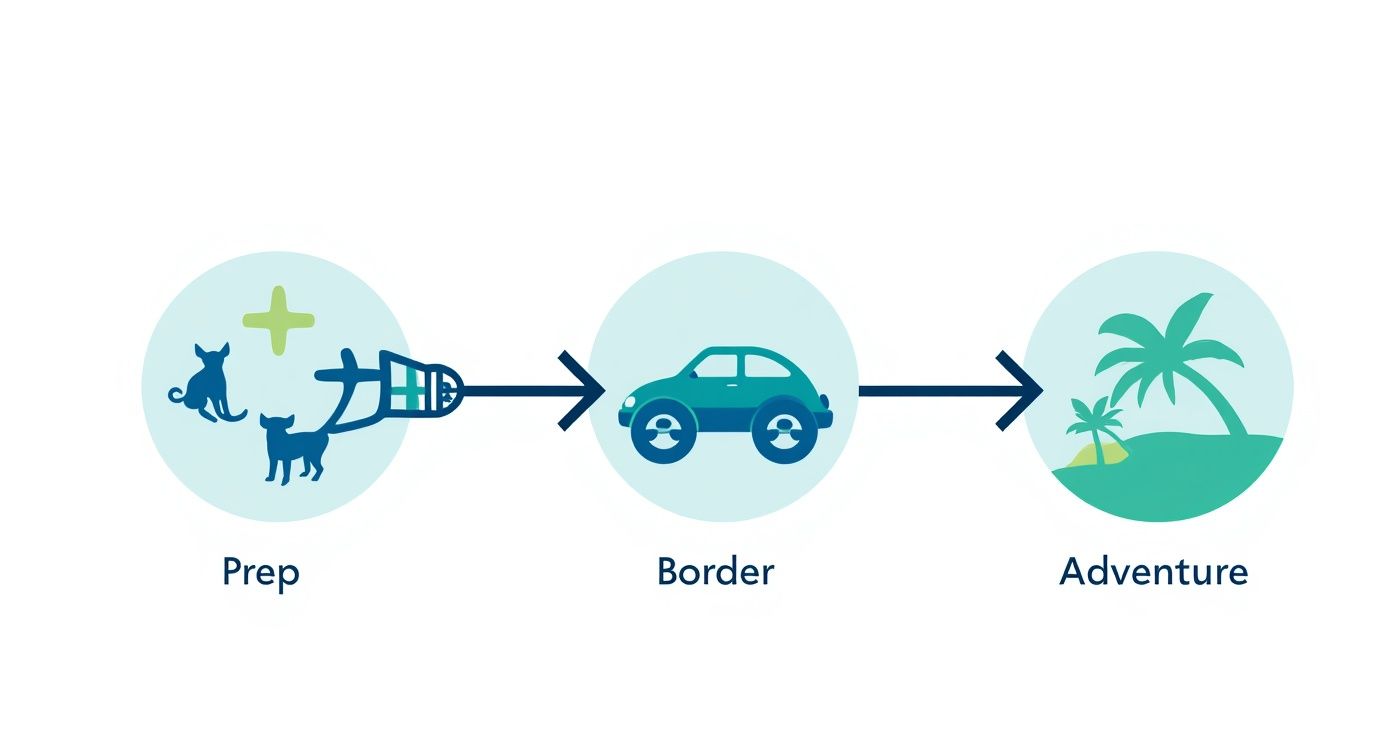
As you can see, the process flows logically from getting your dog's health sorted out to the actual travel day, and then to the fun part. Each step builds on the last, setting you up for a smooth trip.
To help you stay organized, here's a quick checklist summarizing the essential tasks you'll need to tackle before you head out.
Quick Pre-Travel Checklist for Mexico
Task | Timeline | Key Details |
|---|---|---|
Vet Appointment | 1-2 weeks before travel | Get a health check-up. Make sure rabies and other vaccines are current. Discuss flea/tick/heartworm prevention. |
Health Certificate | Within 10 days of travel | Your vet will issue an official health certificate. This is your dog's "passport." |
Microchip Check | Anytime before travel | Confirm the microchip is working and your contact information is up-to-date in the registry. |
Pack Pet Supplies | Week of travel | Food, water, bowls, leash, poop bags, favorite toy, and any medications. Pack enough for the whole trip. |
Confirm Accommodations | 1-2 weeks before travel | Double-check that your hotel or rental is genuinely pet-friendly and aware of your dog's arrival. |
Having this checklist handy will keep you on track and make sure nothing important gets missed in the excitement of preparing for your trip.
Laying the Groundwork for Your Trip
A great trip always starts with solid planning, long before you even think about packing. This means getting your dog's documents in order, understanding your route, and knowing what to expect at every point along the way. Whether you’re driving down the coast or flying into a major city, a clear plan is your best friend.
A well-prepared traveler is a happy traveler. Taking the time to understand the requirements upfront can help prevent surprises at the border and allows you to focus on the fun part of your trip.
As you start to map out your adventure, broader guides on topics like planning your RV trip can provide a fantastic foundation. My goal here is to help turn any potential worries into confident anticipation, making the planning just as exciting as the trip itself.
Preparing Your Dog for a Healthy Journey
Before you start dreaming of tacos and beaches, the first step is making sure your best friend is healthy and ready for the trip. A little proactive care goes a long way and makes the entire journey smoother for everyone. Think of it as getting their paws-port in order!
This all starts with a visit to your trusted veterinarian. A general health check-up is always a good idea before any big trip, and this one is no different. It's the perfect time to confirm all their vaccinations are current, especially the one that's an absolute must-have for this adventure.
Core Vaccinations and Parasite Prevention
Let's get straight to the point: the rabies vaccination is very important. While Mexico has simplified its entry process, you'll still need to present proof of a valid, up-to-date rabies vaccination to the SENASICA officials when you arrive. Don't leave home without it.
Beyond rabies, it's smart to chat with your vet about your specific travel plans. Depending on where you're headed in Mexico, they might recommend other vaccinations. Just as important is a solid parasite prevention plan. You’ll want your dog protected against:
Fleas and Ticks: These critters can be more common in different climates.
Heartworm: A serious but preventable condition.
Intestinal Worms: Regular deworming is key to keeping your dog healthy on the road.
Getting these treatments started before you leave gives your dog a shield of protection against any new bugs they might encounter down south.
The Screwworm Inspection for Your Return Trip
Here’s a recent and really important change you should know about. While getting into Mexico with your dog is pretty straightforward, getting back into the United States has a new step to consider. As of late 2024, it's recommended that every dog coming from Mexico have a screwworm inspection.
This isn't just extra paperwork; it's a key animal health measure. The inspection itself is simple—a quick, non-invasive check by a vet to make sure your dog hasn't picked up this nasty parasite before re-entering the U.S.
The most important detail here is the timing. This inspection should be done by a licensed veterinarian in Mexico within five days of you crossing back into the United States. The vet will give you a health certificate stating your dog is screwworm-free, and this document is now a key part of your return trip. If you want to get familiar with this kind of paperwork, you can learn more about the role of a veterinary international health certificate in pet travel.
Interestingly, Mexico actually simplified its rules a few years back, dropping the suggestion for a health certificate for dogs entering from the U.S. and focusing on their own arrival inspection. This new screwworm rule for the return journey has brought back the need for specific vet paperwork, but only for the trip home.
A healthy dog is a happy travel companion. Keeping them hydrated on your adventure is also a top priority, so it's worth looking into the best travel water bottles to have on hand. Taking these health preparations seriously is the foundation for an unforgettable trip.
Navigating Borders By Car and Plane
Whether you're planning a road trip or catching a flight, the border crossing can feel like the most stressful part of the journey. But honestly, with a bit of prep, getting your dog into Mexico can be surprisingly smooth. Let's walk through what actually happens at the border, both on the ground and in the air.
Driving Across the Border
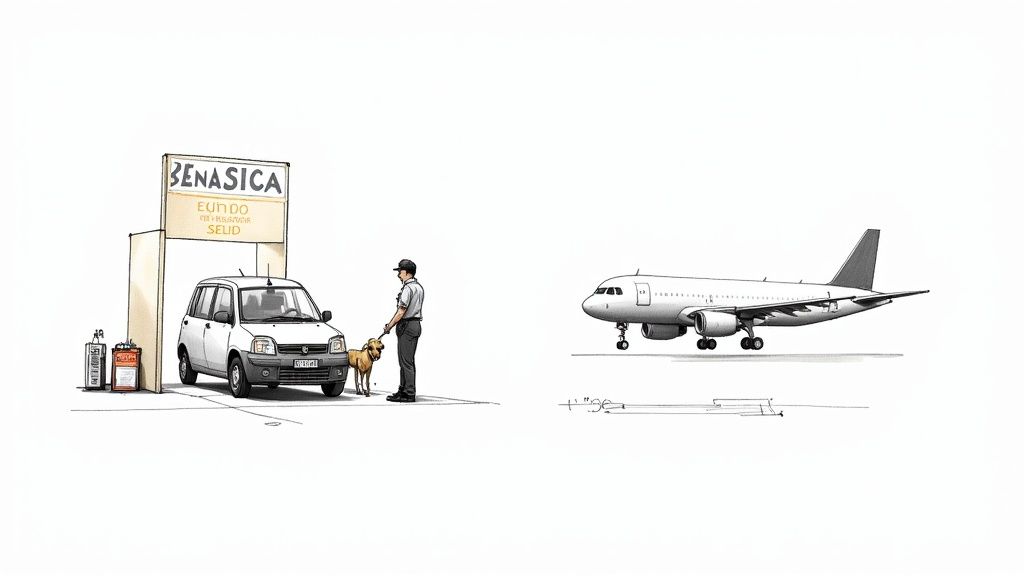
Driving into Mexico with your dog is usually the most laid-back way to do it. The process is designed to be quick, really just a simple health check for your furry co-pilot. When you pull up to the border, you’ll be directed to the Mexican Animal and Plant Health Inspection Office (OISA), where an official from SENASICA will meet you.
Here’s a real-world look at what to expect:
The Inspection: An official will do a brief visual check of your dog. They are just making sure your pup looks healthy and doesn't have obvious signs of illness or parasites like fleas and ticks.
Present Your Dog: Make sure your dog is on a leash or in a clean carrier. The official might ask you to handle your dog so they can get a good look.
Food Check: Bringing dog food? It should be in its original, sealed bag. You can bring a small, open portion just for that day's travel, but large, unsealed bags of kibble are generally not allowed.
The whole thing is usually over in a few minutes. I always keep my dog's rabies certificate in a clearly marked folder, just in case they ask for it. Being organized just makes everything go faster.
Taking to the Skies
Flying definitely adds a few more steps to the process. You'll need to satisfy not just Mexico's entry guidelines but also your specific airline's pet policies. These rules can vary a lot, so a little research ahead of time is a lifesaver.
The first big decision is whether your dog will fly in the cabin with you or as checked baggage in the cargo hold. This almost always comes down to your dog's size and weight.
Most airlines only allow small dogs (typically under 20-25 pounds, including their carrier) to fly in the cabin. It’s very important to check your airline's specific rules on weight limits, carrier dimensions, and any breed restrictions well before you book.
No matter where your dog travels on the plane, the carrier should be IATA-compliant. That just means it needs to be secure, have good ventilation, and be big enough for your dog to comfortably stand up and turn around. For a complete rundown, our pet travel planner for United States to Mexico has detailed checklists to guide you.
Once you land in Mexico, you'll head to the same SENASICA inspection point at the airport. The process is identical to the land border check: a quick visual once-over to confirm your dog is healthy and ready to start their vacation.
My best advice? Get to the airport at least three hours before your flight. It gives you plenty of time to check in your pet without feeling rushed. A calm owner helps keep a calm dog, which is the perfect way to kick off a fantastic trip.
Finding Pet-Friendly Stays and Activities
You’ve made it! After all the planning and paperwork, you and your furry co-pilot have officially arrived in Mexico. Now, the real adventure begins. The key to an incredible trip from here on out is finding places where your dog isn't just tolerated, but truly welcomed.
The great news is that Mexico is becoming more and more accommodating to four-legged travelers every single year.
This isn't just a hunch; it's a cultural shift. A major survey from Mexico's National Institute of Statistics & Geography (INEGI) found there are nearly 44 million dogs in the country, with almost 70% of households owning at least one pet. This boom in pet ownership has led to a wonderful expansion of pet-friendly services, making your trip easier than ever.

Securing the Best Pet-Friendly Accommodations
Just ticking the "pet-friendly" box on a booking website is a good start, but it rarely gives you the full picture. Some places have frustrating size limits, tack on large fees, or have pets stay in specific (and often less desirable) rooms. To sidestep any bad surprises at check-in, you'll want to dig a little deeper.
My personal strategy? I always call the hotel or rental property directly right after I book online. It's a simple step, but that personal connection confirms their exact policy and shows them you're a responsible owner.
When you have them on the phone, ask a few specific questions:
Do you have any weight or breed restrictions for dogs?
Is there an extra pet fee per night, or is it a one-time cleaning fee?
Are dogs allowed in common areas like the lobby or outdoor patios?
Are there any designated green spaces nearby for potty breaks?
This quick chat helps make sure you've found a genuinely welcoming spot, not just one that reluctantly allows pets. For more tips on getting your pup settled, check out our guide on paws in paradise traveling to tropical destinations with your pet.
Exploring Dog-Friendly Regions and Activities
Mexico’s landscape is incredibly diverse, offering all sorts of adventures for you and your dog. But some areas are definitely more welcoming than others. As a general rule, coastal towns and larger cities tend to lead the pack in pet-friendly options.
Places like Baja California Sur and the Riviera Maya, for example, are famous for their laid-back beach towns where dogs are often welcome on restaurant patios and even some public beaches. In big cities like Mexico City, you'll discover amazing parks like Parque México in the Condesa neighborhood, which are buzzing social hubs for dogs and their people.
A quick note on etiquette: Always keep your dog leashed unless you're in a designated off-leash park. And, of course, always clean up after them. These simple courtesies are what keep doors open for future four-legged travelers.
Understanding Local Norms and Rules
While many places will greet your dog with a smile, certain spots have specific restrictions. Most archaeological sites, like Chichen Itza or Teotihuacan, do not allow pets for preservation reasons. It’s also safe to assume that most indoor museums and high-end restaurants will be off-limits.
When in doubt, just look for signs or ask an employee if your dog is allowed. A little respect for local customs goes a long way and helps make your trip smooth and enjoyable for everyone involved.
Keeping Your Dog Safe and Healthy in Mexico
Once you've crossed the border and are settling in, the focus naturally shifts to keeping your dog safe and healthy in this new environment. Mexico is an incredible place to explore with a dog, but it comes with its own set of things to consider. A little bit of prep and awareness is all it takes to make sure your trip is memorable for all the right reasons.
Think about it from your dog's perspective—the heat, the water, and even the local critters are completely different. Being proactive about their well-being is the key to a stress-free adventure. It’s not about being worried; it's just about being smart.
Handling the Heat and Staying Hydrated
For many dogs, the heat in Mexico can be a real shock to the system. Heatstroke and dehydration are serious risks, especially for our flat-faced friends like pugs and bulldogs or any dog with a thick, heavy coat. You definitely want to avoid that ruff situation.
The basics are simple: always make sure your dog has access to shade and plenty of fresh, cool water. A few good habits can make all the difference.
Time Your Walks: This is a big one. Avoid walking during the hottest part of the day, which is usually from late morning until the late afternoon. Early morning and evening strolls are far more comfortable and much safer.
Never, Ever Leave Them in a Car: Even on a mild day, the temperature inside a parked car can climb to dangerous levels in just a few minutes. This is a very important rule.
Watch for Overheating: Know the signs. If you see excessive panting, heavy drooling, tiredness, or very bright red gums, act fast. Get your dog into a cool spot immediately and offer them water.
A common mistake travelers make is letting their pets drink the tap water. Stick to bottled or purified water for your dog—the same kind you'd be drinking yourself. It’s the easiest way to prevent an upset stomach from ruining your trip.
Parasites, Critters, and Finding Care
Beyond the sun, you’ll want to protect your dog from local bugs and wildlife. Fleas, ticks, and mosquitos in Mexico can carry different diseases than the ones back home, so staying on top of their preventative medication is very important. Also, keep an eye out for scorpions, snakes, or other wildlife, particularly if you’re hiking or exploring more rural areas.
It's also a great idea to locate a vet before you actually need one. Most larger towns and cities have excellent veterinary clinics, and you can often find English-speaking vets in popular tourist destinations. A quick Google search when you arrive can save you a lot of stress later.
Before you even leave home, throw together a simple canine first-aid kit. You don't need to go overboard, but having a few key items on hand can be a real lifesaver.
Your Dog's First-Aid Kit Checklist:
Antiseptic Wipes: Perfect for cleaning out minor cuts and scrapes from your adventures.
Gauze and Vet Wrap: For covering and protecting any wounds.
Tweezers: Useful for safely removing splinters or ticks.
Canine-Safe Antihistamine: Ask your vet for a recommendation and the correct dosage for your dog in case of an allergic reaction.
Your Vet's Phone Number: For those "just in case" moments when you need quick advice.
Having these basics packed gives you peace of mind, so you can stop worrying and focus on making incredible memories together.
Common Questions About Mexico Pet Travel
Even with a perfect plan, you might have a few last-minute questions. I get it. Let’s clear up the most common things people ask about taking their dogs to Mexico so you can head to the border feeling completely prepared.
Do I Need a Health Certificate to Enter Mexico?
This is the big one, and thankfully, the answer is simple: no, you do not need a health certificate to bring your dog into Mexico from the U.S. or Canada anymore. The old, complicated process was simplified a few years back, replacing that paperwork with a quick visual inspection when you arrive.
But—and this is very important—you absolutely should have valid proof of a rabies vaccine. Make sure that certificate is easy to grab, because the SENASICA official at the border will likely ask to see it.
What Happens During the Border Inspection?
The pet inspection at the Mexican border is usually pretty painless and, best of all, free for up to two pets. A SENASICA (Mexico's agriculture and food safety service) official will just do a quick visual check. They're looking to see that your dog appears healthy and doesn't have any obvious fleas or ticks.
They’ll glance at your rabies certificate to make sure it’s current and take a look at any pet food you have with you. The whole thing typically takes just a few minutes, and then you’re on your way.
Can I Bring My Dog's Food?
Yes, but there's a catch. You can bring a reasonable amount of food for your trip, but it should be in its original, sealed, and unopened bag. They'll usually let a small, open Ziploc with a day's worth of travel kibble slide, but that's it.
A classic mistake is to show up with a giant, half-eaten bag of kibble from home. It is generally not allowed and may be taken away. Your best bet is to bring a brand-new, sealed bag or just plan to buy food once you're settled in Mexico.
What Is Required to Return to the United States?
Getting back into the U.S. now involves a key new step because of a recent screwworm declaration. It's recommended that you have your dog inspected by a licensed veterinarian in Mexico within 5 days of crossing back into the U.S.
The vet will give you a certificate confirming your dog is free from screwworm. This document is now an important part of re-entry at U.S. ports. Of course, your dog’s rabies vaccination still needs to be up-to-date. I always tell people to double-check the latest USDA APHIS rules right before their return trip, as these things can change.
At Passpaw, we're dedicated to making international pet travel simpler for everyone involved. Learn how our platform helps vets and pet owners manage travel documents with ease.

More articles
From regulatory changes to best practices for veterinarians and pet owners, our resources keep you ahead of the curve.