Are you a team member in a veterinary practice?
Are you a pet parent planning a trip with your furry pal?
traveling with dog to mexico: The Complete Guide
Thinking about a Mexican getaway with your four-legged best friend? It's way easier than you might think. For most people, traveling with a dog to Mexico boils down to having an up-to-date rabies vaccine and recent parasite treatments. With just a little prep, you and your furry co-pilot can be kicking back and enjoying the sunshine together.
Your Stress-Free Guide to Mexico with Your Dog
The idea of a trip to Mexico with your dog is exciting, but let's be real—the thought of navigating the rules can feel a bit ruff. The good news? The process has gotten a lot simpler over the past few years. This guide will walk you through everything you need to know, step by step, so you can focus more on tail wags and less on paperwork.
Mexico has become a go-to spot for pet owners, especially from the U.S., thanks to its close location and refreshingly simple entry process. As long as your dog is good on their rabies vaccination and has the necessary parasite treatments, you can generally get in without a formal health certificate. For a deeper dive into pet travel specifics, check out our insights at https://passpaw.com/blog/pet-travel.
Mexico Pet Travel At a Glance
To give you a clear starting point, we’ve put together a quick summary. This table should help you visualize the main requirements, get a feel for the timeline, and estimate a budget.
Requirement Category | Key Details | Timeline |
|---|---|---|
Essential Documents | Proof of rabies vaccination and recent parasite treatments are your top priorities. | Start pulling these together 4-6 weeks before your trip. |
Veterinarian Visit | A check-up to confirm your dog is healthy and to get necessary treatments. | Book this appointment for 2-3 weeks before you leave. |
Estimated Costs | Budget for vet visits, airline fees (if flying), and potential document services. | Costs can range from $150 to $500+ depending on how you travel. |
Our goal here is to show you that a trip to Mexico with your dog is completely doable. This guide breaks down the essentials of international pet travel so you can focus on the fun parts.
And while you're planning, it's smart to think about your finances, too. Figuring out how to exchange foreign currency ahead of time can save you a lot of hassle and money on the ground. A little planning goes a long way toward making incredible memories with your four-legged friend.
Getting Your Pet's Paperwork in Order
Let's dig into the most important part of your prep work: the documents. Nailing this step is the difference between a smooth border crossing and a stressful, unexpected delay. While Mexico's rules have become more relaxed over the years, having the right paperwork buttoned up is your ticket to a hassle-free arrival when traveling with your dog to Mexico.
The main agency you'll interact with, directly or indirectly, is SENASICA—Mexico's agricultural inspection service. Their job is to make sure all incoming pets are healthy and don't pose a risk to local animals. Think of them as the official welcome committee for your furry friend.
The International Health Certificate: Your Key Document
Even though Mexico's official rules have evolved, many airlines and even some border officials still prefer to see an International Health Certificate (IHC). It's basically your dog's health passport, issued by an accredited veterinarian, confirming they are fit for travel and meet all the necessary standards.
Getting this certificate is more than just a quick check-up. Your vet needs to include very specific details to make sure it's valid for your trip.
Here's a simple look at the major steps in getting your pet ready to go.
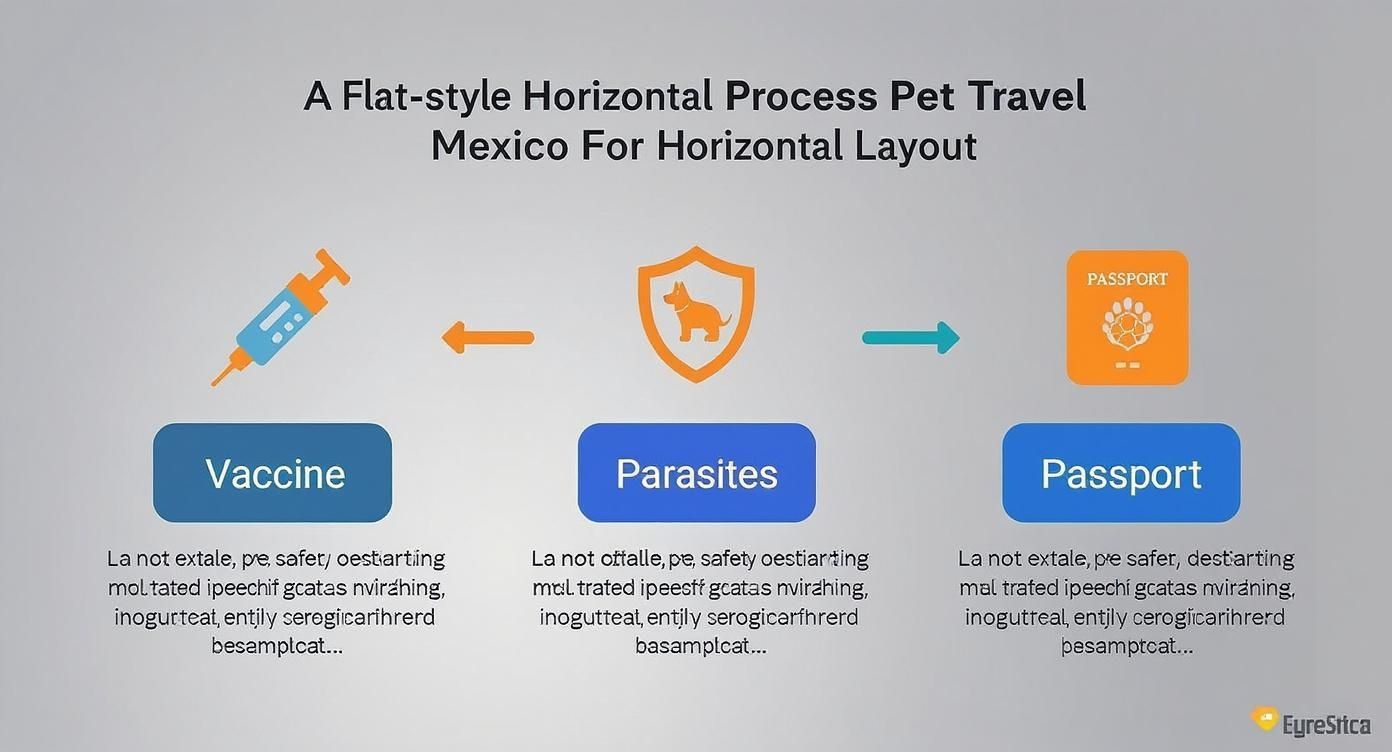
This breaks down the journey into three manageable stages, from vaccinations to final documents.
What Your Vet Needs to Include
When you visit your vet, they aren't just giving your pup a quick once-over. They are creating an official record that Mexican authorities may review. Getting the details right is key—small mistakes can cause big headaches at the border.
Here’s what the certificate should clearly state:
Statement of Good Health: A note from your vet confirming your dog was examined and found to be healthy and free from any signs of infectious diseases.
Up-to-Date Rabies Vaccination: The certificate should list the date the vaccine was given, the product name, and its expiration date. The shot must be current for your entire trip.
Parasite Prevention: It also needs to show that your dog received treatment for both internal and external parasites (like fleas and ticks) within 6 months of your travel date.
One of the most common slip-ups is getting the dates wrong. For instance, if a rabies vaccine was given less than 30 days before travel, some officials might flag it. Always double-check that every date is accurate and lines up with the requirements. You can learn more about the specifics of a veterinary international health certificate to be fully prepared.
The USDA APHIS Endorsement: Extra Peace of Mind
After your accredited vet completes and signs the health certificate, there's one more optional but highly recommended step: getting it endorsed by the USDA's Animal and Plant Health Inspection Service (APHIS). This endorsement is an official government stamp that certifies your veterinarian's signature.
While not always mandatory or checked at every entry point, the USDA endorsement adds a powerful layer of official validation to your paperwork. It can prevent potential confusion or pushback from an official who may be stricter or less familiar with the latest regulations.
Think of it as travel insurance for your paperwork. You might not need it, but if you do, you'll be incredibly glad you have it. It’s a small step that can save you from a big, furry mess at the border. The process can usually be done online or by mail, but be sure to build in extra time for it.
Preparing for Your Vet Visit
To make your vet appointment as productive as possible, go in prepared. Don't just show up hoping your vet knows every single detail about Mexico's latest pet import rules—they change! Being an active partner in the process helps make sure nothing gets missed.
Here’s what to cover with your veterinarian:
Confirm their USDA Accreditation: Only a USDA-accredited vet can issue an international health certificate. It’s a quick question that can save you from having to start the whole process over.
Discuss the Timeline: Ask when the best time is to do the final exam. Health certificates are often valid only for a short window (10-15 days), so timing is everything.
Review the Document Together: Before you leave the clinic, look over the certificate with your vet. Check your name, your dog's name, the microchip number, and all vaccine dates. A simple typo can become a major issue later on.
By taking these steps, you're not just getting a signature; you're building a rock-solid set of documents. This preparation will have you and your best friend saying "¡Hola, México!" with confidence and zero stress.
Choosing How to Travel: Fly or Drive
You’ve got the paperwork handled, and Mexico is calling your name. Now for the big logistical question: how are you and your furry co-pilot actually getting there? Your two main options, flying or driving, offer completely different experiences for both of you.
Honestly, there’s no single "best" answer. The right choice really comes down to your dog's size and personality, where you're starting from, and your own travel style. Let's walk through what each journey looks like so you can pick the one that feels right for your pack.
Taking to the Skies: Pet Air Travel
For a lot of people, especially those coming from farther away, flying is the most practical way to get to Mexico. But once you add a dog to the mix, it requires a lot more homework. Airlines have very different rules for pets, so you need to do your research. It’s not just about finding one that allows dogs, but one that has a good reputation for treating them well.

The first thing to figure out is where on the plane your dog will be. This almost always comes down to size.
In-Cabin Travel: This is the gold standard for small dogs who can fit comfortably in a carrier under the seat in front of you. It's much less stressful for them because you're right there the whole time.
Cargo Travel: Bigger dogs have to fly in the temperature-controlled cargo hold. While airlines have safety measures in place, it can be a scary experience for some pups.
Getting the right carrier is a must. Airlines are very strict about size, material, and airflow. To make sure you get one that will pass muster, check out our guide on selecting the best airline travel pet carrier.
Navigating Airport Logistics
Flying with a dog isn't as simple as just showing up. You must book their spot ahead of time—airlines only allow a certain number of animals on each flight. You’ll also have to pay a pet fee, which usually runs between $125 to $200 each way.
When you get to the airport, you'll have to check in at the main counter, even if your dog is flying in the cabin with you. This is where the airline staff will look at your dog’s health certificate and make sure their carrier meets the rules. Give yourself plenty of extra time so you're not scrambling at the last minute.
Hitting the Road: Driving to Mexico
If you have the time and a dog who loves a good car ride, driving can be a fantastic, flexible way to go. You set the pace, stop for potty breaks as often as you need, and your best friend is right there beside you. For anxious dogs, this is often a much calmer option.
The process at a land border crossing is typically pretty smooth. You’ll need to pull over at the Mexican Animal and Plant Health Inspection Office (OISA), which is part of SENASICA, located right at the border. An official will do a quick physical check of your dog.
They're basically just looking to see that your dog appears healthy and doesn't have any obvious fleas or ticks. Keep your paperwork ready, but the inspection itself is usually very fast and doesn't involve much handling.
As a standard precaution, they might spray your dog’s carrier with a disinfectant. Also, a key rule to remember: you can only bring a single day's portion of pet food across the border. Plan to buy more once you've crossed.
Once you’re in Mexico, the country is yours to explore. And if you're planning longer journeys within the country, you might want to look into bus travel options within Mexico, but be sure to check each company's specific pet policy first.
Flying vs. Driving to Mexico with Your Dog
Still on the fence? Sometimes seeing it side-by-side helps. This table breaks down the key factors to help you decide what's best for you and your dog.
Factor | Flying with Your Dog | Driving with Your Dog |
|---|---|---|
Speed | Much faster, especially for long distances. A few hours vs. multiple days. | Significantly slower. Best for those with time or who live closer to the border. |
Cost | Can be pricey with airline fees, potentially $250+ for a round trip. | Generally more affordable. Costs are limited to gas, tolls, and pet-friendly hotels. |
Dog's Comfort | Can be stressful, especially for anxious dogs or those traveling in cargo. | Less stressful for most dogs as they remain with their owner. More freedom to stop. |
Convenience | Less packing and driving fatigue. Straightforward once you're at the airport. | Offers total flexibility with your schedule and what you can bring. Requires more driving. |
Ultimately, whether you choose the friendly skies or the open road, a little preparation goes a long way. Think about your dog's personality and your own travel rhythm to make sure the journey is just as much fun as the destination.
Keeping Your Dog Healthy and Safe in Mexico
You’ve made it across the border with your furry co-pilot—congratulations, the real adventure is about to begin! But just like back home, your dog's well-being is always priority number one. A little bit of proactive care can make all the difference, ensuring your trip is full of wagging tails from the beaches of Tulum to the charming streets of San Miguel de Allende.
Mexico's varied climates, especially in the warmer regions, bring a different set of health considerations your pup might not be used to. This is where having a solid preventative strategy is so important.
Beyond the Basics: Proactive Preventative Care
While the rabies vaccine was the star of the show for getting across the border, it's just the beginning of the health conversation for travel in Mexico. The country is home to a variety of pests that can cause serious, trip-ruining health issues if you're not prepared.
It is very important to talk with your vet about broad parasite protection before you leave. This isn't something to figure out on the fly. Make sure your dog is covered with effective treatments for:
Fleas and Ticks: These little critters are a year-round problem in most parts of Mexico and can carry some nasty diseases. A reliable monthly preventative is a must.
Heartworm: Transmitted by mosquitoes, heartworm is a serious condition that's common in many areas. Don't skip their regular heartworm preventative.
Think of it as packing an invisible shield for your dog. Sorting these treatments out before your trip is one of the easiest ways to prevent a "ruff" situation from happening later. For more tips on warm-weather travel, check out our guide to traveling to tropical destinations with your pet.
Finding Veterinary Care in Mexico
So, what happens if your dog gets an upset stomach or a small cut on a hike? The good news is that veterinary care in Mexico is generally high-quality, affordable, and easy to find in cities and larger towns. Many vets, particularly in tourist-heavy areas, speak English and are used to treating visiting pets.
In fact, pet medical tourism to Mexico has been on the rise. Many American pet owners travel south specifically for more affordable veterinary procedures. Reports show that the savings can be significant, with some people saving up to $1,600 on services like dental care. You can learn more about how some Americans are turning to Mexico for pet care.
When you need a local clinic, ask your hotel concierge for a recommendation, post in a local expat group on Facebook, or just keep an eye out for a sign that says "Veterinaria." Pro tip: As soon as you arrive at your destination, find and save the number of a local 24-hour emergency animal hospital in your phone. Just in case.
Pack a Doggy First-Aid Kit
You don’t need to bring a mobile vet clinic with you, but a small, well-stocked first-aid kit can be a real lifesaver for minor issues. It gives you peace of mind and lets you handle small bumps and scrapes on the spot.
Here’s what should be in your kit:
Basic Supplies: Gauze, non-stick bandages, and antiseptic wipes for cleaning small cuts.
Stomach Soothers: A few probiotic packets or a small can of plain pumpkin puree can work wonders for travel-related tummy troubles.
Medications: Any prescription meds your dog needs, plus a pet-safe antihistamine for unexpected allergic reactions (always check the dosage with your vet first!).
Tweezers: Essential for safely removing ticks or splinters.
Navigating the Local Environment
Finally, just being aware of your surroundings is a huge part of keeping your dog safe. Mexico's environment can present new challenges. Always have fresh, clean water available—and don't let them drink from puddles or taps if you're unsure about the local water quality. Bottled water is your best friend.
Be smart about the heat. Pavement can get scorching hot, so stick to walks in the early morning or late evening. And it should go without saying, but never, ever leave your dog in a parked car.
Keep an eye out for local wildlife and stray animals, and always have your dog on a secure leash in public spaces. A little bit of awareness is all it takes to keep your Mexican adventure happy and healthy from start to finish.
Enjoying Your Mexican Adventure Together
You made it! All that paperwork and planning paid off, and you and your best friend are officially in Mexico. Paw-some! Now the real fun begins.
You’ll quickly find that Mexico is getting more and more welcoming to four-legged visitors. This isn’t just a hunch; it’s a massive global trend. The worldwide pet travel market was valued at a staggering $2.4 billion in 2024, and dogs make up over 58% of that. People love traveling with their dogs, and the market is booming to keep up. You can dig into the numbers on the booming pet travel market on gminsights.com.
What does this mean for you? More pet-friendly hotels, more restaurants with welcoming patios, and more opportunities to make incredible memories together.

Finding Pet-Friendly Accommodations
First things first: you need a place to stay. From charming boutique hotels in Oaxaca to breezy beachfront Airbnbs in Baja, you’ll find plenty of options. But here's a pro-tip: "pet-friendly" can mean very different things from one place to another. A little homework now will save you a huge headache later.
Don’t just trust the little paw-print icon on a booking site. Before you hit confirm, do a quick check.
Reach Out Directly: A quick call or email to confirm their policy is always a good idea. Ask if they have any size or breed restrictions that might apply to your dog.
Clarify Fees: Many places add an extra pet fee, either per night or as a one-time cleaning charge. Get the exact amount so there are no surprises on your bill.
Ask About Amenities: Is there a designated potty area? Do they offer dog beds or bowls? Some hotels really roll out the red carpet for pups, and these little perks can make your stay so much more comfortable.
Taking a few extra minutes to confirm these details makes sure your chosen spot is genuinely happy to host your dog, not just tolerating them.
Activities You Can Enjoy Together
With your home base sorted, it’s time to explore. This trip is about shared experiences, not leaving your pup cooped up in a hotel room. Luckily, Mexico offers tons of activities you can do together.
Many of Mexico's gorgeous beaches welcome leashed dogs, especially during the quieter hours of the morning and evening. There’s nothing quite like a sunset stroll along the coast with your best friend. Just keep an eye out for local signs that might have specific rules.
Being a responsible pet owner abroad is about more than just following the rules; it's about being a respectful guest. Your actions reflect on all pet travelers, so cleaning up after your dog, keeping them leashed, and respecting local customs ensures that these amazing places stay open for future furry visitors.
Beyond the beach, you’ll find plenty of parks and public squares perfect for a walk. And thanks to the incredible cafe culture in many towns, you can often find restaurants with outdoor patios that are happy to have your well-behaved dog join you. It never hurts to ask first, but more often than not, you'll be greeted with a smile.
Being a Respectful Guest
When you're traveling with your dog in a new country, being mindful of local etiquette goes a long way. While Mexico is very welcoming, a few simple courtesies will make every interaction smoother.
For example, leash laws are key. As a general rule, always keep your dog on a leash in public spaces unless you're in a designated off-leash park. It’s a sign of respect for locals who might not be comfortable around dogs, and it keeps your pup safe.
Also, be aware of your dog's behavior. A constantly barking dog on a quiet restaurant patio can ruin the vibe for everyone. Keeping your dog calm and close by helps ensure a good experience for all. By being a considerate visitor, you’re not just having a great trip—you’re paving the way for more pet-friendly adventures in the future.
Common Questions About Mexico Pet Travel
Even with the best-laid plans, it’s completely normal to have a few questions lingering. When you’re getting ready to take your best friend on an international trip, you want to feel confident, not confused.
Let’s tackle some of the most common questions we hear about traveling with a dog to Mexico. We'll clear up any last-minute uncertainties so you can get back to planning the fun parts of your adventure.
What Happens If My Paperwork Is Incomplete?
This is a big—and very valid—worry for many pet owners. If you show up at the border or airport and an official spots an issue with your documents, what happens next can really vary. It often comes down to the specific official you're dealing with and how serious the problem is.
For a minor issue, like undocumented parasite treatment, you might just have a small hiccup. The official may direct you to a local, accredited vet to get the treatment done at your own expense before they’ll let you pass. It’s an inconvenience, for sure, but manageable.
The real problem is a major error. If you’re missing proof of a rabies vaccination or have a significant mistake on your health certificate, your dog could be denied entry altogether. This is the exact situation we all want to avoid, and it’s why triple-checking every single detail before you leave home is so important.
Are There Food and Treat Restrictions?
Yes, and this one catches a lot of people by surprise. When you cross into Mexico, you are only allowed to bring one day's worth of pet food with you. That giant, economy-sized bag of their favorite kibble will have to stay behind.
The same rule applies to treats. To play it safe, it's best to avoid packing any treats made with beef, lamb, or goat, as these often face tighter agricultural restrictions.
Plan Ahead: Before you go, look up pet stores near your destination in Mexico. Most cities and tourist areas have familiar spots like Petco that stock popular international brands.
Transition Slowly: If your dog has a sensitive stomach, bring a small, sealed baggie of their current food. You can use it to mix with the new food you buy in Mexico, making the transition easier on their system.
This rule is in place for agricultural health reasons, so don't try to bend it. You risk having your supplies taken, so just plan on doing a pet food run shortly after you arrive.
What About the Return Trip to the US?
This is where things can get a little more complicated. Getting back into the United States from Mexico often requires more specific paperwork than entering Mexico did. The rules for re-entry are set by the U.S. Centers for Disease Control (CDC) and the USDA, and they do change.
As of late 2024, a key requirement for dogs coming back from Mexico is a screwworm certification. This means you'll need a certificate from a veterinarian in Mexico, issued within five days of your return, stating they inspected your dog and found it to be free of this specific parasite.
Your dog will also need to be at least six months old, have a microchip, and appear healthy. It's always a smart move to check the official CDC website for the most current dog importation requirements right before your return trip. Planning for this final step will make your homecoming just as smooth as your departure.
Feeling like the paperwork is a bit much? That's where Passpaw comes in. Our platform was built to simplify this entire process, making sure every detail on your pet's travel documents is correct and ready to go. We work directly with your vet to make international travel feel like a walk in the park. Learn more at https://passpaw.com.
More articles
From regulatory changes to best practices for veterinarians and pet owners, our resources keep you ahead of the curve.