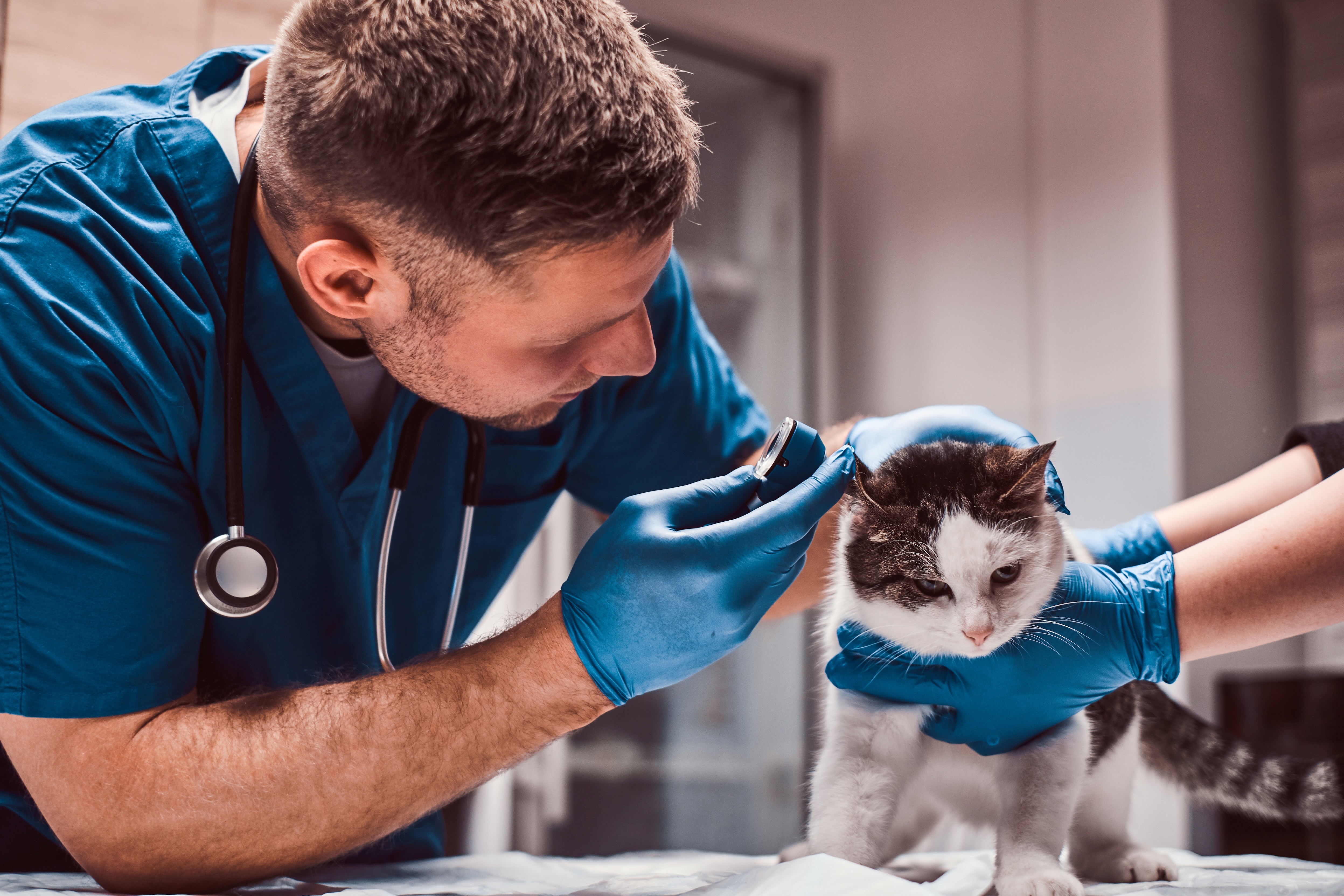
Are you a team member in a veterinary practice?
Are you a pet parent planning a trip with your furry pal?
Transport Pet Across Country Safely and Simply
So, you're planning a cross-country move with your pet. The big question is: how will they get there? The journey itself boils down to two main routes—traveling by road or taking to the skies. Each comes with its own set of rules and considerations, and the right choice really hinges on your pet’s personality, size, and overall health.
Getting this right is all about thoughtful planning. You're not just moving boxes; you're relocating a furry (or scaled) family member, and that requires a completely different level of care. Think of this as your starting point for getting everything in order and making sure your pet is ready for the big adventure.
For more general tips, our comprehensive guide to pet travel is a great resource to have bookmarked.
Key Factors to Consider Early On
Before you start booking flights or renting a van, take a step back and look at the big picture. Answering these initial questions will point you in the right direction.
Your Pet's Health and Temperament: Is your dog a nervous traveler? Does your cat get stressed in a carrier? Do they have any health conditions, like a heart issue or breathing problems, that could be made worse by altitude changes in a plane's cargo hold? An honest look at their personality and physical well-being is a must.
Your Budget and Timeline: Flying is usually faster, no doubt about it. But if you have a large dog or multiple pets, hiring a professional ground transport service can sometimes be surprisingly cost-effective. Driving yourself, of course, gives you total control over the schedule and spending.
Logistical Complexity: Are you ready to dive into the world of airline-approved crates, health certificate deadlines, and breed restrictions? Or does a more laid-back road trip, where you call the shots, feel more your speed?
Moving with pets is a huge undertaking, and it’s a path many of us are taking. The global pet relocation market hit a value of USD 2.4 billion in 2024, which just goes to show how many owners are committed to bringing their companions along for the ride.
Making the call between driving and flying can feel overwhelming. Let's break down the pros and cons of each to make the decision a little clearer.
Ground vs Air Pet Travel at a Glance
Travel Method | Best For | Key Advantage | Main Consideration |
|---|---|---|---|
Ground Travel | Anxious pets, large breeds, multiple animals | Less stressful environment, more flexibility | Can be time-consuming for long distances |
Air Travel | Small pets (in-cabin), long distances, tight timelines | Speed and efficiency | Strict regulations, potential for stress, weather restrictions |
Ultimately, whether you choose the open road or the friendly skies, the "best" method is the one that prioritizes your pet’s safety and comfort while fitting your personal circumstances. There's no one-size-fits-all answer here.
Choosing the Right Mode of Transport
Deciding how to get your pet from one side of the country to the other is a massive decision, and honestly, there's no single right answer. The best method really comes down to your pet’s specific needs—their health, personality, size—and your own schedule and budget. Let's walk through the two main options, ground and air, so you can make a call you feel good about for your furry family member.
This decision tree gives you a quick visual breakdown of the options.
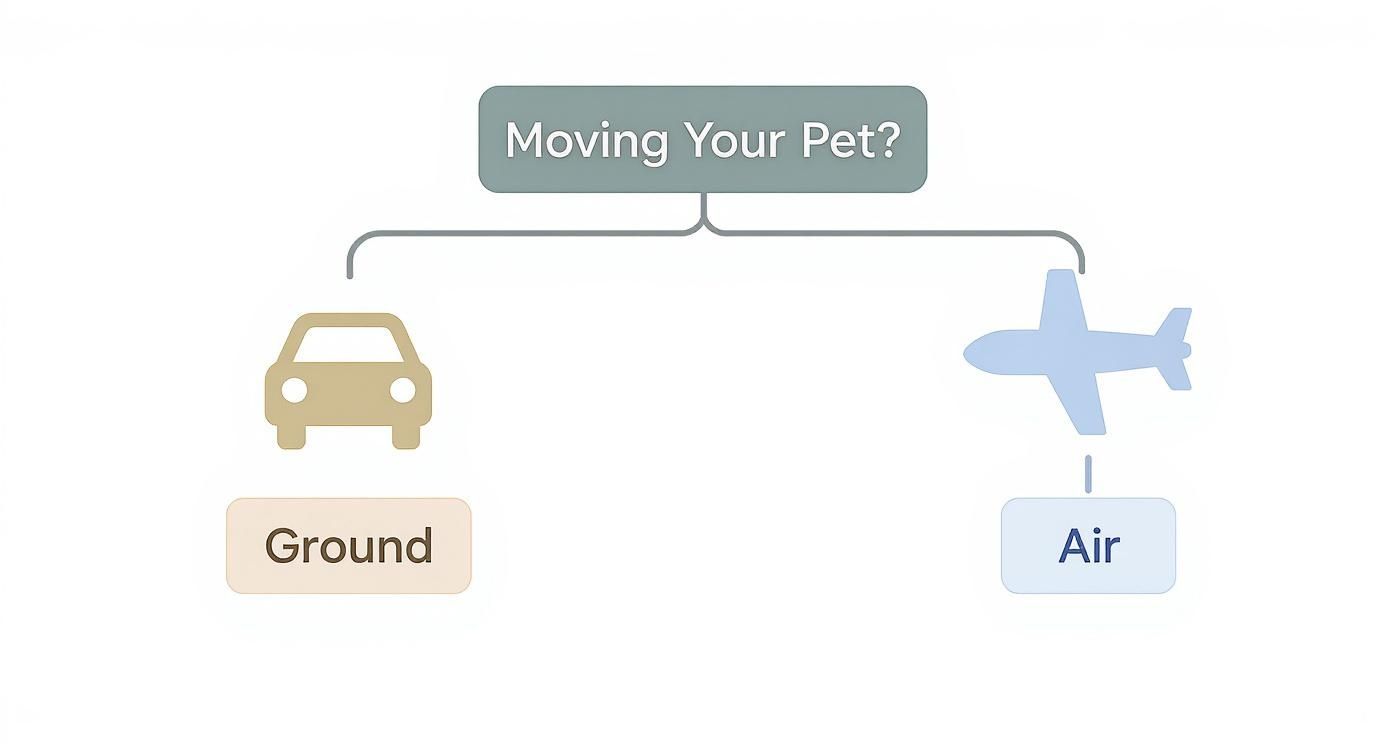
As you can see, ground travel usually gives you more control and a calmer environment, while flying is all about speed. Each has its place.
Taking the Scenic Route: Ground Transportation
For a lot of us, hitting the road is the go-to choice. It puts you in the driver's seat—quite literally. You have total control over your pet's environment, making sure they’re comfortable, safe, and never left alone.
Your Own Road Trip: Driving yourself offers the ultimate flexibility. You can pull over for potty breaks on a whim, keep your pet on their regular feeding schedule, and be right there to offer a reassuring word or scratch behind the ears. This is often the best route for anxious pets, big dogs, or if you're moving a whole crew of animals.
Professional Pet Transport Service: If you can't make the drive, a professional service is a solid alternative. These companies are pros at long-haul animal transport. Just make sure you do your homework. Look for a service that's USDA registered and has a long history of happy clients and positive reviews. Don't hesitate to ask for references!
The biggest plus for ground travel is that it keeps stress to a minimum. Your pet stays in a climate-controlled vehicle, far from the chaos and noise of an airport. To get a better handle on what these options might set you back, take a look at our detailed breakdown of pet transportation costs.
Flying High: Air Travel Options
When time is your biggest concern, nothing beats flying. But air travel comes with its own playbook of strict rules and things to consider. It's becoming more common, though. Nearly 2 million pets fly on commercial planes in the U.S. every year. Globally, the number of families flying with pets has jumped from 19% to 37% in the last ten years, a huge shift showing just how much our pets are part of the family. You can find more stats on this trend over at hotelagio.com.
There are two main ways your pet can fly:
In-Cabin: If you have a small pet who can fit comfortably in an airline-approved carrier under the seat in front of you, they can fly in the cabin. This is fantastic because you can keep an eye on them the entire flight. Every airline has its own limits on size and weight, so you should check their policy before you book a ticket.
As Cargo: Larger animals often have to travel in the cargo hold. This area is pressurized and temperature-controlled, just like the cabin. While airlines have safety protocols in place, it can still be a pretty stressful experience for some animals.
Important Note on Air Travel: Many airlines have breed restrictions, especially for brachycephalic (flat-faced) breeds like Pugs, Bulldogs, and Persian cats. Their short snouts put them at a higher risk for breathing problems at high altitudes. Always confirm your pet’s breed is allowed to fly. You'll also want to look for an IATA-approved travel crate that's tough, well-ventilated, and big enough for your pet to stand up and turn around in comfortably.
Preparing Your Pet for a Smooth Journey
A successful cross-country trip with your pet doesn't start the day you leave—it begins weeks, sometimes even months, before you hit the road. Getting everything in order ahead of time is the single best thing you can do to ensure your pet is healthy, comfortable, and as stress-free as possible when the big day arrives.
It all starts with a visit to your veterinarian. This isn't just a routine check-up; it's a key first step for any long-distance move. Your vet will perform a full health check to confirm your pet is fit for travel and make sure all their shots are up to date.

This is also when you’ll get your Certificate of Veterinary Inspection (CVI), often just called a health certificate. This document is your pet’s official green light for travel, often needed by airlines and for crossing state lines. Need a refresher? Our guide walks you through everything you need to know about getting a pet health certificate for travel.
Making the Crate a Happy Place
Let's be honest: for many pets, the travel carrier is the source of their anxiety. The goal here is to transform that scary box into a safe, personal den. This process, known as crate training, is all about patience and positive reinforcement. Please don't wait until the week before you leave to spring the carrier on them.
Start this process several weeks in advance:
Make it part of the furniture. Put the carrier in your living room with the door wide open. Let your pet explore it on their own terms, without any pressure.
Make it cozy. Line the inside with a familiar blanket or an old t-shirt that smells like you. Tossing in a favorite toy or a few high-value treats can make it much more appealing.
Start feeding them inside. Place their food bowl just inside the carrier door, then slowly move it to the very back over several days. This helps build a powerful positive association.
Practice short stays. Once they are comfortable going in and out, close the door for just a few seconds. Open it, praise them, and give them a treat. Slowly increase the duration over many sessions.
The point isn't to trick your pet into their carrier. It’s to teach them that it’s their own private, safe space. A pet who sees their crate as a sanctuary will handle the actual journey with far less stress.
Managing Travel Anxiety
Even with perfect prep, some pets are just naturally more anxious. That's okay. The key is having a plan to keep them calm without compromising their safety. Making sure your pet has all their essential vaccinations and microchipping is a great place to start, as it smooths out the documentation process and prevents last-minute stressful vet visits.
For pets with mild anxiety, calming aids can work wonders. Pheromone sprays, diffusers, or collars release scents that mimic a mother's natural calming pheromones and can help take the edge off.
For more significant anxiety, you might be tempted to ask about medication. This is a conversation you absolutely must have with your vet. While sedatives might seem like an easy solution, they are often discouraged—especially for air travel—because they can affect a pet's breathing and balance. Your vet can recommend the best path forward, which might include prescription anti-anxiety meds that calm your pet without full sedation.
Packing the Essentials for Your Furry Co-Pilot
When you're moving a pet across the country, they need their own dedicated travel bag packed with familiar comforts and important supplies. Getting this right is key to keeping them happy, healthy, and safe on the long journey, whether you’re driving or flying. Think of it as their personal go-bag for the big adventure ahead.
First things first: food. Keeping their diet consistent is a must. Travel stress combined with a sudden food change is a recipe for an upset stomach and an unhappy pet. Always pack more of their regular food than you think you’ll need, and bring along plenty of fresh water and collapsible bowls for easy access on the go.
Comfort and Safety Items
Never underestimate the power of familiar smells. A favorite blanket, a well-loved toy, or even an old t-shirt that smells like you can make a huge difference in reducing your pet’s anxiety. These simple items can turn a scary, new environment into a more comfortable, personal space.
For road trips, safety inside the car is just as important. A properly secured, crash-tested carrier or a safety harness is an absolute must. You'll also want to have a pet first-aid kit handy. You can buy these pre-made or easily assemble one yourself with basics like antiseptic wipes, gauze, and your vet's emergency contact info.
If you’re flying, having the right gear is even more critical. Our guide on selecting an airline-approved pet carrier breaks down everything you need to know to make the right choice and avoid any surprises at the airport.
Identification Is Your Best Friend
Proper, up-to-date identification is your ultimate safety net. It’s such a simple step, but it provides incredible peace of mind during a hectic move.
Collar and ID Tags: Your pet should wear a secure collar with legible ID tags at all times. The tags need your name, your cell phone number, and a backup contact.
Updated Microchip: A microchip is only as good as the information linked to it. Before you hit the road, double-check that your new address and phone number are correctly registered with the microchip company.
Think of it this way: your pet can’t tell a stranger where they live, but their ID can speak for them. This two-part system—a visible tag for immediate contact and a permanent microchip for backup—is the most reliable way to ensure a happy reunion if you get separated.
Finally, don’t fur-get the cleanup supplies! Pack plenty of waste bags, paper towels, and a pet-safe cleaning spray for any inevitable accidents. Keeping things clean and tidy during the journey is essential, and brushing up on responsible dog waste disposal practices will help you handle this respectfully while on the road.
To help you stay organized, we’ve put together a checklist of all the must-have items for your pet's travel bag.
Your Cross-Country Pet Travel Checklist
Use this checklist to make sure you have everything your pet needs for a safe and comfortable trip. It covers the basics from food and water to important documents and comfort items.
Category | Essential Items | Notes & Tips |
|---|---|---|
Food & Water | Regular pet food (extra supply) | Stick to their usual diet to avoid stomach upset. |
Fresh water in a large bottle | Refill at stops. Avoid letting them drink from unknown sources. | |
Collapsible food & water bowls | Easy to pack and use anywhere. | |
Treats | For rewarding good behavior and providing comfort. | |
Safety & Restraint | Crash-tested carrier or harness | A must for car travel. Ensure it's the right size. |
Leash and secure collar/harness | Keep on your pet during all stops. | |
Pet first-aid kit | Include gauze, antiseptic wipes, and emergency vet contacts. | |
Identification | Collar with updated ID tags | Should have your name and current cell number. |
Microchip registration confirmation | Double-check that your new contact info is registered. | |
Recent photo of your pet | Helpful if your pet gets lost. | |
Documents | Health certificate (CVI) | Keep a printed copy and a digital version. |
Rabies vaccination certificate | Often needed for travel between states. | |
Other medical records | Have records of medications or chronic conditions. | |
Comfort & Clean-Up | Favorite blanket or bed | Familiar smells reduce stress. |
A few favorite toys | Provides entertainment and a sense of normalcy. | |
An old t-shirt with your scent | A simple but powerful calming tool. | |
Waste bags, paper towels, cleaning spray | For accidents and potty breaks. Be prepared! |
Having these items packed and ready to go will make the journey much smoother for both you and your pet. A little preparation goes a long way in turning a stressful move into a successful adventure.
Travel Day and Acclimation: The Final Stretch
Alright, the big day is here. All that planning and paperwork comes down to this: the actual journey. How you handle travel day—and those crucial first few days in your new place—will set the tone for your pet's transition. Remember, the move isn't really over when you unlock the front door. It’s over when your pet feels safe and at home.
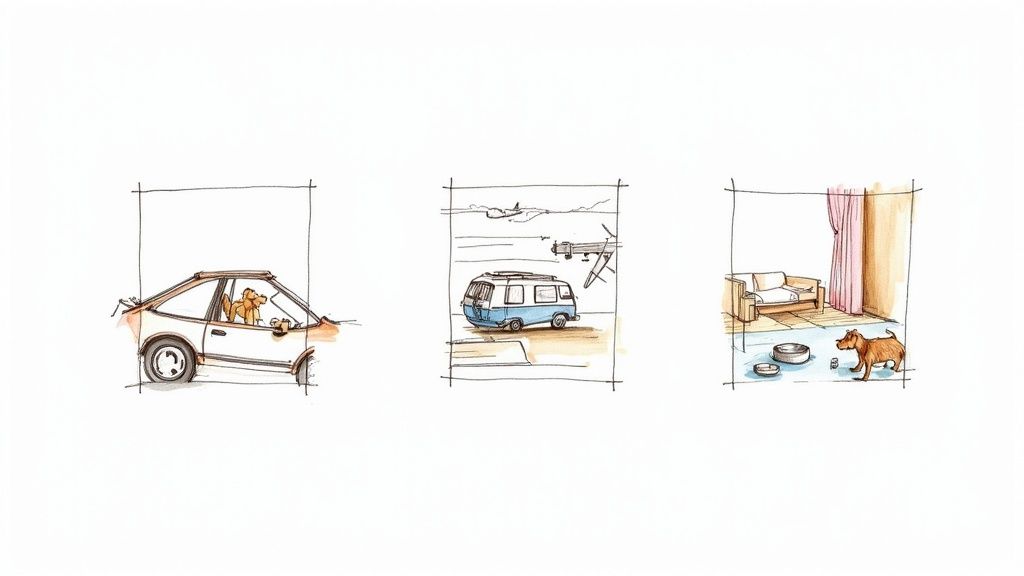
Whether you're packing up the car or heading for the airport, your calm and collected energy is contagious. Your pet is looking to you for cues, so a steady hand goes a long way.
Making a Road Trip Work
Driving gives you the most control over your pet’s comfort, which is a massive plus. The key to a successful road trip is sticking to a routine and building in plenty of breaks.
Schedule Your Pit Stops: It’s a good idea to stop every 2-3 hours. These aren't just quick potty breaks. Let them stretch, sniff around a new patch of grass, and get a drink of water. And of course, always keep them on a secure leash.
Think Small Meals: A full belly is a recipe for car sickness. It's much better to offer small, light meals to keep their stomach from getting upset during the drive.
Keep the Cabin Comfortable: Make sure there's good airflow and the temperature is just right. And it should go without saying, but never leave your pet alone in a parked car. Not for a second.
This simple rhythm helps create a sense of normalcy on a very not-normal day, preventing restlessness and anxiety from taking over.
Getting Through the Airport
Flying introduces a whole new level of logistics. The best advice is to arrive early. Give yourself at least 2-3 hours before a domestic flight. The last thing you need is to be sprinting through the terminal.
Once you’re at the check-in counter, you’ll present the health certificate and all that other paperwork you’ve carefully assembled. The airline staff will give the carrier a once-over to make sure it’s up to their standards. If your pet is flying as cargo, this is where you’ll say goodbye for a bit as they’re taken to a designated animal holding area.
As soon as you land, make a beeline for the pet pickup location. This might be at the airline's cargo facility or a special baggage claim office. Getting them back in your arms is the final piece of the travel puzzle.
The moment you walk into your new home, your top priority shifts entirely to your pet. Those first 24-48 hours are absolutely crucial for helping them feel secure and begin to acclimate.
Creating a Sense of Home
Your pet just went through a huge ordeal. New sights, new smells, new sounds—it's a lot to process. Be patient. Rushing this part can create long-term anxiety and behavioral problems.
The very first thing you should do is set up their "safe zone." Pick a quiet room—a spare bedroom or a corner of the living room—and unpack their stuff first. Set up their bed, food and water bowls, a couple of their favorite toys, and the litter box if you have a cat. Let them explore this small, contained area before opening up the rest of the house.
Most importantly, get back to your routine as quickly as possible. Feed them, walk them, and play with them at the usual times. That predictability is incredibly comforting. It sends a clear message: "The scenery is different, but our life is still the same." That's how you turn a new house into a real home.
Your Top Pet Transport Questions, Answered
Even with a perfect plan, it's natural for a few "what if" questions to pop up as moving day gets closer. Let's walk through some of the most common concerns we hear from pet parents to help you feel ready for the journey ahead.
A big one is age. Is my puppy too young or my dog too old to travel? Generally, puppies and kittens under 8-10 weeks old aren't quite ready for a long-distance move. For senior pets, especially those with chronic health conditions, a detailed chat with your vet is a must to make sure they're fit for the trip.
So, How Much Will This Actually Cost?
The price for moving a pet cross-country can swing wildly. Your final cost really boils down to the distance, your pet's size, and how you choose to get them there.
Driving Yourself: This is almost always the cheapest route. Your main costs are just gas, pet-friendly hotels, and any extra supplies you need for the road.
Hiring Ground Transport: Using a professional pet shipper can run anywhere from a few hundred to well over a thousand dollars. It all depends on the route, the company, and the level of service you choose.
Flying Your Pet: If you're flying, you'll have the airline's pet fee (usually $125-$200 for in-cabin travel), the cost of an airline-compliant carrier, and the vet visit for a health certificate. Flying a pet as cargo is a different beast and almost always costs significantly more.
Can I Move All My Pets at Once?
Of course! Moving an entire furry family is something people do all the time. If you’re driving, you’ve got the most control. The key is making sure everyone has their own safe, secure space—think separate carriers—to keep stress levels down and prevent any in-transit squabbles.
Professional ground transport services are pros at handling multiple animals. Just be upfront about your needs when you book. Flying gets a bit more complicated, as most airlines limit how many pets one person can bring in the cabin, often just one or two.
The goal is simple: a safe trip with as little stress as possible for everyone involved. If you're ever in doubt, your first call should be to your veterinarian. They know your pet's health and personality and can give you advice tailored specifically to them.
At the end of the day, a smooth move comes down to good preparation. By thinking through these questions and tailoring the plan to your pet, you’re paving the way for a much happier transition. It’s a big job, but seeing your best friend exploring their new home makes every bit of effort worth it.
Don't let the paperwork become a roadblock. Passpaw was built to streamline the health certificate process, giving veterinary teams the tools to manage everything with confidence and accuracy. Make sure every detail is perfect for a worry-free move. Learn more and see how it works.
More articles
From regulatory changes to best practices for veterinarians and pet owners, our resources keep you ahead of the curve.