Are you a team member in a veterinary practice?
Are you a pet parent planning a trip with your furry pal?
Top 10 Adventurous Things to Do With Dogs in 2026
Ready to move beyond the usual walk around the block? Finding new and exciting things to do with your dog is one of the best ways to strengthen your bond, provide crucial mental stimulation, and keep them happy and healthy throughout their life. A tired dog is a good dog, but a fulfilled dog is a happy one. This guide is packed with ten great ideas, ranging from structured training programs to thrilling international travel adventures.
This isn't just a simple list; it's a detailed guide designed to give you actionable steps for each activity. We will explore a wide spectrum of engaging pursuits, from competitive dog sports and therapy work to the practicalities of canine relocation and genetic health management. For pet owners, veterinarians, and even pet travel agencies, this resource offers clear insights into the diverse world of canine activities.
Whether you have an energetic puppy eager for a challenge or a seasoned senior companion looking for a new purpose, you will find fresh ideas to enrich your life together. We'll provide specific tips on how to get started, what to expect, and how to ensure every experience is safe and enjoyable. Let's get this ball rolling and discover some amazing things to do with dogs that you can share with your best friend.
1. At-Home Brain Games and Enrichment
Physical exercise is important, but mental workouts are just as crucial for a well-rounded and happy dog. At-home enrichment turns your living space into a canine discovery zone, providing stimulating and fun things to do with dogs, especially on rainy days or when you have a low-energy pup. These activities challenge their problem-solving skills, prevent boredom-related behaviors like chewing, and strengthen the bond you share.
Transforming everyday objects into engaging puzzles is a simple way to start. It’s less about expensive toys and more about encouraging your dog’s natural instincts to sniff, forage, and think.
DIY Brain Game Ideas
You don't need fancy equipment to get started. Simple household items can become excellent tools for mental stimulation.
The Muffin Tin Puzzle: Place a few tasty treats in a muffin tin and cover each cup with a tennis ball or another toy. Your dog must figure out how to remove the balls to get the reward.
Snuffle Mat Fun: Hide kibble or small treats within the fabric strips of a snuffle mat. This encourages your dog to use their powerful nose to forage for their food, which is a calming and rewarding activity.
The Shell Game: Use three non-see-through cups and place a treat under one. Shuffle them around and let your dog sniff out which cup is hiding the prize.
Tidy Up Time: Teach your dog to "clean up" by dropping their toys into a designated basket. This combines a useful command with a fun game.
Pro Tip: Keep training and game sessions short and sweet, around 5-10 minutes. This prevents your dog from getting frustrated or bored, ensuring the experience stays positive and engaging. End on a high note when they successfully complete a task.
Always supervise your dog when introducing a new puzzle toy to ensure they are playing safely. As they get better, you can increase the difficulty to keep them challenged and prevent them from getting "board." This is a fantastic way to tire out a busy mind and build a confident, clever companion.
2. Agility Training and Competition
Agility training is a fun and rewarding dog sport where you guide your dog through a pre-set obstacle course. This thrilling activity involves navigating jumps, tunnels, weave poles, and A-frames against the clock. It’s an excellent thing to do with dogs that builds confidence, improves off-leash listening skills, and provides a great outlet for both physical and mental energy. The teamwork required creates an incredible bond between you and your canine athlete.
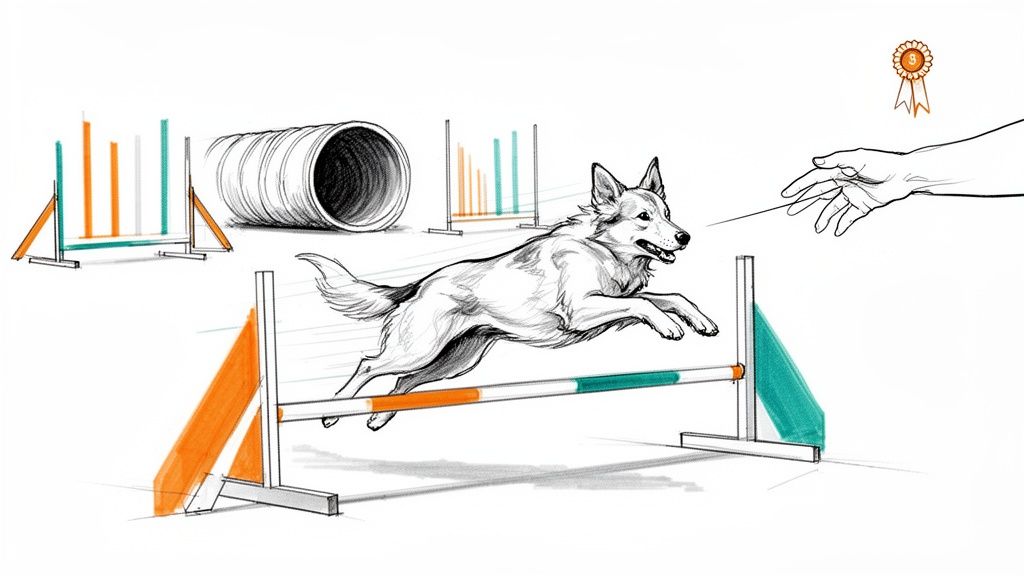
Beyond being a fun hobby, agility develops impressive coordination and focus. Whether you hope to compete in official events like those hosted by the American Kennel Club (AKC) or simply want a new challenge, agility offers a structured way to play and learn together.
Getting Started in Agility
Jumping into agility requires a foundation of safety and basic training. Before you begin, check that your dog is physically ready for this high-impact sport.
Foundation First: Your dog should have solid obedience skills, such as "sit," "stay," and "come." A strong recall is especially important for off-leash work in a distracting environment.
Health is a Priority: Talk to your veterinarian before starting. Agility can be physically demanding, so it's a good idea to confirm your dog's joints and overall health are up to the task.
Find a Pro: Seek out a qualified trainer or a local agility club. Professional guidance helps ensure you and your dog learn the proper techniques to perform obstacles safely and prevent injuries.
Start Slow: Begin with low, simple obstacles. The goal is to build confidence and make the experience fun, gradually increasing the difficulty as your dog's skills and enthusiasm grow. For those who love exploring, don't miss these valuable tips for backpacking with dogs.
Pro Tip: Keep all health and vaccination records organized and accessible. If you decide to enter competitions, you'll often need to provide them as proof of your dog's fitness to participate.
Agility training is a journey, not a race. By focusing on positive reinforcement and celebrating small victories, you'll build a confident and nimble partner, ready for any adventure. If you travel for trials, researching pet-friendly accommodations ahead of time can make the trip stress-free; you can easily find dog-friendly hotels in New Jersey and other locations with a little planning.
3. Hiking and Outdoor Trail Adventures
Taking your canine companion on a hike is one of the most rewarding things to do with dogs, offering a perfect blend of physical exercise and sensory stimulation. Exploring forests, mountains, and coastal trails gives your dog a chance to experience new sights, sounds, and smells far beyond their daily walk. This shared adventure promotes good cardiovascular health, provides valuable mental engagement, and deepens the bond you have with your furry explorer.

From the mountain trails of Colorado to the coastal paths of California, nature provides an incredible playground. It’s an opportunity for your dog to navigate varied terrain, which builds confidence and physical conditioning in a fun, natural way.
Trail Safety and Preparation Tips
Before you "em-bark" on your journey, proper preparation is key to ensuring a safe and enjoyable experience for both of you.
Veterinarian Check-Up: It’s a good idea to check with your vet before attempting strenuous hikes. Ensure your dog's vaccinations are up-to-date and discuss regional health risks, like Lyme disease or leptospirosis.
Start Small: Begin with shorter, less challenging trails to build your dog's stamina. Gradually increase the distance and difficulty as their fitness improves.
Pack the Essentials: Always carry a portable water bowl, extra water, a pet first-aid kit, and poop bags. A well-fitted doggy backpack can allow larger dogs to carry their own supplies.
Trail Etiquette: Keep your dog leashed unless you are in a designated off-leash area and are confident in their recall. Always yield to other hikers, horses, and wildlife.
Pro Tip: Schedule a post-hike check-up for your dog. Look for ticks, burrs, cuts on their paws, or any signs of soreness. This quick inspection helps catch any potential issues before they become serious problems.
Careful planning transforms a simple walk into a grand adventure. For more guidance on finding the perfect route, you can explore a curated list of dog-friendly hiking trails. With the right preparation, you and your dog can safely explore the great outdoors and create lasting memories together.
4. Dog Sports and Dock Diving
For dogs that love to leap and live for the water, dock diving is a thrilling and athletic activity that takes fetch to the next level. This competitive sport involves dogs jumping from a dock into a body of water, with judges measuring the distance or height of the leap. It’s a great way for high-energy, water-loving breeds to channel their enthusiasm and one of the most exciting things to do with dogs in a structured, competitive setting.
The sport is governed by organizations like North American Diving Dogs (NADD) and DockDogs, which host events nationwide. These competitions provide a safe, regulated environment for your canine athlete to shine, building confidence and strengthening your teamwork.
Preparing for Competition
Before your dog makes a splash, it's a good idea to prepare them physically and have their paperwork in order. Health and safety are very important, especially when traveling to events.
Veterinary Clearance: Always get a veterinarian's approval before starting any high-impact sport to ensure your dog is physically sound.
Health and Vaccination Records: Official competitions usually require up-to-date health records. Keep vaccination and health certificates organized and ready for registration, especially for events that cross state lines.
Preventative Care: Regular ear cleaning and skin checks are important for dogs who spend a lot of time in the water to prevent infections.
Conditioning: Build your dog's swimming stamina and jumping strength gradually. Start with short distances and focus on a positive, fun experience.
Pro Tip: Locate a local club or training facility to practice. Trainers can help you perfect your throwing technique to get the best jump from your dog, and your pup can get used to the dock and water in a controlled environment.
Always monitor your dog’s health before and after events. With the right preparation, you and your furry friend can make a big splash in the world of dock diving and create some unforgettable memories. This sport isn't just a competition; it's a celebration of your dog’s natural athleticism.
5. Service Dog Training and Certification Programs
For some dogs and their handlers, the most meaningful thing to do together is to embark on the journey of service dog training. This path involves highly structured programs where dogs are taught to perform specific, life-altering tasks for individuals with disabilities. These incredible animals can become guide dogs for the blind, mobility assistance dogs, or psychiatric service dogs, offering independence and support to their human partners. This is far more than a hobby; it’s a profound partnership built on trust, training, and dedication.
Organizations like Guide Dogs for the Blind and Canine Companions for Independence have well-established, rigorous programs that show the high standard of this work. The process requires extensive health screening, temperament testing, and ongoing skill development, ensuring only the most suitable dogs proceed.
Maintaining Health and Records
Careful documentation is a cornerstone of a service dog's working life, helping to show they meet public access expectations and are fit for duty. This isn't just about initial puppy check-ups; it's a continuous process.
Comprehensive Health History: From the first vet visit, every vaccination, health screening, and medical event should be documented.
Regular Veterinary Assessments: Schedule routine check-ups throughout the dog's training and working career to monitor their health and ability to perform their tasks.
Travel Documentation: If the handler and dog travel, especially internationally, all health certificates and vaccination records should be current. If your travel plans include flying, it's wise to research which airlines allow pets in the cabin ahead of time.
Certification and Access: Keep certifications and health documents needed for public access organized and readily available.
Pro Tip: Using a digital health wallet like Passpaw can help manage this "paw-perwork" by keeping all vaccination records, health certificates, and incident reports in one secure, accessible place. This is especially helpful if the handler relocates to a new state or country.
Properly preparing a service dog for their role is a serious commitment, but it’s one of the most rewarding things to do with dogs. It forges a strong bond while providing life-changing assistance.
6. Dog Shows and Conformation Competitions
For owners of purebred dogs, conformation shows offer a structured and competitive outlet that celebrates a breed's history and form. These events are not just about beauty; they evaluate how well a dog matches its specific breed standard in terms of structure, movement, and temperament. Participating in shows like the Westminster Dog Show or Crufts is a fascinating thing to do with dogs that deepens your understanding of your canine's heritage and function.
This pursuit transforms routine grooming and training into a dedicated art form. It strengthens the handler-dog bond through precise communication and teamwork, culminating in a few proud moments in the show ring. The journey involves careful preparation, from conditioning your dog's coat to practicing their "stack" and gait.
Preparing for Show Day
Success in the show ring starts long before you arrive. Diligent health and travel preparation is very important, as organizers and kennel clubs have their own requirements.
Health Clearances First: Before starting a show season, get necessary health clearances from your veterinarian. Many breed clubs suggest specific genetic and physical health screenings.
Vaccination Records: Keep all vaccinations current and have organized records ready for inspection at every venue. Requirements can vary between clubs and locations.
International Travel Docs: For shows abroad, such as in Europe or Asia, you will likely need international health certificates. Start this process well in advance, as it can be complex.
Travel Comfort: When road-tripping to competitions, ensuring your vehicle is prepared for your champion is key. A quality dog seat cover keeps your car clean and gives your dog a comfortable space to relax before the big event.
Pro Tip: Create a "show binder" for each dog containing their pedigree, registration, vaccination records, health clearances, and travel documents. Also, keep a digital copy accessible on your phone for easy access on the go.
Always schedule a pre-show check-up with your vet to make sure your dog is in peak condition. Maintaining these detailed health and travel records isn't just for following rules; it's a cornerstone of responsible ownership and helps ensure your canine athlete is happy, healthy, and ready to shine.
7. Therapy Dog Programs and Certification
If your dog has a calm temperament and a loving personality, becoming a certified therapy dog team might be one of the most rewarding things to do with dogs. This advanced form of volunteering involves training your dog to provide comfort and support in settings like hospitals, nursing homes, schools, and mental health facilities. It’s a meaningful way to share your dog’s special gift of companionship with those who need it most.
Unlike service dogs, which are trained to perform specific tasks for one person with a disability, therapy dogs offer affection and comfort to many people. The certification process helps ensure your dog has the right disposition and is healthy enough to work safely in sensitive environments like healthcare facilities.
Getting Started with Certification
Becoming a therapy dog team requires dedication to training, health, and documentation. Organizations like Pet Partners and the Alliance of Therapy Dogs have specific requirements to ensure safety and professionalism.
Behavioral Evaluation: Your dog must pass an assessment to show they are calm, gentle, and well-behaved around strangers, medical equipment, and in unfamiliar environments.
Health and Documentation: Therapy dogs need extensive health records, including up-to-date vaccinations and regular vet check-ups. This is crucial for visiting places with vulnerable individuals.
Training Commitment: You and your dog will be tested as a team. This means you need to learn how to read your dog’s body language and advocate for them during visits.
Find a Program: Look for established organizations like Therapy Dogs International or local hospital-run programs to guide you through the certification and placement process.
Pro Tip: Keep all your dog's health and training certificates in one organized place. Facilities often require specific documentation before a visit, and being prepared makes the process much smoother. Keeping records tidy will prevent a "ruff" start.
Joining a therapy dog program is a profound way to strengthen your bond while making a real difference in your community. It transforms your shared time into a powerful act of kindness, bringing smiles and comfort wherever you and your furry partner go.
8. Canine Rehabilitation and Physical Therapy
While we often focus on fun activities, sometimes the most important thing to do with your dog is to support their physical recovery. Canine rehabilitation and physical therapy are specialized fields dedicated to helping dogs heal from injuries, recover after surgery, or manage chronic conditions like arthritis. These structured programs use therapeutic exercises to improve mobility, reduce pain, and restore quality of life, guided every step of the way by veterinary professionals.
This isn't about pushing your dog too hard; it’s about gentle, controlled movements that rebuild strength and confidence. From post-surgery care to managing the aches of old age, physical therapy provides a clear, supportive path forward, strengthening not just their body but also your shared bond through a journey of healing.
Common Rehabilitation Scenarios
A veterinarian or certified canine rehabilitation professional can create a plan for various conditions. These programs are always tailored to the individual dog's needs and diagnosis.
Post-Surgical Recovery: Following orthopedic surgeries like ACL repair, a rehabilitation program helps ensure a successful outcome by carefully managing exercise and rebuilding muscle.
Arthritis Management: For senior dogs, hydrotherapy (underwater treadmill) provides low-impact exercise that eases joint pain and maintains muscle mass.
Injury Healing: Dogs with spinal cord injuries or soft tissue damage can regain function and mobility through targeted land-based exercises and therapeutic massage.
Sports Medicine: Athletic dogs can benefit from conditioning programs to prevent injuries or recover more quickly from sports-related strains.
Pro Tip: Always work with a certified professional. Organizations like the International Association of Canine Rehabilitation Professionals can help you find qualified specialists. This helps ensure your dog receives safe and effective care based on a proper diagnosis.
Properly managing a rehabilitation program requires careful record-keeping of treatments and progress. Always follow the prescribed plan exactly as instructed, and schedule regular reassessments with your vet to adjust the therapy as your dog heals. This dedicated care is one of the most loving and impactful things to do with dogs who need it most.
9. Breeding Programs and Genetic Health Management
For those deeply dedicated to a specific breed, participating in a responsible breeding program is one of the most impactful things to do with dogs. This advanced commitment goes beyond simple ownership, focusing on improving a breed's health, temperament, and conformation for future generations. Responsible breeding is a science and an art, requiring careful planning, health testing, and a profound respect for the dogs involved.
The goal is to produce puppies that are healthy, well-socialized, and excellent representatives of their breed standard. This involves working with organizations like the American Kennel Club (AKC) and using health registries such as the Orthopedic Foundation for Animals (OFA) to make informed breeding decisions.
Key Steps in Responsible Breeding
A structured approach is vital for the health and welfare of both the parents and their future litters. It's about preserving the best traits while actively working to reduce the incidence of hereditary diseases.
Comprehensive Health Screening: Before breeding, dogs should undergo extensive health testing. This includes genetic screening for breed-specific conditions, as well as evaluations for issues like hip and elbow dysplasia (OFA or PennHIP) and eye disorders (CERF).
Maintain Detailed Records: Keep meticulous documentation of pedigrees, health clearances, and temperament evaluations for every dog. This lineage information is critical for tracking genetic diversity and health outcomes over generations.
Follow Breed Standards: Adhere to the official breed standard as a blueprint for conformation and temperament, aiming to produce dogs that are not only beautiful but also mentally and physically sound.
International Health Certificates: If breeding or selling puppies across borders, check that all health documentation, vaccinations, and certifications are compliant with the destination country's regulations.
Pro Tip: Always prioritize health and temperament over trends or aesthetics. A responsible breeder’s primary duty is to the welfare of the breed and the individual dogs, ensuring each puppy is set up for a long, healthy, and happy life.
Participating in a breeding program is a serious, long-term commitment that requires a significant investment in time, money, and education. When done ethically, it's a deeply rewarding endeavor that helps secure a "pawsitive" future for the breeds we love.
10. Canine Expat Relocation and Resettlement Services
For the ultimate "thing to do with your dog," sometimes the adventure is moving to a new country altogether. International relocation is a complex journey, but professional canine expat and resettlement services can manage the entire process. These specialized services handle health compliance, documentation, transportation logistics, and quarantine requirements, making a difficult task more manageable and helping your best friend arrive safely at your new home.
Moving abroad with a pet involves much more than just booking a flight. Each country has its own import rules to prevent the spread of disease, and navigating this "paw-perwork" requires careful planning. Professional relocators act as your project manager, making sure every detail is covered for a smooth transition.
Key Steps in International Pet Relocation
Successfully moving your dog overseas requires a long-term, step-by-step approach. Professional services help coordinate these critical milestones.
Health and Vaccination Compliance: This is the foundation of the process. It involves confirming your dog’s microchip is ISO-compliant, updating all vaccinations (like rabies), and potentially performing blood tests, such as a rabies titer test, months in advance.
Documentation and Endorsements: Services help gather, translate, and obtain official government endorsements (like from the USDA) for all required documents, including international health certificates.
Quarantine and Transport Logistics: They book space on pet-friendly airlines, arrange for IATA-compliant travel crates, and manage any mandatory quarantine stays upon arrival in countries like Australia or Japan.
Post-Arrival Support: Some services also offer assistance with acclimatization, helping your dog adjust to their new environment and routine after the long journey.
Pro Tip: Start the relocation process at least six to twelve months before your planned move. Some countries require blood tests to be performed a minimum of 180 days before entry, so early planning is crucial to avoid delays.
Using a relocation service transforms a stressful ordeal into a structured plan. It provides peace of mind, knowing that experts are handling the critical details, allowing you to focus on your own move while ensuring your furry family member’s journey is as safe and comfortable as possible.
Top 10 Dog Activities Comparison
Activity | Implementation Complexity 🔄 | Resource Requirements ⚡ | Expected Outcomes 📊⭐ | Ideal Use Cases 💡 | Key Advantages ⭐ |
|---|---|---|---|---|---|
International Dog Travel Adventures | Very high — multi-country regulations, quarantine planning 🔄 | High — vet clearances, certifications, logistics, costs ⚡ | Enables lawful cross-border travel; enriched owner-dog experiences; compliance reduces denial risk 📊 | Relocation, multi-country vacations, international shows 💡 | Facilitates legal travel and global experiences; strengthens owner-dog bond ⭐ |
Agility Training and Competition | Medium — structured courses and competitive rules 🔄 | Medium — training time, facility/trainer fees, health checks ⚡ | Improved fitness, obedience, and competition results; injury risk if mismanaged 📊 | Sport-focused owners and competitive handlers 💡 | Builds fitness, teamwork, and competitive outlet ⭐ |
Hiking and Outdoor Trail Adventures | Low–medium — trail planning and health prep 🔄 | Low — basic gear, vaccinations, parasite prevention ⚡ | Increased cardiovascular health and mental stimulation; exposure to/environmental risks 📊 | Recreational outings, day hikes, low-cost exercise 💡 | Accessible low-cost exercise with natural enrichment ⭐ |
Dog Sports and Dock Diving | Medium — technique training and water safety protocols 🔄 | Medium–high — pool/facility access, travel, event fees ⚡ | High engagement, muscle development, competitive ranking 📊 | Water-loving breeds and competitive divers 💡 | High excitement and low-impact conditioning for swimmers ⭐ |
Service Dog Training and Certification Programs | Very high — lengthy training, legal/regulatory compliance 🔄 | Very high — specialized trainers, medical screening, long time/cost ⚡ | Trained assistance leading to greater independence and certified access 📊 | Individuals with disabilities; formal assistance programs 💡 | Life-changing support; standardized accountability and public access ⭐ |
Dog Shows and Conformation Competitions | High — breed standards, presentation, travel compliance 🔄 | High — grooming, entry fees, travel, prep time ⚡ | Breed recognition, titles, networking; potential stress from competition 📊 | Breeders, professional handlers, show enthusiasts 💡 | Preserves breed standards and offers prestige/recognition ⭐ |
Therapy Dog Programs and Certification | High — behavioral testing and ongoing health monitoring 🔄 | Medium — training/certification and periodic health checks ⚡ | Emotional/psychological support in institutions; structured visits with safety controls 📊 | Hospitals, schools, nursing homes, community programs 💡 | Provides community impact and therapeutic benefits ⭐ |
Canine Rehabilitation and Physical Therapy | Medium–high — individualized protocols and medical oversight 🔄 | High — specialized clinics, repeated sessions, veterinary supervision ⚡ | Accelerated recovery, pain reduction, improved mobility and longevity 📊 | Post-surgical recovery, chronic conditions, sports injuries 💡 | Enhances recovery outcomes and quality of life for injured/aging dogs ⭐ |
Breeding Programs and Genetic Health Management | High — testing, lineage tracking, cross-jurisdiction compliance 🔄 | High — genetic tests, long-term recordkeeping, ethical oversight ⚡ | Healthier bloodlines, reduced hereditary disease, traceable pedigrees 📊 | Responsible breeders, breed clubs, genetic improvement projects 💡 | Improves breed health and protects breeder/buyer interests ⭐ |
Canine Expat Relocation and Resettlement Services | Very high — destination-specific regulations, quarantine, logistics 🔄 | Very high — multi-party coordination, transport, legal docs, cost ⚡ | Safe, legal international relocation; minimized denials and delays 📊 | Expat families, military relocations, international employees 💡 | End-to-end relocation support that reduces stress and compliance risk ⭐ |
Your Next Adventure Awaits
We’ve journeyed through a wide world of things to do with dogs, from the focused precision of agility courses to the heartwarming work of therapy programs. This list shows that the bond you share with your canine companion can be the foundation for countless incredible experiences. The options are as diverse as our dogs themselves, offering something for every breed, age, and energy level.
The common thread woven through all these activities, whether it’s a hike on a local trail or preparing for an international show, is the shared experience. Each new challenge you tackle together, every skill you learn side-by-side, deepens your communication and strengthens your partnership. It’s about more than just keeping your dog busy; it’s about building a richer, more fulfilling life for you both.
Key Takeaways for Your Canine Companion
As you consider all the possibilities, remember that the "best" activity is the one that brings joy to both you and your dog. It's about finding that perfect match for your dog's natural instincts, personality, and physical condition.
Assess, Don't Assume: Don't push a laid-back Basset Hound into high-intensity dock diving. Observe your dog’s natural tendencies. Do they love to sniff? Try nose work. Do they have boundless energy? Agility might be their calling.
Safety is the Foundation: Before starting any new high-impact sport or strenuous activity, a check-up with your veterinarian is a good idea. They can help you understand your dog’s physical limits and ensure you’re setting them up for success, not injury.
Patience is Key: Whether you’re teaching a simple "stay" or navigating the complexities of service dog training, progress happens at your dog's pace. Celebrate the small victories and remember that the training process itself is a valuable bonding activity.
The most memorable moments often aren't about reaching the destination or winning the ribbon. They're about the quiet understanding, the enthusiastic tail wags, and the shared effort along the way.
Turning Ideas into Action
Feeling inspired? The best way to start is to simply pick one idea and give it a try. You don’t need to commit to becoming a world champion overnight.
Start Small: Choose a low-commitment activity from our list. Try a beginner’s scent work class online or find a local hiking group that welcomes dogs. See what sparks your dog's interest.
Connect with a Community: Search for local clubs or online groups dedicated to your chosen activity. Fellow enthusiasts are an invaluable source of advice, support, and friendship. From breed-specific meetups to dog sport organizations, there's a community for nearly every interest.
Plan for the Big Adventures: For those grander ambitions, like international travel or competing abroad, planning is everything. The administrative side, especially documentation, can seem daunting. This is where preparation pays off, ensuring your journey is smooth and stress-free.
Ultimately, exploring new things to do with dogs is an investment in your relationship. It builds confidence (for both of you!), provides essential mental and physical stimulation, and creates a treasure trove of memories that will last a lifetime. Your dog’s world is only as big as you make it. So, grab the leash, pack the treats, and step out the door. Your next great adventure is waiting for you both.
Planning an international trip with your pet? Don't let complicated paperwork stand in your way. Passpaw helps you and your veterinarian prepare and manage all the necessary travel documents, ensuring every detail is correct for your destination. Visit Passpaw to make your next global adventure with your dog a reality.

More articles
From regulatory changes to best practices for veterinarians and pet owners, our resources keep you ahead of the curve.