Are you a team member in a veterinary practice?
Are you a pet parent planning a trip with your furry pal?
Your Guide for Pets Entering Canada
Bringing your furry family member along for a move to Canada is a big deal, but it takes a bit of planning to make sure the process is smooth for everyone. Think of this guide as your roadmap, breaking down the entire journey into a simple, manageable timeline. Let's get your companion ready for their Canadian adventure.
Your Pet's Journey to Canada: A Timeline for Success
Moving to Canada with your pet can feel like a huge project, but it’s much less scary when you break it down into a clear schedule. Waiting until the last minute is your biggest enemy here, since many steps have specific timing rules set by the Canadian Food Inspection Agency (CFIA).
I can't say this enough: start early. Kicking things off well in advance is the best way to get all your ducks—or dogs and cats—in a row. A well-planned approach cuts down on stress for both you and your pet, turning a tricky task into a series of simple, doable steps.
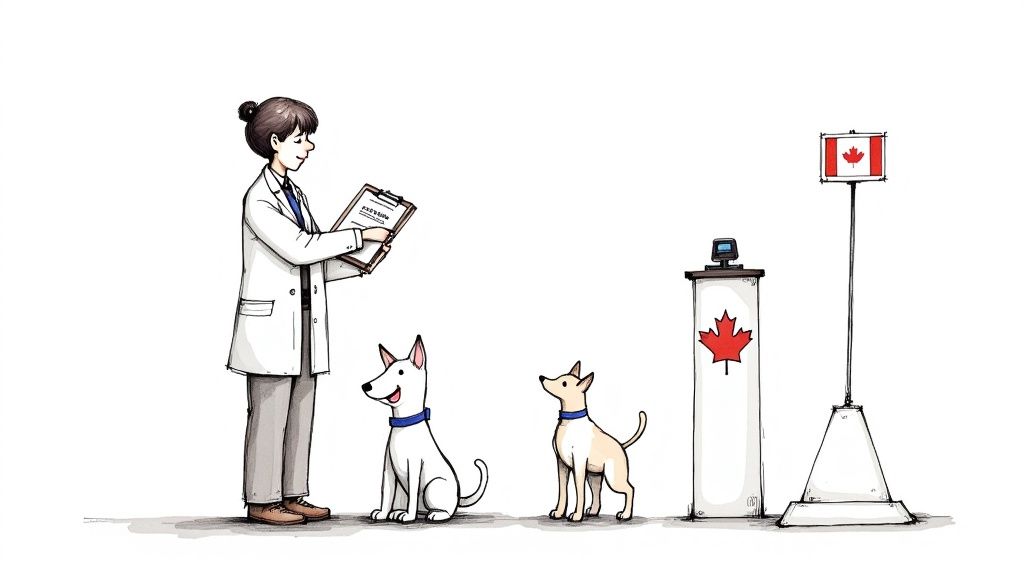
This timeline is designed to help you see the key milestones, from that first vet visit all the way to your arrival at the Canadian border.

As you can see, the journey really begins months before your travel date, with the paperwork becoming the main focus as you get closer to your departure.
The Key Stages of Preparation
The whole process really comes down to three main phases. First up is the initial planning and health preparation stage, which you should start at least three months before your travel date. This is your time to schedule a chat with your vet, double-check microchip details, and go over your pet's vaccination history.
Next comes the documentation phase. About one to two months out, your focus should shift to gathering and finalizing all the necessary paperwork. We're talking about things like the international health certificate and proof of rabies vaccination. If you're coming from the US, our pet travel planner for United States to Canada offers a detailed breakdown.
The final stage is the travel and arrival period. This covers the last-minute vet check-up and getting ready for the inspection process when you land in Canada. Honestly, success just comes down to hitting each deadline.
Beyond Canada's specific rules, learning the general best practices for how to travel with pets can make a world of difference. A little planning ahead makes the experience much less ruff for everyone involved.
Pet Import Preparation Timeline
To make things even clearer, here’s a quick-glance table breaking down the key actions and when you should tackle them.
Timeframe | Key Action | Primary Focus |
|---|---|---|
3+ Months Out | Initial Vet Consultation | Review vaccination history, confirm microchip, and map out a health plan. |
1-2 Months Out | Document Preparation | Gather all required paperwork, including the international health certificate and rabies vaccination certificate. |
1 Month Out | Finalize Travel Logistics | Confirm airline pet policies, book flights, and purchase a travel-compliant crate. |
1-2 Weeks Out | Final Vet Visit | Get the final health check and have your vet sign the official documents. |
Day of Travel | Pre-Flight Prep | Ensure your pet is comfortable, fed (lightly), and has access to water. Have all documents handy. |
Arrival | Border Inspection | Present all paperwork to the Canada Border Services Agency (CBSA) for inspection. |
Following this timeline can help keep you on track and turn a potentially stressful process into a smooth, organized journey for you and your best friend.
Your Guide to Canada's Pet Import Rules
Figuring out the rules for bringing a pet into Canada can feel a little overwhelming at first. The good news? The Canadian Food Inspection Agency (CFIA) has laid out pretty clear guidelines, and they all depend on a few key facts about your furry travel companion.
The requirements change based on your pet’s species (dog or cat), its age, and where it's coming from. Nailing these details from the start is the secret to a smooth, stress-free entry into Canada.

Is Your Pet Personal or Commercial?
One of the first things you need to sort out is whether your animal is a personal pet or a commercial import. This is an important distinction because the rules and paperwork are completely different for each.
A personal pet is exactly what it sounds like—an animal you own and are bringing into the country with you. Commercial imports cover a lot more ground, including animals intended for resale, adoption, breeding, or research. Getting this wrong can cause major delays or even lead to your pet being turned away at the border, so it's a good idea to get this right from day one.
For most folks reading this, your animal will be a personal pet, which makes things much simpler.
Rabies Vaccination Is a Must
When it comes to your pet's health, Canada's top concern is rabies. With very few exceptions, both dogs and cats should be vaccinated against this disease before they can enter.
You'll need to have a valid rabies vaccination certificate ready to show at the border. This isn't just any vet record; it's an official document that usually has to meet some very specific CFIA criteria.
Here’s what that certificate should typically show:
Pet Identification: It should clearly identify your animal, listing its breed, sex, color, and weight.
Vaccine Details: The certificate should state that the pet received a rabies shot, including the trade name and serial number of the licensed vaccine.
Timing is Everything: It should show the date the vaccine was given and state how long the immunity lasts. If no duration is listed, it's often considered valid for only one year.
Veterinarian Signature: A licensed veterinarian should sign and date the certificate, including their name and clinic information.
It's a common mistake to think any vet record will do. The rabies certificate is a specific, formal document. If it's missing any of these details, your pet could face issues at the border.
Now, for puppies and kittens who are too young for the vaccine, the rules are a bit different. We’ll get into those specific situations a little later.
The Power of the Microchip
A microchip is your pet’s permanent ID, and it's another key item for a successful border crossing. Canada expects every pet to be identifiable, and a microchip is the standard way to do that.
Canada uses the ISO 11784/11785 standard for microchips, which are 15-digit chips that can be read by the standard scanners border officials use. If your pet has a different type of chip, it’s not a dealbreaker, but you will be responsible for bringing your own scanner that can read it. Honestly, it's just easier to get an ISO-compliant chip.
Getting an ISO-compliant microchip implanted before the rabies vaccination is a smart move. This simple step creates a clear link between your pet and their vaccine record that officials can easily trace. The chip number should be recorded correctly on all your paperwork, especially the international health certificate. For a deeper dive, check out our guide on the pet health certificate for travel and what it requires.
Getting Your Pet’s Travel Papers in Order
Think of your pet's paperwork as their passport to Canada. Getting every document perfectly organized isn't just a nice-to-have—it's key for a smooth, delay-free entry. This is where attention to detail really pays off, saving you a world of stress at the border.
And make no mistake, a lot of pets are making this journey. While exact figures are hard to pin down, one report found that over 6,189 dogs were brought into Canada by rescue groups alone in a single year, coming from at least 29 different countries. You can get a deeper look at the data in the Canadian National Canine Importation Working Group's findings.
That number only scratches the surface, showing just how many animals cross the border, each with its own stack of required documents. Let’s break down exactly what you need.
The International Health Certificate
This is the big one. The international health certificate is the main document a Canada Border Services Agency (CBSA) officer will likely ask for. It’s an official statement from a licensed veterinarian confirming your pet is healthy and fit for travel.
But this isn't just any vet note. To be valid, it usually must include very specific information:
Pet Identification: Your pet's species, breed, age, sex, color, and, most importantly, their microchip number.
Health Declaration: A clear statement from the vet that your pet is in good health and shows no signs of infectious disease.
Veterinarian Credentials: The document must be signed and dated by a licensed veterinarian in your home country.
Timing is everything here. The health certificate is often valid for a very narrow window of time before you arrive. If the final vet exam and the signature on the form fall outside that window, the entire document could be rejected. For more on the nitty-gritty details, check out our guide to the veterinary international health certificate.
Proof of Rabies Vaccination
Right alongside the health certificate, a valid rabies vaccination certificate is essential for most pets. This is your proof that your pet is protected against rabies, a top concern for Canadian authorities.
And this document needs to be detailed. A simple note saying "rabies shot" won't cut it.
It should clearly state:
The date the vaccine was given.
The vaccine's brand name and serial number.
The date the vaccination expires or its official duration of immunity.
The signature and contact info of the licensed veterinarian who gave the vaccine.
A common pitfall we see is a rabies certificate missing a small but important detail, like the vaccine’s serial number. Double-check this with your vet. An incomplete form can cause major headaches at the port of entry.
Paperwork for Puppies and Kittens
Bringing a puppy or kitten under three months old? They're too young for a rabies shot, so the rules are different. Instead of a rabies certificate, you’ll need proof of age.
This usually means getting an official document from your veterinarian that clearly states your pet's date of birth. The goal is simply to show border officials that your little one is, in fact, too young to have been vaccinated. Don't leave this to chance—get a formal letter.
While organizing all this can feel like a chore, creating a dedicated travel folder for your pet is a game-changer. Keep everything together: the health certificate, rabies certificate, proof of age (if needed), and a copy of the microchip registration. A little organization now will make your arrival far less hairy.
The Final Vet Visit Before You Travel
Alright, this is it. The final vet check-up is probably the single most important appointment in your pet's entire journey to Canada. This is the moment where all your careful planning comes together and the official paperwork gets its last, crucial sign-off.
Getting this visit right is the secret to a smooth, stress-free border crossing. Think of it less like a routine check-up and more like a strategy meeting to make sure every "i" is dotted and every "t" is crossed on that international health certificate. It's your last chance to spot any potential hiccups before they become real problems.

Preparing for the Appointment
A little prep work here goes a long, long way. Don't just show up and hope your vet knows what to do. Arrive organized and ready to go. It’s the best way to make sure nothing gets missed.
Start by gathering all of your pet's documents into one folder. Bring everything you’ve collected, even if you don't think you'll need it. This means the microchip registration, old vet records, and especially the original rabies vaccination certificate. It's a good idea to double-check the specifics for your proof of rabies vaccine to make sure it's ready to go.
Here’s a quick checklist of what to bring:
All Previous Paperwork: The original rabies certificate is a must, plus any other relevant health records.
Travel Details: Know your exact travel date and which Canadian port of entry you'll be using.
Health Certificate Form: Have the specific international health certificate form required for your pet ready.
A List of Questions: Write down any last-minute worries you have about the trip or the forms.
What Happens During the Exam
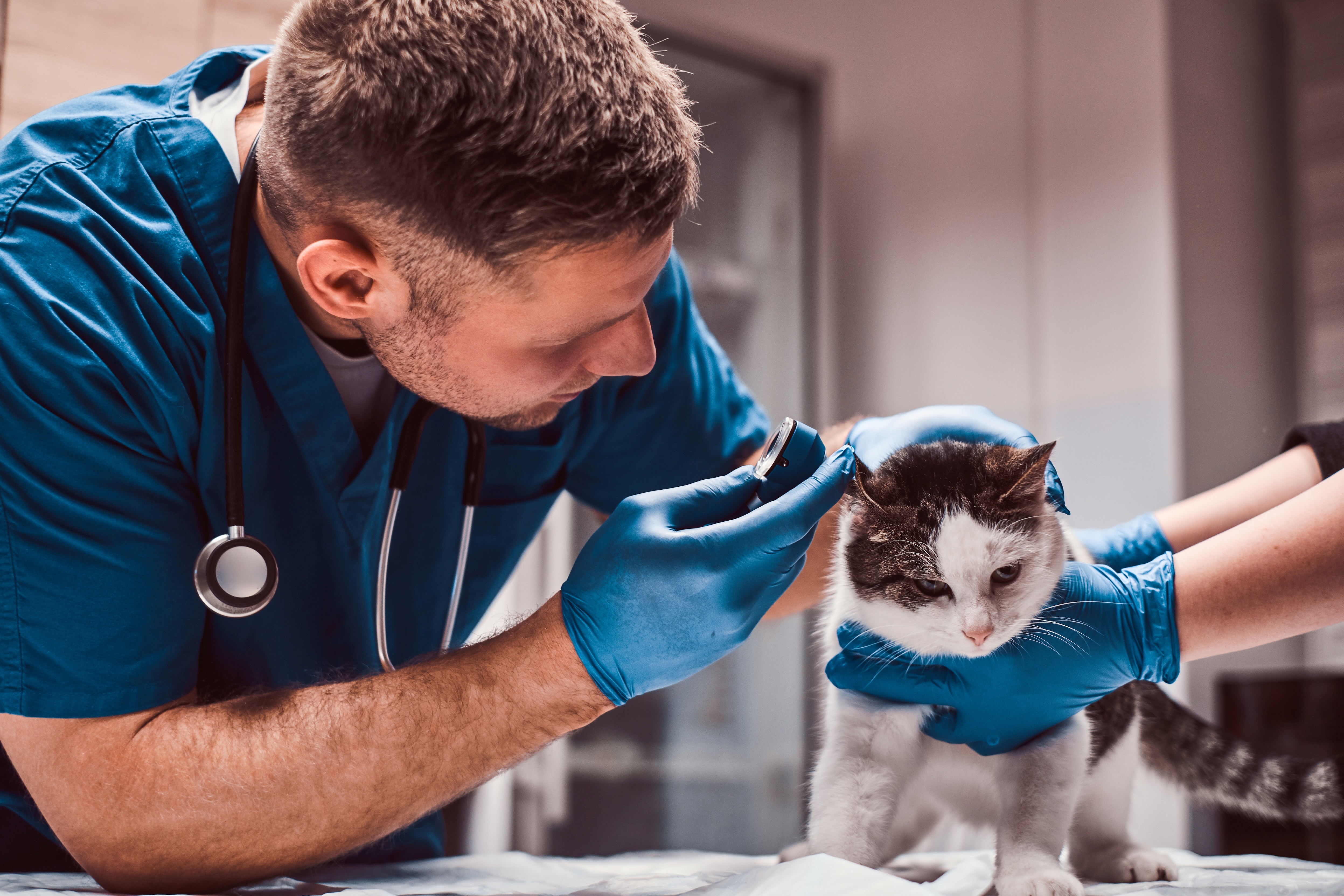
This isn't your pet's standard annual physical. The veterinarian will conduct a thorough exam focused entirely on confirming your pet is healthy and shows zero signs of any contagious diseases. They are, in a way, officially certifying your pet's fitness for international travel.
The vet will check your pet's overall condition, looking for anything that might raise a red flag for border officials. A huge part of this is scanning the microchip to confirm the number matches what's on all the paperwork. An incorrect or unreadable chip is a common—and completely avoidable—reason for entry issues.
The most important part of this visit is the final signature on the international health certificate. Your vet must complete, sign, and date this form within the very strict timeline set by the Canadian Food Inspection Agency (CFIA). If that date is even one day outside the required window, the entire document may be considered invalid.
The Importance of Parasite Prevention
While Canada might not have a strict requirement for parasite treatments, this final vet visit is the perfect time to take care of it. Travel is stressful on an animal's system, which can weaken their immunity and make them more open to pests.
Frankly, making sure your pet is protected is just part of being a responsible owner.
Flea and Tick Treatment: A good preventative protects your pet from the discomfort and diseases they could encounter during the trip or in their new Canadian home.
Deworming: Internal parasites are another thing you don't want to worry about. As part of this final health check, it's wise for any pet owner to be aware of potential issues, including the symptoms of worms in cats and dogs.
Your veterinarian can recommend and give the best treatments based on your pet’s specific needs and where you'll be living in Canada. It's a simple step that buys you a lot of peace of mind and helps ensure the process of pets entering Canada is as safe and healthy as possible.
Arriving in Canada and Clearing the Border
You’ve made it! After all the planning, paperwork, and travel, you and your pet have finally landed in Canada. Take a moment to breathe, but remember there’s one final, important step before you can head to your new home: the inspection at your port of entry.
This is your official welcome, and being prepared will make all the difference between a stressful final hurdle and a smooth, easy entry.
When your turn comes, you'll meet an officer from the Canada Border Services Agency (CBSA). This is the moment to have your pet's dedicated travel folder ready. Don't bury it in your checked luggage—you'll need it in your hand. The officer will ask to see all the documents you've so carefully prepared, and being organized immediately shows them you've done your homework.
What to Expect During the Inspection
The CBSA officer's main job is to verify that your pet meets all of Canada's import requirements. It’s less of a tough questioning and more of a check to confirm your pet is healthy and poses no risk.
The officer will focus on two key areas:
Document Review: They will carefully examine the international health certificate and the rabies vaccination certificate. They’re looking for correct dates, official signatures, and all the required pet identification details.
Pet Identification: Next, the officer needs to confirm that the pet with you is the same one listed on the paperwork. This is usually done by scanning your pet’s microchip and matching the number to the one recorded on the health certificate.
This process highlights how seriously Canada treats live animal imports. In recent years, these imports reached approximately USD 752 million, showing just how much animal movement there is across the border and why the verification process is so thorough. You can explore more data on Canada's live animal imports on tradingeconomics.com.
When a Deeper Look is Needed
In most cases, if your documents are complete and the microchip scan is successful, the inspection is quick and straightforward. However, sometimes a CBSA officer might need a second opinion and will call a veterinarian from the Canadian Food Inspection Agency (CFIA) for a secondary inspection.
A CFIA vet might get involved if:
Your paperwork is incomplete, expired, or has conflicting information.
The officer has any concerns about your pet's health or notices signs of illness.
The microchip cannot be read or doesn't match the documents.
This isn’t something to panic about, but it’s another reason why having every detail right from the start is so important. A CFIA inspection can lead to delays, and it’s a situation that is almost always preventable with good preparation.
A key takeaway from experienced travelers is to stay calm and patient. The officers are just doing their job to keep everyone safe. A friendly attitude and organized documents go a long way in making the process feel less like a big deal and more like a formality.
Paying the Import Inspection Fee
There is a small but important fee for the inspection when pets entering Canada. Be prepared to pay this right at the border. The cost is modest, but it's a required part of the process.
It’s a smart move to check the current fee on the CFIA website before you travel and have a credit card or Canadian currency handy. It’s one of those small details that’s easy to overlook but can cause a scramble if you're not ready.
Finally, a quick tip for a less stressful inspection: keep your pet as calm and comfortable as possible. If they are in a travel kennel, ensure it’s clean and they have access to water. Your own calm mood will help them stay relaxed, making the final step of your journey a purr-fect end to a long trip.
Sidestepping Common Mistakes and Special Cases
Even the most careful traveler can get tripped up. When it comes to getting your pet into Canada, a tiny oversight can grow into a major delay at the border. Knowing the common pitfalls and unique situations ahead of time is your best defense against that last-minute panic.
Honestly, the most frequent headaches we see come from simple but critical paperwork errors. It could be a rabies certificate that's missing the vaccine’s serial number or a health certificate signed just one day outside the required window. These details are everything to border officers, so triple-checking every single document before you travel isn't just a good idea—it's essential.

Navigating Special Exemptions
Not every pet’s journey fits the standard mold. The good news is that Canada has specific considerations for certain animals and situations, which can sometimes make the process a bit easier.
For example, if you're flying in from a country that Canada officially recognizes as rabies-free, the rules for your dog or cat might be different. In these cases, you may not need a rabies vaccination certificate, but you'll likely need proof that your pet has spent its entire life in that specific country.
Another important group to understand is assistance dogs.
Certified Service Animals: Properly recognized assistance dogs, like guide dogs, are subject to specific rules that can ease their entry.
Proper Documentation: You can't just say your dog is a service animal. You typically need the correct certification from an accredited organization proving it's a trained service animal.
Emotional Support Animals: This is a key distinction. Emotional support animals are not recognized as assistance animals under Canada's import regulations. They must meet all the standard entry requirements for any other pet.
The bottom line is to never assume your situation is standard. Always look into the specific rules for your pet's country of origin and their role, whether they're a family companion or a certified assistance animal.
The World of Exotic Pets
While this guide focuses on cats and dogs, it’s worth a quick mention that the rules for other animals are a whole different ballgame—and much stricter. Bringing birds, reptiles, or other non-traditional pets into Canada involves a completely different and far more complex set of regulations.
These animals, often just called "exotic pets," are governed by tight rules designed to protect Canada's native wildlife and agriculture. The trade in these species is surprisingly large; between 2014 and 2020, Canada imported around 1.8 million live wild vertebrates, with nearly half of them destined for the pet market. You can dive deeper into these trends in this detailed study on Canada's wildlife trade.
Bringing an exotic pet across the border usually requires special permits from multiple government agencies, and the process is anything but simple. If you're planning to move with a less common animal, start your research months—or even a year—in advance. You should be prepared for a much more involved process than what's laid out here for a cat or dog.
Common Questions About Bringing a Pet to Canada
Getting ready to move a pet to Canada always brings up a few tricky questions. We get these all the time from owners, so let's clear up some of the most common points of confusion.
How Long Is a Canadian Pet Health Certificate Valid For?
This is all about timing, and it can be a nail-biter. The window for getting your pet's international health certificate signed is tight. For most countries, the vet exam and the final, official signature need to happen within 10 days of your arrival in Canada.
You should always check the latest CFIA guidelines for your specific country of origin. This isn't something you can guess on. Work closely with your vet to nail the timing perfectly—a wrong date on that form can cause serious headaches at the border.
What if My Pet’s Microchip Isn’t the ISO Standard?
If your pet has an older, non-ISO-compliant microchip (the standard is a 15-digit chip), the responsibility falls on you. You must bring your own scanner that can read your pet’s specific chip.
The Canada Border Services Agency (CBSA) officers won't have universal scanners for every non-standard type out there. When you get to the port of entry, you'll need to hand your scanner to the officer so they can verify your pet's identity.
It's one of the most common and preventable mistakes we see. Forgetting a scanner for a non-standard chip can lead to long delays or, in a worst-case scenario, your pet facing entry issues. The best path forward is always to have an ISO-compliant microchip implanted well before you travel.
Does Canada Ban Any Dog Breeds?
On a federal level, no. The Canadian government doesn't have a nationwide ban on any specific dog breeds.
But this is where things get local. Certain provinces and even individual cities have their own breed-specific legislation (BSL). The most well-known example is the province of Ontario, which has long-standing restrictions on pit bull-type dogs. Before you make any concrete plans, you should research the local ordinances for the exact city and province you’ll be calling home. You'll need to follow those rules once you're past the federal border checkpoint.
Planning a pet’s move shouldn't feel like you’re trying to solve a puzzle in the dark. Passpaw gives veterinarians the right tools to handle all the paperwork for international travel, making sure every detail is double-checked and submitted on time. We're here to make your pet’s journey to Canada as smooth as possible. Find out how we can help at https://passpaw.com.
More articles
From regulatory changes to best practices for veterinarians and pet owners, our resources keep you ahead of the curve.