Are you a team member in a veterinary practice?
Are you a pet parent planning a trip with your furry pal?
Pet transport service: Stress-Free Travel for Your Furry Friends
Thinking about moving with your pet? A professional pet transport service is like a travel agent and logistics expert rolled into one, dedicated to getting your animal companion from here to there safely. They handle the tricky details—from airline bookings and complicated paperwork to customs clearance—making sure your pet’s journey is as smooth as possible. It's the first-class ticket your furry best friend deserves.
Your Pet's First-Class Ticket to a New Home
Let's be honest, planning a move with a pet can feel like a mountain of stress. But it doesn't have to be a ruff experience. A pet transport service simplifies the entire process, acting as your coordinator, advocate, and problem-solver. Their whole job is to turn a logistical headache into a well-managed, safe, and comfortable trip for your animal.
This guide will break down the essential roles of everyone involved in this adventure: your veterinarian, the pet shipper, and of course, you. Knowing who does what is the key to a successful move.
It Takes a Team to Move a Pet
Coordinating a pet's travel is a true team effort, and success depends on clear communication. Think of it as a relay race where each person has to cleanly pass the baton to the next.
You, the Pet Parent: Your role is vital. You provide all the correct information about your pet and get them ready for their big trip.
The Veterinarian: This is your medical expert. They’re responsible for the important health checks and completing the very precise, time-sensitive paperwork needed for travel.
The Pet Transport Service: These are the logistics pros. They navigate the maze of airline rules, country-specific regulations, and make sure your pet gets from point A to point B without a hitch.
Starting this process early isn't just a suggestion; it's a must. This is especially true for international travel. Some countries have requirements that need months of lead time for things like specific vaccinations or blood tests. For more tips on getting started, you can check out our guide on making pet travel less stressful.
A common mistake is thinking pet travel is just about booking a spot on a plane. The reality is that it's a highly detailed process where timing, documentation, and following the rules are everything. One missed step can cause major delays or, worse, a travel refusal at the border.
The good news is that modern platforms are making this coordination easier than ever. By connecting vets, shippers, and pet owners on a single platform, technology ensures every detail is tracked and accounted for—from that first vet visit all the way to the final, happy reunion. This guide will give you a clear roadmap for the journey ahead.
Creating Your Pet Relocation Timeline
When it comes to moving a pet, timing isn't just important—it's everything. A well-planned timeline is the difference between a smooth journey and a frantic, last-minute scramble. Whether you're a pet owner, veterinarian, or shipper, mapping out the key milestones is your secret weapon for a stress-free relocation.
For any complex international move, you really want to start the process at least six months in advance. I know, it sounds like a ton of time, but you'll be grateful for the buffer. It gives you breathing room for multi-step requirements, potential shipping delays, and any unexpected hurdles that pop up. Don't let the calendar catch you by surprise.
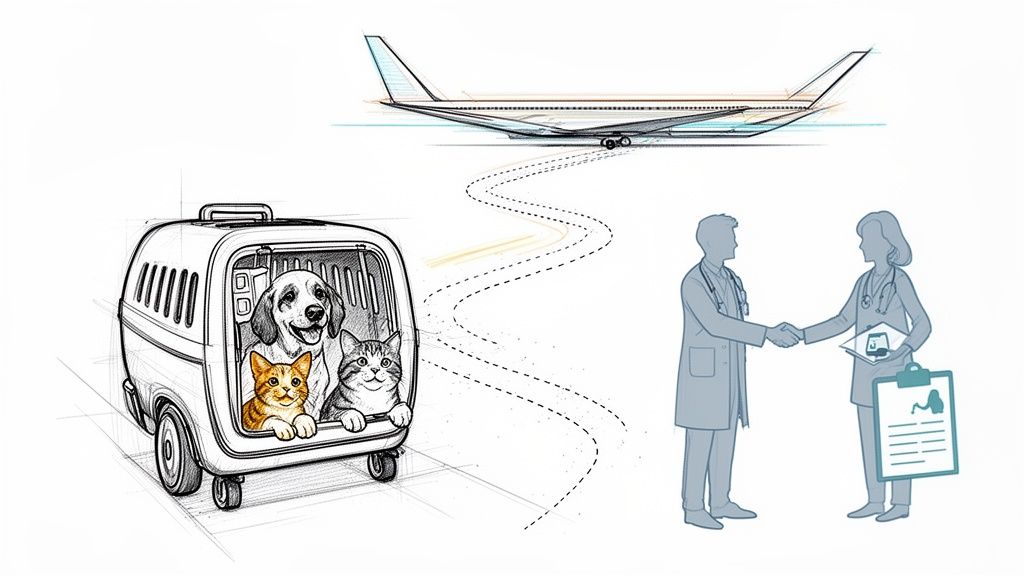
To help you get a handle on the process, here’s a quick visual of the main phases.
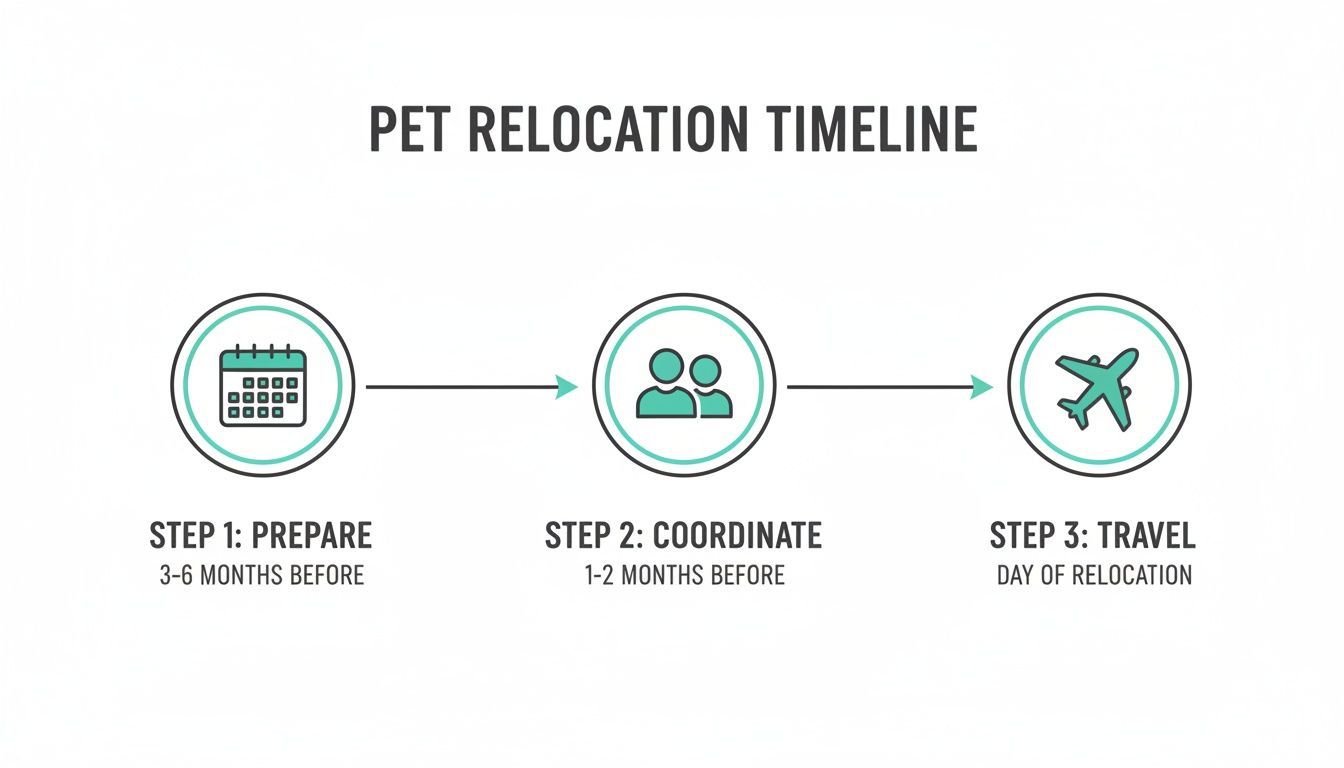
As you can see, it all flows from long-term prep work into focused coordination, and finally, the travel day itself.
The Long-Range Plan: Six Months and Beyond
This is your research and foundation-building phase. Think of it as laying the groundwork for everything that follows.
Your very first move should be to confirm the destination country's import requirements. Every single country has its own set of rules, and some are famously strict. This is when you'll find out if you need a rabies titer test, which often comes with a waiting period of several months.
During this period, you should also:
Check the Microchip: Make sure your pet has an ISO-compliant microchip and that all the registration info is current. An outdated phone number can cause major headaches.
Talk to Your Vet: Schedule an initial chat with your veterinarian about the move. This lets them review your pet’s medical history and get a head start on what's needed.
Find a Pet Shipper: Getting a professional pet transport service involved early can save you from costly, irreversible mistakes. Their expertise is tailored to your specific journey.
The Mid-Range Countdown: One to Three Months Out
As you get closer to the big day, your to-do list gets much more specific. Now is the time for booking flights, scheduling key appointments, and gathering essential supplies.
Your pet transport service will usually handle the flight reservations, making sure they pick pet-safe airlines and the most direct routes. This is also the perfect time to get your pet comfortable with their travel crate. Your goal is to make the crate a safe, familiar space—a "den," not a cage—which can dramatically lower their anxiety on travel day.
Navigating the maze of international rules is hands-down the biggest challenge. For instance, Australia may require certain blood tests up to 180 days before entry, while many EU countries may ask for a rabies vaccination at least 21 days prior. A simple mistake could lead to quarantine holds of 30 days or more, potentially costing over $5,000 in fees. For a detailed breakdown of what's involved, our pet travel planner can help organize these crucial steps.
The Final Approach: The Last Four Weeks
The final month is when all your careful planning comes together. This is when the final veterinary health checks happen and the official travel documents, like the international health certificate, are completed and endorsed.
These last few weeks are all about final confirmations and double-checking every single detail. Confirm flight times, review all paperwork for accuracy, and pack a travel-day kit with food, water, and comfort items for your pet. A calm, organized approach in these final days will set the stage for a purrfectly smooth departure.
To help clarify everyone's role in this process, here is a sample timeline outlining the key actions for each party involved in an international pet move.
Pet Relocation Planning Timeline
Time Before Travel | Key Action for Pet Owner | Key Action for Veterinarian | Key Action for Pet Shipper |
|---|---|---|---|
6+ Months | Research destination requirements. Choose a vet and a pet shipper. | Initial consultation. Review pet's medical history and plan for necessary vaccinations/tests. | Provide a quote and initial consultation. Advise on country-specific regulations and potential challenges. |
3-5 Months | Confirm pet has an ISO-compliant microchip. Schedule rabies vaccination and titer test. | Administer rabies vaccine. Draw blood for the titer test and send it to an approved lab. | Advise on ideal travel dates and airline options. Begin preliminary flight research. |
1-2 Months | Purchase and begin crate training. Provide shipper with all necessary documents. | Follow up on titer test results. Schedule the final health certificate examination. | Book flights and confirm all travel arrangements. Provide owner with a detailed itinerary and pre-travel checklist. |
Last 4 Weeks | Finalize travel plans and pack a travel-day kit for the pet. | Perform final health exam. Complete and sign the international health certificate. | Submit health certificate for USDA endorsement. Coordinate pet pickup and check-in at the airport. |
Travel Day | Drop pet off with the shipper or at the airport as instructed. Stay updated on flight. | Be available for any last-minute questions from the owner or shipper. | Manage airport check-in. Monitor the pet’s journey and provide updates to the owner until safe arrival. |
This timeline is just a guide, of course. Every pet's journey is unique, but following this general structure helps ensure no critical steps are missed along the way.
Navigating Pet Travel Paperwork and Health Rules
Let’s be honest: the paperwork for a pet transport service can look like a gigantic, tangled ball of yarn. But once you start unraveling it, thread by thread, you’ll find it’s entirely manageable. This part of the journey is all about precision and timing—dotting every "i" and crossing every "t" before your pet even thinks about boarding a plane.
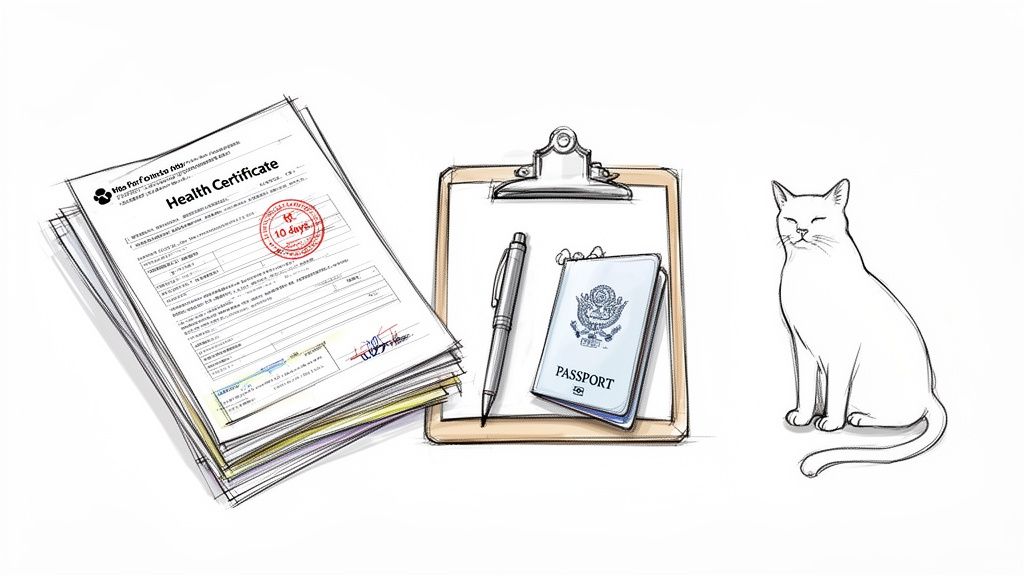
The single most important document for international pet travel is the International Health Certificate. This isn't just a simple note from your vet. It's an official, often multi-page document that confirms your pet's health and fitness for travel. A USDA-accredited veterinarian must complete it, and then it needs an official endorsement from a government body like the USDA's Animal and Plant Health Inspection Service (APHIS).
The Critical 10-Day Window
One of the most nail-biting parts of this process is the strict validity window for the health certificate. For many countries, this document has to be completed and endorsed within just 10 days of your pet's arrival.
That tight timeline leaves absolutely no room for error. It makes the coordination between you, your vet, and your pet shipper absolutely critical. Missing this window, even by a single day, can get your pet denied entry at the border. This is where professional pet shippers really earn their keep—they live and breathe these deadlines and will keep everyone on schedule.
The International Health Certificate is the ultimate "hall pass" for your pet's global travels. Think of it as their official passport, visa, and health declaration all rolled into one. Every detail, from the microchip number to the vaccination dates, must be flawless to satisfy border officials.
Core Documents You'll Need
While the health certificate gets all the attention, several other documents play crucial supporting roles. Getting these in order early on will save you from last-minute scrambles.
Vaccination Records: A complete, up-to-date record of all vaccinations, especially rabies, is non-negotiable.
Import Permits: Some countries require you to apply for and receive an import permit before your pet can even be booked on a flight.
Rabies Titer Test Results: If you're heading to a rabies-free or rabies-controlled region (like the EU or Japan), you'll often need a blood test proving the rabies vaccine is working effectively. This needs to be done months in advance.
Planning a pet's international move means understanding all the necessary licenses and permits, much like you would for any other type of cross-border restricted goods documentation.
Real-World Scenario: A Cat's Journey to France
Let's walk through an example. A family is moving their cat, "Croissant," from Florida to France. The veterinary team has to follow French import rules to the letter.
First, they verify Croissant has an ISO-compliant microchip. Then, they confirm her rabies vaccine was given more than 21 days before travel. Finally, they tackle the bilingual EU health certificate. The vet fills out this complex form, which is then sent to the USDA for its official endorsement—and all of this has to happen within that tight 10-day travel window. You can learn more about the specifics of this crucial paperwork in our detailed guide on the veterinary international health certificate.
For veterinarians and pet travel agencies, mastering these global requirements is essential. Recent industry data shows that pets are jetting off to popular spots like the UK, Australia, and Spain, with these destinations accounting for over 50% of 2,015 recent family relocations. This just goes to show how many families are counting on a smooth process—and how important it is to get every detail right.
Understanding Who Does What in Pet Shipping
A smooth move for your furry family member is a team effort. It really helps to know who’s playing which position.
When everyone understands their role, the entire pet shipping process becomes a well-coordinated play, avoiding unnecessary stress and last-minute fumbles. Think of it as a three-person team: the pet owner (you), the veterinarian, and the pet transport service. Each has distinct responsibilities that are critical for a successful journey.
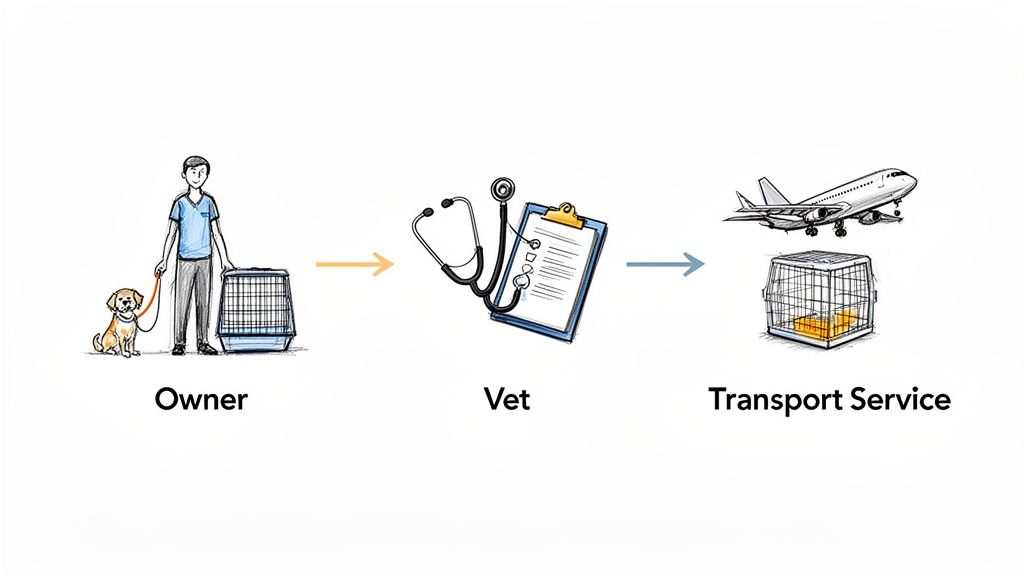
Let's break down who does what.
The Pet Owner's Role
As the pet parent, you're the team captain. Your main job is providing accurate information and getting your pet ready for their big adventure. This is where your deep knowledge of your animal is invaluable.
Your key tasks include:
Providing Accurate Details: This is the foundation for everything that follows. Be ready to share your pet's correct age, breed, and full medical history.
Crate Training: This one is huge. Helping your pet see their travel crate as a safe, comfy den weeks in advance can significantly reduce their anxiety on travel day.
Gathering Personal Documents: You'll need to supply copies of your passport and any other personal identification required by the destination country.
The Veterinarian's Role
Your veterinarian is the team's medical expert, responsible for all the health-related pieces of the move. Their attention to detail is crucial, as even small mistakes on paperwork can cause major delays at customs.
The vet's main responsibilities are:
Performing Health Exams: They conduct thorough check-ups to confirm your pet is healthy and fit for travel.
Administering Vaccinations: They make sure all required shots are up-to-date and given within the strict timeframes set by the destination country.
Completing Official Paperwork: The vet is in charge of accurately filling out the complex international health certificate and other medical forms. This is not a simple task.
Each role is a vital link in the chain. The owner provides the initial info, the vet certifies the pet's health, and the shipper executes the logistics. If one link breaks, the whole process can be jeopardized.
The Pet Transport Service's Role
Think of your pet transport service as the logistics manager and travel agent for your pet. They handle the complex web of regulations, bookings, and coordination, turning what can be a daunting task into a manageable one.
This is what they typically manage:
Flight and Route Planning: They find the most direct, pet-friendly flights and handle the booking.
Navigating Regulations: They are experts in airline rules and country-specific import requirements, making sure everything is in order from start to finish.
Customs Clearance: They handle the paperwork and procedures to get your pet through customs smoothly. For international moves, this often involves understanding the role of a customs broker, who can manage import and export declarations.
Door-to-Door Coordination: Many services manage the entire journey, from picking your pet up at your old home to delivering them safely to the new one.
To make it even clearer, here’s a simple breakdown of who handles what.
Who Does What in Pet Transport
Task | Pet Owner | Veterinarian | Pet Transport Service |
|---|---|---|---|
Initial Research | Provides pet details and travel dates | --- | Researches routes and country requirements |
Crate Training | Responsible for acclimating the pet to the crate | --- | Advises on crate size and type |
Health Exam | Schedules the appointment | Performs exam and confirms fitness to fly | --- |
Vaccinations & Treatments | Ensures pet's history is available | Administers and documents all required shots/treatments | Verifies requirements are met |
Health Certificate | --- | Completes and signs official documents | Reviews for accuracy and submits for endorsement |
Flight Booking | --- | --- | Books pet-safe airline cargo space |
Customs Clearance | Provides personal ID documents | Provides signed medical forms | Manages all import/export paperwork |
Overall Coordination | The primary point of contact | The medical authority | The logistics expert and project manager |
When everyone knows their part and works together, you can feel confident your pet is in the best possible hands for their journey.
Avoiding Common Mistakes on Travel Day
Even the most carefully planned pet move can hit a snag on travel day. After all the paperwork and vet visits, a few simple, last-minute checks can mean the difference between a smooth takeoff and a stressful, costly delay. Let's make sure you sidestep the common slip-ups.
It’s about more than just getting to the airport on time. I’ve seen simple errors, like grabbing the wrong size travel crate or miscalculating a vaccine deadline by a single day, cause absolute chaos. These aren't just minor hiccups; they can put the entire move in jeopardy. A good pet transport service is great at catching these things, but being prepared yourself is always the best defense.
Final Checks Before Takeoff
The day of the flight is all about the details. One small oversight can have a domino effect, leading to missed flights, broken connections, and unexpected kennel fees. We don't want that.
Here are a few of the most common pitfalls to watch out for:
Microchip Mayhem: Is your pet’s microchip an ISO-compliant, 15-digit chip? If your destination requires one, a non-compliant chip is a non-starter at customs. They will not let your pet in.
Crate Calamities: The travel crate must meet IATA standards—not too big, not too small, with the right ventilation and security. Airlines are incredibly strict about this. You can learn more about picking the perfect one in our guide to the best airline travel pet carrier.
Feeding Foul-Ups: Give your pet a light meal about four hours before their scheduled pickup. This gives them plenty of time to digest and do their business, reducing the chance of an upset stomach or an accident in the crate mid-flight.
Think of travel day as the final exam after months of studying. All your prep—from double-checking that health certificate to ensuring the crate is properly labeled with "Live Animal" stickers—is what ensures you pass with flying colors and get to that happy reunion.
The demand for these services is exploding. The global pet relocation market was valued at USD 1.2 billion in 2023 and is on track to hit USD 2.4 billion by 2032. For everyone involved—vets, shippers, and owners—getting the details right is more critical than ever. It's the key to avoiding things like lengthy, mandatory quarantines, which can last up to 180 days in some countries. You can dig into more of the data on this growing market by exploring these pet relocation market insights.
Packing for Your Pet's Comfort
Finally, don't forget about what goes inside the crate.
Pack a familiar blanket or an old t-shirt that smells like you. That scent can be incredibly comforting during a new and strange experience. Steer clear of hard toys or chew bones that could become a choking hazard if they break. A little piece of home can make the journey a whole lot less scary for your best friend.
Your Top Pet Transport Questions, Answered
If you're digging into the world of pet transport, you've probably got a few questions. That's completely normal. Whether you're a pet owner, a vet, or a professional shipper, a lot goes into making a move successful. Let's tackle some of the most common questions we hear to give you the clarity you need.
How Much Does a Pet Transport Service Cost?
This is usually the first thing on everyone's mind, and the honest answer is: it depends. There’s no flat rate because every move is unique. The final cost hinges on your pet's size, the travel distance, and the exact services you need.
For a domestic flight within the same country, you can generally expect a range of $500 to $1,500. International travel is a whole different ballgame due to customs, extensive paperwork, and longer flights, so costs typically run from $2,000 to $5,000—and sometimes more for very long-haul trips. This usually covers the flight booking, professional handling, and customs coordination, but remember that vet bills for exams and health certificates are a separate cost.
Is It Safe for My Pet to Fly in Cargo?
Yes, it’s incredibly safe when handled by professionals who live and breathe pet travel. Forget the image of suitcases being tossed around; pets fly in a dedicated, climate-controlled, and pressurized compartment that’s just as safe as the main cabin.
Reputable shippers have deep partnerships with airlines that run proven, pet-safe programs. They are absolute pros at logistics, like avoiding flights during extreme heat or cold. Your pet's well-being is their entire focus. They simply won't fly an animal if the conditions aren't right.
The most important takeaway here is that professionals put safety above all else. They are trained to handle animals and navigate complex airline protocols to ensure a secure journey. This expertise is precisely what makes professional pet transport the safest way for a pet to travel by air.
Should I Medicate My Pet to Calm Them Down?
The answer from both airlines and veterinarians is a firm no. Sedatives and tranquilizers are a major red flag for air travel. These drugs can interfere with a pet’s ability to regulate their body temperature and maintain balance at altitude, which introduces unnecessary risks.
The single best thing you can do to reduce travel stress is to get your pet comfortable with their travel crate weeks ahead of the flight. When the crate feels like their own safe little den, the journey becomes a whole lot less hair-raising.
What Is the Most Important Travel Document?
For any international move, the International Health Certificate is the golden ticket. This isn't just any form; it has to be completed by a USDA-accredited veterinarian and then officially endorsed by a government authority, like the USDA here in the States.
The timeline for this document is notoriously tight, often needing to be completed within just 10 days before travel. A single mistake on this form is one of the most common reasons for last-minute delays or denials. Working with a vet and shipper who know this process inside and out is non-negotiable.
Are you a vet or pet shipper tired of chasing down paperwork? Passpaw centralizes all your pet travel documents, making sure every detail is perfect for a smooth journey. Ditch the compliance headaches and create happy clients at https://passpaw.com.
More articles
From regulatory changes to best practices for veterinarians and pet owners, our resources keep you ahead of the curve.