Are you a team member in a veterinary practice?
Are you a pet parent planning a trip with your furry pal?
Your Guide to Understanding Pet Shipping Cost
Planning a move with your pet? The reality is, pet shipping costs can vary quite a bit. For a domestic trip, you might be looking at anywhere from $350 to over $1,000. If you're heading overseas, that range jumps to $1,500 to $8,000 or even more. These aren't just random numbers; they're shaped by your pet's size, your destination, and how they'll be traveling.
What to Expect for Pet Shipping Costs
Figuring out the cost of moving your furry (or feathery) family member is the first step in planning a smooth trip. The final price tag isn't a single line item. It’s a puzzle made of different pieces that all click together.
The biggest factors are always your pet’s size, the distance they're traveling, and whether it's a domestic or international move. A tiny kitten flying one state over is going to have a completely different cost breakdown than a Great Dane moving across an ocean. It's not just about the flight; it's about making sure the whole process is safe, comfortable, and follows the rules.
Estimated Pet Shipping Cost At a Glance
To give you a clearer picture, it helps to see the numbers side-by-side. Think of this table as a starting point for your budget—a ballpark estimate to get you oriented. The actual cost will be unique to your situation, which is why getting a detailed, personalized quote is so important.
Shipping Type | Typical Low-End Cost (USD) | Typical High-End Cost (USD) | Primary Factors |
|---|---|---|---|
Domestic Ground | $350 | $1,200 | Distance, Pet Size, Shared vs. Private Ride |
Domestic Air (Cargo) | $450 | $1,500 | Pet & Crate Size, Airline, Ground Transport |
International Air (Cargo) | $1,500 | $8,000+ | Destination Rules, Pet Size, Quarantine, Airline |
Remember, these figures are just averages. Complex international moves, especially for large breeds or to countries with strict quarantine rules like Australia or New Zealand, can easily go above these high-end estimates.
A common mistake is focusing only on the airline fee and getting blindsided by everything else. Vet visits, proper paperwork, a compliant travel crate, and ground transportation can add up fast.
Here in the United States, costs can shift quite a bit depending on the journey. Short-distance ground transport might only be a few hundred dollars. Air travel for a domestic move, on the other hand, often starts around $275 and can easily climb past $1,000. The crate size is a huge driver of cost; shipping a small dog might run around $490, while a giant breed could be closer to $845, purely because of the space they take up on the plane. Once you factor in services like health certificates and door-to-door handling, the total climbs. You can dig into more detailed U.S. pet transport expenses to get a better sense of the breakdown.
The journey ahead involves a lot more than just booking a ticket. It's about ensuring every detail is paw-sitively perfect. In the next sections, we'll unpack what really goes into these costs, from airline fees to unexpected hurdles, so you can plan with confidence.
Breaking Down Your Pet Shipping Bill
When you first see the quote for your pet's move, that single, large number can feel a bit jarring. But it's good to remember that the total cost isn't just one fee—it's a bundle of key services that all come together. Let's pull back the curtain on a typical invoice and see exactly where the money goes.
The biggest slice of the pie is almost always the base transport fee. This is the core cost of getting your pet from Point A to Point B, whether they're traveling by air or on the ground. For flights, this fee is based on the amount of space your pet's crate takes up in the cargo hold, not just what your pet weighs on the scale.
The Big Three Cost Drivers
Your final quote is shaped by three main factors. Getting a handle on how they work together is the key to understanding your bill.
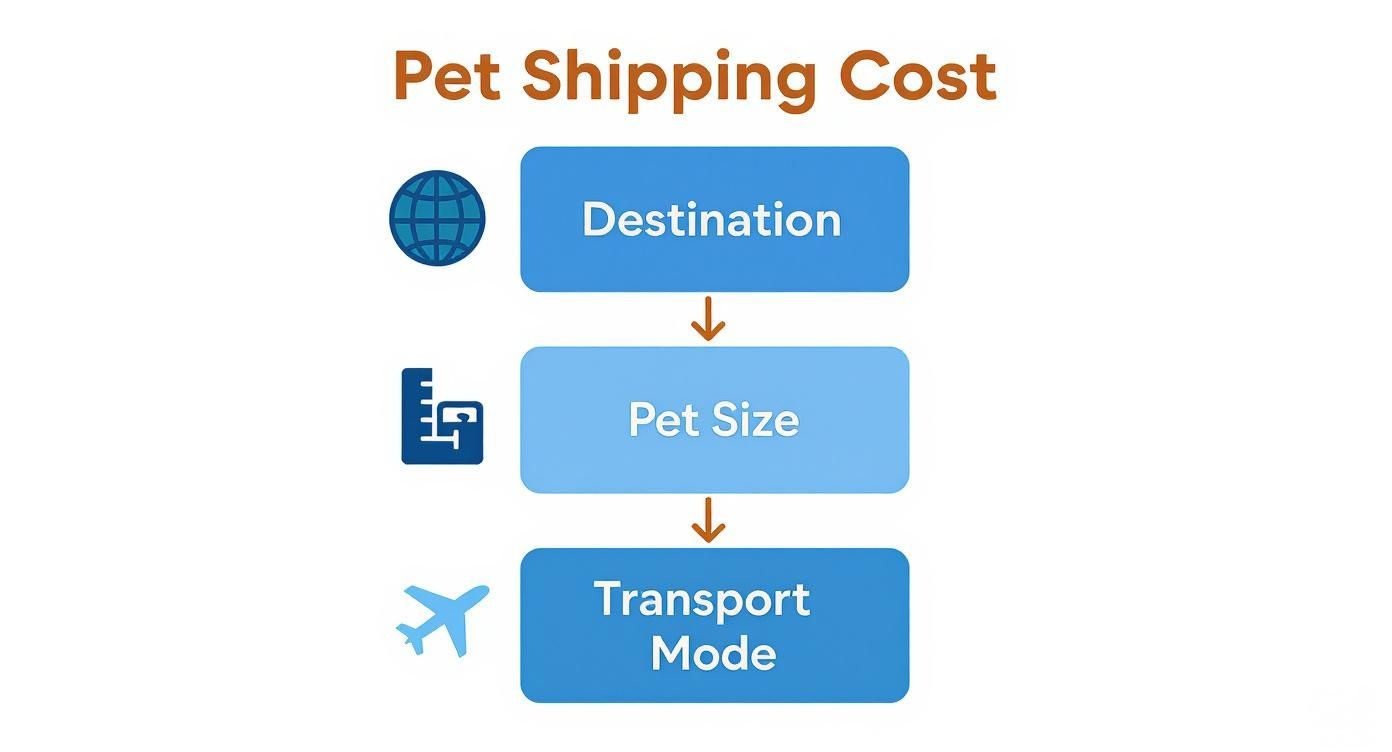
As you can see, the destination, your pet’s size, and how they travel are the building blocks of your total cost. Everything else stacks on top of this foundation.
Pet Size and Crate Dimensions Matter
It’s a common myth that an animal's weight is what drives the cost of air travel. In reality, airlines charge based on volumetric weight, which is a term for a formula that considers the crate's length, width, and height. A bigger crate means a bigger price tag. Simple as that.
This is exactly why two dogs of the same weight—say, a short, stocky Bulldog and a tall, lanky Greyhound—can have very different shipping costs. The Greyhound needs a much taller crate, which increases the volumetric weight and, in turn, the final price. It’s all about the space, not the pounds.
Veterinary and Documentation Fees
Before any pet can travel, they need a clean bill of health from a vet, and this part of the journey has its own set of costs. These are requirements put in place for the safety of your pet and others.
You should budget for a few key items:
Health Certificate: A licensed veterinarian must examine your pet and sign a certificate confirming they're fit to travel. This is a must-have for all commercial pet transport.
Required Vaccinations: Your pet needs to be current on all their shots, especially rabies. Some destinations have a longer list of required vaccinations or parasite treatments.
Government Endorsements: For any international trip, the health certificate and other forms may need an official stamp from a government agency like the USDA, and that endorsement comes with a fee.
Getting this paperwork right is very important. A mistake or a missed step can lead to expensive delays, or worse, your pet being turned away at the border. To learn more, check out our complete guide on pet transportation costs.
Destination-Specific Charges
Finally, where you're headed has a huge impact on the final bill. Every country has its own rulebook, and some are far more complicated (and expensive) than others. These costs are set by the destination government, not the transport company.
Your destination sets the rules of the game. A simple domestic move might only require a health certificate, while an international relocation could involve import permits, customs clearance, and mandatory quarantine.
For example, moving a pet to a country like Australia or Japan may mean a required quarantine period upon arrival. This stay can last for days or weeks and can add thousands of dollars to your budget. You might also run into fees for import permits, customs duties, and local taxes. These charges vary so much from one country to another, making it vital to research your destination's specific rules as early as you can.
Domestic vs International Pet Travel Costs
Moving your pet across state lines and moving them across an ocean are two completely different ball games, and the pet shipping cost proves it. Think of it like this: domestic travel is like mailing a letter to the next town over, while international travel is like sending a valuable, fragile package through customs. The price, complexity, and sheer amount of paperwork scale up dramatically.
Getting a handle on these differences is the first step to setting a realistic budget and avoiding any ruff surprises along the way.
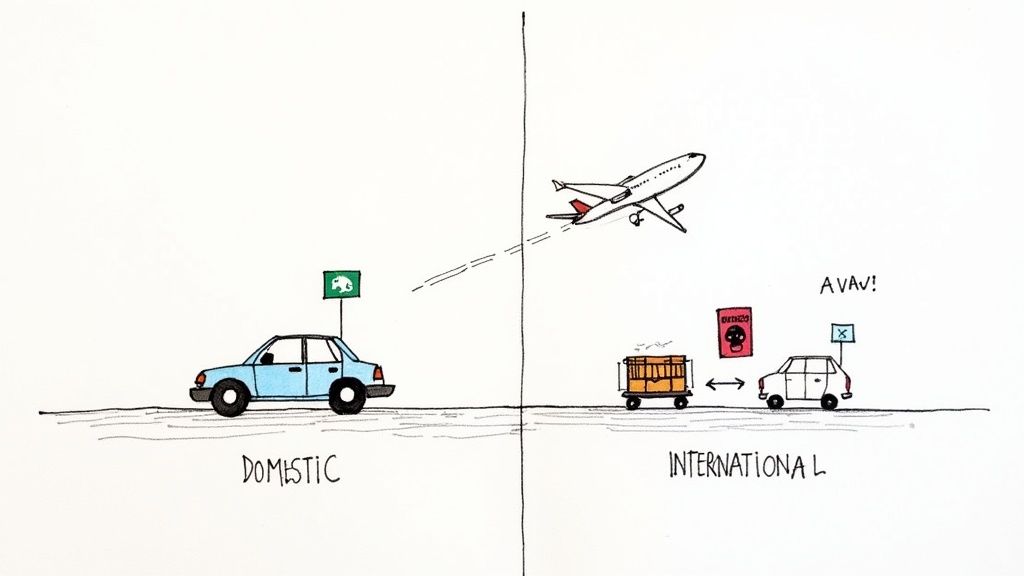
A domestic trip is usually a single flight or a straightforward drive with one set of rules. An international move? That introduces layers of official procedures, and every single layer comes with its own price tag.
The Simplicity of Domestic Pet Travel
For moves within the same country, you’re looking at two main options: ground transport or flying. Ground shipping can be a great choice for shorter distances or for very large breeds, as it's often more flexible and less stressful for pets who aren't fans of planes.
Flying is faster, of course, but the rules are more strict. For a typical domestic flight, you'll need:
An airline-compliant travel crate.
A recent veterinary health certificate.
Proof of up-to-date vaccinations.
The cost is mostly driven by the transport fee itself. While you still have vet visits and the price of a crate, you get to skip the really complicated (and expensive) stuff like import permits and customs clearance. This keeps the final bill much more manageable.
Why International Pet Shipping Costs More
This is where the costs really start to climb. When you cross a border, the journey becomes a logistical puzzle involving at least two different governments, each with its own health and safety laws. That added complexity is the number one reason for the higher price.
International travel isn't just a longer flight; it's a completely different process. You're not just booking a ticket—you're navigating customs, satisfying import rules, and coordinating multiple agencies.
For instance, international flights out of the UK can range anywhere from £1,400 to £8,000 on major airlines. That massive gap comes down to the airline, your pet's size, and the route's complexity. A bigger crate simply takes up more space and costs more to handle.
This huge jump in price is all thanks to a series of required international steps that just don’t exist for domestic moves.
Cost Factor Comparison Domestic vs International Travel
Let’s get specific about where all that extra money goes when you’re planning an international move. When you see the requirements side-by-side, the difference becomes crystal clear.
Cost Factor | Domestic Shipping | International Shipping |
|---|---|---|
Paperwork | A simple vet health certificate. | Multi-page health certificate, import permits, customs forms, government endorsements. |
Vet Requirements | Standard vaccinations and check-up. | Specific vaccinations, microchip, blood tests (e.g., rabies titer test), parasite treatments. |
Customs & Fees | None. | Mandatory customs clearance fees, broker fees, taxes, and potential duties. |
Quarantine | Not required. | Required by some countries, adding thousands to the cost for a stay of days or weeks. |
Airline Fees | Lower cargo fees for shorter flights. | Higher cargo fees due to long distances and complex handling procedures. |
As you can see, each one of those international requirements adds a new line item to your budget. Government endorsements, specialized blood tests, and import permits all come with fees attached. Getting a head start on understanding these is key, which is why we put together our guide on international pet travel requirements.
Ultimately, a domestic move is a relatively simple logistical task. An international one is a specialized process that calls for careful planning and a much bigger budget. Knowing which journey you’re on from the start helps you prepare for the real costs involved, ensuring your pet’s trip is safe, compliant, and free of financial headaches.
Avoiding Hidden Fees and Surprise Expenses
The first quote you get for your pet’s move is almost always just a starting point. While it covers the big-ticket items, a handful of smaller, unexpected expenses can sneak up on you, turning a carefully planned budget upside down. Knowing what these potential surprises are is the best way to keep your pet shipping cost predictable and avoid that last-minute financial scramble.
These aren’t sneaky charges from a transport company; they're simply the real-world costs that come with a complex logistical puzzle. Think of it like a home renovation—you budget for the new kitchen cabinets, but it's smart to have a cushion for the old wiring you might find behind a wall. The same idea applies here. Being prepared is your best defense.
Common Sources of Surprise Costs
Most hidden fees pop up because of bad timing, tricky regulations, or simple human error. They usually appear when plans change at the last minute or when the initial prep work wasn't quite thorough enough. Knowing what to look for helps you ask the right questions from the start.
Here are a few common culprits that can inflate your final bill:
Peak Season Surcharges: Airlines often add extra fees for shipping pets during busy travel times like summer vacation or over Christmas, when cargo space is in high demand.
Last-Minute Paperwork Changes: Finding a mistake on a health certificate or needing an urgent government endorsement can trigger rush fees from vets, government offices, and your shipper.
After-Hours Clearance: If your pet's flight lands late at night, on a weekend, or a holiday, you could face extra charges for customs brokers or government officials who have to process their arrival outside of normal business hours.
While some of these costs are hard to avoid in an emergency, solid planning helps you sidestep most of them.
Planning for the Unpredictable
Beyond the usual fees, there are situational costs that are nearly impossible to predict. You can’t know for sure if they'll happen, but you can build a small buffer into your budget just in case. It's far better to have the funds and not need them than to be caught off guard.
One of the most common—and totally preventable—surprises we see is a pet parent arriving at the airport with a travel crate that isn't compliant. Being forced to buy a new, overpriced crate from the airline at the last second is a stressful and expensive mistake.
Keep these other potential costs in mind, too:
An Unplanned Vet Visit: If your pet seems a little under the weather right before the flight, an emergency vet check-up might be needed to get the all-clear to fly.
Boarding Fees from Delays: A canceled flight or a paperwork hiccup could mean your pet needs to be boarded for a night or two, adding an unexpected kennel bill to your total.
Ground Transportation Issues: Delays can also lead to extra charges for ground transport, like waiting time or another delivery attempt.
Being aware of what can go wrong is the first step toward making sure everything goes right. You can learn more by reading about the hidden costs of pet travel-don-t-realize-until-it-s-too-late) that often catch even the most prepared owners by surprise. By asking your shipping partner detailed questions and double-checking every requirement, you can make sure your pet’s journey is as smooth—and affordable—as pawsible.
Smart Ways to Manage Your Pet Shipping Budget
Keeping your pet safe is priority number one, but that doesn't mean the pet shipping cost has to spiral out of control. With a bit of smart planning, you can find real savings without cutting corners where it counts. The goal isn't just to find the cheapest option, but to get the best value for a safe and smooth journey.
Think of it like booking your own vacation—a little flexibility and forward-thinking go a long way. This is all about making sensible choices that keep your budget in check while putting your pet’s well-being first.
Be Flexible with Your Timing
One of the easiest ways to save is by avoiding peak travel seasons. Airlines know exactly when demand is highest—think summer holidays or Christmas—and cargo space prices often jump to match. If you have some wiggle room in your moving dates, ask your shipping provider about off-season rates.
Traveling in the spring or fall can often translate to lower airfare for your pet. This simple shift in timing could potentially save you hundreds of dollars, freeing up your budget for other moving expenses. It’s a small change that can make a surprisingly big difference.
Handle Some Tasks Yourself
While a full-service, door-to-door move is wonderfully convenient, you can often trim costs by taking on some of the legwork yourself. This "DIY" approach lets you pay only for the specific services you really need.
Consider tackling these yourself:
Book Vet Appointments Directly: Instead of having the transport company manage it, you can schedule the required vet check-ups and health certificate appointments on your own.
Manage Paperwork: With some careful organization, you can handle submitting some of the paperwork to the necessary agencies, which cuts down on administrative fees.
Airport Drop-off/Pick-up: Driving your pet to the airport or picking them up on arrival can completely eliminate the cost of door-to-door ground transportation.
This route definitely requires more of your time and a close eye on the details, but the savings can be substantial. For a well-organized move, using a tool like a pet travel planner helps you track all those critical deadlines and documents so nothing falls through the cracks.
Buy and Prep the Crate Early
A last-minute scramble for a travel crate is a recipe for overspending. One of the most common surprise costs is having to buy a ridiculously overpriced, airline-approved crate at the airport because the one you brought wasn't compliant. You can avoid this headache entirely by getting the right crate well in advance.
Buying your pet’s travel crate a month or two before the trip does more than just save money. It gives your pet valuable time to get used to it, turning a scary new box into a familiar, safe den.
This early prep makes the actual travel day so much less stressful for them. Let them sniff it out, sleep in it, and associate it with good things like treats and toys. A calm pet makes for a much smoother journey for everyone involved.
Consider a Hybrid Travel Plan
For some domestic moves, a hybrid approach might be the most cost-effective solution out there. If you're moving a long distance, driving the entire way can be draining for both you and your pet. But what about driving part of the way to a major airport hub?
Major airports tend to have more flight options and more competitive pricing for pet cargo than smaller, regional ones. By driving a few hours, you might access a cheaper direct flight, saving money on airfare and avoiding the extra cost and complexity of connecting flights. It's a creative solution that blends the savings of driving with the speed of flying.
How a Professional Shipper Can Save You Money
It might seem backward, but hiring a professional pet shipper can actually save you money on the total pet shipping cost. Hiring an expert isn't just about convenience; it's about investing in a smooth process and preventing the kind of expensive mistakes that can derail a complex move.
Think of them as a specialist travel agent for your pet. They are immersed in the maze of rules—from airline crate specifications to the fine print on international health documents. This knowledge is their superpower, helping you dodge the nightmare scenario of getting turned away at the airport because a form was filled out wrong or your pet's crate is off by half an inch.

The Real Value of Expertise
A professional shipper’s entire job is to stay on top of constantly changing regulations for hundreds of destinations around the globe. This is where the real savings kick in, protecting you from the most common and costly pitfalls.
Here’s where their guidance can be invaluable:
Preventing Rejected Paperwork: An incorrectly timed vaccination or a missing government stamp can halt an entire trip. That means re-booking fees, expensive delays, and a whole lot of stress.
Ensuring Crate Compliance: Professionals know the exact IATA-compliant crate your pet needs for their specific flight. This prevents the frantic, overpriced purchase of a new one at the airport cargo desk moments before check-in.
Optimizing Flight Routes: They have relationships with airlines and know the most direct, pet-friendly routes. This helps you avoid unnecessarily long layovers and other stressful complications that can add to your costs.
Their experience turns a potentially chaotic ordeal into a structured, predictable plan, saving you from headaches that almost always come with a hefty price tag.
A Growing and Complex Industry
The need for this kind of expertise is only growing. As more of us see our pets as true family members, the global pet travel market is booming. The market was valued at around $1.5 billion and is projected to expand significantly over the next decade.
This growth brings more complexity, making professional help even more valuable. You can learn more about the expanding pet travel market to see the trends for yourself.
Hiring a professional shipper changes your role from project manager to informed supervisor. You're no longer responsible for every single detail; you're entrusting the logistics to an expert, giving you invaluable peace of mind.
Ultimately, you’re not just paying for a service. You are buying a smoother, safer, and often more cost-effective journey for your beloved pet. A single mistake in a DIY move can easily cost more than the shipper's entire fee. By partnering with an expert, you’re ensuring your pet's trip is as seamless and stress-free as pawsible.
Common Questions About Pet Shipping Cost
Even after breaking down the numbers, a few questions always seem to pop up about the total pet shipping cost. That's completely normal! Let’s clear up some of the most common ones so you can finalize your budget with confidence.
Think of this as the final pre-flight check for your pet's big move. Getting these last few details sorted out will make sure you're truly prepared for the journey ahead.
Is It Cheaper to Fly with My Pet in the Cabin?
For small pets, the answer is almost always yes. Flying with your pet in the cabin is generally much cheaper than shipping them as cargo. Cabin fees are usually a flat rate, somewhere between $100 to $200 each way.
But there’s a catch. This option is only available for pets small enough to fit comfortably in a carrier under the seat in front of you. Plus, not all airlines, flights, or international destinations allow it, so you absolutely have to check the specific rules for your route first.
Does Pet Travel Insurance Cover Shipping Costs?
This is a frequent source of confusion, and it's an important one. Standard pet health insurance is designed to cover unexpected vet bills from illness or injury—it almost never covers transportation or relocation costs.
Some specialized pet travel insurance policies might cover certain emergencies that happen during the trip, like an unexpected vet visit in your new city. But the actual cost of getting your pet there is a planned, out-of-pocket expense you'll need to budget for.
It's crucial to read the fine print on any insurance policy. Never assume travel costs are included. From an insurer's perspective, a planned move isn't a risk to be insured—it's a guaranteed expense.
How Far in Advance Should I Book to Get the Best Price?
Booking early is one of the smartest things you can do to keep costs in check. For a domestic move, try to lock things in at least 1-3 months ahead of time. If you’re heading abroad, giving yourself 4-6 months is a much safer bet.
That extra time gives you the flexibility to find off-peak travel dates, which can be dramatically cheaper. Last-minute bookings almost always come with rush fees and sky-high flight prices that can blow up your budget. This is one time you don't want to pro-cat-stinate!
Are There Discounts for Shipping Multiple Pets?
Sometimes, yes. A few pet shipping companies might offer a small discount if you're moving multiple pets from the same family at the same time. The savings typically come from shared logistics, like consolidating the trip to the airport.
However, each pet still needs their own IATA-compliant travel crate and their own air waybill (think of it as their ticket). Since the airfare is the biggest piece of the pie, the overall savings might be modest, but it never hurts to ask.
Planning a move shouldn't feel like navigating a maze. With the right tools, you can handle the paperwork and logistics with confidence. Passpaw helps veterinary practices and pet owners get international health certificates right the first time, reducing the risk of costly delays and ensuring a smoother journey for your furry family member. Learn more at Passpaw.
More articles
From regulatory changes to best practices for veterinarians and pet owners, our resources keep you ahead of the curve.