Are you a team member in a veterinary practice?
Are you a pet parent planning a trip with your furry pal?
Your Guide to Pet Health Certificates for Travel
If you're planning to take your pet on a trip, you've probably realized it's not as simple as just packing their favorite toy. Every traveler needs the right papers, and for your furry friend, the most critical document is their pet health certificate.
Think of it as your pet's official passport. It's a formal document signed by an accredited veterinarian that confirms your pet is healthy, up-to-date on all required vaccinations, and free from any contagious diseases. Without it, your travel plans could hit a major roadblock before you even leave home.
So, What Exactly Is a Pet Health Certificate?
This isn't just a simple note from your vet. A pet health certificate, also known as a Certificate of Veterinary Inspection (CVI), is a special form filled with the key details that airlines and border officials need to see. It’s their proof that a licensed professional has recently examined your pet and given them the green light for the journey ahead.
Why is this so important? Because it helps prevent the spread of animal diseases across state and country lines. It's a system designed to keep all animals—and people—safe.
This small piece of paper is a big deal in the global travel industry. The market for pet travel health certificates was recently valued at around $1.2 billion and is expected to more than double to $2.5 billion in the coming years, all thanks to increasingly strict travel rules. With North America making up 38% of that market, it's clear that pet travel is more common than ever.
Domestic Trips vs. International Adventures
Just like our own travel plans, the paperwork for your pet changes depending on how far you're going. A quick trip to another state is one thing; flying across an ocean is a whole different beast.
To make it clearer, let's break down the main differences between domestic and international certificates.
Quick Guide to Domestic vs International Certificates
Feature | Domestic Certificate | International Certificate |
|---|---|---|
Travel Scope | Within the same country (e.g., state-to-state) | Between different countries |
Complexity | Generally simpler, often a single form | Highly complex, multi-page documents are common |
Key Requirement | Proof of good health and current rabies vaccine | Varies by country; can include microchip, specific vaccines, blood tests (like rabies titers), and parasite treatments |
Endorsement | Usually just needs a vet's signature | Often requires an official government endorsement (like from the USDA in the U.S.) |
Timeline | Can often be obtained within a few days of travel | Planning should start months in advance due to strict timelines for tests and treatments |
As you can see, a domestic trip is fairly straightforward. An international move, however, requires a lot more planning and attention to detail.
Understanding the broader landscape of the pet wellness business helps explain why these regulations exist—it's all about ensuring health and safety on a global scale. The health certificate is the key piece of that puzzle.
To get a better handle on the nitty-gritty of international travel, be sure to check out our detailed guide on the https://passpaw.com/blog/veterinary-international-health-certificate.
How to Get a Pet Health Certificate Step by Step
Ready to sort out the paperwork for your pet's trip? Getting a pet health certificate can feel like a massive chore, but if you break it down into a few manageable steps, it’s much less daunting. Think of it like a travel checklist for your furry co-pilot—a little bit of organization now means a smooth takeoff later.
This guide will walk you through the whole process, from the initial planning stages right up to the final vet sign-off. We'll cover everything you need to know to avoid that last-minute scramble. It’s all about being prepared so you and your pet can have a stress-free journey.
Step 1: Research Your Destination and Airline Rules
Before you do anything else, you have to dig into the specific rules for your trip. Every airline and destination has its own set of requirements, and they are not all the same. This is without a doubt the most important step in the whole process.
Start by checking the official government website for your destination. If you're flying out of the U.S., the USDA APHIS pet travel website is your best friend. After that, pull up your airline’s pet travel policy.
Key Takeaway: Never assume the rules are standard. One country might need a specific blood test, while another won't. Getting this research done first prevents costly—and heartbreaking—mistakes down the road.
Step 2: Find a Federally Accredited Veterinarian
For international travel, and even some domestic flights, you can't just go to any vet. You’ll need a USDA-accredited veterinarian. These vets have gone through special training and are authorized by the federal government to issue the official health certificates needed for travel.
Not every vet has this accreditation, so it’s important to confirm this when you book your appointment. You can usually find a list of accredited vets on the USDA APHIS website or just by calling clinics in your area. This step helps ensure your paperwork is official, valid, and won't get rejected.
This infographic shows a simplified flow for getting your pet's travel documents in order, from the initial vet check to being ready for travel.
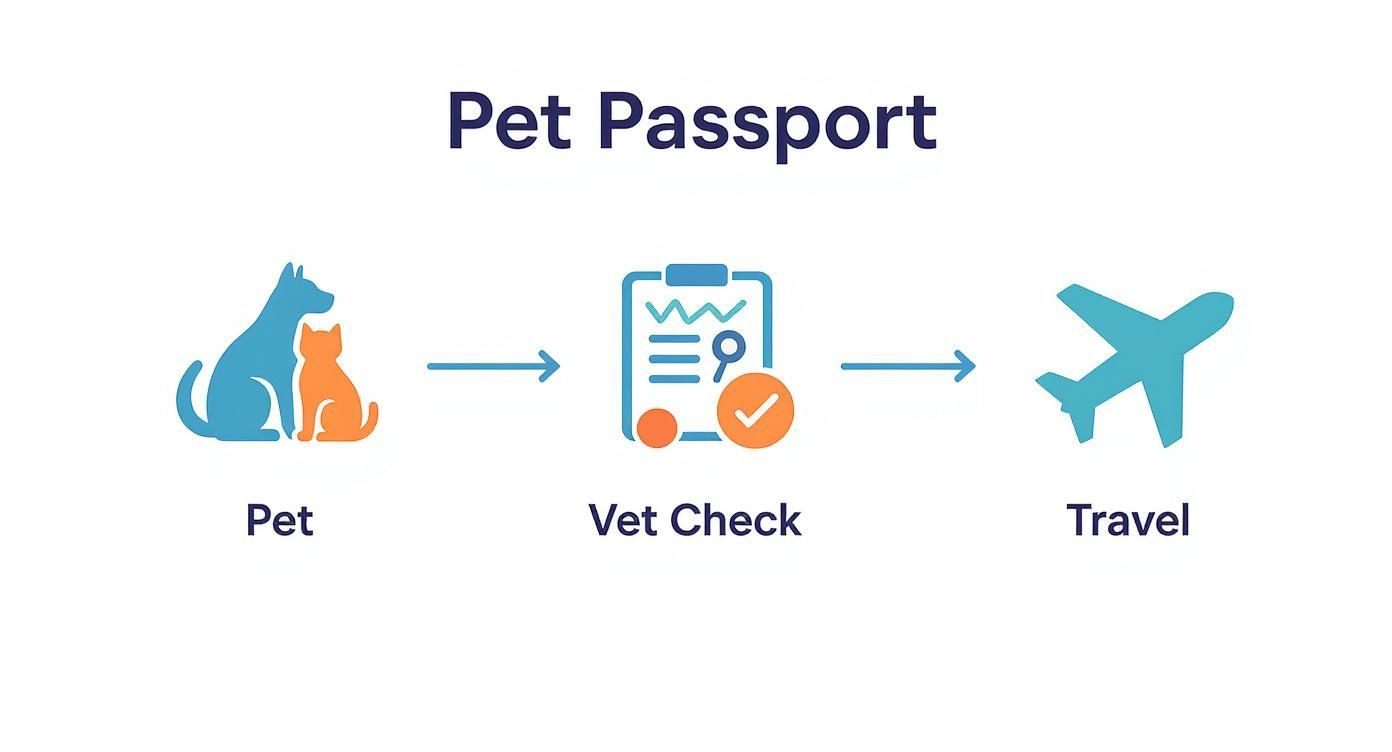
As you can see, your vet is at the center of getting your pet ready for a safe and sound journey.
Step 3: Gather All Necessary Pet Records
Once your appointment is on the calendar, it’s time to get your pet’s records together. Your vet needs a complete picture of their health history to fill out the certificate correctly.
Pull these documents together to bring with you:
Vaccination Records: This is the big one. Make sure all shots are current, especially rabies. The rules around rabies vaccines can be very strict, so having clear proof is a must.
Microchip Information: If your pet is chipped, have the number and the date of implantation handy. Many countries require a very specific type of microchip, usually a 15-digit ISO-compliant chip.
Travel Details: Give your vet the exact destination address and your travel dates. This info has to be listed on the certificate itself.
For a deeper dive into vaccine requirements, check out our guide on providing proof of rabies vaccine to make sure you've got all your bases covered.
Step 4: Attend the Health Examination
The health exam is when the vet gives your pet a thorough check-up to confirm they're healthy and fit to travel. They’ll be looking for any signs of illness, injury, or contagious diseases. This is a hands-on physical, not just a paperwork formality.
During this visit, the vet will fill out and sign the official health certificate. Before you leave the clinic, review the document carefully for any errors. A simple typo in a microchip number can cause a world of trouble at the airport.
Step 5: Get Government Endorsement for International Travel
If you’re traveling internationally, there’s one last, crucial step: government endorsement. After your accredited vet signs the certificate, it has to be sent to the USDA APHIS for an official stamp of approval.
This endorsement is the government's way of confirming that an accredited vet issued the document properly. Many countries require this, and without it, your certificate is invalid for entry. Your vet can often help you submit the paperwork online, which is way faster than mailing it. Just be sure to factor the time for this endorsement into your travel prep timeline.
Navigating International Pet Travel Rules

Taking your pet on a trip across the country is one thing, but crossing international borders is a whole different ballgame. When you go abroad, the rules for pet health certificates get a lot more complicated—and for a very good reason. This isn't just about extra paperwork; it’s about global biosecurity.
Every country has its own unique concerns about animal diseases that could affect local wildlife, agriculture, and even family pets. Rabies, for example, is under control in many places but remains a huge threat in others. That’s why each nation sets its own import rules, creating a complex web of regulations you have to navigate for your specific destination.
These aren't just friendly suggestions, either. A mistake can lead to your pet being denied entry or, even worse, being stuck in a long and expensive quarantine.
Why Every Country Is Different
Think of each country as having its own immune system. Some places, especially island nations that are naturally isolated, are incredibly protective. They have to be. They use strict rules to shield their native animals from foreign diseases they’ve never encountered.
This is why the requirements can swing so wildly from one country to the next. One might just ask for a basic health certificate and a rabies shot. Another might demand a series of blood tests, specific parasite treatments, and an official government endorsement—all within a tight deadline.
Here’s a look at how different it can be:
The European Union: The EU has a fairly standardized system with its "pet passport." Once your pet is cleared for one EU country (with an ISO-compliant microchip and a valid rabies vaccine), hopping between other member nations becomes much easier.
Australia and New Zealand: On the other end of the spectrum, these countries have some of the toughest rules in the world. Because of their unique ecosystems, getting a pet in can take months of preparation, involving multiple tests and often a mandatory quarantine period after you land.
This is why doing your homework is not optional. You can't just assume the rules for a flight to Paris are the same as for a trip to Tokyo.
The Critical Element of Timing
If there’s one thing that trips up pet travelers more than anything else, it's timing. Many of the required steps for an international health certificate have very strict validity windows. This is absolutely not a process you can leave for the last minute.
The "10-day rule" is a classic example. Many countries require the health certificate to be signed by your accredited veterinarian no more than 10 days before you arrive. Being off by even a single day can make your documents worthless.
Vaccinations, blood tests, and treatments have their own timelines, too. A rabies titer test, for instance, often needs a blood sample drawn at least 30 days after the vaccination, followed by a waiting period of several months before your pet is even allowed to travel. Planning ahead isn’t just smart; it’s essential.
Your Most Reliable Source of Information
With rules that can change on a dime, where do you find information you can actually trust? For anyone leaving from the United States, the single best resource is the USDA Animal and Plant Health Inspection Service (APHIS) website.
This is the official government source. It has a searchable database with the specific import requirements for almost every country. It's the gold standard and should always be your first stop. Relying on an old blog post or a friend’s advice from their trip last year could be a recipe for disaster.
More and more people are traveling with their pets—about 37% of families, a 19% jump in the last decade. This means officials at borders are more vigilant than ever. A paperwork mistake for a strict country like Australia could land your pet in quarantine for up to 30 days. Other places might impose quarantines as long as 120 days for not following the rules.
Getting it right from the start saves you from stressful and costly surprises, ensuring the adventure is a great one for both you and your pet. For a deeper dive, check out our guide on international pet travel requirements.
Understanding Your Vet's Role and Government Endorsements
Getting a pet health certificate feels complicated, but it's really a team effort between you, your veterinarian, and a government agency. Think of it as a two-act play: your vet takes the stage first, and the government gives the final stamp of approval. Knowing who does what is the key to a stress-free process.
Your veterinarian kicks things off. For any trip, a licensed vet needs to give your pet a physical exam and sign the certificate, confirming they're fit to travel. But when you're crossing international borders, things get a bit more specific.
Finding a USDA Accredited Veterinarian
For international travel, you can't just go to any vet. The paperwork has to be signed by a USDA Accredited Veterinarian.
These are vets who've gone through special training with the U.S. Department of Agriculture (USDA) and are officially authorized to handle the complex forms for animal export. Their accreditation means they're up-to-date on the specific, often-changing rules for different countries. They are the only ones who can sign an international pet health certificate. If you're not sure, a quick call to your vet clinic to ask if they have an accredited DVM on staff will clear things up.
Once your vet signs the document, their main part is done. Now, it's time for the second key player to step in.
What Is a Government Endorsement
After your accredited vet has done their part, the health certificate needs one more official sign-off. This is called the government endorsement, and for pets leaving the U.S., this is handled by the USDA's Animal and Plant Health Inspection Service (APHIS).
Think of the endorsement as a final, official verification. APHIS reviews the certificate to make sure your vet filled it out perfectly and that every required test and treatment for your destination country is documented. It’s the government’s way of saying, "Yes, this document is legitimate and meets all international standards."
Depending on your destination, you might even need further authentication after the USDA's stamp. This list of Secretary of State websites for document authentication is a helpful starting point if that's required.
Budgeting for Your Pet Health Certificate
Naturally, this process has costs. It's smart to budget for them ahead of time to avoid any surprises. The total price breaks down into your vet's fees and the government's charges.
Here’s what you can generally expect to pay for:
Veterinary Exam Fee: The standard cost for the physical check-up itself.
Certificate Completion Fee: Vets typically charge an extra fee for the time and expertise it takes to fill out the detailed paperwork correctly.
Government Endorsement Fee: This is what USDA APHIS charges to review and endorse your documents.
Keep in mind that these fees can change. For instance, as of early 2025, APHIS raised its base endorsement fee from $38 to $101. If your destination requires extra lab tests, that total cost could climb past $173.
By understanding these different roles and costs, you're already in a much better position to plan your pet’s travel. For a deeper dive into this final, critical step, check out our guide on how to get a USDA endorsed pet health certificate.
Common Pet Travel Mistakes to Avoid
A little bit of planning goes a long way in ensuring your travel plans don't get sent to the doghouse. When it comes to pet health certificates, even a small oversight can create a big headache. We've seen it happen time and again.
Learning from the common slip-ups others have made is one of the best ways to ensure your journey is smooth sailing. Let’s walk through the most common pitfalls we see and, more importantly, how to sidestep them.
Missing the Tight Travel Window
This is easily the most frequent and frustrating mistake. Many airlines and countries require the health certificate to be issued within a very specific timeframe—often just 10 days before your arrival.
Wait too long to see the vet, and you'll miss the deadline. Get it done too early, and the certificate is invalid before you even leave. This strict window exists for a reason: officials need to know your pet is healthy right now, not a month ago.
Proactive Tip: As soon as you book your flight, count backward from your arrival date to find your 10-day window. Schedule your vet appointment for the very beginning of that period. This gives you a buffer for any unexpected hold-ups, like needing a government endorsement.
Using a Vet Who Isn't Accredited
For any international trip, your regular veterinarian might not be the one for the job. International health certificates must be signed by a USDA-accredited veterinarian. This special accreditation shows they have the specific training to handle the complex requirements for animal export.
Using a non-accredited vet is a non-starter. Your documents will be rejected by government officials, and there are no exceptions. It's a key step that many pet owners unfortunately overlook until it's too late.
Forgetting Destination-Specific Treatments
It's easy to focus on the big things like rabies shots and forget the smaller, but equally important, requirements. Many countries have specific rules about parasite treatments that must be given and documented within a tight timeframe before arrival.
Here are a couple of common examples:
Tapeworm Treatment: Countries like the United Kingdom, Ireland, Finland, and Malta require a specific tapeworm treatment administered by a vet 1 to 5 days before arrival.
Flea and Tick Prevention: While always a good idea, some destinations require proof of recent flea and tick treatment on the official paperwork.
If you miss one of these, your pet could be denied entry. The treatment name, date, and time should be recorded perfectly on the health certificate.
Having an Incompatible Microchip
Think of a microchip as your pet's digital passport, but not all of them speak the same language. The international standard is a 15-digit ISO 11784/11785 chip. If your pet has an older, non-compliant chip (like a 9 or 10-digit one), it may not be readable by scanners at your destination.
This is a huge problem. If officials can't scan the chip and match it to the number on your paperwork, your entire pet health certificate is called into question.
Proactive Tip: Next time you're at the vet, ask them to scan your pet’s microchip to confirm its type and number. If it isn't ISO-compliant, you may need to get a new one implanted before you start the travel paperwork process. A little beep from the scanner now can prevent a lot of beeping from an unhappy airline agent later.
To make things even clearer, here's a quick-reference table summarizing these common slip-ups.
Pet Travel Checklist Common Pitfalls and How to Solve Them
Common Mistake | Why It's a Problem | How to Avoid It |
|---|---|---|
Incorrect Timing | The certificate expires before you arrive or isn't valid yet. Many destinations have a strict 10-day window. | Count backward from your arrival date and book the vet visit at the start of that window. |
Using a Non-Accredited Vet | Only USDA-accredited vets can sign international health certificates. The document will be rejected otherwise. | Confirm your vet's USDA accreditation before scheduling the appointment. |
Missing Treatments | Forgetting a required tapeworm, flea, or tick treatment can lead to denial of entry. | Research destination rules thoroughly. Add required treatments to your calendar with alerts. |
Non-ISO Microchip | If the destination country's scanner can't read your pet's 15-digit ISO chip, their identity can't be verified. | Have your vet scan the chip to confirm it's ISO-compliant well before your trip. |
Getting these details right from the start is the key to a stress-free travel day for both you and your pet.
Your Pet Health Certificate Questions Answered
Even after going through all the steps, it's totally normal to have some questions pop up. The world of pet health certificates is full of little details that can feel tricky, and the last thing anyone wants is a surprise right before a big trip. This section is all about clearing up those last-minute worries.
Think of this as your final peace-of-mind checklist. We're going to tackle the practical, everyday questions that come up when you're in the thick of planning. Let's get these sorted so you can get back to being excited about the journey ahead with your best friend.
How Long Is a Pet Health Certificate Valid?
This is a huge one, and it's all about timing. For most domestic flights in the U.S. and for many international trips (like to the European Union), the certificate is only good for 10 days from the moment the accredited vet signs it. That’s a tight window, and it catches a lot of people off guard.
But—and this is important—that's not a universal rule. Some destinations or even specific airlines have their own timelines, which could be longer or even shorter. You absolutely have to confirm the validity period with your airline and the official import authorities for your destination country. Your goal is to schedule that vet appointment so it lines up perfectly, avoiding any last-minute panic.
Do I Need a Health Certificate to Drive Across State Lines?
Great question for all the road-trippers out there! For a personal trip in your own car, most states don't require you to have a formal health certificate just to cross the border. The rules for a family vacation are usually much more relaxed than for commercial transport.
That said, it’s always a smart move to carry proof of your pet's current rabies vaccination. This could be their rabies tag, but the actual paper certificate is even better. Since rules can vary, doing a quick search on the department of agriculture websites for the states you'll be driving through is the safest bet for a long road trip.
A Note on Commercial Travel: If you're traveling for business—like going to a dog show, for breeding purposes, or selling an animal—a health certificate is almost always needed, even if you're driving.
What Happens If There Is an Error on My Certificate?
A mistake on a health certificate, even a simple typo, can throw a major wrench in your travel plans. We’re not talking about a small inconvenience; an error could get you denied boarding at the airport. In a worst-case scenario at an international border, your pet could be quarantined or even sent back home, all at your expense.
Before you walk out of that vet clinic, triple-check every single detail on the certificate.
Pet's Name and Description: Is the spelling right? Is the breed, color, and age spot on?
Microchip Number: Does the number on the form match your pet's microchip records exactly?
Dates: Are all the vaccination, treatment, and exam dates correct and within the required timeframes?
Names and Addresses: Are your name and the destination address listed without any typos?
If you spot something wrong, get it fixed by the veterinarian right then and there. When it comes to pet travel, accuracy is your best friend.
Can I Get My Pet Health Certificate Online?
The short answer here is no, you can't get the whole thing done online. A licensed and accredited veterinarian has to physically examine your pet to sign off on their health. This hands-on check is a key requirement designed to make sure the animal is truly healthy and ready for the trip.
However, technology is definitely making the paperwork side of things way easier. While you can't skip the in-person exam, many modern vets use digital systems to fill out the certificate and submit it to the USDA for endorsement. This online submission is a huge improvement—it's much faster and more reliable than mailing paper forms.
Is a Rabies Certificate the Same as a Health Certificate?
This is a really common mix-up, so it's good to get it straight. A rabies certificate and a health certificate are two totally different documents, even though info from the rabies certificate is listed on the health certificate.
Document | Purpose |
|---|---|
Rabies Certificate | This paper proves one thing: that your pet is vaccinated against rabies. It shows the vaccine date, the type of vaccine, and when it expires. |
Pet Health Certificate | This is the big one. It's a comprehensive statement about your pet's overall health, confirming they are free of contagious diseases and fit to travel. It also includes key vaccination data, like rabies. |
Here's an easy way to think about it: your rabies certificate is a critical piece of evidence your vet needs to complete the much broader health certificate. You’ll have to bring it to your appointment, but it can't be used in place of the health certificate for travel.
Trying to manage all the paperwork for pet travel can be a headache, but you don't have to figure it all out on your own. Passpaw is a platform built to make getting international pet health certificates simpler for everyone involved. We help veterinarians and pet owners stay organized and on track. See how we can help with your next adventure at https://passpaw.com.

More articles
From regulatory changes to best practices for veterinarians and pet owners, our resources keep you ahead of the curve.