Are you a team member in a veterinary practice?
Are you a pet parent planning a trip with your furry pal?
Pet Certificate of Health: Your Essential Guide
A pet certificate of health is an official thumbs-up from an accredited veterinarian, confirming your pet is healthy and ready for travel. Think of it as your pet's passport—it shows they're up-to-date on their shots and free from any contagious bugs before you cross state or international lines.
Your Pet's Official Ticket to Ride
Planning a trip with your furry co-pilot? A pet certificate of health might just be the most important thing you pack. This official document, often called a Certificate of Veterinary Inspection (CVI), isn't just another piece of paper. It's a formal declaration that your pet is in good health, and it serves one key purpose: to help stop animal diseases from spreading between regions.
This isn't just red tape; it's an important measure for protecting both public and animal health. By having a vet confirm your pet is healthy, authorities can feel more confident that new illnesses aren't being introduced into local environments. It's a lot like showing your own passport at the border, but for your pet, it's all about their health status.
The Core Purpose of the Certificate
At its heart, the pet health certificate is a key tool for animal welfare and public safety. Whether you're moving to a new state, adopting a pet from another country, or just taking a well-deserved vacation, this document is the official proof that your companion is not a health risk.
Its importance really breaks down into a few key areas:
Disease Prevention: It confirms your pet is free from contagious illnesses like rabies, helping keep other animals and people safe at your destination.
Travel Compliance: Airlines, states, and countries have their own rules. A health certificate shows you've checked all the boxes and met their requirements for entry.
Animal Identification: The form includes specific details about your pet—like their breed, age, and microchip number—making sure the document is tied directly to them.
A pet health certificate acts as a standard, trustworthy assessment of an animal's condition. It creates a common language between veterinarians, airline staff, and border officials, making travel safer for everyone involved.
Ultimately, getting this certificate is a basic step in being a responsible pet owner, especially if you and your furry friend have a case of wanderlust. It helps your travel plans go off without a hitch because they're safe and compliant from the get-go. Without one, you could face some ruff complications, like being denied boarding or having your pet quarantined upon arrival.
When Do You Actually Need a Pet Health Certificate?
A pet certificate of health is much more than just a piece of paper. Think of it as your pet's official passport to new places, confirming they're healthy and ready for the next adventure. It’s an important document that helps ensure not only their safety but the well-being of other animals they might encounter. In many cases, it's absolutely necessary.
The number one reason pet owners find themselves needing one is for travel. Whether you're flying to another state or heading out on an international trip, almost every airline will ask for a valid health certificate signed by an accredited veterinarian. This isn't just for show—it's an important measure to help stop the spread of diseases from one place to another.
Key Scenarios Requiring a Certificate
While flying is the most common trigger, you might need this document in a few other situations too. It’s always better to have your paperwork sorted out ahead of time than to get caught in a bind at the last minute.
Here are the most common times you'll need one:
International Travel: Every country has its own set of rules to protect its local animal population. A pet health certificate is the starting point for meeting those requirements.
Domestic Air Travel: Most U.S. airlines require a certificate issued within a specific window before your flight, typically 10 days.
Driving Across State Lines: It's less common, but some states suggest or require a Certificate of Veterinary Inspection (CVI) for pets coming in by car, especially if you're making a permanent move.
Pet Sales or Adoption: When a pet is bought or adopted from another state, a health certificate is often needed to show the animal is healthy at the time of the exchange.
These rules are all part of a larger effort to protect animal welfare. For example, the careful quarantine laws in places like Australia and New Zealand rely heavily on the information in a health certificate to prevent diseases like rabies from entering their borders. And with pet travel booming—about 37% of families now travel with their pets, a 19% jump in the last decade—these safeguards are more important than ever.
More Than Just a Travel Document
Beyond getting from point A to point B, a pet health certificate can pop up in other situations. If you plan on entering your dog in a show or your cat in a competition, the organizers will almost certainly ask for proof of good health. This helps ensure all the participating animals are safe and sound.
The certificate acts as a universal checkpoint—a standard way to show that your pet has been professionally examined and meets the health standards for whatever they're doing, whether it's boarding a plane, moving to a new home, or competing in the show ring.
In the end, it all comes down to planning. Knowing when you’ll need this certificate makes any process, from a quick domestic flight to a complex international move, go a lot more smoothly. For a deeper look into what's required for trips abroad, check out our complete guide on international pet travel requirements. A little prep work goes a long way in making sure your companion's journey is safe and stress-free.
What's Actually on a Pet Health Certificate?
At first glance, a pet certificate of health can look like a confusing jumble of official-looking boxes and jargon. But once you know what you're looking at, it's actually pretty simple. Let's pull back the curtain on this form so you understand exactly what your vet needs to fill out and what you need to double-check.
Think of the certificate as your pet's travel passport. Its whole job is to tell a complete, accurate story about your pet’s identity and current health. It gives officials at your destination a quick, clear snapshot confirming your pet isn't a health risk. This isn't just about filling in blanks; it's about providing solid, verifiable proof that helps ensure a smooth journey.
Key Information on the Certificate
Every field on the form serves a specific purpose, from proving who your pet is to confirming they're medically fit for travel. While the exact layout might differ slightly depending on the destination, they all cover the same core information.
Here’s a breakdown of the key information and documentation that makes up a standard pet health certificate.
Information Category | What It Includes | Why It Is Important |
|---|---|---|
Owner Details | Your full name, current address, and phone number. | This officially connects you to the pet being transported and ensures authorities can contact you if needed. |
Pet Identification | Your pet's name, species, breed, age, color, sex, and any unique markings. | This creates a unique profile to show the certificate belongs to your specific animal. |
Microchip Number | The pet's unique 15-digit ISO-compliant microchip number and the date it was implanted. | This is the most reliable form of permanent identification. The vet will scan and check this number during the exam. |
Vaccination Records | A detailed list of all recent vaccinations, especially the rabies vaccine, including administration date, manufacturer, and expiration date. | This shows your pet is protected against key diseases and meets the import health requirements of the destination. |
Veterinary Exam | A declaration from the vet that the pet is free from signs of infectious or contagious diseases upon examination. | This is the official "fit to fly" statement, assuring officials that your pet is healthy enough for travel. |
Parasite Treatments | Records of recent treatments for fleas, ticks, and internal parasites (like tapeworms), if required. | Some countries are free of certain parasites and require proof of treatment to prevent them from being introduced. |
As you can see, each piece of information is a critical part of the puzzle. Getting these details right is key for successful travel.
Accuracy is everything. A single typo in a microchip number or an incorrect vaccination date could cause major travel delays or, in the worst-case scenario, result in your pet being denied entry.
Beyond the basics, the form will also include the results of the vet's hands-on physical exam. The vet must state that your pet shows no signs of infectious or contagious diseases. For some destinations, you might also need proof of specific parasite screenings or treatments, like tests for worms or evidence of recent flea and tick prevention.
Understanding these sections helps you come prepared for your vet visit and ensures you’re ready for the journey ahead. For a deeper dive into the specifics of travel paperwork, you can learn more about the pet health certificate for travel in our detailed guide.
Your Step-by-Step Guide to Getting the Certificate
Getting a pet certificate of health can feel like a mountain of paperwork, but it doesn't have to be. Once you break the process down into a few key steps, it becomes much more manageable. With a clear game plan, you can confidently check off all the requirements and get your furry friend ready for their big trip.
The journey doesn't actually start at the vet's office. It begins with a little bit of detective work. Every destination—whether it’s another state, a new country, or even a specific airline—has its own set of rules. Think of it as your pre-flight checklist; getting this right from the start will save you a world of headaches later on.
Step 1: Research Your Destination
Before you do anything else, you need to find out what your destination requires. This is the single most important step. A health certificate that works for a flight from New York to California probably won't be enough for a trip to France.
Your research should cover three main areas:
Country Requirements: For international travel, the destination country's rules are your top priority. Check their ministry of agriculture or a similar government website for the official pet import regulations.
State Requirements: When traveling domestically, some states have their own specific rules. The best source for this info is often the state veterinarian's office.
Airline Requirements: Don't forget the airline! They often have their own policies on top of government regulations. Check their website or call customer service to confirm exactly what they need to see.
This infographic gives you a simple visual of the core elements involved in getting your pet's travel documents sorted.
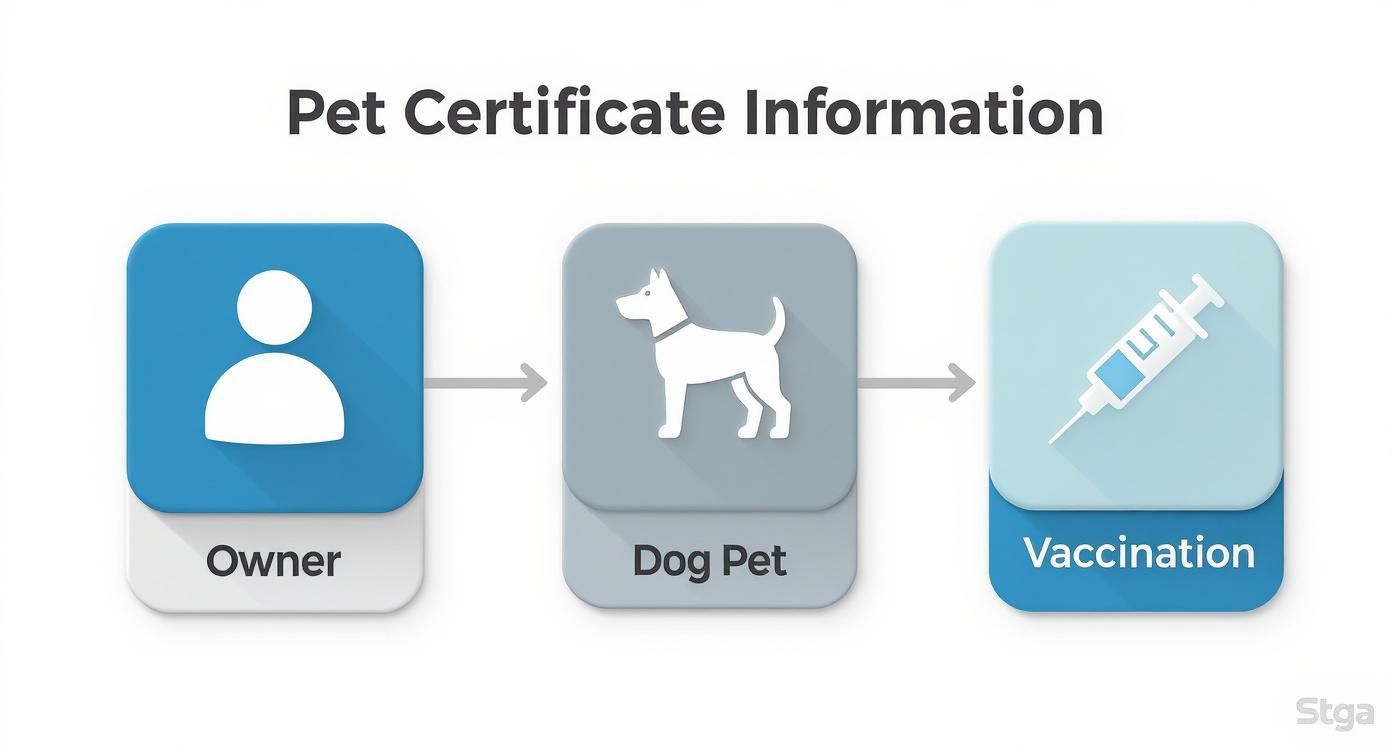
As you can see, it's a partnership between you, your pet, and your vet to make sure every health requirement is met.
Step 2: Find a USDA-Accredited Veterinarian
Once you know the rules, it's time to book an appointment. But here's the catch: not just any vet can issue a travel health certificate. You'll need to see a veterinarian who is USDA-accredited. These vets have gone through special training and are authorized by the U.S. government to sign these official documents. A certificate from a non-accredited vet will most likely be rejected.
Make sure you schedule this appointment well within the required timeframe. This brings us to the next important point.
Timeliness is everything when it comes to a pet certificate of health. Most certificates are only valid for a very short period, often just 10 days from the date of the veterinary exam.
This tight window means you can't get the certificate too early. You'll need to plan your vet visit to fall squarely within that 10-day period right before your departure.
Step 3: Government Endorsement, if Needed
For many international destinations, there's one final step after your vet signs the certificate. The document may need to be sent to the USDA's Animal and Plant Health Inspection Service (APHIS) for an official government endorsement. This is basically the government's stamp of approval, confirming your vet's signature and the document's legitimacy.
This process can take time, so it's important to factor it into your timeline. For a deeper dive into this specific part of the process, our guide on how to get a USDA-endorsed pet health certificate walks you through everything you need to know. Following these steps will help make sure your pet's travel plans go off without a hitch.
Understanding the Costs and Changing Rules
When you're planning for a pet certificate of health, it's smart to budget for more than just the final piece of paper. The total cost can vary quite a bit, depending on where you're headed, the specific hoops you need to jump through, and even your own vet's fees. Think of it like buying a plane ticket—the final price tag really depends on your destination and any extras you need along the way.
The biggest chunk of the cost is often the veterinary exam itself. This isn't your average check-up. It's a detailed assessment by a USDA-accredited vet to make sure your pet is healthy enough to travel. If your pet needs any last-minute shots, parasite treatments, or specific blood tests to meet the destination's rules, those will add to the final bill. The more complicated the country's import requirements, the more you can generally expect to pay.
Breaking Down the Main Expenses
Several key things factor into the total cost of getting your pet ready for takeoff. Keeping these in mind will help you avoid any last-minute financial surprises.
Accredited Vet Exam Fee: This is the base charge for the veterinarian's time and expertise in getting the official paperwork filled out correctly.
Required Tests and Vaccinations: If your destination demands a rabies titer test or specific parasite treatments, these procedures will show up on your invoice.
Government Endorsement Fees: For international trips, the USDA often has to stamp and approve the certificate, and they charge a fee for this service.
For example, the USDA’s Animal and Plant Health Inspection Service (APHIS) has adjusted its endorsement fees over time. Fees for a pet health certificate can be around $101 and climb to $173 or more, depending on how many tests the destination country requires.
Staying Ahead of Shifting Regulations
Beyond the costs, it's very important to remember that pet travel rules aren't set in stone. Governments can—and do—update their import requirements, sometimes with little warning. A process that worked for a friend’s pet last year might not work for your trip today. This makes checking the latest rules a vital first step in your planning.
Think of pet travel regulations like the weather—they can change unexpectedly. Always check the official government source for your destination right before you begin the process to ensure you have the most current information.
Taking this proactive approach saves you from last-minute scrambles and helps ensure you aren't spending money on requirements that are no longer valid. It’s the best way to make the whole process as smooth and stress-free as pawsible. For a deeper dive into the financial side of moving with a pet, our guide on pet transportation costs has plenty of additional insights.
The Bigger Picture of Pet Health and Travel

It’s easy to see a pet certificate of health as just another item on a long travel checklist. One more box to tick before you can finally get going. But if you take a step back, this piece of paper is part of a much bigger, and frankly, much better, way of thinking about our pets.
This document is proof that we’ve shifted from just owning pets to treating them like true family members.
This "pets as family" mindset has completely changed how we approach their well-being. We're not just reacting to sickness anymore; we're actively working to keep them healthy in the first place through routine check-ups, regular screenings, and staying on top of their vaccinations.
And it's not just a feeling—it's a massive cultural shift driving real industry growth. The global market for pet health screenings is set to grow by about 6.1% every year through 2033. That growth is fueled by owners like you who see preventative care as the best approach. You can read more about these pet wellness trends to see just how much this is shaping the future of veterinary medicine.
More Than a Form, It's a Commitment
When you really think about it, everything required for a health certificate fits perfectly with this modern, responsible view of pet ownership. The certificate isn’t just a hurdle—it's a snapshot of great care in action.
Each part of that form tells a story about your pet's well-being:
Vaccination Records: This shows you’re committed to protecting your pet from serious, preventable diseases.
Parasite Checks: This confirms you're taking the right steps to keep them free from harmful pests.
Veterinary Exam: This is a professional thumbs-up, an expert confirmation that your pet is healthy and ready for adventure.
Getting a health certificate is less about following a rule and more about joining a global effort to protect animal welfare. It’s a meaningful step that confirms your own pet is healthy while helping safeguard the entire pet community.
So, the next time you need a pet certificate of health, try to see it in this new light. It’s not just a travel pass—it’s a testament to the love and excellent care you give your furry family member every single day.
Common Questions About Pet Health Certificates
Getting a pet certificate of health often brings up a few last-minute questions. It’s completely normal to want to nail down every single detail. To help clear up any confusion, we’ve pulled together the answers to the questions we hear most from pet owners.
Knowing these answers ahead of time will help you feel more confident and prepared for the process, making the journey as smooth as possible for both you and your furry co-pilot.
How Long Is a Pet Health Certificate Valid For?
This is one of the most critical, time-sensitive parts of the entire pet travel puzzle. For most domestic and international flights, the health certificate should be issued within 10 days of your travel date. Think of it as a fresh seal of approval confirming your pet's current health status right before they fly.
But that 10-day window isn't a universal rule. Some destinations or airlines have their own specific timelines. It's very important to confirm the requirements for your specific trip. Always double-check this before you schedule that vet appointment—it'll save you from a world of last-minute panic.
Do I Need a Special Kind of Veterinarian?
Yes, you do. For nearly all official travel, you should use a veterinarian who is USDA-accredited. These are vets who have gone through specific training and are authorized by the U.S. government to issue a formal pet certificate of health for animal transport.
A certificate from a non-accredited vet will almost certainly be rejected by airlines and border officials. Using an accredited vet isn't just a good idea; it's a key part of the process.
You can usually find a list of accredited veterinarians in your area on the USDA APHIS website, which makes it pretty easy to find a qualified professional for the job.
Can My Pet Travel with a Pre-Existing Condition?
If your pet has a chronic but stable health condition, travel is often still possible. The key here is total transparency and the right paperwork. The accredited vet can note the condition on the health certificate and state that it is well-managed and doesn't pose a travel risk.
Ultimately, though, airlines and destination authorities may have the final say. It’s a smart move to discuss this with your vet early in the planning process and to check directly with your airline about their policies for pets with pre-existing conditions. A little extra communication can make all the difference.
Planning pet travel can feel like navigating a maze, but it doesn't have to. With Passpaw, veterinary practices can simplify the entire process, from managing documents to communicating with clients, ensuring every detail is perfect for a pet's journey. Learn more about how Passpaw streamlines pet travel compliance.

More articles
From regulatory changes to best practices for veterinarians and pet owners, our resources keep you ahead of the curve.