Are you a team member in a veterinary practice?
Are you a pet parent planning a trip with your furry pal?
Guide to a Pet Airline Travel Carrier: Find the Best Fit
Flying with your best friend should be an adventure, not a source of anxiety. It all starts with finding the right pet airline travel carrier, which is their personal safe space in the sky. Getting this part right—making sure the carrier meets airline rules for either in-cabin or cargo travel—is the first step to ensuring they're comfortable and secure from takeoff to landing.
Your Pre-Flight Checklist for Pet Carriers
Choosing the right carrier can feel like a huge task, but it really just comes down to a few key decisions and some important features. More of us are traveling with our pets than ever before. In fact, the global pet travel services market was valued at around $2.4 billion and is only expected to grow, which makes sense when you consider how many of us see our pets as true family members. You can dig into the numbers on pet travel industry growth from recent market analyses.
This boom means more carrier options on the market, but it also means you have to be more careful in your selection. The first thing you need to figure out is where your pet will be during the flight.
In-Cabin vs. Cargo Hold Carriers
The biggest difference you'll find is between carriers made for the cabin and those designed for the cargo hold. For in-cabin travel, a soft-sided carrier is almost always your best bet. Its flexibility is a huge advantage when you need to fit it neatly under the seat in front of you.
If your pet is traveling in the cargo area, you'll need a hard-sided plastic kennel. These are built tough for a reason. Airlines often suggest they have features like metal bolts that secure the top and bottom halves together—plastic clips just might not cut it. This is to make sure the carrier stays in one piece during the journey.
To make it easier to see the differences, here’s a quick comparison of the two main types of carriers.
In-Cabin vs Cargo Pet Carrier At a Glance
Feature | In-Cabin Carrier | Cargo Carrier (Checked Baggage) |
|---|---|---|
Material | Usually soft-sided (polyester, nylon) | Hard-sided plastic (IATA-style) |
Primary Benefit | Flexible to fit under airline seats | Durable and protective for transit |
Fasteners | Secure zippers, often with locking clips | Metal nuts and bolts (not plastic clips) |
Ventilation | Mesh on multiple sides | Vents on all four sides |
Pet Size | Small enough to fit under the seat | Larger pets that cannot fly in-cabin |
Ultimately, the right choice depends entirely on your pet's size and the airline's specific rules for where they can travel.
A huge mistake people make is seeing "airline-approved" on a label and assuming it's a universal green light. It's not. Every single airline has its own specific rules, so a carrier that one airline loves might get rejected by another. Always, always check with your airline directly.
No matter which type of carrier you choose, there are a few must-have features to look for:
Excellent Ventilation: Your pet needs fresh air. Look for carriers with mesh on at least two or three sides.
Secure Latches: Zippers should have locking clips to prevent any clever escape attempts. For hard-sided kennels, the door must latch securely.
Absorbent Bedding: A comfortable, leak-proof liner is helpful for keeping your pet clean and dry if there are any accidents.
Of course, having the perfect carrier is only one piece of the puzzle. You also need to make sure all your pet's travel documents are ready to go. For any international travel, the health certificate is very important. If you're just getting started, our guide on the veterinary international health certificate is a great place to begin.
Navigating Airline Rules for Pet Carriers
Figuring out airline pet policies can feel like you're trying to solve a puzzle with half the pieces missing. Every airline has its own playbook, and what was perfectly fine on one flight might get you turned away on the next.
Let's clear one thing up right away: the term "airline-approved" is mostly for marketing. There's no single, universal certification that means a carrier will be accepted everywhere. It's just not that simple.
The reality is, each airline sets its own specific requirements for pet carriers. This means the carrier you used last year might not pass the check with a different airline today. They can have different rules for everything—size, weight, ventilation, even the type of material.
In-Cabin vs. Cargo: Know the Difference
One of the biggest points of confusion is the difference between carriers for in-cabin travel versus those checked as cargo. It’s a critical distinction. In-cabin carriers have to be small and flexible enough to slide under the seat in front of you. Cargo carriers, on the other hand, are held to much stricter IATA (International Air Transport Association) style guidelines for strength and security.
This decision tree gives you a quick visual on which path you’ll likely need to take.

Essentially, it boils down to whether your pet is small enough to fly with you in the cabin or needs the sturdier, hard-sided crate needed for the cargo hold.
Why You Must Always Double-Check
Airlines aren't just being difficult; these rules are all about safety. With over 4 million pets flying each year, strict policies on carrier ventilation and construction are important to prevent things like overheating.
For instance, many airlines have very specific rules for brachycephalic (flat-faced) breeds like Pugs, French Bulldogs, and Persian cats. Their breathing sensitivities mean they often need carriers with extra ventilation and might not be able to fly in cargo during warm weather.
The single most important thing you can do is this: Always check your specific airline’s pet policy page before you book, and then check it again before you fly. This isn't just a friendly suggestion—it's the only way to avoid the nightmare of being denied boarding at the gate. I always tell people to print a copy of the policy and bring it to the airport.
Rules can and do change without warning. To get a feel for what to look for, take a look at our complete guide to the Delta pet travel policy. Once you've seen one airline's rules in detail, you'll have a much better idea of what to expect from others. A little preparation goes a long way in ensuring a smooth trip for both you and your furry co-pilot.
Finding the Paw-fect Fit for Your Pet
Getting the size of your pet airline travel carrier right is probably one of the most important parts of planning your trip. A carrier that’s too tight is uncomfortable and unsafe, but one that’s too big can make your pet feel insecure and slide around during takeoff or turbulence. You're looking for that "just right" Goldilocks zone.
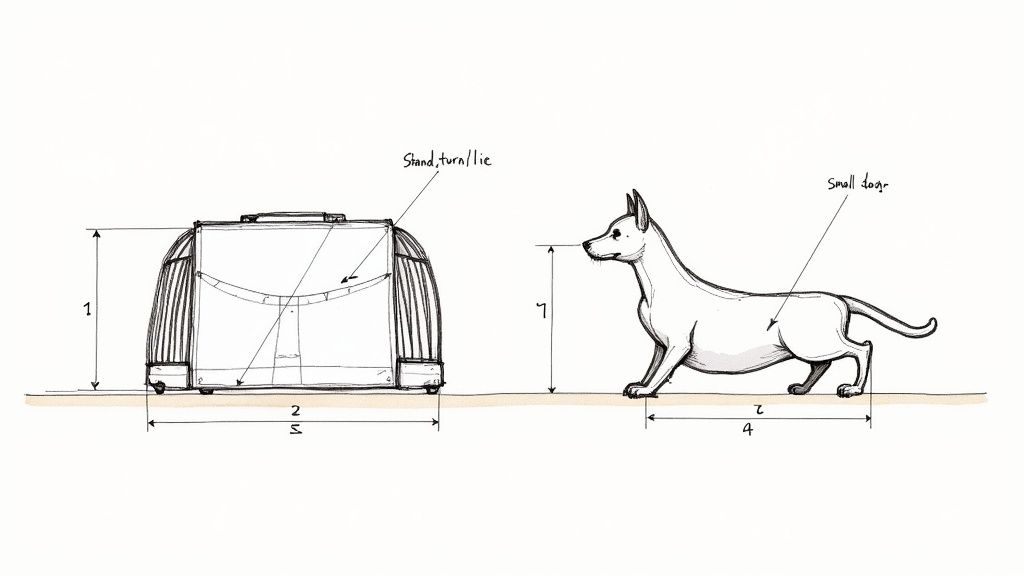
Airlines are pretty consistent on this rule: your pet must have enough room to stand up, turn around, and lie down comfortably in a natural position. Think of it as their personal business class seat—they need a little space to adjust and get comfortable. A cramped pet is a stressed pet, and a smooth journey begins with making them feel secure.
How to Measure Your Pet Correctly
To nail the measurements, you'll need a soft measuring tape and maybe a few treats to convince your travel companion to stay still. Don't guess—a couple of inches can make all the difference between a carrier that gets approved and one that gets denied at the check-in counter.
Length: Measure your pet from the tip of their nose to the base of their tail. The tail itself doesn't count.
Height: While they're standing, measure from the floor to the top of their head or the tip of their ears, whichever is higher.
Once you've got those numbers, add 2-4 inches to both the length and height. This little bit of wiggle room is what lets them reposition themselves without feeling boxed in.
Remember, in-cabin carriers have to fit under the seat in front of you, so there are strict external dimension limits. This means you have to find a carrier that's big enough on the inside for your pet but small enough on the outside for the airline. It's a tricky but essential balancing act.
These final measurements give you the minimum internal dimensions your carrier needs. Juggling all these numbers along with airline rules can feel like a lot, which is where a good pet travel planner can really save your sanity. It helps keep everything from carrier dimensions to flight info organized in one spot.
How to Prepare Your Pet for a Smooth Journey
A great pet airline travel carrier is half the battle, but the real win is having a calm, happy pet inside it. The secret to a stress-free travel day isn't just about the gear; it's about helping your pet see their carrier as a safe space long before you even think about booking a flight. This simple process can turn a scary box into a familiar, cozy den.
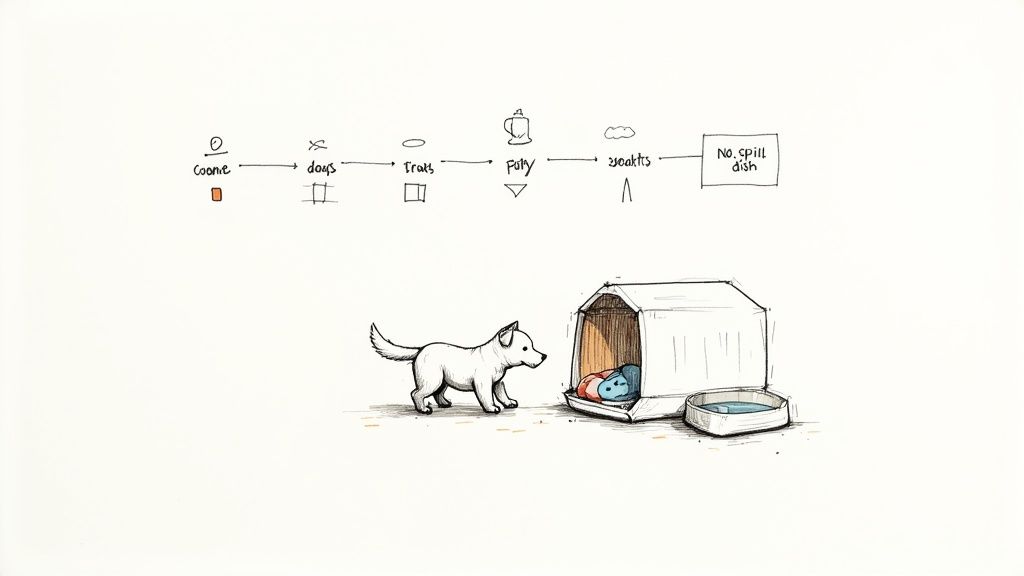
The key is to start early—weeks in advance, if you can. Just leave the new carrier out in your living room with the door wide open. Let your pet sniff it out and check it out on their own terms. It's all about creating a positive, no-pressure first impression.
Try tossing a few of their favorite treats or a beloved toy inside to build a strong, positive association. Before you know it, you might just find them napping in there on their own. That's a paw-some sign your hard work is paying off. For more tips on getting your furry friend ready for the skies, check out our comprehensive guide to all things pet travel.
One of the biggest mistakes I see is waiting until the last minute to introduce the carrier. A pet's first encounter with their carrier should never be the chaos of a travel day. A slow, positive introduction is the best way to make them feel secure.
Day-of-Travel Preparations
When travel day finally rolls around, a little planning goes a long way. These simple steps can dramatically cut down on stress for both you and your pet.
Time Their Last Meal: Give your pet a light meal about four hours before your flight. This helps prevent an upset stomach while making sure they don't get too hungry.
Final Potty Break: Make sure they get one last chance to relieve themselves right before you head into the airport. Trust me, you'll both be glad you did.
Pack for Comfort: Place a familiar blanket or a t-shirt with your scent inside the carrier. That little piece of home can be incredibly reassuring for them.
Water Wisely: For longer flights or cargo travel, a non-spill water dish that attaches to the carrier door is a great idea.
It's amazing how common pet travel has become. Globally, dogs make up about 58% of all traveling pets, with a full 60% of owners taking their pets along on vacation. Still, travel restrictions can be a hurdle, causing 35% of owners to opt for shorter trips. It just goes to show you're part of a massive community of globe-trotting pet parents.
What to Look for in a Carrier
When you're picking out a pet airline travel carrier, the little details are everything. A good carrier is much more than a simple box; it's your pet's safe space during the chaos of travel. You'll want to look past the flashy marketing and focus on the features that actually deliver on safety and durability.
First up, let's talk materials. For pets traveling in cargo, nothing beats a sturdy, hard-sided plastic shell. And I mean one held together with metal nuts and bolts, not those flimsy plastic clips that can pop open. If your pet is small enough to fly in the cabin, look for tough, tear-resistant fabrics like nylon or polyester stretched over a strong frame that won’t collapse.
Must-Have Safety and Comfort Features
Once you've settled on the basic shell, it's time to zero in on the elements that separate a top-tier carrier from a risky one. Proper ventilation is absolutely key. A quality carrier should have mesh windows on at least two or three sides to keep fresh air flowing. This is crucial for keeping your pet from overheating and helps them stay calm.
Security is another big one. Are the zippers escape-proof? I always recommend looking for zippers with locking clips to stop a clever dog or cat from nosing their way out. The hardware, like the D-rings for the shoulder strap, should always be metal. Plastic can and does snap under pressure, and that's the last thing you want to deal with at an airport. It’s these small things that prevent a total travel nightmare.
A truly high-quality pet carrier prioritizes function over flash. Essentials like a waterproof bottom, a removable and washable plush liner, and strong stitching are far more important for your pet's well-being than trendy colors or patterns.
Finally, don't overlook the practical details that make your life easier. Does the carrier have pockets for stashing a leash or a bag of treats? Is there a sleeve to slide over your luggage handle? What about clear pockets for ID tags and "Live Animal" labels? A carrier with these thoughtful features shows it was actually designed by someone who understands the realities of air travel.
Before you make a final decision, it helps to run through a quick checklist to make sure you haven't missed anything important.
Airline Carrier Feature Checklist
This table breaks down the key features to check before purchasing a pet carrier for air travel, helping ensure it meets both safety and airline guidelines.
Feature | Why It Matters | What to Look For |
|---|---|---|
Ventilation | Ensures proper airflow to keep your pet cool and calm. | Mesh windows on at least 2-3 sides for cross-ventilation. |
Secure Fasteners | Prevents accidental escapes during transport. | Metal nuts and bolts for hard carriers; locking zippers for soft carriers. |
Material Durability | Withstands the rigors of travel and prevents tears or breaks. | Sturdy hard plastic for cargo; tear-resistant fabric (nylon/polyester) for in-cabin. |
Waterproof Bottom | Contains accidents and makes cleanup easy. | A leak-proof base, often with a raised lip. |
Removable Liner | Provides comfort and allows for easy washing. | A soft, machine-washable plush or fleece pad. |
Strong Hardware | Ensures straps and handles won't break under your pet's weight. | Metal D-rings and strap clips, not plastic. |
Travel-Friendly Add-Ons | Simplifies carrying and identification. | Luggage strap, storage pockets, and a clear ID tag slot. |
Taking a few extra minutes to confirm these features will give you peace of mind, knowing your pet is as safe and comfortable as possible on your journey.
Common Questions About Pet Travel Carriers
Flying with your furry co-pilot can stir up a lot of questions, even after you've picked out the perfect pet airline travel carrier. It’s completely normal to have some last-minute jitters. Let's clear up a few of the most common concerns so you can feel confident and ready for a smooth trip.
Can I Use the Same Carrier for Cabin and Cargo?
That's a great question, but the answer is almost always no. Carriers made for in-cabin travel are typically soft-sided, giving them just enough flex to slide under the seat in front of you. It's a snug fit, and that flexibility is key.
Cargo carriers, on the other hand, are a whole different ball game. They have to be rigid, hard-sided kennels built with specific safety features like metal bolts. They’re designed to be tough and secure enough to handle the journey in the cargo hold. You’ll definitely need the right type for your pet’s ticket.
What Should I Put Inside the Carrier?
Simplicity and comfort are your best friends here. A soft, absorbent pad or a familiar blanket can make the space feel much cozier and more like home. A little bit of comfort goes a long way.
For pets traveling in cargo, be sure to attach food and water dishes to the inside of the door. This allows the airline staff to give your pet refreshments without opening the kennel. While it’s best to skip bulky toys that take up space, tucking in a t-shirt that smells like you can be incredibly calming for your pet.
A lot of people wonder if they should give their pet medication before a flight. Most vets and airlines strongly advise against sedation, as it can interfere with a pet's breathing and balance at high altitudes. A much better approach is to focus on positive carrier training well before your trip. If you're concerned, always have a chat with your vet.
Ultimately, a little prep work makes all the difference. Getting these details sorted out ahead of time helps ensure your pet’s journey is as safe and stress-free as paws-sible.
Navigating the maze of pet travel documents can be tough, but Passpaw is here to help. Our platform takes the guesswork out of getting international health certificates, making sure every requirement is met on time and without errors. Let us handle the paperwork so you can focus on the adventure. Find out more at https://passpaw.com.
More articles
From regulatory changes to best practices for veterinarians and pet owners, our resources keep you ahead of the curve.