Are you a team member in a veterinary practice?
Are you a pet parent planning a trip with your furry pal?
Moving with Pets Overseas: Your Complete Guide
Moving to a new country with your pet is a huge adventure, but it's completely doable when you know what to expect. The secret to a smooth journey is starting early. Seriously, many destination countries have health requirements that take months to complete, so this isn't something you can leave to the last minute. Think of it as getting your furry co-pilot's passport ready for an international trip.
Your International Move With a Furry Co-Pilot
You're not alone in this! Moving with pets overseas is more common than you might think. You're joining a massive community of global citizens who wouldn't dream of leaving their four-legged family members behind.
This trend is so big that the global pet relocation market hit around $2.5 billion in 2023 and is only expected to grow. It just goes to show how committed people are to keeping their families—furry members included—together, no matter where life takes them.
Successfully getting your pet from Point A to Point B is all about timing and organization. You simply can't rush vet appointments, required waiting periods after blood tests, or import permit applications. Breaking the whole process down into smaller, manageable chunks makes it far less intimidating and helps you make sure nothing important gets missed.
The Long Runway Before Takeoff
Your pet's travel journey begins long before you even think about booking a flight. In fact, the research phase is probably the most important part of the entire process.
Every country has its own unique rulebook for bringing in animals. Some might not allow certain breeds at all, while others could require a lengthy and costly quarantine period when you arrive.
The biggest mistake I see pet owners make is underestimating the timeline. If you're heading to a strict destination like Australia or Japan, the process can easily take six months or more because of their tough rabies testing and quarantine rules.
This timeline gives you a great visual breakdown of the key stages: kicking off your research, handling all the veterinary prep, and then finally, making the travel arrangements.
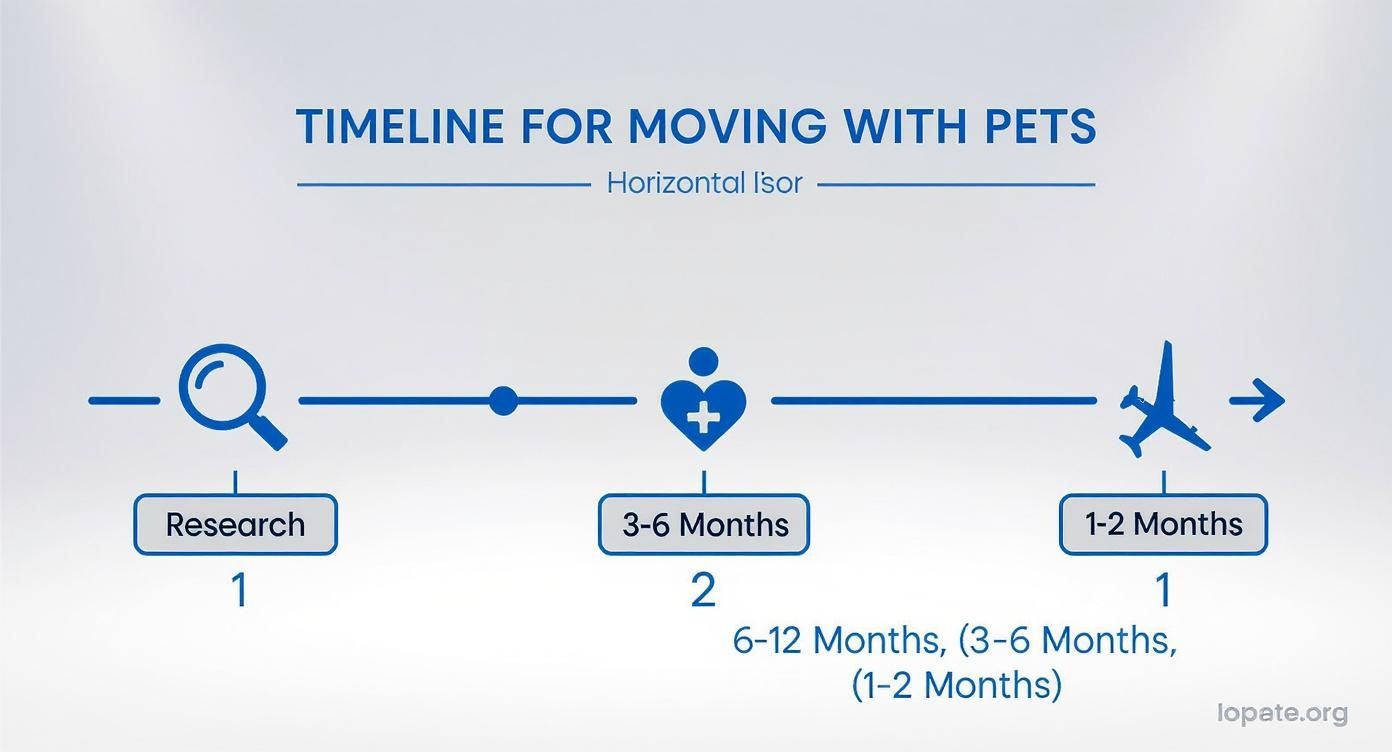
As you can see, the real heavy lifting happens months in advance. Getting a head start is the best way to keep stress levels down for both you and your pet.
Getting Organized for the Move
Staying on top of every little detail is the name of the game. You're juggling vet visits, government paperwork, and airline rules—it's a lot. And that's on top of everything else involved in a move! A comprehensive guide for moving house can be a lifesaver for managing all the other non-pet-related tasks on your plate.
To keep your sanity, create a special folder (digital or physical) just for your pet's travel documents. Here's what you'll need to start tracking:
Destination Country Requirements: Find the official import rules for your new home. This is your first and most important step.
Veterinary Timeline: Map out and schedule all needed appointments for microchipping, vaccinations, and any required blood tests.
Airline Policies: Research pet-friendly airlines and get super clear on their rules for crates, temperature restrictions, and booking procedures.
Here's a quick overview of how that timeline generally breaks down.
International Pet Move Timeline At a Glance
This table gives you a bird's-eye view of the major milestones you'll need to hit and when you should be tackling them.
Timeframe Before Move | Key Task | Primary Goal |
|---|---|---|
6-12 Months | Initial research | Understand the destination country's import laws, breed restrictions, and quarantine rules. |
4-6 Months | First vet visit | Confirm microchip, update rabies vaccine, and perform rabies titer test (if required). |
2-4 Months | Book transport | Secure a spot with a pet-friendly airline or a professional pet shipper. |
1-2 Months | Apply for permits | Submit applications for import permits and gather all necessary documentation. |
Within 10 Days | Final vet check | Obtain the final International Health Certificate and any required treatments (e.g., tapeworm). |
Travel Day | Final checks | Make sure all original documents are handy and your pet is comfortable for the journey. |
Remember, this is just a general guide. Your specific timeline will depend entirely on where you're going.
Creating a detailed checklist is one of the best ways to stay on track. If you want a digital tool to help, our custom pet travel planner can map out all your tasks and deadlines. A little prep work now will make the entire move feel less like a frantic scramble and more like a well-planned adventure.
Making Sense of Health Checks and Paw-perwork

Alright, let's tackle the part of moving with pets overseas that trips most people up: the paperwork. It can feel like a mountain of forms, but think of it as your pet's official travel portfolio. Honestly, getting this part right is the single most important step for a smooth entry into your new country.
Each document has a specific job, from proving your pet's identity to confirming they are healthy and won't pose a risk to local animals. This isn't just about ticking boxes—it's about following international animal health rules that keep pets everywhere safe.
The Microchip: Your Pet’s Global ID
Before you do anything else—vaccines, blood tests, anything—your pet needs an ISO-compliant microchip. This tiny chip is their permanent ID, and it's the very first thing officials will check.
Think of it this way: the microchip number is like a passport number. Every other health document, from the rabies certificate to the final health forms, should be tied to this specific chip.
Why is the timing so important? If your pet gets a rabies vaccine before being microchipped, most countries will consider that vaccine invalid for travel. You'd have to start all over again, which could throw your entire timeline off by months. Always, always microchip first.
Rabies Vaccinations and Titer Tests Explained
The rabies vaccine is the cornerstone of international pet travel. Nearly every country requires an up-to-date rabies vaccination, but the timeline is what catches people by surprise.
Typically, your pet must be vaccinated at least 21-30 days before they can travel. This waiting period gives the vaccine enough time to become fully effective.
But it doesn't stop there. Many rabies-free or rabies-controlled countries ask for an extra layer of proof called a rabies titer test (also known as a FAVN test).
What is it? It’s a simple blood test that measures the level of rabies antibodies in your pet’s system, proving the vaccine is actually working.
When is it done? The blood sample has to be drawn at least 30 days after the most recent rabies vaccination.
The Waiting Game: This is the big one. After the blood is drawn, many countries have a required waiting period—often three to six months—before your pet is even allowed to enter. This is exactly why you need to start the process so far in advance.
For example, a move to Japan requires a 180-day wait starting from the date the blood sample arrives at the lab. Missing that window can completely sidetrack your plans.
International pet travel is a world of complex rules that vary wildly from one country to another. Nations like Australia and New Zealand have strict quarantine periods, while others might ban certain breeds entirely. This is why standardized documents, like ISO-compliant microchips and official health screenings, are so crucial for building trust in the relocation process. You can find more details on how these rules shape the process of bringing your pet on an overseas move on CurrencyFair.com.
Finding the Right Vet and Nailing the Health Certificate
Heads up: not just any veterinarian can sign off on international travel forms. You'll likely need to work with a government-accredited veterinarian who is authorized to handle these documents. Your regular clinic should be able to tell you if they have an accredited vet on staff or can refer you to one who does.
This vet will be your go-to for preparing the International Health Certificate. This document is the final, official summary of your pet’s health, confirming they are fit to fly and free of contagious diseases. For a complete look at this form, check out our guide on what a pet health certificate for international travel includes.
This certificate is incredibly time-sensitive. It usually has to be completed and then endorsed by a government agency (like the USDA here in the States) within just 10 days of your departure. That tight window leaves zero room for mistakes.
Don’t Get Blindsided by Country-Specific Rules
Beyond the basics, many countries have their own unique requirements. This is where all that early research you did really pays off. Missing even one of these specific demands can lead to your pet being quarantined or even denied entry. It's a real cat-astrophe you want to avoid.
Here are a few common country-specific rules you might run into:
Parasite Treatments: Many places, especially in Europe and the UK, ask for a specific tapeworm treatment (usually with praziquantel) given by a vet within a very precise window before arrival.
Import Permits: Some destinations require you to apply for and receive an official import permit months in advance. You'll have to present this permit when your pet lands.
Extra Vaccinations: Depending on where you're headed, your pet might need vaccines for more than just rabies, like canine influenza or leptospirosis.
Always, always check the official government agriculture or veterinary services website for your destination country. That's the only way to get the most accurate, up-to-date list of what you need. With a bit of careful planning, you'll have all your pet's paw-perwork sorted and be ready for your big adventure.
Choosing the Right Flight and Travel Crate
Once the most demanding paperwork is in motion, you can shift your focus to the journey itself. Booking your pet’s flight is a huge step, but it’s about more than just finding an open spot. You need to figure out the best way for them to travel and, just as importantly, pick a crate that will keep them safe and comfortable for the trip.
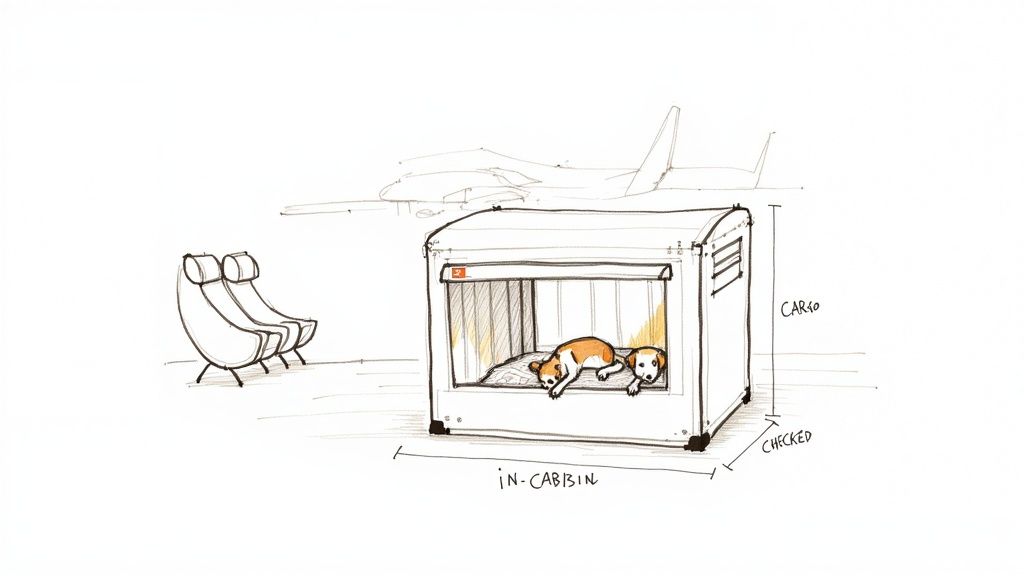
There are three main ways your pet can fly, and each comes with its own set of rules, costs, and benefits. Getting a handle on these options is the key to making the right call for your animal and your specific move.
Cabin, Cargo, or Checked Baggage?
The first big decision you'll face is how your pet will travel on the plane. Every airline has its own strict policies—so you'll definitely need to check with them directly—but these are the general options you'll come across.
In-Cabin: This is almost always the go-to choice for small pets. If your cat or tiny dog is light enough and can fit comfortably in a carrier under the seat in front of you, they may be able to fly right there with you. It’s usually the least stressful option since they never leave your side.
Checked Baggage: Some airlines let pets travel as "excess baggage" in a climate-controlled, pressurized cargo hold. This is for pets too large for the cabin. You'll check them in at the ticket counter just like a suitcase, and they get loaded onto the same flight as you.
Manifest Cargo: This is the most common route for large pets, animals traveling alone, or for certain destinations. They fly in the same climate-controlled hold but are checked in at the airline's dedicated cargo facility, which is often a completely separate building from the passenger terminal. It might sound a bit intimidating, but the process is handled by staff specifically trained in animal transport.
For many international moves, especially to places with strict import rules like the United Kingdom, manifest cargo may be the only way your pet is allowed to enter the country. Always, always confirm your destination's import rules before you even think about booking a ticket.
Finding the Purr-fect Travel Crate
No matter which way your pet flies, they will need an IATA-compliant travel crate. This is not optional. The International Air Transport Association (IATA) sets the global standard for transporting animals safely and humanely. Showing up with a non-compliant crate means you'll be turned away at the airport, period.
An IATA-compliant crate must be:
Made of rigid plastic, wood, or metal—soft-sided carriers are a definite no for cargo.
Large enough for your pet to comfortably stand up, turn around, and lie down.
Securely fastened with metal nuts and bolts. Plastic clips are almost universally not allowed.
Properly ventilated on at least three sides.
Equipped with separate food and water dishes that clip onto the inside of the door.
Getting the size right is absolutely critical. A crate that’s too small is unsafe and stressful, while one that's too big won’t provide enough stability during turbulence.
How to Measure Your Pet for Their Crate
To find the right size, grab a tape measure. Don't just guess—airlines are incredibly strict about this.
Length: Measure your pet from the tip of their nose to the base of their tail (not the tip). Add a few inches to that number.
Height: While they are standing, measure from the floor to the top of their head or the tip of their ears, whichever is higher. Add a few inches to this number, too.
These two measurements will give you the minimum interior dimensions your crate needs. It's always better to have a little extra space than not enough. A properly sized crate becomes a safe den for your pet during their big trip, not a cramped box. For a deeper dive, our article offers more advice on choosing the best airline travel pet carrier.
Choosing Pet-Friendly Airlines
Not all airlines are created equal when it comes to flying pets. Some have fantastic track records and dedicated animal transport programs, while others have policies that are much more restrictive. Do your homework and read reviews from other pet owners.
When you're comparing airlines, look for:
Direct Flights: The best flight is the shortest one. A direct route minimizes stress and dramatically reduces the chance of something going wrong during a layover.
Temperature Restrictions: Most airlines have a "pet embargo" during extreme weather. They won't fly animals if the temperature at the origin, destination, or any connection point is too hot or cold—usually below 45°F (7°C) or above 85°F (29°C). This is a huge factor if you're moving in the middle of summer or winter.
Clear Pet Policies: A good airline will have its pet policies laid out clearly on its website. If the information is confusing or hard to find, that could be a red flag.
Booking your pet's flight almost always requires calling the airline directly, as these reservations can't typically be made online. When you call, have your pet’s breed, weight, and crate dimensions ready to go. And book as early as you possibly can—the number of pets allowed on each flight is very limited. A little extra care here paves the way for a much smoother journey for your furry family member.
Getting Your Pet Ready for a Smooth Journey
With the paperwork and logistics handled, it's time to shift focus to your pet's emotional and physical well-being. A successful international move is just as much about their comfort as it is about getting the documents right. The real goal here is to make the entire journey as calm and stress-free as possible.
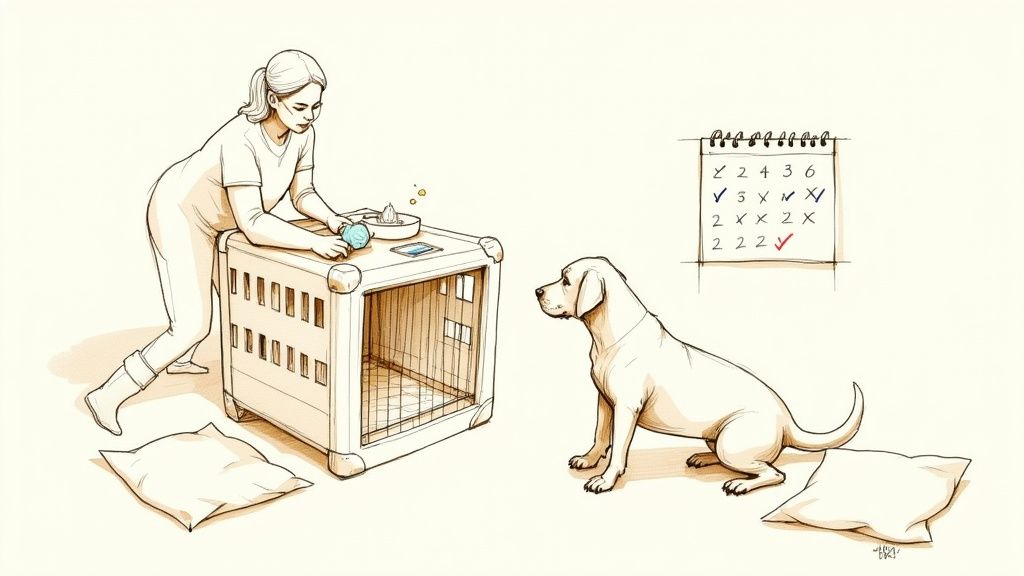
This part of the process starts weeks, sometimes even months, before the actual travel day. The single most important task is transforming their travel crate from a scary, unfamiliar box into a safe space. This is what we call crate training, and it’s one of the best things you can do for your pet before a long flight.
Turning the Crate Into a Comfort Zone
The trick to good crate training is to make the crate a totally normal—even positive—part of your pet's everyday life. You want them to walk in on their own, not see it as a punishment. Think of it as giving them their own cozy, personal den.
Start by just placing the crate in a busy part of your house, like the living room, where your family hangs out. Keep the door wide open and make it look inviting.
Make it Comfy: Put a soft blanket or bed inside that already smells like home. Tossing in one of your old t-shirts can be a great source of comfort.
Use High-Value Rewards: Encourage your pet to check it out by throwing their absolute favorite treats or a special toy inside. Whatever you do, never force them in.
Feed Meals Inside: This is a game-changer. Start feeding your pet their regular meals inside the crate with the door open. It creates a powerful positive connection: crate means good food!
As they get more comfortable, you can start closing the door for just a few seconds at a time, then gradually make it longer. The key is to keep the vibe relaxed and happy. Don't be surprised if you eventually find them napping in there all by themselves.
A well-acclimated pet is a calmer traveler. By making the crate a positive space, you're giving them a familiar sanctuary that will travel with them, reducing their anxiety significantly during the actual move.
The Great Sedation Debate
It can be tempting to ask your vet for a sedative to help your pet "sleep through" the flight, but this is a big no-no from most veterinarians and airlines. It’s a bit of a ruff topic, but it’s really for their own safety.
Sedatives can interfere with a pet's ability to regulate their own body temperature and maintain balance. This is especially risky at high altitudes where the environment is already strange. A groggy, disoriented pet is much more likely to get injured or have breathing problems. It’s far better to focus on natural calming methods and solid crate training.
Countdown to Travel Day Tips
The 24 hours before your flight are critical for setting your pet up for success. A few simple steps can make a massive difference. If your dog is particularly anxious, you might find some useful strategies in a practical guide to calming dog anxiety.
Here’s a quick checklist for the day you leave:
Meal Timing: Feed your pet a light meal about four to six hours before heading to the airport. This gives them plenty of time to digest and helps prevent an upset stomach during the flight.
Hydration is Key: Let them drink water right up until you leave. A great trick is to freeze a small bowl of water and put it in the crate. It will melt slowly, giving them water without spilling everywhere during loading.
Final Potty Break: Take your dog for a nice long walk and give your cat some quality time in their litter box right before you walk out the door. A tired pet is usually a more relaxed pet.
Keep it Calm: Your pet can sense your stress, and it will make them anxious too. Do your best to stay calm and reassuring. Your relaxed energy will help them feel much more secure.
By focusing on these practical and humane strategies, you’re not just prepping them for a trip; you're showing them that they are safe and cared for. For more in-depth advice, Passpaw offers a wealth of resources covering all aspects of pet travel.
Arrival Day and Settling Into Your New Home
You've made it! After months of planning, you and your furry co-pilot have finally landed. It’s a huge moment, but the journey isn't quite over yet. The first few hours and days in your new country are absolutely critical for helping your pet feel safe and start to adjust.
This last leg of the trip is all about patience. You'll need to navigate the airport, clear customs, and then carefully introduce your companion to their new home. A little prep here goes a long way.
Navigating Customs and Pet Collection
Once you land, your first job is to get your pet. How you do this depends entirely on how they traveled.
In-Cabin: If your pet flew with you, this part is pretty straightforward. You’ll go through passport control and customs like any other passenger, with your pet in their carrier. An official at the customs checkpoint will likely ask to see their paperwork.
Checked Baggage: For pets who traveled as checked baggage, you'll typically find them at a special oversized baggage area or a dedicated airline services office. Have all your original documents ready to go.
Manifest Cargo: If your pet flew as cargo, you'll head to the airline's cargo facility, which is usually a separate building from the main passenger terminal. You'll present the air waybill and your import documents to an agent who will guide you through the process of clearing your pet.
No matter how they arrived, you’ll have to formally clear them through customs. This is where your organized folder of paperwork—the import permit, health certificate, and vaccination records—is your best friend. An official will review everything to make sure it all lines up with the country's import rules.
Understanding Quarantine Requirements
This is a big one. Some countries, especially island nations like Australia, New Zealand, and Japan, have strict, required quarantine periods. It’s all about protecting their local ecosystems from diseases and pests that don't exist there.
The length and type of quarantine vary wildly. Sometimes, it’s just a quick vet check at the airport and you’re on your way. In other, stricter countries, your pet will be taken directly from the airport to a government quarantine facility for a stay that could last anywhere from 10 days to several weeks. This is why all that research you did months ago was so important.
If quarantine is required, you won't be picking your pet up from the airport yourself. They will be moved by authorized staff. Make sure you have the facility’s contact information and understand their rules for visiting hours and communication.
Helping Your Pet Settle In
You're finally home! But for your pet, it's a strange new place filled with unfamiliar smells and sounds. Your main job is to create a sense of calm and routine. No need for a cat-astrophe—just a patient, gentle introduction.
Start by setting up a "safe zone" in a quiet room. This space should have all their familiar things:
Their bed or crate
Favorite toys
Food and water bowls
A litter box for cats
Let them explore this area on their own terms. Don't force them to interact or immediately introduce them to new people. Give them time to decompress after a very long trip.
Getting back into a routine is one of the quickest ways to help them feel secure. As much as you can, stick to your old schedule for feeding, walks, and playtime. That predictability is incredibly comforting and tells them that everything is going to be okay.
It's clear that people are more willing than ever to navigate these complexities. Globally, 37% of families now travel with their pets, which is a 19% increase over the last decade. And with nearly 2 million pets flying on commercial airlines in the United States alone each year, you're in good company. You can dig into more pet travel trends and statistics at Soocial.com.
Finding a New Local Vet
Within the first week or two, make it a priority to find a local veterinarian. This is a crucial step. It establishes a point of contact for any future health needs, whether it's a routine check-up or an unexpected emergency.
A local vet can also fill you in on any region-specific health risks, like local parasites or required vaccinations you might not know about. Getting your pet registered in their system right away buys you invaluable peace of mind. A little patience now will pay off with a happy, well-adjusted companion for years to come.
Common Questions About Moving Pets Overseas
Taking your pet overseas is a huge undertaking, and even the most buttoned-up plans can leave you with questions. It's totally normal. Let's walk through some of the most common things we hear from pet owners getting ready for their big move.
How Far in Advance Should I Start Planning My Pet's Move?
The short answer? As early as possible. We recommend starting the process at least 6 to 12 months before you plan to travel.
I know that sounds like a ridiculously long time, but it’s your single best defense against last-minute panic. Many countries have strict timelines that you simply can't rush.
For instance, a lot of rabies-free countries ask for a rabies titer blood test. After that test is done, your pet will often have to wait a mandatory three months before they can even set foot in the country. Starting early gives you the breathing room you need for these long waiting periods, not to mention time to research airlines and get your pet comfortable with their travel crate.
Should I Use a Pet Relocation Service or Do It Myself?
This one really comes down to three things: your destination, your budget, and your own comfort level with juggling a lot of moving parts. Going the DIY route can definitely save you some money, but it's a major time commitment and requires you to be incredibly detail-oriented.
When to Consider a Pro: If you're moving to a country with notoriously complex rules, like Australia or New Zealand, a professional pet relocation service can be an absolute lifesaver. They know the ins and outs of the paperwork, flight bookings, and customs, which takes a massive weight off your shoulders.
When DIY Can Work: For moves between places with more straightforward requirements, like from the US to many EU countries, managing it yourself is very doable. The key is to be obsessive about double-checking every single detail and treating your destination country's official government website as your bible.
Is It a Good Idea to Sedate My Pet for the Flight?
While it might feel like the kindest option, most veterinarians and nearly all airlines strongly advise against sedating your pet for air travel. It can be surprisingly dangerous.
Sedatives can affect a pet’s ability to regulate their body temperature and keep their balance, especially at high altitudes. This can lead to serious health issues mid-flight. A much safer and more effective strategy is to dedicate time to positive crate training, turning their carrier into a familiar, safe space long before the travel day.
The best preparation for a calm traveler is familiarity, not medication. A pet who sees their crate as a safe den will handle the journey far better than one who is simply groggy and disoriented from sedatives.
What Are the Most Common Mistakes to Avoid?
Even with the best intentions, things can go sideways. Knowing the common pitfalls ahead of time is the best way to dodge them. It's not about being purr-fect; it's about being prepared.
Here are the mistakes we see most often:
Starting Too Late: This is the big one. Underestimating the waiting periods for blood tests or paperwork is the fastest way to sidetrack your entire timeline.
Buying the Wrong Crate: Showing up at the airport with a crate that isn't IATA-compliant is a recipe for disaster. Always look for sturdy construction, metal bolts (not plastic clips), and proper ventilation.
Misunderstanding Import Rules: Don't rely on a random blog post from three years ago. Rules change. The only source you should trust is the official government import website for your destination country.
Ignoring Airline Policies: Every airline has its own rules, especially regarding temperature restrictions. A flight can be cancelled at the last minute if it's too hot or cold on the tarmac, so you need to know the policy in advance.
Getting these key details right from the very beginning will make the entire process of moving your pet overseas smoother and far less stressful for everyone—especially your furry family member.
At Passpaw, we help veterinary practices and pet owners navigate the complexities of pet travel documents. Our platform simplifies the management of health certificates and deadlines, ensuring you're ready for takeoff when the time comes.
More articles
From regulatory changes to best practices for veterinarians and pet owners, our resources keep you ahead of the curve.