Are you a team member in a veterinary practice?
Are you a pet parent planning a trip with your furry pal?
10 Most Popular Veterinary Software Platforms (2026 Guide)
If you are shopping for veterinary software, the timing is rarely ideal. The phones are ringing, refill requests are stacking up, and someone at the front desk has six tabs open just to get through the morning. That is usually when a practice manager or owner has to decide whether a new system will reduce friction or move it to a different part of the day.
The right platform changes how a clinic runs. Scheduling, records, billing, client communication, inventory, reporting, and lab connections all live in that decision. Analysts at Grand View Research expect continued growth in the veterinary software market, driven in part by cloud systems and AI features. In practical terms, clinics are asking more from software than they did a few years ago.
Fit matters more than popularity.
Some practices need stronger diagnostic integrations. Some need easier onboarding for a team with mixed comfort levels around tech. Some need tighter control across multiple locations. And some need help with a service that standard PIMS still do not handle well: international pet travel paperwork.
That gap matters for veterinary clinics and pet services serving relocations, breeders, frequent travelers, and high-touch clients. A general PIMS can manage the core charting and billing work, but it often stops short when the job involves country-specific forms, timing rules, document validation, and deadline tracking. That is why this list looks at each platform through the needs of a modern practice, including where a specialized tool like Passpaw fits alongside the main PIMS instead of trying to replace it.
1. Passpaw
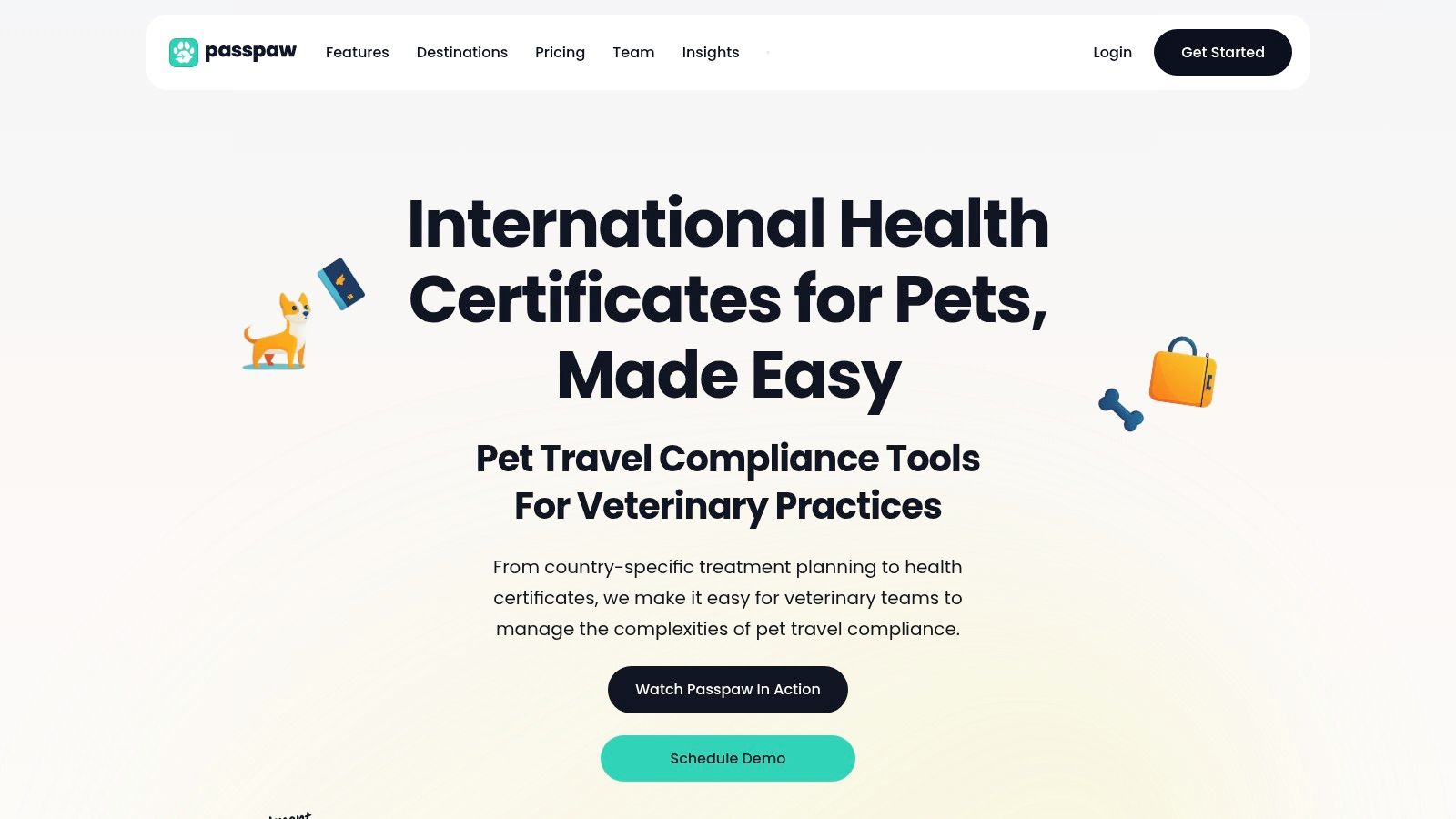
Most PIMS handle the everyday well enough. Appointments, invoices, SOAPs, reminders. Passpaw stands out because it handles a workflow most general veterinary systems still leave manual: international pet travel.
That matters more than many practices expect. Teams can get by with spreadsheets and email threads for a while, but pet travel work has a habit of turning into a hairball. Dates shift. Country rules differ. Clients upload partial records. Someone has to check whether the treatment timing still lines up after an itinerary change. Passpaw is built around that exact mess.
Where Passpaw fits best
Passpaw is cloud-native and designed to automate the health certificate workflow from intake through submission prep. Instead of staff manually chasing every detail, it engages clients early, collects travel and pet information, builds country- and date-specific task lists, validates uploaded records, fills official forms, and assembles a USDA-ready packet.
For a clinic, the practical value is not just speed. It is structure.
Client intake stays organized: Pet owners can provide updates without endless phone tag.
Task timing is clearer: Treatments and document deadlines are sequenced against travel dates.
Submission prep is cleaner: Teams can prepare packets with shipping support and wet-seal handling where needed.
Remote review is easier: Because it is cloud-based, staff are not tied to one machine in one office.
The broader market is moving this direction. Cloud and web-based delivery accounted for 63.4% market penetration in 2026, and practice management software held 56.3% of the veterinary software market share, according to Coherent Market Insights’ veterinary software market report. Passpaw’s model fits that operating style, especially for practices that already prefer browser-based workflows.
If your clinic only does the occasional travel certificate, Passpaw may feel specialized. If you do them often, specialization is the point.
What works and what does not
What works is the end-to-end workflow thinking. Passpaw does not feel like a generic forms tool wearing a veterinary costume. It is built around the primary bottlenecks: changing travel dates, incomplete records, country-specific requirements, and submission readiness.
What does not work for every buyer is the lack of public pricing. You need a custom quote, and that slows down early comparison shopping. Practices should also confirm coverage for the destinations and edge cases they see most often instead of assuming every route and rule is handled the same way.
Website: Passpaw
2. IDEXX Cornerstone
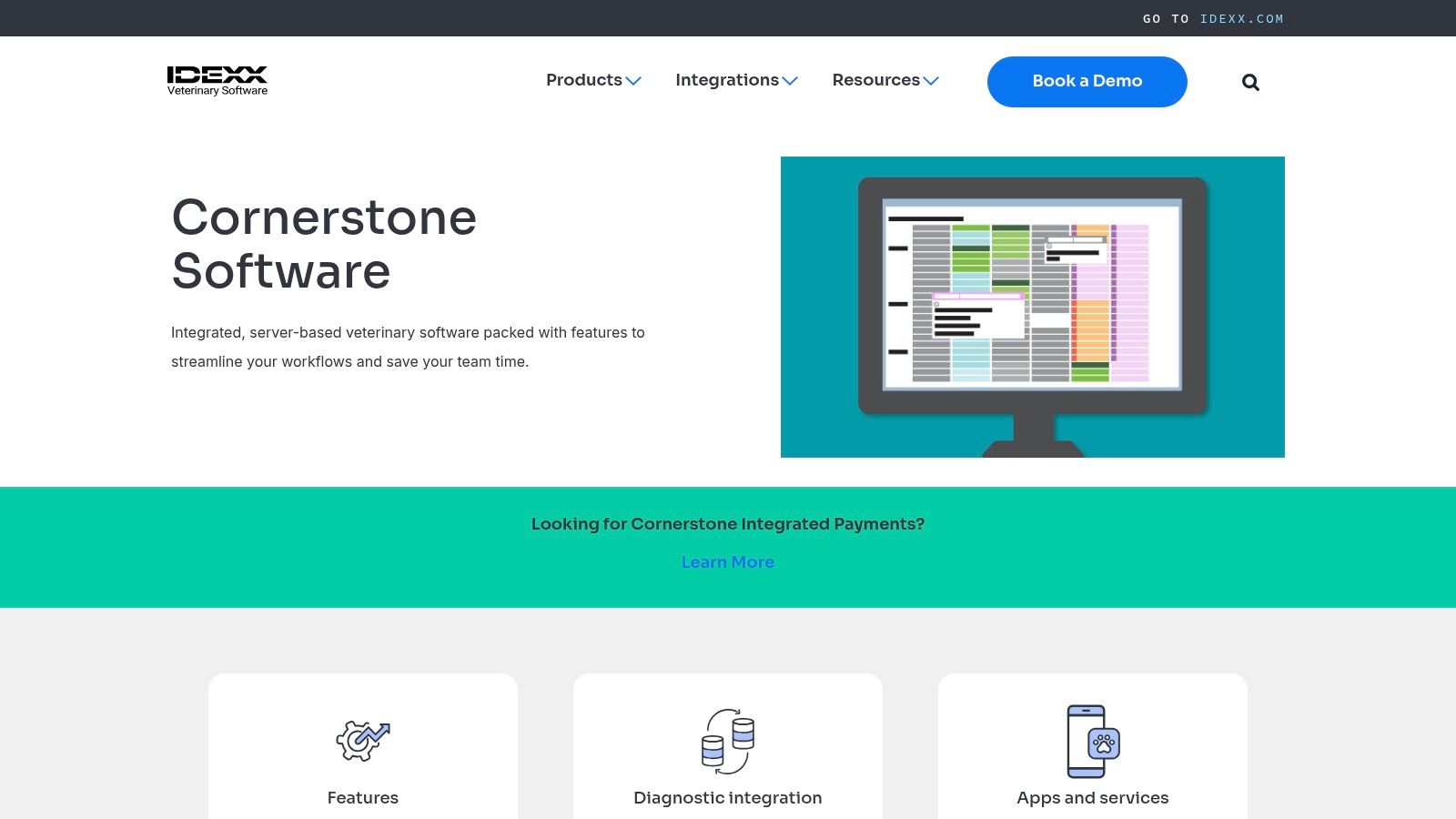
A hospital with four doctors, heavy IDEXX lab volume, and years of built-out workflows can still run very well on Cornerstone. In that setting, replacing the PIMS is not a software decision. It affects exam room flow, front-desk speed, inventory habits, reporting, and every shortcut the team has built over time.
Best for clinics deep in the IDEXX ecosystem
Cornerstone remains a practical choice for practices that already depend on IDEXX analyzers, VetConnect PLUS, imaging, inventory tools, and established in-hospital processes. It covers a lot of ground, and many experienced team members have used it before. That lowers hiring friction and makes cross-training easier in hospitals that do not want to rebuild everything at once.
Its age shows too. Cornerstone is server-based, so ownership includes local hardware, backups, upgrade planning, and IT support. For some practices, that trade is acceptable because they want the control and the feature depth. For others, especially ownership groups trying to standardize across locations, that overhead becomes the reason to leave.
Real trade-offs
Cornerstone fits best in practices that value configurability and established process control more than ease of rollout.
Strong fit: Busy multi-doctor hospitals with entrenched workflows and heavy IDEXX integration
Weaker fit: Newer practices that want remote access, lighter infrastructure, and faster onboarding
Operational advantage: Detailed reporting, broad functionality, and enough depth for teams with complex habits
Common friction: An older interface, more training time, and more dependence on local IT than many clinics want now
One gap matters for modern specialty services. Cornerstone can store records and support the general workflow, but it is not built to manage complex pet travel certificate work, country-specific rule changes, or submission logistics. Practices that offer those services often end up pairing their PIMS with a specialized tool. If you are comparing those options, this veterinary software comparison for modern clinics is a useful place to start.
Website: IDEXX Cornerstone
3. IDEXX Neo
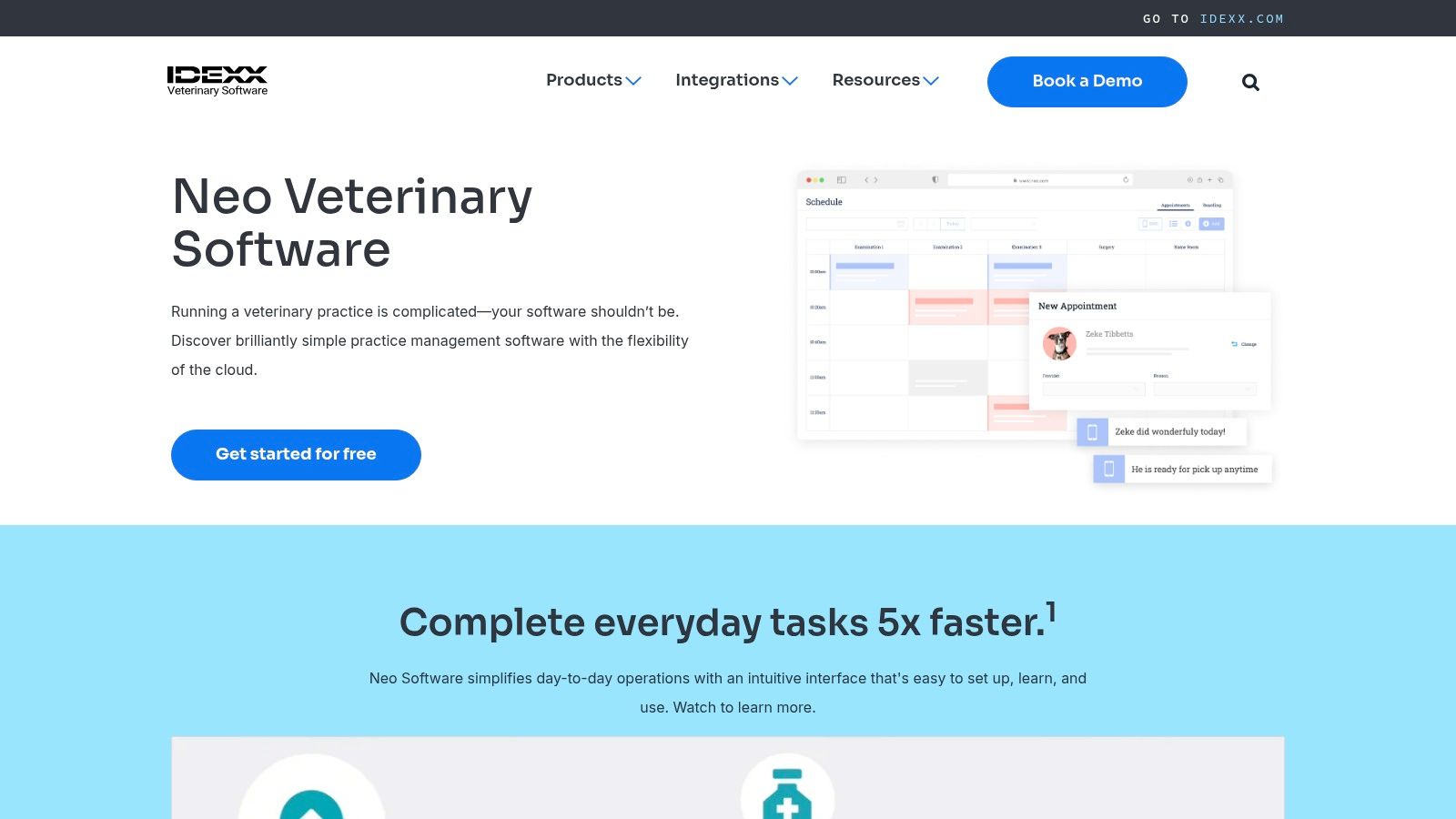
Neo is what many clinics expect from modern veterinary software: cloud access, easier onboarding, cleaner workflows, and less hardware drama. It is not trying to be the heaviest system in the room. That is part of its appeal.
Why teams choose it
Neo works for practices that want IDEXX connectivity without inheriting all the weight of a legacy server build. Doctors can move through patient history quickly, templates help standardize notes, and rollout tends to feel lighter than older platforms.
That makes it attractive to small and mid-sized clinics, especially teams that need software staff can learn without a long runway. Newer associates and relief doctors adapt faster to this kind of layout.
A practical plus is the optional path into other IDEXX tools, including Vello and payments. If a clinic wants to keep its stack tighter, Neo gives it room to do that.
Where it can fall short
Neo is strongest when the clinic values speed and clarity over customization. If your workflows are complex, specialized, or spread across multiple locations with lots of exceptions, you may hit the edges sooner than with a heavier platform.
The public site also does not make pricing transparent, so you will need a demo to get a complete picture.
Neo is often a good “don’t make me think too hard” choice. That is praise, not a knock. In a busy clinic, simple often wins.
One market trend supports that direction. Veterinary hospitals and clinics represented 85.97% of market adoption, and companion-animal platforms accounted for 55.67% of 2025 demand in Mordor Intelligence’s veterinary software market report. Neo fits into that practical companion-animal clinic lane.
Website: IDEXX Neo
4. ezyVet
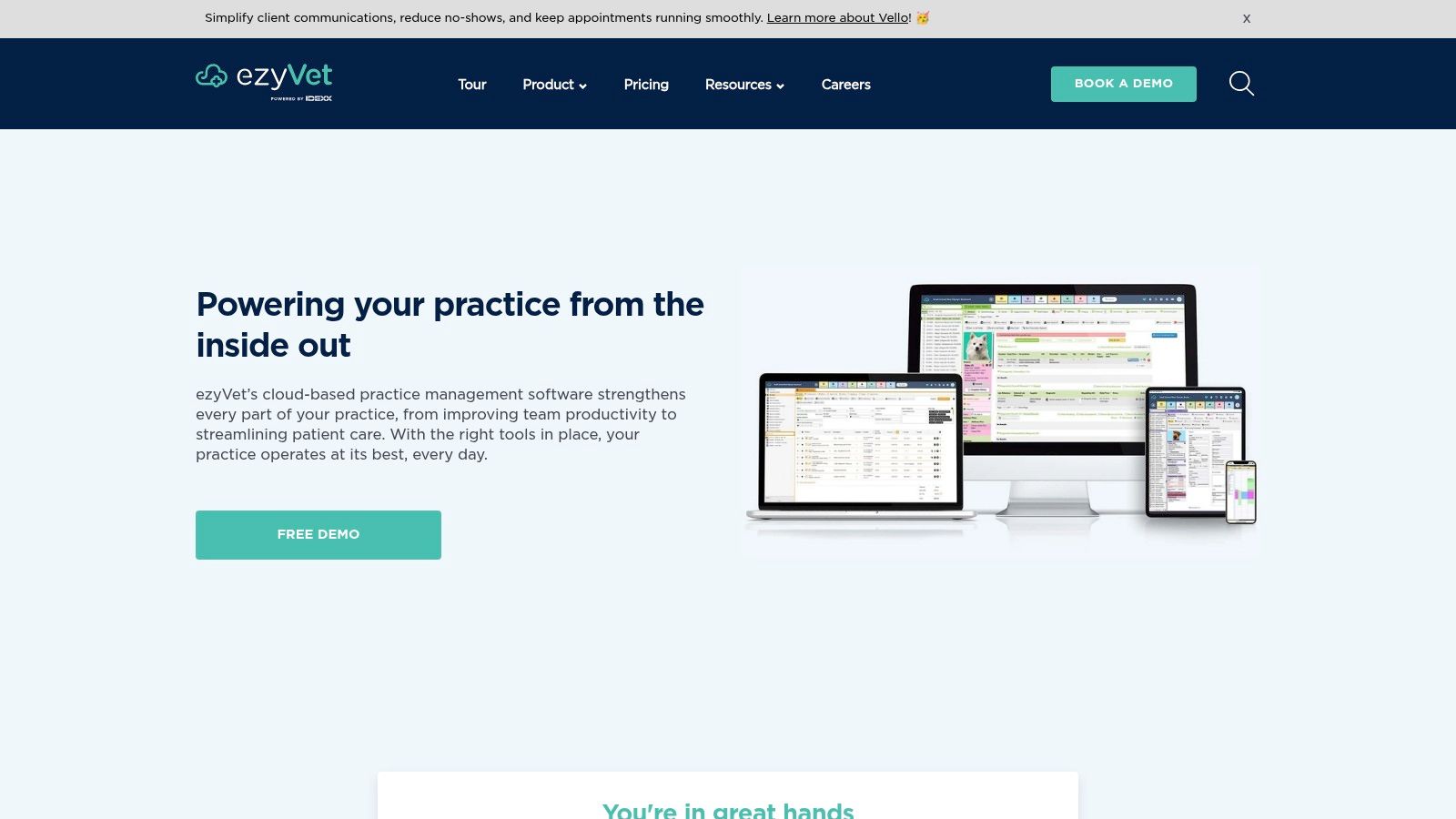
ezyVet is for clinics that need room to grow. Not just more appointments, but more locations, more roles, more integrations, more workflow complexity. It is one of the most popular veterinary software platforms for that reason.
Strong when complexity is real
Some systems feel great in a demo and start limping once the clinic gets bigger. ezyVet does the opposite. The deeper value shows up when you have multiple doctors, multiple service lines, or a plan to expand.
Its cloud model, integration catalog, diagnostics ordering, reporting, and customization are what make it attractive. The trade-off is obvious. You pay for that flexibility in setup effort and training.
This is the software I would consider when a clinic says, “We are not just replacing our old PIMS. We are trying to build the next version of the practice.”
Practical caution
ezyVet can be too much system for a small team with straightforward needs. If your clinic mainly wants fast scheduling, clean records, and fewer clicks, the extra depth may feel like carrying a St. Bernard when you needed a beagle.
That said, for practices adding specialty workflows or niche services, extensibility matters. In this context, specialty tools can earn their keep alongside a core PIMS. If pet travel is one of those services, this overview of veterinary software is useful context for deciding what belongs inside the main platform and what is better handled by an add-on.
Website: ezyVet
5. Covetrus Pulse
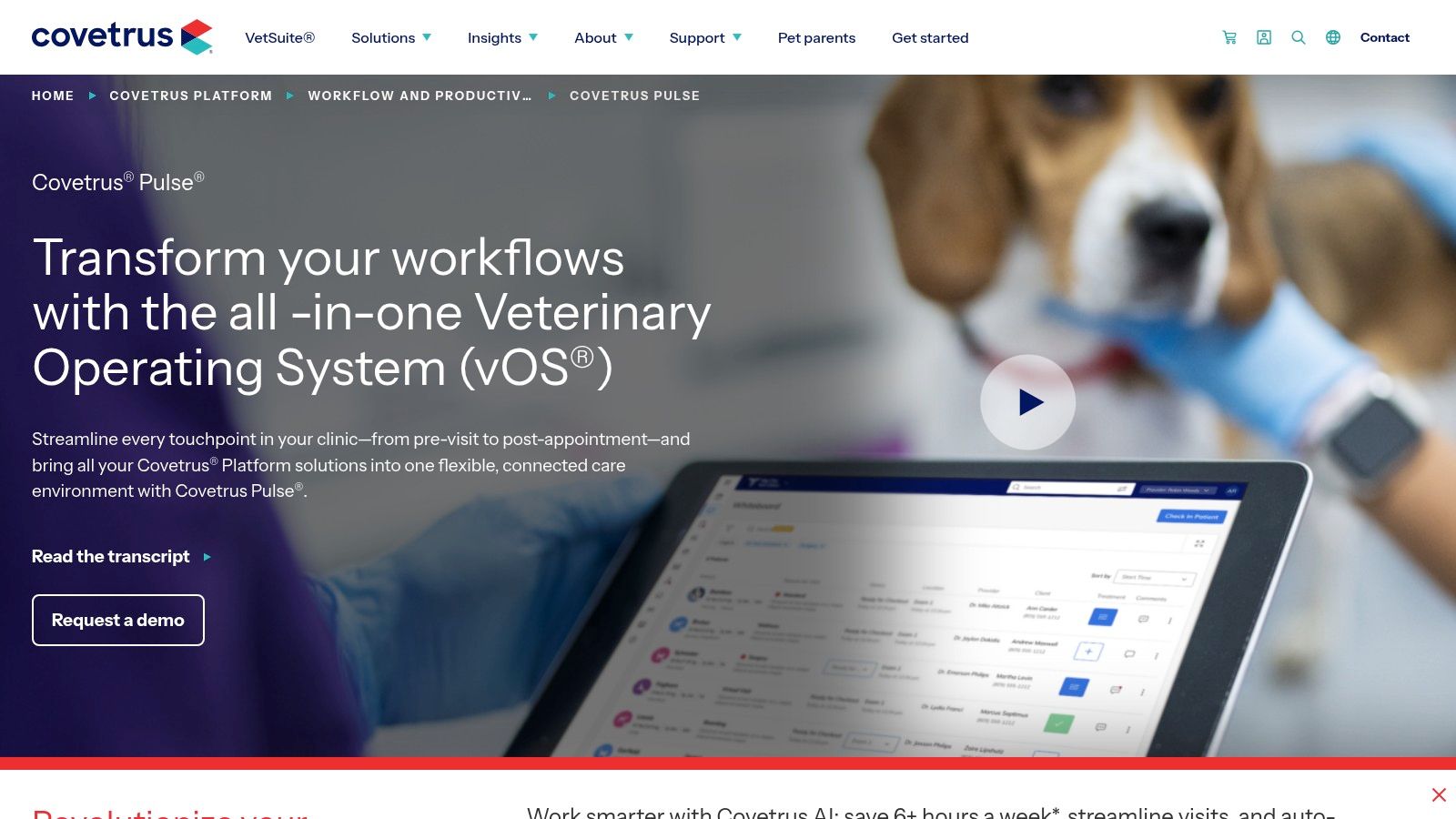
A clinic adds online booking, payment processing, pharmacy fulfillment, and client messaging one tool at a time. Six months later, the front desk is still re-entering data and the manager is chasing support tickets across multiple vendors. Covetrus Pulse is built for the practice that wants fewer handoffs and is comfortable buying more of the stack from one company.
Where Pulse earns its keep
Pulse is strongest as an operations hub. Scheduling, records, inventory, payments, communications, and pharmacy-related workflows sit closer together than they do in a patchwork setup, which can save time at the desk and reduce small but constant reconciliation problems.
That matters most in busy general practices that do not want to become their own integration department.
I usually put Pulse in the "good fit if standardization is the goal" category. If leadership wants one vendor relationship, one account team, and a cleaner path for connected services, Pulse deserves a serious look. The convenience is real, especially for clinics already using other Covetrus products.
What to watch closely
The trade-off is narrower freedom. The more value you expect from the Covetrus ecosystem, the more carefully you need to test what happens outside it. A clinic with unusual specialty workflows, heavy reporting demands, or a strong preference for best-of-breed third-party apps should push hard on demos and ask detailed workflow questions.
Pet travel is a good example. Most PIMS, including Pulse, can help you document visits and store records, but they are not designed to manage the full administrative load of international travel prep. If your hospital offers high-value services like health certificate coordination, country-specific document handling, or multi-step travel compliance, that work usually needs a specialized tool alongside the core PIMS rather than inside it.
Public pricing is not posted, so evaluation takes more effort. I would also test speed, invoicing flow, refill workflows, and the number of clicks for common front-desk tasks before making a decision. A polished demo is useful. A realistic Tuesday-morning workflow test is better.
Website: Covetrus Pulse
6. AVImark
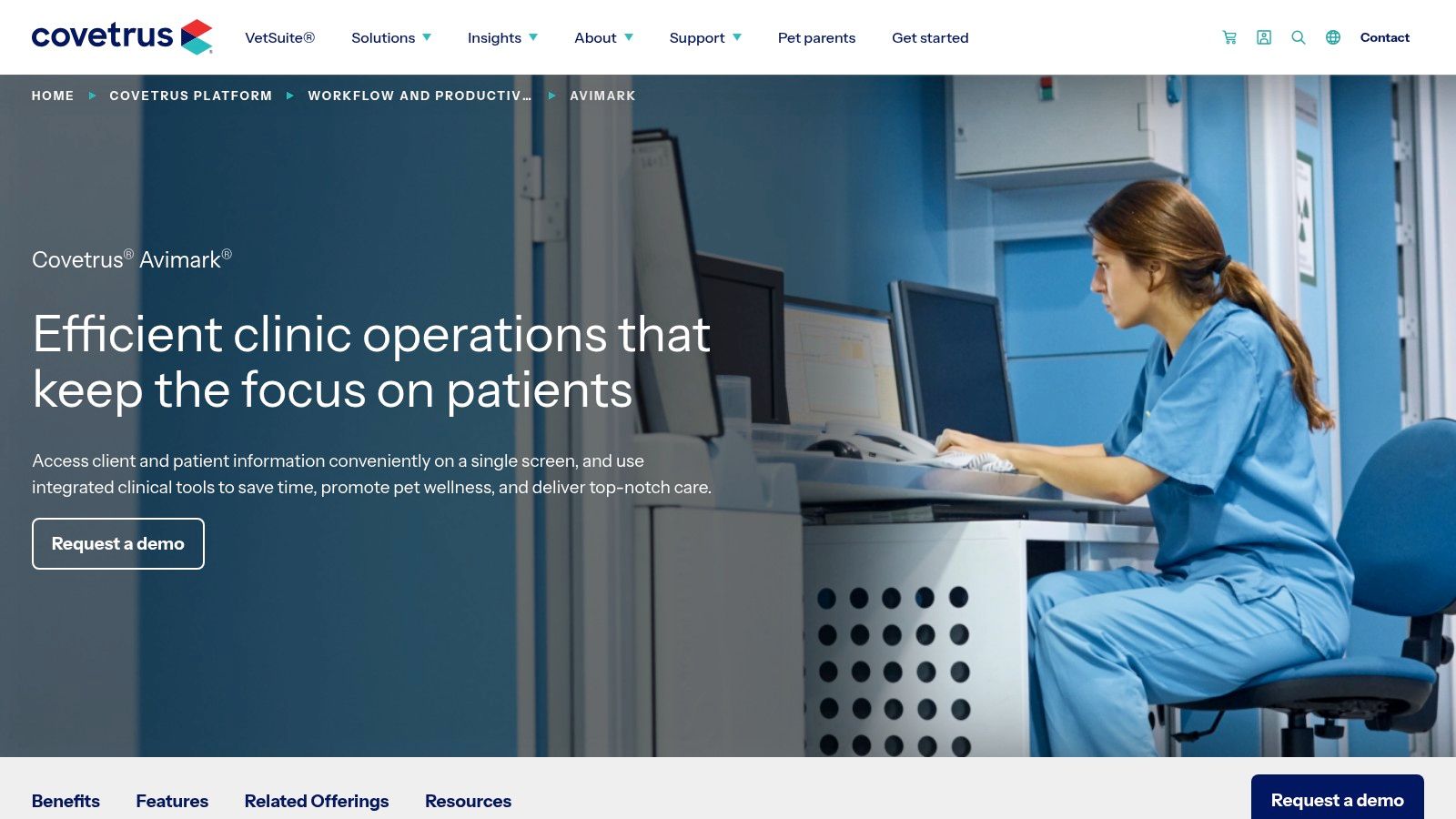
A clinic that has run on AVImark for years usually is not asking for flashy. It is asking whether the front desk can move fast, whether records are easy to find, and whether the team can get through a packed day without fighting the software.
That is why AVImark still shows up in serious evaluations. It has a long track record, many staff members already know how to use it, and established hospitals often have workflows built around it that still hold up under daily volume.
Best fit for practices that value familiarity and control
AVImark tends to make the most sense in clinics that are comfortable with an on-premise setup and want a system their team may already know from prior jobs. That familiarity has real operational value. Training usually goes faster, adoption is less disruptive, and managers do not have to rebuild every process at once.
I see AVImark work best in long-running general practices that care more about dependable in-clinic execution than having the newest interface. If the practice has stable staffing, predictable workflows, and local IT support or a trusted vendor relationship, AVImark can still be a sensible choice.
The trade-off is flexibility
The main question is not whether AVImark can run a hospital. It can. The question is whether it fits how the hospital wants to work over the next few years.
Because it is server-based, remote access and multi-location flexibility usually take more planning than they do with newer cloud systems. The interface also feels dated compared with newer products, which matters if your team expects cleaner mobile access, easier off-site use, or faster third-party app connections.
This is also where the modern-practice lens matters. A core PIMS like AVImark can manage records, scheduling, invoicing, and day-to-day clinical operations, but it does not solve every specialized service line. Pet travel is a clear example. If your hospital handles international health certificates, destination-specific paperwork, or multi-step compliance work, you will usually need a specialized tool such as Passpaw alongside the PIMS. The core system keeps the medical record organized. The travel workflow needs its own process.
If scheduling friction is part of your software review, this guide to veterinary appointment scheduling software is a useful comparison point for evaluating what AVImark handles well versus what may require add-ons or workflow workarounds.
Website: AVImark
7. DaySmart Vet
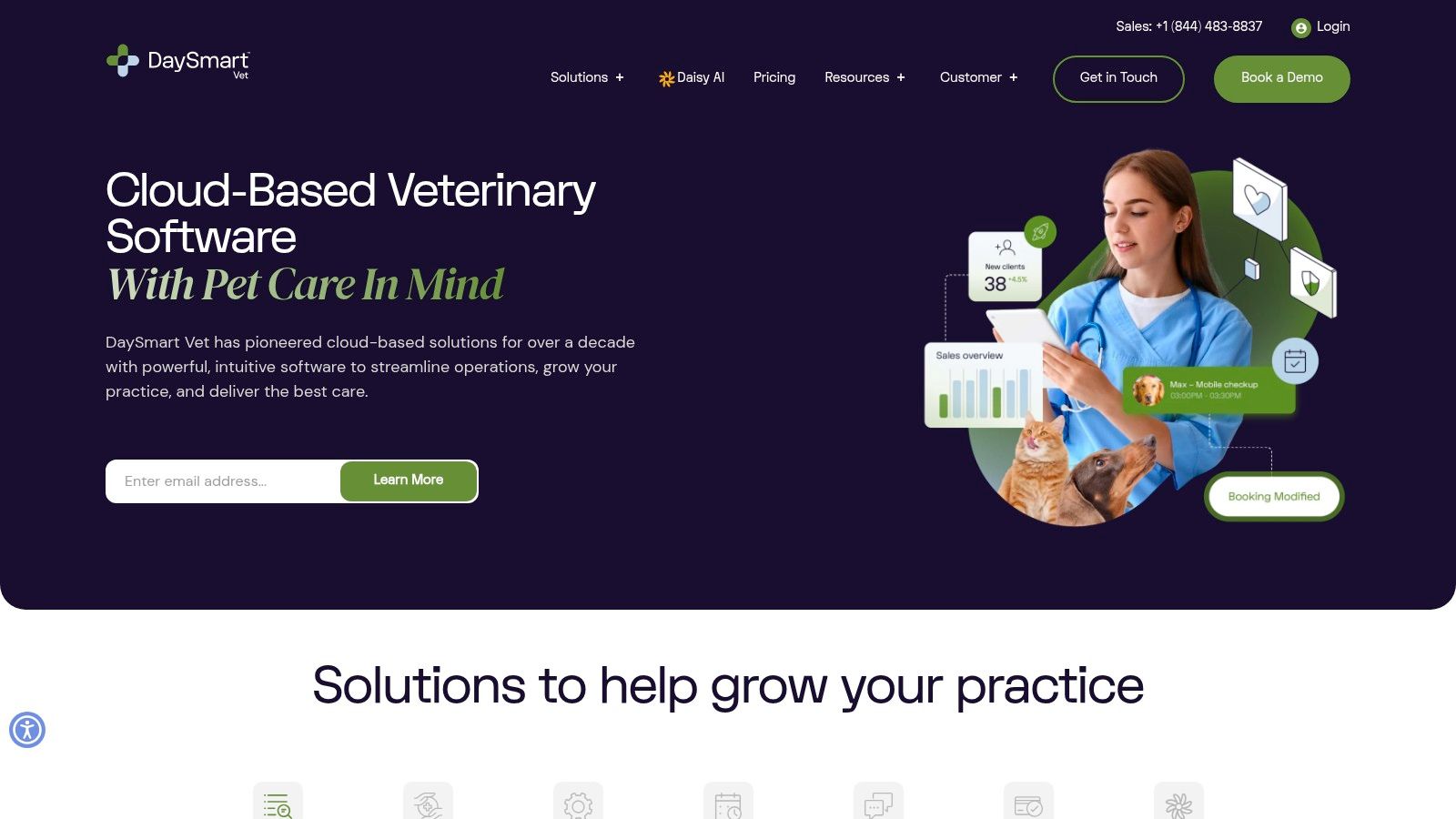
DaySmart Vet is the kind of platform that appeals to clinics tired of duct-taping together five separate tools. It aims to pull records, scheduling, inventory, communications, payments, and support into one cloud system without feeling heavy.
Best fit for smaller and mid-sized teams
This is a good match for general practices that want usability first. It is also a reasonable option for mobile or flexible teams that need access from different devices and locations.
I tend to like platforms in this category when a clinic’s biggest issue is operational clutter, not advanced complexity. If your team keeps asking, “Why are we paying for one app to remind clients, another to take payments, and a third to manage records?” DaySmart Vet is at least worth a look.
The practical trade-off
What you gain in simplicity, you may give up in specialization. Enterprise-style needs, highly custom workflows, or unusual service lines may require more vetting.
Pricing is also not posted publicly, so budget planning starts with a sales conversation. If scheduling is one of your pain points, this roundup of veterinary appointment scheduling software can help you compare what built-in booking looks like versus what needs another layer.
Website: DaySmart Vet
8. Hippo Manager
Hippo Manager has a specific lane, and that is a good thing. It speaks to small practices that want cloud access, predictable subscriptions, and a lighter learning curve without joining a giant distributor ecosystem.
Why small clinics often like it
Hippo Manager is easier to recommend when the budget is limited, the team is small, and the practice does not need enterprise-level reporting or multi-site controls. Setup, support, and training are part of the appeal. So is the straightforward feel.
For some owners, independence matters too. Not every clinic wants its software choice tied tightly to a larger distribution or diagnostics strategy.
Where the edges show
Hippo is not the strongest option for complex multi-location networks or analytics demands. That is not a flaw so much as a design boundary. It aims at smaller teams that want practical functionality without a huge implementation project.
For a small clinic, “enough software” is often better than “all the software.”
If you are evaluating it, verify current pricing and integration details directly with the vendor rather than relying on older third-party summaries.
Website: Hippo Manager
9. Provet Cloud
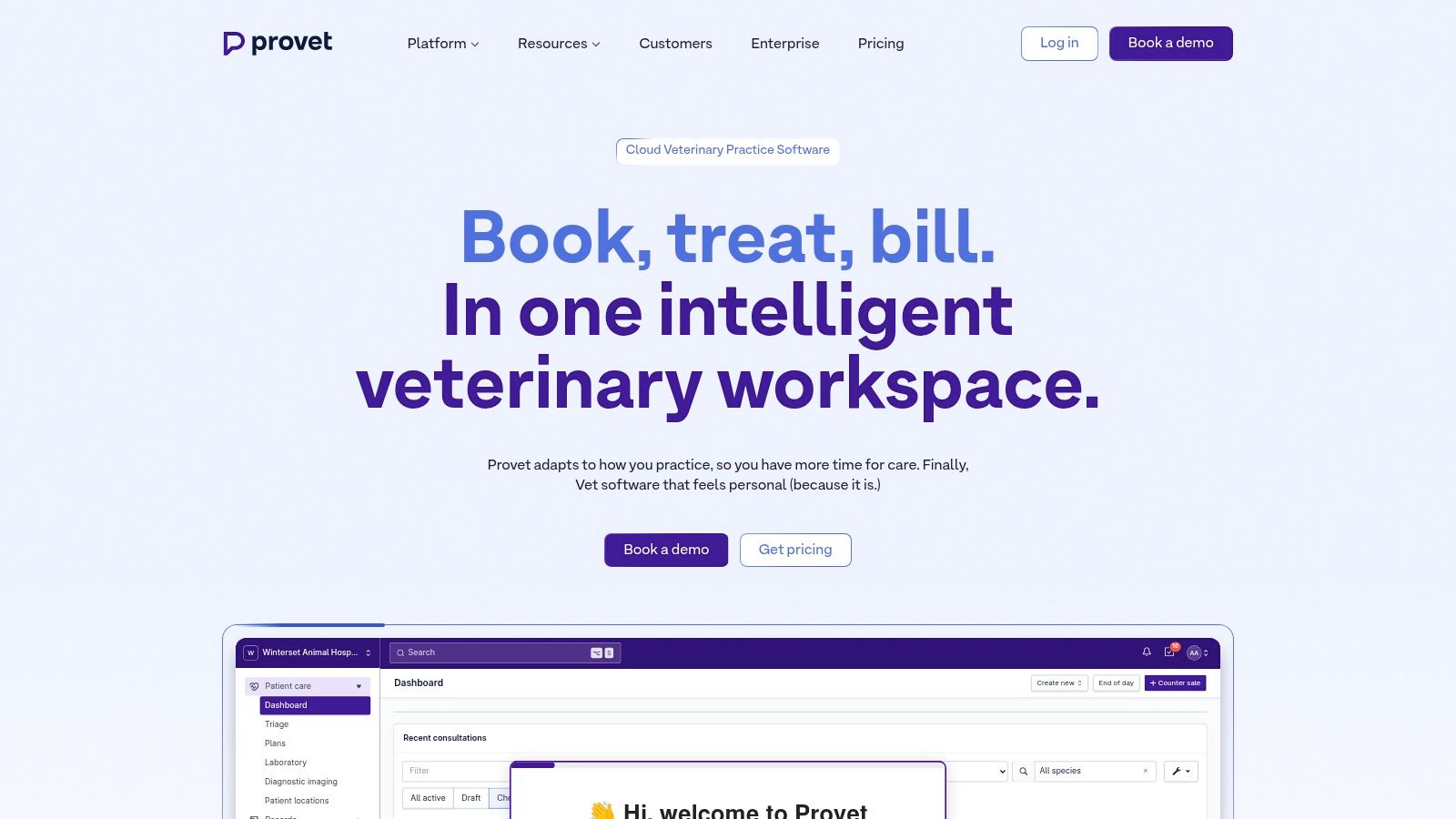
A Monday referral rush exposes weak software fast. Three inpatients need updated treatment plans, the whiteboard is changing by the hour, and the front desk is still trying to keep routine appointments on time. Provet Cloud tends to hold up better in that kind of environment than lighter cloud PIMS options.
Best suited to hospitals with active case management
Provet Cloud makes more sense for practices that manage hospitalized patients throughout the day, not just book-and-bill outpatient visits. Treatment workflows, whiteboard visibility, triage support, and mobile access all matter more once the case load gets messier. Referral hospitals, ER teams, and larger GP practices usually feel that difference first.
I would not put its main selling point at "it is cloud-based." Plenty of systems are. The practical question is whether the software helps the team track patient status clearly when several doctors, technicians, and CSRs are touching the same case.
The trade-off is complexity and cost
That added control usually comes with a heavier rollout and a higher bill. Platform fees plus per-vet pricing can be reasonable in a busy hospital where better inpatient coordination saves time every day. In a small clinic with mostly wellness traffic, the same structure can feel expensive for features the team rarely uses.
This also matters if your practice offers services outside standard PIMS workflows. International pet travel is a good example. Most systems, including Provet Cloud, are not built to manage destination rules, document sequencing, and compliance-heavy travel prep in depth, which is why some clinics pair their PIMS with specialized tools. If that is part of your service mix, this guide to veterinary practice management software for modern clinics is a useful comparison point.
Website: Provet Cloud
10. NaVetor
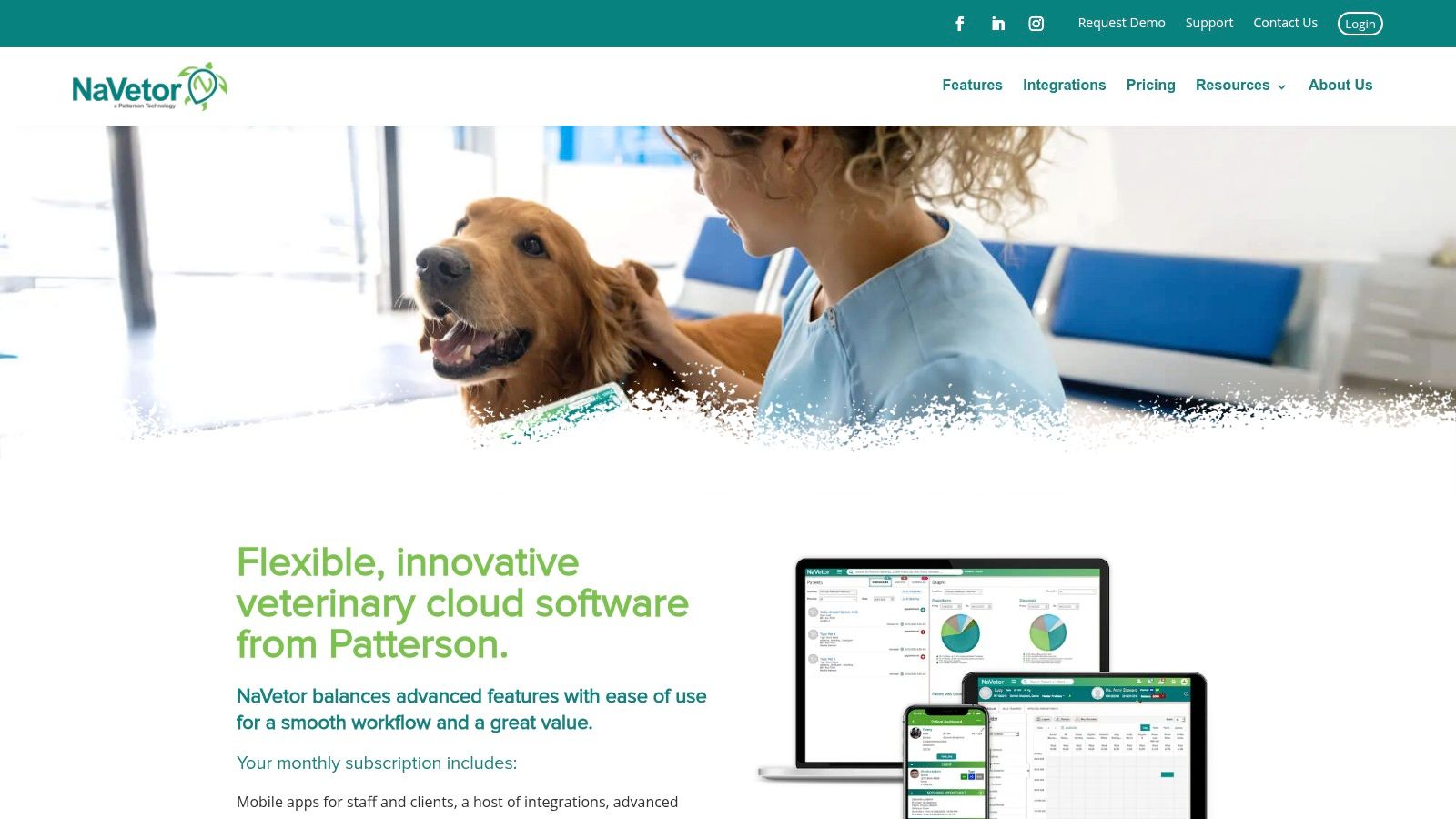
NaVetor makes the shortlist for clinics that want a cloud PIMS with practical mobile tools and a close connection to Patterson support and ordering.
Good for Patterson-oriented practices
If your clinic already works comfortably inside the Patterson world, NaVetor feels like a natural extension. It covers the expected core pieces: EMR, scheduling, reminders, texting, whiteboard views, payments, and mobile apps for both staff and clients.
That bundle can make the day smoother for front-desk teams that want fewer disconnected tools.
The main trade-off
Like many ecosystem-friendly platforms, NaVetor is strongest when your practice likes that ecosystem already. If you want maximum flexibility outside it, test integrations and workflow assumptions carefully.
The other thing to remember is that “starting at” pricing is only a starting point. Larger practices or more advanced needs may land in higher tiers, so quote review matters.
Website: NaVetor
Top 10 Veterinary Software Comparison
Product | Core Features ✨ | UX & Quality ★ | Pricing/Value 💰 | Target Audience 👥 | USP / Unique Selling Points ✨ |
|---|---|---|---|---|---|
Passpaw 🏆 | Auto client intake; country/date task lists; real-time document validation; USDA-ready packets | ★★★★☆: cloud, audit-ready, client self-service | 💰 Custom quote; free practice starter & Travel Prep Planner | 👥 Vets, pet shippers & travel providers | 🏆 Automates international pet health certificates; timeline recalcs & wet-seal shipping |
IDEXX Cornerstone | Server-based PIMS; deep IDEXX lab & imaging integrations; EMR & reporting | ★★★★☆: mature, extensive; legacy UI | 💰 Quote; requires hardware/IT | 👥 Multi-doctor GP clinics using IDEXX hardware | ✨ Best-in-class IDEXX lab/imaging workflows; large ecosystem |
IDEXX Neo | Cloud PIMS; quick setup; one-click histories; IDEXX links | ★★★★☆: modern, fast to train | 💰 Quote; optional add-ons for advanced features | 👥 Practices wanting cloud with IDEXX diagnostics | ✨ Lightweight cloud with embedded IDEXX connections |
ezyVet | Highly configurable cloud PIMS; 100+ integrations; advanced reporting | ★★★★☆: flexible, enterprise capable | 💰 Subscription; sales quote | 👥 Growing GP practices & multi-site networks | ✨ Very customizable; scales from single clinics to networks |
Covetrus Pulse | Cloud EMR, scheduling, CarePlans, vRxPro pharmacy & payments | ★★★☆☆: integrated if using Covetrus; variable performance | 💰 Quote; tied to Covetrus platform | 👥 Clinics standardized on Covetrus services | ✨ Seamless Covetrus pharmacy/payments/engagement stack |
AVImark | Server PIMS; single-screen client view; in-hospital whiteboard | ★★★☆☆: stable but dated UI | 💰 Quote; server upkeep required | 👥 Practices with long-standing Covetrus/legacy installs | ✨ Familiar UI and large trained talent pool; strong add-ons |
DaySmart Vet | Cloud EMR, scheduling, payments; mobile-friendly; 24/7 support | ★★★★☆: easy to use; good support | 💰 Quote; positioned as competitive value | 👥 Small-to-mid GP & mobile practices | ✨ Usability-focused; replaces multiple point tools |
Hippo Manager | Cloud EMR, scheduling, reminders, predictable subscription | ★★★★☆: simple, budget-friendly | 💰 Predictable subscription w/ setup & support included | 👥 Cost-conscious small practices | ✨ Independent, straightforward PIMS with clear pricing |
Provet Cloud | Cloud PIMS; inpatient treatment sheets, triage board, mobile app | ★★★★☆: modern, scales well | 💰 Platform fee + per-vet (transparent US tiers) | 👥 Multi-site, referral & ER hospitals | ✨ Strong inpatient tools; optional Clinical AI scribe |
NaVetor | Cloud EMR; AI workflow helpers; mobile apps; Patterson eShelf | ★★★★☆: mobile-centric, integrated | 💰 "Starting at" tiers; Patterson bundles | 👥 Practices using Patterson distribution & support | ✨ Patterson ordering, two-way texting & AI workflow aids |
Final Thoughts
The most popular veterinary software platforms are popular for different reasons, and that is why shortlists can get messy. A strong choice for a single-location small-animal clinic can be a poor fit for a referral hospital. A system that makes one practice purr can make another shed.
The safest way to compare these tools is to focus on the day-to-day pressure points first. Where is your team losing time right now? Training new staff? Entering charges? Chasing records? Handling inpatient flow? Managing client communication? Supporting multiple locations? Those answers matter more than a long feature list.
There are a few patterns worth keeping in mind.
Server-based systems like Cornerstone and AVImark still work for practices that value depth, familiarity, and mature workflows. They are less attractive to teams that want lower IT overhead and more remote flexibility.
Cloud systems like Neo, ezyVet, DaySmart Vet, Hippo Manager, Provet Cloud, Covetrus Pulse, and NaVetor make more sense for practices that want easier access, continuous updates, and less local infrastructure. That preference is not a fad. It reflects how many clinics now want to operate.
The other practical point is ecosystem fit. IDEXX-heavy clinics feel the pull toward Cornerstone, Neo, or ezyVet. Covetrus-oriented clinics may find Pulse or AVImark more natural. Patterson-friendly clinics may lean toward NaVetor. There is nothing wrong with that, as long as the ecosystem supports your workflows instead of boxing them in.
This is also where many standard PIMS still leave a gap. They handle general practice management, but they do not always handle specialized revenue lines. International pet travel is a good example. It is high-touch, deadline-sensitive, and document-heavy. Most practices can manage it manually for a while, but manual systems tend to crack under volume or complexity.
That is why I would not look at software only as a replacement decision. I would look at it as a stack decision: which platform should run the core clinic, which tools should plug in for special workflows, and which services could become smoother, more profitable, or less error-prone if they had dedicated support?
If you approach the search that way, the decision gets clearer. You stop chasing the mythical perfect platform and start choosing the system that best supports your practice, your staff, and your clients' actual behavior. That is where the best software choice stops being a gamble and starts being a smart operational move.
If your practice handles international health certificates, relocations, breeder travel, or client requests that turn into a paperwork marathon, Passpaw is worth a closer look. It gives veterinary teams a dedicated workflow for pet travel that most general PIMS do not provide, helping turn a stressful side service into a more organized, client-friendly process.

More articles
From regulatory changes to best practices for veterinarians and pet owners, our resources keep you ahead of the curve.