Are you a team member in a veterinary practice?
Are you a pet parent planning a trip with your furry pal?
A Guide to Marketing for Vet Practices
Being a great veterinarian is the baseline expectation these days, not the differentiator. In a world where pet owners see their animals as family, the real challenge isn't just providing excellent care—it's communicating that expertise and compassion to a community full of choices.
Effective marketing for vet practices is all about building trust and showing you care long before a pet even needs you. It's the right mix of a strong local online presence, genuinely helpful content, and smart communication that pulls in new clients and keeps your current ones coming back.
Winning Over Pet Owners in a Crowded Market

This guide is your playbook for creating a marketing strategy that does more than just advertise—it builds relationships. The goal isn't just to be found online; it's to be chosen. That means creating a presence that resonates with local pet owners, making them feel confident in your care before they even pick up the phone. Let's walk through the essentials to make your practice the go-to clinic in town.
Standing Out in a Competitive Field
The market for veterinary services is booming. Here in the U.S., pet spending is on track to hit $152 billion in 2024, with a massive $39.8 billion chunk of that going straight to veterinary care. That kind of money creates an incredibly competitive environment. Clinics that get smart about marketing their expertise and building trust are the ones that will pull ahead.
This competition makes a thoughtful marketing plan a necessity, not just a "nice-to-have." It's about shifting from being just another service provider to becoming an active, trusted resource for your community.
Your marketing should reflect the same level of care and attention you give to your patients. It’s the first step in building a relationship based on trust, expertise, and genuine concern for animal well-being.
Key Pillars of Modern Vet Marketing
A winning strategy connects with pet owners at multiple points, but it's not about being everywhere at once. It's about being in the right places with the right message. Your plan should really nail a few key areas:
A Strong Digital Foundation: Think of your website and local search visibility as your clinic's digital front door. Many of the principles of effective SEO for healthcare practices apply directly here, helping you show up when pet owners are actively searching for a vet.
Authentic Social Engagement: Use platforms like Facebook and Instagram to show off your practice’s personality. Share success stories, introduce your staff, and post valuable pet care tips. A professional voice on LinkedIn can also be great for attracting top talent and building industry credibility.
Targeted Client Communication: Use email and other tools to stay in touch with your existing clients. Simple reminders for preventative care or promotions for special services can go a long way. For instance, promoting a high-value service like pet travel assistance is a fantastic way to drive new revenue. You can learn more about why promoting pet travel services is a smart strategy for veterinary practices and see how these specialized campaigns work.
By focusing on these core elements, you create a marketing engine that doesn't just find new clients but also nurtures the loyalty of the ones you already have. It’s time to stop chasing clients and start attracting them.
Building Your Clinic’s Digital Front Door

Before a pet owner ever picks up the phone to call your clinic, you can bet they’ve already met you online. Your website and local search presence are your digital front door, and making that first impression a great one is crucial. This is where trust begins and is the absolute foundation of solid marketing for vet practices.
Think about it from a pet owner's perspective. A clunky, outdated, or confusing website can send them straight to the next clinic on Google’s list. Your site needs to feel clean, professional, and be incredibly simple to use—especially on a smartphone, where the vast majority of local searches happen today.
Your Website: The Hub of Your Marketing
Your website is your home base. It’s the one piece of online real estate you completely own and control. It’s where you get to tell your story, introduce your incredible team, and clearly communicate the compassionate care you provide every day.
A truly effective vet practice website has to be:
Mobile-First: Most of your visitors are on their phones, often in a hurry. If your site is a pain to navigate on a small screen, you’re already losing them.
Easy to Navigate: A worried pet owner needs your phone number, address, and emergency contact info now. Don't make them hunt for it. Key information should be front and center.
Service-Oriented: Clearly lay out your core services. From routine wellness exams and vaccinations to more specialized care like dentistry or surgery, make it easy for clients to see how you can help.
Integrating your website with your clinic's other tools is a game-changer. The right veterinary software can help streamline everything from scheduling to communication, creating a seamless experience from that very first click. A site that allows online appointment booking isn't just a nice feature anymore; it's an expectation for modern clients.
Dominating Local Search Results
When a pet owner in your town types "vet near me" into Google, you absolutely have to show up. This is where local Search Engine Optimization (SEO) comes into play, and it’s not as intimidating as it sounds. The most powerful tool you have for this is completely free: your Google Business Profile (GBP).
Seriously, optimizing your GBP is probably the single most impactful marketing task you can do for your practice. It’s what gets you into the local "map pack"—that prime real estate at the very top of the search results.
An incomplete or neglected Google Business Profile is like having a "closed" sign on your digital front door. It signals to potential clients that you might not be active, reliable, or attentive to detail.
To turn your GBP into a machine that brings clients through your real front door, concentrate on these key areas:
Complete Every Single Section: Fill out every field Google gives you. This includes all your services, hours (don't forget emergency hours!), and accessibility details. The more info, the better.
Upload High-Quality Photos: Show off your clean, welcoming clinic, your friendly staff, and happy patients (with the owner's permission, of course!). Photos build instant trust and give people a real feel for your practice's atmosphere.
Actively Ask for Reviews: Positive reviews are pure gold online. Make it a habit to encourage happy clients to leave feedback. A simple follow-up email or text with a direct link to your GBP review page works wonders.
Keep Your Info Consistent: This is a small detail that has a huge impact. Your clinic’s name, address, and phone number (often called NAP) must be identical everywhere online—your website, GBP, Yelp, etc. Inconsistencies confuse search engines and can drag down your ranking.
Simple Keywords That Attract the Right Clients
You don't need to be an SEO genius. Just start by thinking like a local pet owner. What would they actually type into Google?
Your website content and GBP service descriptions should include common-sense phrases like:
"Emergency vet in [Your Town]"
"Cat and dog clinic [Your Neighborhood]"
"Affordable pet vaccinations [Your City]"
"Veterinarian open on Saturday"
By creating specific pages on your website for your key services and weaving in these location-based keywords, you're sending a clear signal to Google that you are the most relevant answer for those local searches. This foundational work ensures that when a pet owner in your area needs help, your practice is the first one they find.
Create Content That Builds Trust and Community
Great marketing for a vet practice is about more than just running ads. It’s about giving pet owners real value long before they ever need to book an appointment. Your content is how you build that bridge of trust, positioning your clinic not as a business, but as a caring, go-to resource. This is how you start a relationship, not just a transaction.
It's a mental shift from "selling" services to "serving" your community with genuinely helpful information. When you're the one consistently providing useful advice, you become the first name that pops into a pet owner's head when they need help.
Your Blog is Your Knowledge Hub
A blog is one of the best tools you have for building this kind of trust. Think of it as a dedicated space on your website where you can answer the questions that are always on your clients' minds. Every article you publish is like a new digital signpost, helping people find you through a simple Google search.
What topics would actually help your clients?
Puppy and Kitten Care: "How to Socialize Your New Puppy Safely" or "A Checklist for Your New Kitten’s First Vet Visit."
Preventative Health: "Why Year-Round Flea and Tick Prevention is a Must" or "Decoding Your Dog’s Dental Health."
Pet Safety: "Common Household Dangers for Cats" or "Recognizing the Signs of Heatstroke in Dogs."
Travel Advice: Traveling with a pet is a huge source of stress for owners. An article detailing the necessary steps is incredibly valuable. You can even provide more in-depth resources, like this guide on understanding international pet travel requirements, to show you've really got their back.
Don't just write to fill space. Create content that’s genuinely useful, easy to understand, and reflects the compassionate voice of your practice. It's your chance to show off your expertise without being pushy.
Bring Your Practice to Life on Social Media
While your blog is for deep dives, social media is where your practice's personality gets to shine. It’s the perfect spot to build a real community and give people a peek behind the curtain. The key here is to be authentic and engaging.
Platforms like Facebook and Instagram are built for visual storytelling. Instead of just posting service reminders, share content that forges an emotional connection:
Patient Success Stories: A heartwarming photo of a pet who has recovered from an illness is powerful stuff (just be sure to get the owner's permission!).
Behind-the-Scenes Moments: A snapshot of a vet tech comforting a nervous puppy or the front desk team celebrating a birthday makes your practice feel human.
Quick Educational Tips: Turn a blog topic into a bite-sized video or a simple graphic. A 30-second video on how to check for ticks can be way more effective than a long article for a busy pet owner.
This kind of friendly, consistent presence keeps you top-of-mind. It transforms your clinic from a place people have to go into a place they actually feel connected to.
"Social media for a vet practice isn't about going viral; it's about being a consistent, reassuring, and familiar face in your clients' daily feeds. It’s about building a community, one cute pet photo and helpful tip at a time."
Don't Overlook LinkedIn for Professional Credibility
Okay, so Facebook and Instagram are for connecting with pet owners. But LinkedIn is your platform for professional branding. It might seem like an odd choice for marketing a local clinic, but it plays a subtle yet important role in building your reputation.
A strong professional presence on LinkedIn signals a high standard of care and expertise. It shows you're serious about your craft.
Here’s how to use it effectively:
Develop a Professional Voice: Share insightful articles about new advancements in veterinary medicine, practice management, or animal welfare. This positions you and your team as thought leaders, not just practitioners.
Connect with Specialists: Build a network with veterinary specialists, industry reps, and other professionals. This isn't just good for your own knowledge; it builds a valuable referral network that benefits your patients.
Attract Top Talent: Let's be honest, hiring is tough. A well-maintained LinkedIn presence makes your practice far more attractive to high-quality veterinarians and support staff looking for their next career move.
This activity might not bring a client directly through your door tomorrow, but it absolutely elevates your practice's reputation. When a potential client is doing their research, seeing that your vets are active and respected in their professional community reinforces their decision to trust you. It's a quiet but powerful part of your overall marketing strategy.
Using Technology to Drive Growth and Loyalty
Once you’ve got a solid website and a decent social media presence, it's time to level up. The next stage of marketing for your vet practice is all about using technology to work smarter, not harder. This is where you shift from just broadcasting information to creating personalized, one-on-one conversations that build incredible client loyalty and drive real growth.
Think of it as anticipating your clients' needs before they even pick up the phone. Instead of waiting for a problem, you can proactively reach out with timely reminders and genuinely helpful advice that keeps their pets healthier—and keeps your clinic top-of-mind.
This infographic lays out how all your marketing efforts can connect and support one another.
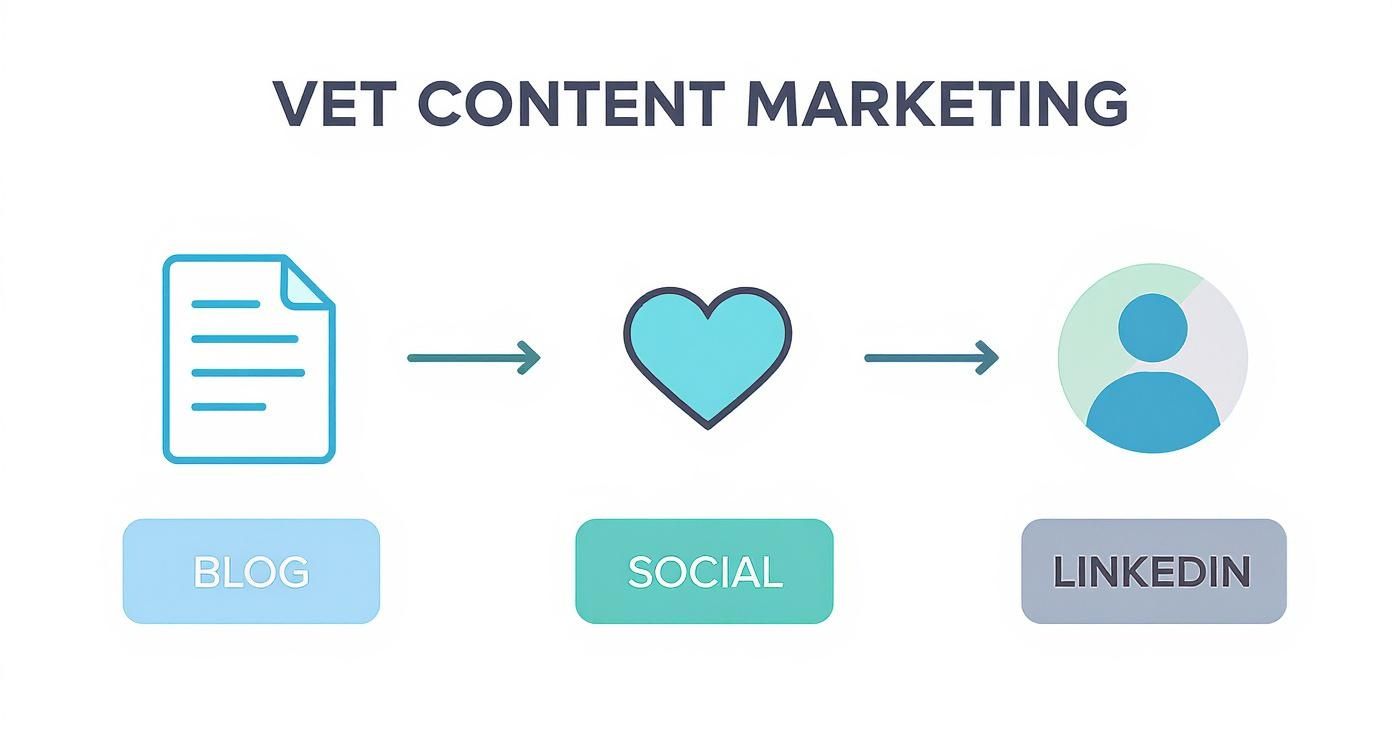
The big takeaway here? Each channel reinforces the others. When they work together, you create a powerful, cohesive brand message that builds trust and a real sense of community around your practice.
Automating the Client Journey
Let’s be clear: automation isn't about being robotic. It’s about being consistently helpful without burning out your staff. Simple automated systems can handle the routine stuff, freeing up your team to focus on what they do best—providing amazing care to the pets and people right in front of them.
You can create a seamless client journey with a few powerful, yet simple, automations:
Appointment Reminders: Automated emails or texts are one of the best ways to reduce your no-show rate. It’s a game-changer.
Post-Visit Follow-Ups: Imagine a client getting a simple, "How is Fluffy feeling?" email the day after a visit. It takes zero effort on your part but shows you genuinely care.
Review Requests: A few days after a great appointment, an automated email can ask for a review, complete with a direct link to your Google Business Profile. Easy for them, invaluable for you.
These small, consistent touchpoints make clients feel seen and valued. Many of these features are already built into modern veterinary practice management software, which can centralize your marketing efforts. The right PIMS connects your clinical operations with your client communication, making everything just flow.
Running Targeted Email Campaigns
Email is still one of the absolute best ways to talk to your existing clients. But the key is to ditch the generic, one-size-fits-all newsletters. Your client database is a goldmine of information—use it to send messages that are actually relevant to the pet owner.
For instance, instead of a blast to everyone, try campaigns like these:
Dental Health Month: Email only the owners of senior dogs or breeds prone to dental issues. Throw in a special offer on cleanings, and you’ll see your schedule fill up.
Seasonal Parasite Alerts: As flea and tick season ramps up, send a friendly reminder to clients who haven't bought prevention products in the last few months.
Puppy and Kitten Packages: Create a special welcome series for new pet owners, walking them through wellness plans and essential early-life care.
A targeted email campaign shows clients you know their pet and understand their specific needs. It's the difference between marketing at them and communicating with them.
Marketing Specialized Services Effectively
Technology is also your best friend for promoting higher-value services that not every client needs, like pet travel certifications. Mass marketing these is a waste of time and money. The smarter approach is to use technology to find the right people at exactly the right time.
For example, add a simple "Planning to travel with your pet?" checkbox to your new client intake form. Just like that, you've created a segmented list of clients interested in travel. Now you can send them targeted information about your pet travel services, positioning your clinic as the go-to expert.
This data-driven approach is quickly becoming the standard. The smartest vet marketing strategies now use technology and data to personalize every interaction. We’re even seeing AI used to analyze client data for tailoring emails and social media posts, which is a huge boost for engagement.
To really nail the first impression on your website, you can use automated conversational software to connect with visitors. Check out this ultimate guide to chat bot marketing to see how it works. These tools can answer common questions 24/7, book appointments, and flag urgent inquiries for your staff.
When you use technology this thoughtfully, you don't just find more clients—you build stronger, longer-lasting relationships with the ones you already have.
How to Measure Your Marketing and Drive Real Growth
Marketing without measurement is like giving a check-up without a stethoscope—you’re just guessing. To make sure your marketing efforts aren't just a shot in the dark, you have to track what's happening. This is the only way to see what’s working, what isn't, and where you should be putting your time and money for healthy, long-term growth.
The goal here is to get past "vanity metrics" like social media likes. Sure, they feel good, but they don't tell you if your practice is actually growing. We need to zero in on Key Performance Indicators (KPIs) that connect directly to your clinic's bottom line.
Identifying the KPIs That Actually Matter
For a busy veterinary practice, you don't need to get lost in dozens of different numbers. Focusing on just a handful of core metrics will give you a surprisingly clear picture of your marketing's return on investment (ROI).
These are the numbers that really matter:
New Clients Per Month: This one’s the most straightforward indicator of growth. Is this number trending up over time?
New Client Acquisition Cost (CAC): How much are you spending on marketing to get one new client through the door? Just divide your total monthly marketing spend by the number of new clients you gained. A lower CAC means your marketing is getting more efficient.
Average Client Transaction (ACT): What's the average amount a client spends per visit? Tracking ACT helps you understand the immediate value each appointment brings to your practice.
Website Traffic Sources: Where are your website visitors coming from? Google Analytics can show you if they found you through a Google search, a Facebook post, or by clicking a link in an email. This tells you which of your channels are actually driving traffic.
Getting a handle on these numbers is the first step toward making smarter decisions. For example, if you see that your Google Business Profile is bringing in a large portion of your new online bookings, you know that’s a channel worth your continued attention.
From Data to Decisions
Once you start tracking these numbers, you'll begin to see patterns and can finally make informed choices. The data tells a story about what your potential clients respond to. This is where you double down on what works and pull back on what doesn't, saving yourself a whole lot of time and money in the process.
Let's say you spent a chunk of your budget on a local newspaper ad and a targeted Facebook ad campaign. By asking new clients how they heard about you and keeping an eye on your website traffic, you might discover the Facebook campaign brought in 15 new clients while the newspaper ad only brought in two. The decision for next month's budget becomes pretty obvious.
Measuring your marketing isn't about judging past performance; it's about gathering the intelligence you need to make better decisions for the future. It turns your marketing from an expense into a strategic investment.
This data-driven approach is becoming more important than ever. The veterinary industry is seeing major shifts in client behavior, and the practices that adapt are the ones that will thrive. In fact, a recent report highlighted that while new client acquisition has declined industry-wide, high-performing practices are still growing. How? By focusing on clear operations and excellent client communication. You can read the full 2025 veterinary benchmark report to see how data is shaping success.
Simple Tools to Track Your Success
You don't need complicated or expensive software to get started. Many of the tools you're probably already using have built-in analytics that can provide all the information you need.
Here’s a simple toolkit to begin with:
Tool | What It Tracks | Why It's Important |
|---|---|---|
Google Analytics | Website visitors, traffic sources, page views, and online appointment form submissions. | Shows you exactly how people find and use your website, helping you optimize it for new clients. |
Google Business Profile Insights | How many people found you via search, requested directions, or called your clinic directly from your listing. | This is your best gauge for local search performance and is critical for attracting nearby pet owners. |
Your Practice Management Software (PIMS) | New clients, appointments booked, and average transaction value. | Your PIMS is your source of truth for all client-related financial and appointment data. |
By checking these sources just once a month, you can get a solid understanding of your marketing performance. This regular check-in allows you to stay agile, making small adjustments to your strategy that lead to big results over time. It’s the key to building a marketing engine that doesn't just run, but purrs.
Common Questions About Vet Marketing
Even with a great plan, questions always come up. Marketing a veterinary practice isn't exactly straightforward, so let's dig into some of the most common things we hear from clinic owners and managers. Think of this as the practical, no-fluff Q&A to help you move forward with confidence.
How Much Should a Vet Practice Spend on Marketing?
Ah, the million-dollar question. It's easy to feel like you're just throwing money into a black hole without a clear answer.
For an established practice, a good benchmark is to budget around 2-5% of your gross revenue for all things marketing. If you’re a brand-new clinic just trying to get your name out there, you'll want to be more aggressive. Investing closer to 7-12% can help you build that crucial initial momentum and start filling your appointment book.
But here’s the most important thing: start with a budget you're comfortable with. You don't have to do everything at once. Focus first on high-impact, low-cost activities that are easy to measure. For example, optimizing your Google Business Profile and actively asking clients for reviews cost you nothing but time, yet they can deliver fantastic returns.
Once you see what's working, you can reinvest that success into other areas, like targeted social media ads or creating genuinely helpful blog content for local pet owners.
What Is the Single Most Effective Tactic for a Local Clinic?
If you could only do one thing, what should it be?
Hands down, the highest-impact tactic for nearly every local vet practice is Local SEO, with a laser focus on your Google Business Profile (GBP). It’s the digital equivalent of having the best, most visible storefront in town.
Think about how people search for you. When a worried pet owner types "emergency vet near me" or "best vet in Anytown" into their phone, Google is their first and often only stop.
A complete, well-managed GBP with accurate hours, a steady stream of positive reviews, great photos, and regular posts is what gets you to the top of those vital search results. It’s free to manage and directly targets pet owners who are actively looking for exactly what you do.
How Can I Get More Online Reviews for My Practice?
This is a huge one for many practices, but the solution is surprisingly simple: you just have to ask. The trick is to build a simple, repeatable process so it happens every time. Don't leave it to chance.
The easiest way is to implement a simple, automated system. A day or two after an appointment, send a friendly follow-up email or text. Thank them for coming in and include a direct link to your Google review page.
You can phrase it gently, like:
"Your feedback helps our team improve and allows other pet owners in the community to find us. If you have a moment, we'd love for you to share your experience."
Also, empower your front-desk team. Train them to mention it to clients who are clearly happy as they're checking out. A simple, "It was so great to see Bella today! If you were happy with your visit, we'd be so grateful for a review on Google."
Making the process as simple as possible—one click straight to the review page—is the key. Just remember to be mindful of the policies of review platforms regarding incentives for reviews.
Is Social Media Really Necessary for a Vet Practice?
Yes, but maybe not for the reason you think. While it might not drive new clients as directly as a Google search, social media is absolutely essential for building community and trust.
It’s your chance to show the warm, caring, human side of your practice—something a simple Google listing can't convey. Think of it less as a lead-generation tool and more as a brand-building and client-retention engine.
Use platforms like Facebook and Instagram to:
Showcase your personality: Share behind-the-scenes moments, introduce your team members (and their pets!), and celebrate patient successes.
Share valuable tips: Post quick, educational content about seasonal pet safety, nutrition, or behavior.
Build your professional brand: Use LinkedIn to connect with specialists, share clinical insights, and signal a high standard of care. This subtly markets your clinic's expertise to the entire community.
A strong social media presence reinforces your brand as the compassionate, local expert. That feeling of connection is what builds long-term loyalty and sparks powerful word-of-mouth referrals. It keeps you top-of-mind, making sure you’re the first clinic they think of when their furry family member needs care.
Streamlining specialized services like pet travel certifications can be a major headache. Passpaw makes it easy by simplifying the entire process, from managing documents to communicating with clients, ensuring every detail is handled correctly. Empower your practice to offer high-value services without the operational drag. Learn more at https://passpaw.com.
More articles
From regulatory changes to best practices for veterinarians and pet owners, our resources keep you ahead of the curve.