Are you a team member in a veterinary practice?
Are you a pet parent planning a trip with your furry pal?
Quick Guide to the international health certificate for pets
Planning an international move with your furry co-pilot? Then you'll need an international health certificate for pets. This isn't just another piece of paper—it's one of the most important documents for your journey. Think of it as your pet's official passport, a document signed by a special vet confirming your pet is healthy and meets the entry rules for your destination country.

Your Pet’s Ticket to See the World
Taking your companion on a global adventure is incredibly exciting, but it demands some serious prep work. The international health certificate is the foundation of this whole process. It's much more than a simple note from your vet; this is a detailed, official document that shows foreign authorities that your pet is fit for travel and won't introduce any new diseases.
This certificate does a lot of heavy lifting to make your pet's journey possible. Without it, you could face every pet owner's worst nightmare: being denied entry at the border or, even worse, having your pet put into a long and stressful quarantine. Getting this document right isn't just about paperwork—it's about peace of mind.
Why This Certificate is So Important
At its core, the health certificate exists to protect public and animal health on a global scale. By checking your pet’s health status, countries can help stop diseases from crossing their borders. It’s a worldwide standard that helps keep animals everywhere safe.
For you, the pet owner, this certificate is proof that you've done your homework. It shows you’ve followed all the rules, from getting the right vaccinations on the right schedule to completing specific treatments. It's the ultimate "hall pass" for your pet's international travels.
Here's a quick look at what makes this document so essential:
Official Health Check: It confirms a licensed veterinarian has recently examined your pet and found them free of contagious diseases.
Proof of Vaccination: The certificate lists every required vaccination—especially rabies—and shows they are current and meet the destination's specific timing requirements.
Meets Import Rules: Every country has its own unique set of rules. This document is tailored to meet those specific demands, whether it’s for microchipping, parasite treatments, or particular blood tests.
An Airline Requirement: Forget about flying without one. Most airlines will not board a pet for an international flight without a valid, properly endorsed health certificate.
The process can feel overwhelming at first, but remember that every step is designed to ensure a safe and smooth trip for your furry family member. Getting this certificate right is the single most important part of your pet's travel plans.
To give you a clearer picture, here’s a quick rundown of the typical documents and steps involved.
Pet Travel Document Quick Checklist
This table provides a high-level summary of the essential documents and steps you'll likely encounter when planning international pet travel.
Document or Step | Typical Timeframe Before Travel | Key Purpose |
|---|---|---|
Microchip Implantation | 3-6 months | Provides permanent, internationally recognized identification. |
Rabies Vaccination | 1-6 months | Fulfills the primary requirement for most countries. |
Rabies Titer Test (FAVN) | 3-4 months | Verifies vaccine effectiveness for entry into rabies-free regions. |
Additional Vaccinations | 1-2 months | Meets country-specific requirements for diseases like distemper. |
Veterinary Health Exam | Within 10 days of travel | Confirms fitness to fly and allows the vet to issue the certificate. |
USDA Endorsement | Within 10 days of travel | Provides official government validation of the health certificate. |
Keep in mind, this is just a general guide. The exact requirements and timelines will always depend on your specific destination.
While the international health certificate is the star of the show, it's often part of a larger collection of documents people refer to as a "pet passport." To get the full picture, you can learn more about how to get a pet passport in our detailed guide. Getting this paperwork sorted is your first step to a purr-fectly planned adventure.
Before you even dream of booking flights or packing your pet's favorite chew toy, your first job is to become an expert on your destination’s pet import rules. We can't stress this enough—it's the absolute foundation for a successful international move with your pet. Every single country has its own playbook, and the regulations can be wildly different.
Think of it like this: you need a visa to move to a new country, and your pet needs their own special clearance. Getting this part wrong can lead to stressful delays, huge unexpected costs, or even your pet being put into quarantine. It takes a bit of detective work upfront, but it’s essential for a smooth journey.
Where to Find Official Pet Travel Rules
The internet is full of advice, but when it comes to your pet's entry requirements, you should always go to the official source. Relying on old forum posts or a friend-of-a-friend’s story from two years ago is a recipe for disaster.
For anyone leaving from the United States, your best resource is the USDA APHIS Pet Travel website. This is the government's official hub, and it lists the import requirements for pretty much every country on the planet.
Let's be honest, government websites can sometimes be a bit tricky to navigate. But the information there is accurate and up-to-date, which is what matters. You're generally looking for the "department of agriculture" or "animal health" section for your destination country. This is where you'll find the specific rules you need to follow.
For those of you planning a long-term move, like digital nomads or expats, this research is just as important as checking out the best countries for digital nomads. A country's pet-friendliness and import process should be a huge factor in your final decision.
Understanding Common Import Requirements
As you start digging into the regulations, you'll notice some common themes. While the details vary, most countries are focused on a few key things to protect their local animal populations. Getting a handle on these will give you a great head start, and using a comprehensive tool like our pet travel planner can help you track every single milestone.
Here are the requirements that pop up most often:
ISO-Compliant Microchip: This is a 15-digit microchip that serves as your pet’s permanent ID. It's important that it's implanted before the rabies vaccine is given.
Rabies Vaccination and Titer Tests: A current rabies vaccination is a universal requirement. However, some destinations—especially rabies-free countries like Japan or Australia—go a step further and ask for a blood titer test to prove the vaccine is working.
Parasite Treatments: It's very common for countries to require specific treatments for ticks, tapeworms, and other parasites. These often have to be done by a vet within a very tight window before you travel.
Specific Health Certificate Forms: Your destination might have its own official, often bilingual, health certificate form that you must use. A generic one from your vet's office won't work.
Key Takeaway: The timing of these procedures is everything. For instance, a rabies shot given before a microchip is implanted may be considered invalid. This one mistake could force you to restart the entire process, wasting months.
In the United States, an international health certificate for pets should be issued by a USDA-accredited veterinarian. These certificates confirm your pet's health and vaccinations, and often need to be completed within just 10 days of your flight. To help with this tight timeline, the USDA has introduced digital platforms to speed up their endorsement process, cutting down on what used to be painful delays.
Once you have a good grip on your destination's rules, your next mission is finding the right vet to partner with. You can't just pop into any animal clinic for an international health certificate for pets; this job requires a professional with special training and authorization from the United States Department of Agriculture (USDA).
That’s where a USDA-accredited veterinarian comes in. These vets have gone through specific training on the ins and outs of animal import and export regulations. They are authorized to complete and sign the complex federal forms needed for your pet to travel abroad. Finding one isn't just a suggestion—it's a must.
Finding and Working With Your Accredited Vet
Locating an accredited vet is usually pretty simple. While the USDA keeps an official database, a quick Google search for "USDA-accredited vet near me" or just asking your regular clinic for a referral often does the trick. Many larger practices have at least one accredited vet on staff.
Your first appointment with this vet is where your travel plan really starts to come together. Think of it less like a routine check-up and more like a planning session. You're the project manager, and the vet is your expert consultant. This meeting is your chance to get on the same page and map out the coming weeks or months.
A successful partnership with your vet is built on clear communication. They handle the medical parts, but you're in charge of providing the destination rules and keeping the timeline on track.
To get the most out of this first visit, show up prepared. It’s your chance to make a great impression and get things moving right away.
Bring Your Research: Don't just show up empty-handed. Arrive with a printed copy of your destination country's import requirements. These rules can change, so don't assume the vet has them all memorized.
Share Your Pet's History: Have your pet’s complete medical and vaccination records ready to go. This gives the vet a quick snapshot of what’s already done and what's still on the to-do list.
Discuss Your Travel Dates: A clear timeline is everything. The vet needs your departure and arrival dates to schedule exams, tests, and treatments inside the very specific windows required by your destination.
Organizing Your Pet’s Travel Documents
From this point forward, think of yourself as the official keeper of your pet's travel portfolio. Staying organized is your secret weapon against last-minute panic. Start a dedicated folder—whether it’s a physical one or a digital one on your computer—to keep every single document in one place. Trust us, you’ll thank yourself later.
This folder will be your single source of truth for the entire journey. It's where you'll stash everything from the initial import rules you printed out to the final, government-endorsed health certificate.
What to Keep in Your Travel Folder
Destination Country Requirements: The official document from the USDA APHIS site or the destination country's government page.
Medical Records: A complete history of your pet's vaccinations, surgeries, and any other relevant treatments.
Microchip Information: The certificate showing the chip number, date it was implanted, and the manufacturer's details.
Rabies Vaccination Certificates: You'll need the current one, but it's smart to include previous certificates too. Some countries want to see a full vaccination history.
Lab Results: Any blood test reports, like a rabies titer test, belong right here.
This organized approach doesn’t just help you keep your sanity; it makes your vet's job a whole lot easier, too. This partnership is all about making the process as close to a "walk in the park" as possible for you and your furry co-pilot.
Navigating Paperwork and Government Endorsement
Once your USDA-accredited vet fills out and signs the international health certificate, you're in the home stretch! But don't celebrate just yet. That document needs one final, official stamp of approval before it's ready for your trip: an endorsement from the USDA's Animal and Plant Health Inspection Service (APHIS).
This government endorsement is what makes your pet's health certificate valid for international travel. It’s the USDA’s way of verifying that one of their accredited vets completed the paperwork correctly, following all the specific rules for your destination country. Without this official seal, airlines and border agents will likely not accept it.
Proper documentation has become a massive part of global pet travel. In fact, the market for pet travel health certificates was recently valued at around $1.2 billion, with North America making up a 38% share of that. It just goes to show how critical this process is. You can dig into more details in this insightful report on Marketintelo.com.
Getting the Official USDA Seal of Approval
You have a couple of ways to get this important endorsement. The best path for you will likely depend on your timeline, budget, and how comfortable you are with digital processes. Think of it as the difference between snail mail and email—one is traditional, the other is all about speed.
The prep work for this stage really starts with your vet visit.
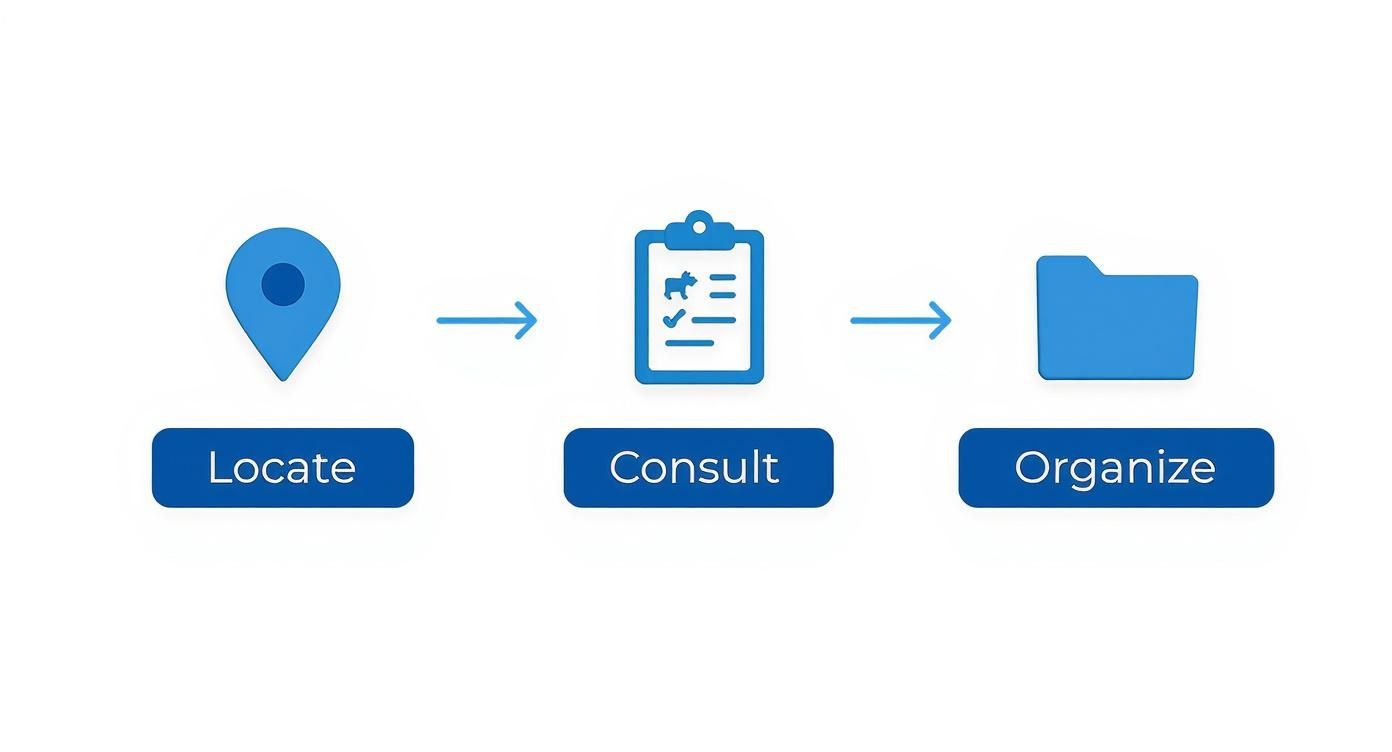
As you can see, it all flows from finding the right professional, creating a solid plan together, and getting your documents in order before you even think about the final endorsement.
Here are the two main ways to get it done:
Mail-In Option: You can mail the physical paperwork to the APHIS Endorsement Office that serves your state. This method requires careful planning to account for shipping time both ways. You'll need to send everything in with a pre-paid, self-addressed return envelope so they can mail the endorsed certificate back to you.
Online Submission (VEHCS): This is the modern, faster route. The Veterinary Export Health Certification System (VEHCS) is the USDA's online portal. Your vet can upload all the necessary documents directly, and in many cases, APHIS provides a digital endorsement. It saves a ton of time and stress.
A Real-World Scenario: Moving to Spain
Let's walk through an example to see how this plays out. Imagine a family is moving their Golden Retriever, Buddy, from Texas to Spain. Spain is in the EU, which has a rule that the health certificate must be issued within 10 days of the pet's arrival.
Their flight lands in Madrid on June 20th. This means their final vet appointment should be on June 10th or later.
Here’s their timeline:
June 11th: Buddy gets his final exam. The accredited vet fills out the specific bilingual Spain-EU health certificate and immediately submits it online through VEHCS.
June 13th: The USDA APHIS office reviews the digital submission, sees that everything is in order, and applies their official digital endorsement.
June 14th: The vet gets a notification, downloads and prints the official endorsed hard copy from VEHCS, and calls the family to come pick it up.
By using the online system, the family has the endorsed international health certificate for pets in their hands a full six days before flying. This gives them precious breathing room and turns what could have been a frantic wait into a calm final week of packing. If you want to learn more about what these certificates involve, check out our guide on the pet health certificate for travel.
This final government check is what truly validates all your hard work. Whether you mail it in or your vet uses the online portal, securing the USDA endorsement is the last piece of the puzzle that makes your pet's journey official.
Avoiding Common Mistakes for a Smooth Journey
Even the most organized pet owner can hit some turbulence when trying to get an international health certificate for pets. We've seen it happen time and again—a tiny oversight snowballs into a massive headache at the airport. Let's walk through the most common slip-ups so your journey is less of a stressful scramble and more of a walk in the park.
This isn't about being perfect. It's about being prepared for the hurdles that can pop up when you least expect them. A little foresight goes a very long way in making sure your pet’s travel day is a success.
Misreading the Travel Window
This is, without a doubt, one of the most frequent and costly mistakes we see. Most countries require the health certificate be issued within a very specific timeframe, often within 10 days of arrival. And the keyword there is arrival, not departure.
This tight window means you have to schedule your final vet visit and the USDA endorsement with great care. If you calculate the window based on your departure date, especially for a long-haul flight, your certificate could be invalid by the time you land. Always, always double-check this detail on your destination's official government website.
A single day can make or break your trip. Miscalculating this window is a leading reason pets and their owners face frustrating delays or are denied boarding at the airport. It really pays to be obsessive with your calendar on this one.
Another timing trap is simply not starting early enough. Some requirements, like rabies titer tests, have to be done months in advance. Procrastination is not your friend here. Start the planning process the moment you know you’ll be traveling.
Overlooking Airline-Specific Policies
Your destination country isn’t the only one calling the shots. Every single airline has its own set of policies for pet travel, and sometimes they're even stricter than the government's rules. Don't make the mistake of assuming your government-approved paperwork means you're all clear with the airline.
Airlines have their own specific rules about:
Carrier Size and Type: They will have exact dimensions for both in-cabin and cargo carriers. Don't guess.
Breed Restrictions: Certain brachycephalic (flat-faced) breeds might have travel restrictions, especially during warmer months.
Health Certificate Timing: Some airlines enforce their own 10-day rule, even if the destination country gives you more wiggle room.
Failing to check these details directly with the airline can get you turned away at the check-in counter. It is a good idea to call the airline's special assistance or pet travel line and confirm every single requirement. If you can get it in writing via email, even better.
Mishandling Your Documents on Travel Day
You've done all the hard work: the vet visits, the endless paperwork, getting the final endorsement. Don't fumble at the finish line! How you manage your documents on the day you fly is just as critical as getting them right in the first place.
The biggest mistake is packing your original, endorsed health certificate in your checked luggage. This is a huge gamble. If your bag gets delayed or lost, you’ll land in a new country without the single most important document your pet needs for entry.
Here are a few paws-on tips for managing your paperwork like a pro:
Carry the Originals: Your pet's original, hard-copy documents must always be in your carry-on bag. No exceptions.
Create Digital Backups: Scan or take clear photos of every single document. Save them to your phone and to a cloud service like Google Drive or Dropbox.
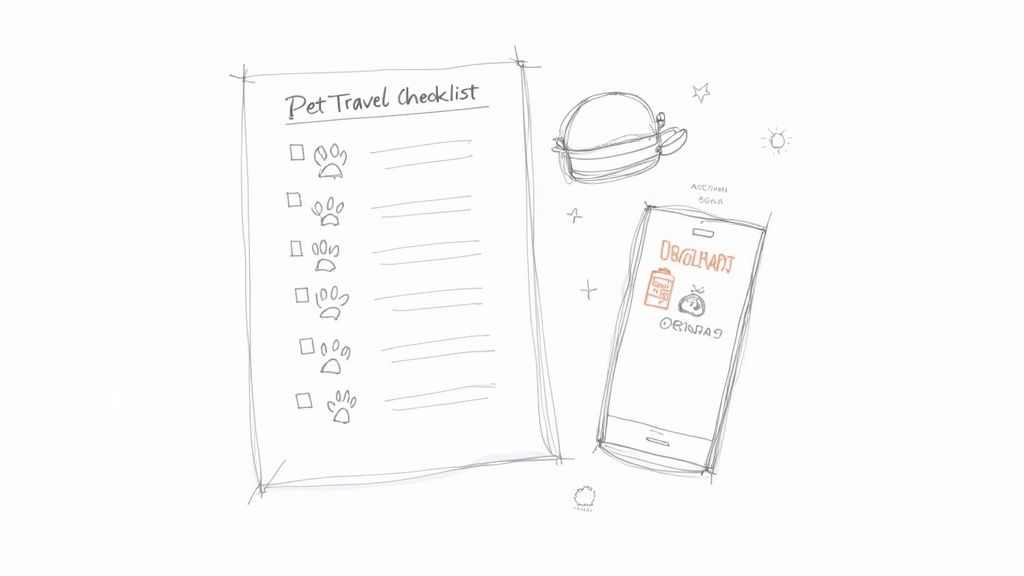
Make a Checklist: A simple checklist helps you track every signature, stamp, and step, ensuring nothing falls through the cracks.
By steering clear of these common pitfalls, you can navigate the process with confidence, making sure you and your furry copilot are truly ready for your next big adventure.
Common Questions About Pet Travel
Trying to figure out international pet travel can feel like you're piecing together a complex puzzle. It's totally normal for questions to pop up, and honestly, we've heard them all. To make your life a little easier, we’ve put together some of the most common things people ask about getting an international health certificate for pets.
Think of this as your quick-reference guide for all those nagging "what if" and "how do I" moments. Getting these details right is the last, crucial step to ensuring your pet’s journey is as smooth as it can possibly be. Let's dig in.
How Long Is an International Health Certificate Valid For?
This is one of the most critical details in the entire process, and it trips up a lot of pet owners. The validity of a health certificate is almost always decided by your destination country, and that window can be surprisingly short.
For most destinations, including the entire European Union, the certificate must be completed by your vet and endorsed by the USDA within 10 days of your pet's arrival. That timeline is tight, and it demands some careful scheduling. Your final vet visit and the USDA endorsement have to fit perfectly inside that 10-day window.
Crucial Tip: Always, always base your timeline on your arrival date, not your departure date. When you're dealing with long-haul flights that cross multiple time zones, this little detail can be the difference between a valid certificate and a very expensive piece of paper.
What’s the Difference Between Domestic and International Certificates?
Great question. The two documents serve completely different functions, and it's not just about geography. The level of detail and authority are worlds apart. You definitely don't want to get them mixed up, or you could find yourself in a tricky spot at the airport.
A domestic health certificate, often called a Certificate of Veterinary Inspection (CVI), is just for travel within the United States. Think of it as a basic health check-up on paper—it confirms your pet is healthy and has an up-to-date rabies vaccine for a flight from, say, California to New York.
An international health certificate for pets, on the other hand, is a much more complex document. Here's a quick breakdown:
Feature | Domestic Certificate | International Certificate |
|---|---|---|
Complexity | Simple, one-page form | Multi-page, often bilingual document |
Requirements | Basic health check, rabies vaccine | Specific tests, treatments, and vaccinations |
Endorsement | Veterinarian's signature only | Required government endorsement (e.g., USDA) |
Purpose | Interstate travel, airline compliance | Border control, disease prevention |
The biggest takeaway here is the government endorsement. Without that official USDA stamp, an international certificate generally isn't considered valid.
Can I Use a Digital Copy of the Health Certificate?
Even though we live in a digital world, international pet travel still runs on paper. Your vet might submit the forms to the USDA electronically using a platform like VEHCS, but the final, endorsed document you travel with almost always needs to be the original hard copy.
Why? The official paper often has a raised, embossed seal and a real ink signature from the endorsing official. These security features are tough to copy digitally, which is why most border agents still insist on seeing the physical version.
While a few countries are starting to accept digital copies, it’s far from standard practice. You should always plan on carrying the original certificate with you in your carry-on luggage. Unless you have official, written confirmation from your destination country stating otherwise, it's best not to take the risk. Better safe than sorry.
Why Is This Process So Strict?
All the strict rules surrounding the international health certificate for pets boil down to one thing: global biosecurity. These regulations are in place to help prevent the spread of diseases that can harm both animals and people, with rabies being the most well-known example.
Global bodies work to standardize this process. The World Organisation for Animal Health (WOAH), for instance, issues internationally recognized veterinary certificates to make sure every pet meets public and animal health standards when crossing borders. These documents, issued by the exporting country's veterinary authority (like the USDA in our case), are a guarantee to the importing country that your pet is healthy. You can learn more about these global standards for animal health to see the bigger picture.
At the end of the day, every country has the right to protect its ecosystem and local animal populations. By following the rules, you're doing your part to keep pets everywhere safe and healthy.
Navigating all these details doesn't have to be overwhelming. With the right support, you can make sure every document is perfect and every deadline is hit. Passpaw was built to help veterinary practices manage this entire process, turning a complicated headache into a simple, repeatable workflow.
More articles
From regulatory changes to best practices for veterinarians and pet owners, our resources keep you ahead of the curve.