Are you a team member in a veterinary practice?
Are you a pet parent planning a trip with your furry pal?
How to Take My Dog to Mexico: A Pawsitive Travel Guide
Ready for a sunny getaway with your furry co-pilot? Taking your dog to Mexico is an amazing adventure, but it all starts with a solid plan. You'll need to follow a specific timeline, starting with checking their microchip and rabies vaccination status a few months out. The most important part, though, is getting an official veterinary health certificate within 15 days of your travel date. Nail that, and you're set for a smooth border crossing.
Your Pre-Travel Timeline for a Mexican Adventure
A little prep work goes a long way in making sure your trip to Mexico is all about fun—think dog-friendly beaches in Puerto Vallarta or exploring the parks of Mexico City. Following a clear timeline helps you sidestep any last-minute stress or 'ruff' surprises at the border. Let's break it down.
Two to Three Months Before Your Trip
This is where the real planning begins. First up, confirm your dog has an ISO-compliant microchip. This is the 15-digit chip that’s become the international standard and is your best bet for identification if your pup ever gets lost abroad. If they have an older, non-compliant chip, you might need to get a new one implanted or, at the very least, carry a compatible scanner with you.
Next, pull out your dog's vaccination records and check the rabies vaccine. Mexico looks for proof that it's current. If it’s expiring anytime around your travel dates, get a booster well ahead of time. You don't want any last-minute scrambles.
Key Takeaway: A functional, registered microchip is your dog’s ticket home if they get lost. Double-check that your contact information—including your phone number and email—is up-to-date in the microchip registry. An unregistered chip is just a piece of plastic.
Now is also the time to dig into airline policies if you're flying. Every airline has its own set of rules for carrier size, breed restrictions, and whether pets can fly in the cabin. Don't put this off; booking a pet-friendly spot early is a very good idea. If things feel overwhelming, you can always look into professional travel planning assistance to help navigate the process.
This visual timeline breaks down the key milestones, from early prep to that final, crucial health certificate.

As the infographic shows, getting the microchip and vaccines sorted early gives you breathing room for the time-sensitive health certificate right before you leave.
One Month Before Your Trip
With your departure date getting closer, it's time to book the most important appointment of all: the vet visit for your international health certificate. Go ahead and schedule this now, making sure the appointment date falls squarely within 15 days of your arrival in Mexico. This window is important, so timing is everything.
This is also the perfect time to get all your pet's documents organized. Create a folder—both a physical one and a digital backup—with these essentials:
Proof of rabies vaccination (the actual certificate)
Microchip registration details
A clear, recent photo of your dog
Your flight or travel itinerary
For pet owners coming from the U.S., getting this right is key. With U.S. live animal imports to Mexico reaching US$199.02 million in 2024, Mexican authorities are diligent. SENASICA, the agricultural authority in Mexico, has guidelines for health certificates, microchips, and proof of required treatments. Vets often report that a number of travel denials happen because of expired documents or missing endorsements.
The Final 15 Days
You’re in the home stretch. Your vet appointment for the health certificate needs to happen during this period. The vet will do a full exam to confirm your dog is healthy and parasite-free before filling out the official health certificate. It's so important to make sure every single detail is accurate.
This certificate is your golden ticket, so treat it like one. If you want to dive deeper into perfecting this part of the process, check out our comprehensive guide to pet travel documents.
Getting the All-Important Vet Health Certificate for Your Dog
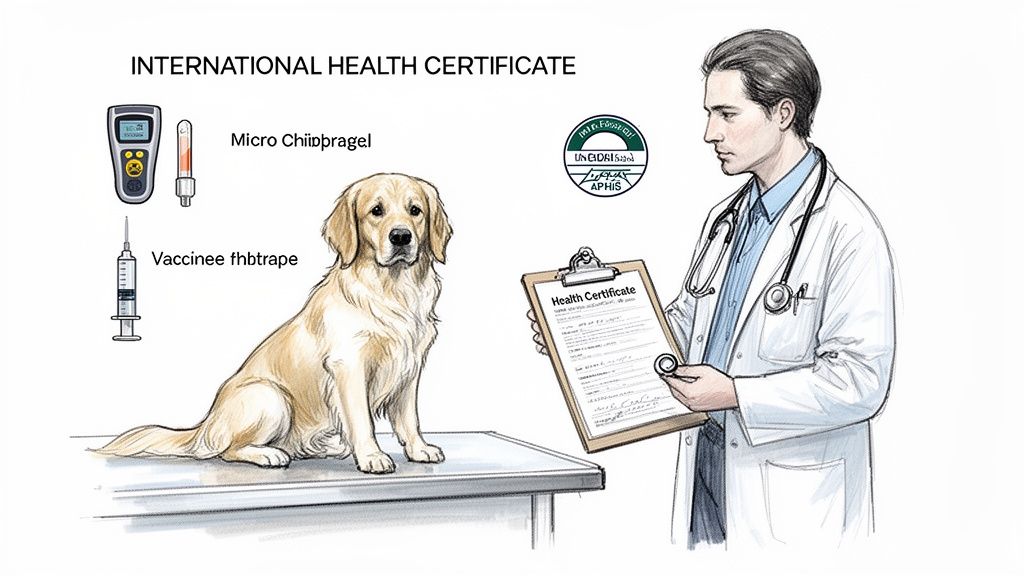
This vet visit is the single most important appointment you'll make for your trip. It’s not your average check-up; this is a highly specific exam designed to confirm your dog meets Mexico's entry guidelines. Getting the health certificate right is your golden ticket to a smooth border crossing, so let's walk through what really happens.
Think of this document as your dog's official passport. Your vet's office records are great, but the international health certificate is the formal document that Mexico's agricultural authority, SENASICA, will be looking for. It’s official proof that your dog is healthy, disease-free, and ready for travel.
What Your Vet Will Be Looking For
During this exam, your veterinarian will perform a very thorough physical inspection. They're on the lookout for specific signs of health that line up with what Mexico's guidelines suggest. This is way more than just a quick once-over.
Your vet will confirm your dog is completely free of any signs of infectious or contagious diseases. A big part of this is a careful check for external parasites—we're talking fleas and ticks. If they find any, your dog will need to be treated before the certificate can be signed. This is a big deal, as stopping the spread of parasites is a huge priority for agricultural officials everywhere.
They'll also document a few key things:
Rabies Vaccination: The vet will verify the rabies vaccine is current and was given within the required timeframe.
Parasite Prevention: The certificate needs to state that your dog received preventative treatments for both internal and external parasites recently.
Overall Health: They will confirm your dog is in good physical shape, with no open wounds or signs of illness that could make travel unsafe.
This level of detail ensures your dog is not only safe but will be welcomed into Mexico without any issues. It feels like a lot, but it's all in the name of keeping pets healthy.
Understanding the APHIS Endorsement
Once your USDA-accredited veterinarian fills out and signs the health certificate, there's usually one more step for anyone traveling from the United States: the USDA APHIS endorsement. APHIS stands for the Animal and Plant Health Inspection Service, and their official stamp (or digital signature) is what validates the entire document.
This endorsement is the government's way of confirming that a federally accredited vet issued the paperwork correctly. For many travelers, this is the final, important step that makes your dog's health certificate official for international travel. You can get this done by mail or in person, but your timing has to be perfect.
Expert Tip: Do not wait until the last minute for the APHIS endorsement. The process can take days, especially by mail. Plan your vet visit and endorsement timeline to fall within the 15-day window before you arrive in Mexico.
For pet owners, this means your dog's vet visit should probably happen around 10 days before your travel date. It gives you just enough buffer to get everything in order. Platforms like Passpaw are a game-changer here, helping to validate documents in real-time and organizing tasks by travel date. It turns a process that could take weeks of back-and-forth into just a few days, which may cut down on errors. Without it, you’re rolling the dice—Mexico has rejected many pets in recent years because of simple paperwork mistakes.
How to Talk to Your Vet
Clear communication with your vet is everything. Don't just assume they know the latest rules for Mexico; regulations can change and may be different from other popular destinations. When you book the appointment, be very specific: "This is for an international health certificate for travel to Mexico."
Bring your travel dates and all of your dog's health records to the appointment. This gives the vet team all the info they need to fill out the forms with total accuracy. A simple typo or a wrong date can cause a massive headache at the border. For a deeper dive, check out our guide on how to get a USDA-endorsed pet health certificate. Getting this paperwork right is a team effort between you and your clinic.
Crossing the Border With Your Dog by Air or Land
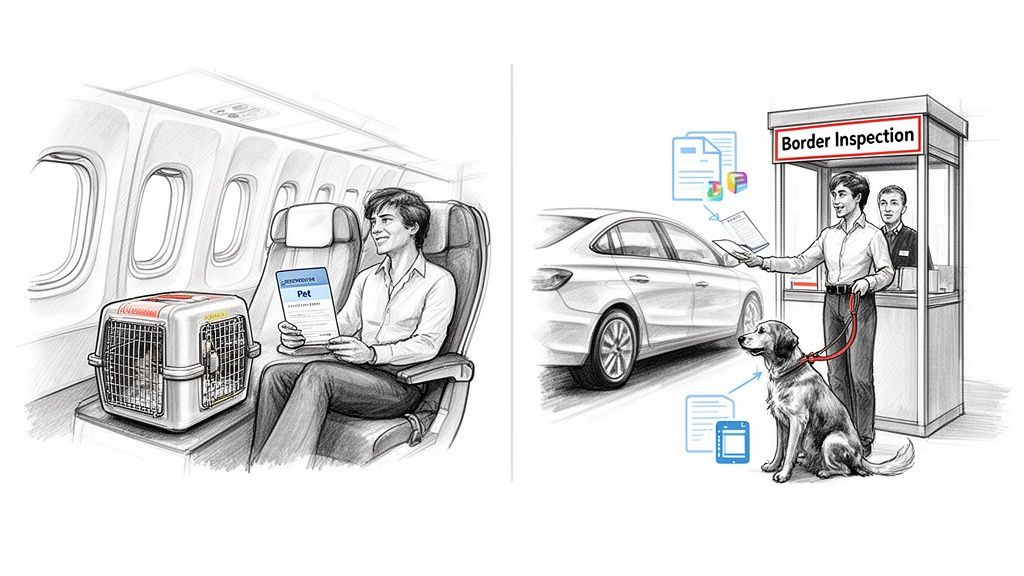
You’ve done the hard part—all your paperwork is in order and you’re ready for the final leg of the journey. This is where your preparation truly pays off. Whether you’re flying or driving, knowing what’s coming can make the actual border crossing feel less like a challenge and more like the start of an exciting adventure.
Let's walk through what actually happens at the airport and at a land crossing so you and your furry co-pilot can breeze into Mexico without a hitch.
Taking Your Dog to Mexico by Air
Flying with your dog involves more than just booking a ticket. Every airline has its own playbook for pet travel, so the moment your own seat is confirmed, your next call should be to them. This isn't a step you want to skip.
Get on the phone and get clarity on a few key things:
In-Cabin vs. Cargo: Can your dog fly in the cabin with you? This is typically for smaller dogs that can fit comfortably in an approved carrier under the seat in front of you. Bigger pups will likely need to travel in the temperature-controlled cargo hold.
Carrier Requirements: Airlines can be strict about pet carriers—down to the exact dimensions, ventilation, and material. Get the specific requirements so you can buy the right one and avoid any last-minute surprises at check-in.
Breed Restrictions: Some airlines have restrictions on brachycephalic (flat-faced) breeds like pugs, bulldogs, or Frenchies due to the increased risk of breathing difficulties at high altitudes.
When you get to the airport, the check-in process is pretty standard. Have your dog’s health certificate and vaccination records handy, as the airline staff will need to verify them before you can proceed.
But you’re not quite done once you land in Mexico. Your first stop will be the Animal and Plant Health Inspection Office (OISA), which is run by the agricultural authority, SENASICA. An official there will give your dog a quick physical inspection and review your documents one last time to make sure your pup is healthy and free of parasites. It's usually a quick, friendly process before you're officially welcomed into the country.
Driving Across the Border into Mexico
A road trip to Mexico with your dog often means more flexibility and less stress for everyone involved. The process at a land border crossing is generally very straightforward. As you drive up, an official will direct you to a vehicle inspection area.
Here, you’ll present your paperwork to an agent from SENASICA, the same authority you’d meet at the airport. Keep your dog’s health certificate and rabies vaccination records in a folder that’s easy to grab. They’ll look over the documents and might ask to see your dog for a quick visual check.
Pro Tip: Have both paper and digital copies of everything. I keep photos of all documents on my phone, but the physical copies live in a folder in the glove compartment. You never know when your phone might die or you won't have service.
A little bit of friendliness goes a long way. Greet the officials, let them know you’re traveling with your dog, and hand over your paperwork. If your dog is calm and on a leash, it just makes the whole interaction smoother for everyone.
Making the Crossing a Breeze
No matter how you get there, a few simple habits can make the crossing completely stress-free. First, always be polite and patient with border officials. They’re just doing their job to protect Mexico's animal health, and a good attitude can make a world of difference.
Keep your documents organized. Fumbling through a messy backpack only adds tension. If someone else, like a friend or family member, is traveling with your dog, you might also want to look into specific notarized travel consent forms ahead of time.
Finally, think about your dog's comfort. Give them a chance to go to the bathroom before a long flight or before you get into a potentially long line at the border crossing. A happy, comfortable dog makes for a much happier travel day. For a deep dive into all the documentation rules, our complete guide to pet travel to Mexico covers every detail you'll need.
How Passpaw Can Simplify Your Pet Travel Prep
Feeling a bit buried in checklists, timelines, and paperwork? It's completely understandable. Taking a dog to Mexico involves serious planning, and one tiny mistake on an international health certificate can spiral into frustrating delays or even getting turned away at the border. It's a high-stakes process where every single detail has to be perfect.
But there’s a much better way to handle it all. Instead of trying to juggle vet appointments, endorsement deadlines, and shifting regulations on your own, a specialized tool can transform this stressful ordeal into a straightforward, manageable task. This is exactly where a platform built for pet travel makes a world of difference for both your vet's office and for you.
From Manual Chaos to Automated Clarity
The old-school way of preparing pet travel documents can be a tangled mess of phone calls, back-and-forth emails, and manual data entry. A busy vet practice has to hunt down the latest country-specific forms, fill them out by hand, and then coordinate everything between the pet owner and the USDA for endorsement. Frankly, it's a system where human error can easily happen.
Passpaw completely changes this dynamic by creating a clear, automated workflow. For veterinary teams, this means no more digging for forms or second-guessing regulations. The platform serves up the correct, up-to-date documents and walks the staff through the process, making sure nothing gets missed. This level of automation is a true game-changer.
This screenshot of the Passpaw dashboard shows how a clinic can manage multiple pet travel cases at once, with clear statuses for each step.
What you’re looking at is organized simplicity. It’s a central hub where a vet can track progress, see upcoming deadlines, and communicate directly with pet owners—all in one place.
Keeping Everyone on the Same Page
One of the biggest sources of anxiety for pet owners is simply not knowing what’s going on. Did the vet send the paperwork? Was the endorsement approved? Passpaw bridges this communication gap by keeping you in the loop with real-time updates.
This means your vet's office can send you progress reports automatically, so you’re never left wondering about the status of your dog’s documents. This transparency builds confidence and lets you focus on other parts of your trip planning, like figuring out the best dog-friendly parks in Mexico City. When your vet has a tool that manages all the complex parts, the whole experience becomes less of a headache and more of a partnership.
Key Insight: A managed, transparent process reduces stress for everyone. When vet clinics can work more efficiently and pet owners are kept informed, the result is accurate paperwork and a much smoother journey for your furry friend.
Mexico has strict guidelines, which can include ISO-compliant microchips, specific rabies vaccination timelines, and vet-issued certificates endorsed by APHIS. Any issues can lead to 15-30 day quarantines that cost thousands. This is where a tool like Passpaw is invaluable for vet practices and pet shippers; it manages everything from regulation updates to owner communication, helping to reduce errors by automating a large part of the workflow. You can learn more by exploring these insights on the Mexican pet food market.
By using a dedicated platform, your vet helps ensure that your dog's journey to Mexico is handled with precision and care. If you'd like to see how this technology can make your next trip easier, you can get started with Passpaw and explore the features for yourself. It’s a small step that makes a huge difference in your travel prep.
Packing the Perfect Travel Bag for Your Dog
You’ve probably gone over your own packing list a dozen times, but what about your dog’s? Nailing your pup's travel bag is the secret ingredient for a smooth, stress-free trip to Mexico. It’s about more than just grabbing some food and a leash; it's about anticipating their needs so they feel just as comfortable and secure as you do.
Think of it this way: a well-packed bag means you’ll spend less time hunting for a pet supply store in a new town and more time tracking down the perfect dog-friendly beach.
Comfort and Familiarity from Home
Let's be honest, travel can be weird for dogs. The new smells, sounds, and routines can throw them for a loop. Bringing a few key items from home can make a world of difference in helping them settle in.
A favorite blanket or a well-loved, grimy toy carries the scent of home, which is incredibly reassuring. When you get to your hotel or Airbnb, laying out their bed or blanket instantly creates a "safe spot" just for them. It’s a small trick that works wonders for easing travel anxiety.
A few must-haves for comfort:
A favorite blanket or dog bed: This gives them a familiar place to crash after a long day of sniffing out new adventures.
A couple of go-to toys: A familiar chew toy or fetch ball provides a welcome distraction and a dose of normalcy.
An old t-shirt with your scent: For dogs prone to separation anxiety, leaving an item that smells like you can be a game-changer when you need to step out.
Health and Safety Must-Haves
You hope you never need it, but a pet first-aid kit is a very good idea. You can buy a pre-made one or build your own with essentials like antiseptic wipes, gauze, self-adhesive bandages, and tweezers for any run-ins with thorns or splinters. Having it on hand provides incredible peace of mind.
And don't forget their meds. Pack any regular medications in their original bottles, and bring a copy of the prescription from your vet. This is a lifesaver if you need a refill or if officials ask any questions.
Traveler's Tip: The Mexican sun is no joke, even for our furry friends. Dogs with thin coats or pink skin on their noses and ears can get sunburned surprisingly fast. Toss a tube of pet-safe sunscreen in your bag to protect them during your outdoor excursions.
Finally, double-check that your dog’s collar is secure and has an up-to-date ID tag. Make sure it has your name and, most importantly, your cell phone number. An engraved tag is a smart move—it won't smudge or wash away like a handwritten one.
Practical Gear for Daily Adventures
Once you've settled in, having the right gear makes every outing that much easier. A few simple items will quickly prove their worth.
A collapsible water bowl is a lightweight lifesaver. Whether you're hiking, lounging on the beach, or just wandering through a local market, it ensures your dog stays hydrated in the warm climate. Always carry a bottle of purified water just for them.
And, of course, plenty of poop bags. It’s always better to have way too many than not enough. Being a responsible pet owner is appreciated everywhere and helps keep public spaces welcoming for all dogs.
A sturdy leash and a well-fitting harness are also key. If you're planning on evening strolls, a reflective leash or a small clip-on light is a great idea for added safety. Having these basics ready means you’re prepared for whatever adventure comes your way.
The Ultimate Packing List
To make sure you don't forget a thing, we've put together a handy checklist. This covers everything from the absolute essentials to the nice-to-haves that will make your trip even better.
Category | Item | Pro Tip |
|---|---|---|
Documents | Health Certificate & Rabies Certificate | Keep digital copies on your phone and hard copies in a waterproof folder. |
Documents | Microchip Information | Have the number and registration details saved somewhere easily accessible. |
Health & Safety | Pet First-Aid Kit | Include vet's contact info, tick remover, and any allergy medication. |
Health & Safety | Regular Medications | Pack enough for the entire trip, plus a few extra days' worth, just in case. |
Health & Safety | Pet-Safe Sunscreen & Bug Repellent | The sun and bugs can be intense; protect your pup's skin and coat. |
Food & Water | Regular Dog Food | Bring more than you think you'll need to avoid sudden diet changes. |
Food & Water | Collapsible Food & Water Bowls | Lightweight and easy to clip onto a backpack for day trips. |
Food & Water | Water Bottle (for your dog) | Always carry fresh, purified water to prevent stomach upset from tap water. |
Comfort | Favorite Bed or Blanket | The familiar scent will help them settle in a new environment. |
Comfort | A Few Favorite Toys | A chew toy or ball can help with anxiety and boredom. |
Gear | Sturdy Leash & Harness/Collar | Make sure the fit is secure and comfortable for long walks. |
Gear | ID Tags with Current Contact Info | Double-check that your cell phone number is correct and legible. |
Gear | Poop Bags | Pack more than you think you'll need. You can never have too many. |
Gear | Old Towels or Dog Towel | Perfect for cleaning off sandy paws after a day at the beach. |
With this list, you're not just packing—you're preparing. Taking a few extra minutes to get your dog's bag right is the final piece of the puzzle for a successful and memorable adventure in Mexico.
Common Questions About Taking Your Dog to Mexico
Even with the best plans, you might still have a few nagging questions. It’s totally normal. Taking your dog to another country is a big deal, and it’s smart to make sure every last detail is covered. We’ve pulled together some of the most common questions we hear from fellow travelers to help you nail down the final pieces of your plan.
Getting these things right can be the difference between a breezy border crossing and a stressful, complicated mess. Let's dig into what might still be on your mind.
Does My Dog Need a Microchip to Enter Mexico?
Officially, a microchip isn't always listed as a requirement for dogs coming from the U.S. or Canada. But you should absolutely get one.
Think of an ISO-compliant microchip as the single best permanent ID your dog can have. If you two ever get separated in a new place, that tiny chip is their fastest and most reliable ticket back to you. Plus, some airlines make it a requirement anyway, so check their policy. It’s a simple safety measure that brings a ton of peace of mind. Just be sure to log into the registry and confirm your contact info is up-to-date before you go.
How Long Is the Pet Health Certificate Valid For?
Timing is absolutely critical here. Your veterinarian has to complete the exam and issue the health certificate within a very specific window before you cross the border. As a general rule, Mexican officials look for the certificate to be dated within 15 days of your entry into Mexico.
This 15-day window is pretty firm, so you'll need to schedule that vet visit carefully. It's always a good idea to confirm the latest guidelines with your vet or airline, as rules can sometimes shift. Don't forget that your airline might have its own, even stricter, timeline, so check their policy too.
A Quick Reminder: Your dog’s health certificate is their passport. If it’s expired or filled out incorrectly, you can expect major delays at the border. Keep a close eye on the calendar as your trip gets closer.
Can I Bring My Own Dog Food into Mexico?
Yes, but only a very small amount. You're typically allowed to bring just enough dog food for the day of travel and arrival. The most important rule? It should be in its original, unopened, factory-sealed bag.
Don't plan on bringing a huge sack of kibble or any homemade food, as that is not usually allowed. If your dog has a sensitive stomach or is on a prescription diet, do some research ahead of time to see if you can buy their specific brand where you're staying in Mexico. A little planning here can save you a lot of running around later.
What Happens if My Paperwork Is Wrong at the Border?
This is the exact situation every pet owner dreads, and it’s why being careful is so important. If a border official finds a mistake on your paperwork, a couple of things can happen. At best, you might have to find a local vet at the border to perform a new exam on the spot. This will be expensive and can lead to long, frustrating delays.
In a worst-case scenario, if the problem can't be fixed, your dog could be denied entry entirely. That could mean turning around and going home. It’s a heartbreaking outcome that highlights just how important it is to double- and triple-check every single detail on that health certificate before you even leave the house.
Ready to take the guesswork out of your travel prep? Passpaw helps veterinary clinics manage and validate every detail of your pet’s travel documents, ensuring everything is perfect for your trip to Mexico.
More articles
From regulatory changes to best practices for veterinarians and pet owners, our resources keep you ahead of the curve.