Are you a team member in a veterinary practice?
Are you a pet parent planning a trip with your furry pal?
Complete Guide To Health Certificates For Pets
Ready to jet-set with your furry friend? Pet health certificates are veterinarian-signed documents confirming your companion’s health and vaccination status—think of them as their passport for travel. This guide pulls back the curtain on scheduling vaccines, lab tests, forms, and endorsements so you’re free to pick out the purrfect travel bowl, not chase paperwork.
Preparing Your Pet For Travel
Planning a trip with your pet can feel a bit ruff, but a health certificate breaks it down into clear, bite-sized steps. You’ll know exactly when to visit the vet, submit tests, and collect those all-important stamps.
Schedule vaccinations and rabies tests to meet destination windows
Fill out government and airline forms with precise pet details
Secure endorsements from accredited veterinarians and relevant agencies
Keep a close eye on timing to avoid quarantine holds or travel hiccups
Ensuring each step is completed on time keeps your pet happy, healthy, and ready for takeoff.
Quick Overview Of Certificate Steps
Below is a summary of the core actions needed to obtain a health certificate for pet travel.
Step | What You Do | Who Signs | Typical Timing |
|---|---|---|---|
1 | Schedule vet visit and vaccinations | Pet Owner & Vet | 1–2 months before travel |
2 | Submit blood tests and titers | Lab & Vet | 4–6 weeks before travel |
3 | Complete official forms | Vet & Agency | 10–14 days before travel |
4 | Obtain endorsements and stamp | Government Official | 3–7 days before travel |
These four steps form the backbone of your pet’s health certificate process, helping you stay organized and on schedule.
Screenshot Insights
Here’s a screenshot showing a sample veterinary certificate format with fields for pet identity, vaccination records, and official endorsements.
Key details like microchip numbers, exam dates, and vet signature blocks must be filled out accurately to make the certificate valid.
With this quick overview, you’re now pawsitively primed to dive into the finer points. Upcoming sections will break down how these certificates double as passports, why careful paperwork keeps quarantine at bay, and exactly what you need for those vet and agency sign-offs.
Explore how certificates act like passports for border crossings
Learn why accurate paperwork guards against quarantine and delays
Find a detailed roadmap to secure vet and agency endorsements—and keep your furball travel-ready
For veterinary teams, a clear, step-by-step workflow turns a complex process into smooth sailing. Platforms like Passpaw can manage deadlines, forms, and endorsements in one place—no more chasing your tail over signatures or missing dates. Happy travels ahead!
Understanding The Key Concepts
Pet health certificates are like boarding passes for your furry companions, bringing together vaccine records, health checks, and parasite screenings into one official document.
Issued by accredited veterinarians and government bodies, these certificates form the backbone of any pet travel plan. Since every destination sets its own rules, learning the basics early will save you from last-minute headaches.
Key Document Issuers
Accredited Veterinarians: Perform the physical exam and complete the official forms.
Government Agencies: Add the required stamps or signatures to legitimize the paperwork.
Certified Laboratories: Run blood titer analyses and parasite tests to meet each country’s standards.
Airline Veterinary Teams: Do a final document check before boarding to ensure full compliance.
Navigating country-specific requirements can feel like mastering a new dialect. A simple analogy often clears the fog:
A passport without an embassy stamp is like a health certificate without an endorsement—it won’t get you very far.
Types Of Health Certificates
In most cases, you’ll work with three core documents: general health certificates, import/export forms, and pet passports. Each has a distinct purpose.
General Health Certificate: Think of it as your pet’s local ID, listing exams, shots, and parasite treatments.
Import/Export Form: Acts like a visa, granting permission to enter or exit a specific country.
Pet Passport: A booklet that consolidates multiple records—ideal for multi-country adventures.
When you hear endorsement, that’s the government’s official stamp validating your form for international use.
Term | Definition | Example |
|---|---|---|
Endorsement | Official stamp or signature from a government office | USDA stamp on a U.S. departure certificate |
Accreditation | Recognition that a vet can issue valid certificates | OIE-accredited vet designation |
Validity Period | Window during which a certificate remains accepted | Valid for 10 days before travel date |
Blood Titer Tests | Checks for antibodies to show immunity levels | Rabies titer of 0.5 IU/mL minimum |
This table ties key words and numbers to real documents, so you can see how each piece fits into your travel puzzle.
Real-World Scenarios
Picture this: You’re flying Fido from the U.S. to the EU. Under EU rules, you need a rabies titer drawn at least 30 days before export. Miss that window, and you might face unexpected quarantine.
On another itinerary—say, heading to Japan—you’ll follow a two-step certification process with a 180-day validity span. Nail each requirement, and your pet clears customs without a hitch.
For a deeper dive, check out our guide on veterinary international health certificate procedures. It walks you through endorsements, timelines, and each checkbox with clear examples.
A well-prepared certificate keeps tails wagging and travel plans on track.
Bridging Knowledge To Next Steps
With accreditation and endorsements under your belt, tackling these forms feels straightforward. You’ll know exactly when to call your vet, schedule lab tests, and monitor those validity clocks.
By the end of this guide, you’ll breeze through general health certificates, import/export forms, and pet passports. No more late-night paperwork scrambles or deciphering cryptic instructions.
Next, we’ll look at how these certificates protect animal health and prevent border delays. You’ll see real-life case studies that prove why skipping one tiny detail can lead to major detours at customs.
Why Certificates Matter For Pet Travel
Think of a pet health certificate as your furry friend’s boarding pass through customs. It’s more than a stack of forms—it’s like a safety net against surprises that can turn a dream vacation into a quarantine nightmare.
Miss one deadline, and your dog might spin in circles at the airport or spend weeks in an unfamiliar kennel. That’s why the timing of vaccines, lab work, and official signatures is everything.
Prevents Disease Spread by verifying core vaccination dates.
Avoids Entry Denial and long holds abroad.
Supports Animal Welfare through consistent health screenings.
Meets Airline & Border Rules so you can focus on packing treats, not paperwork.
For instance, a traveler who missed the rabies titer window ended up in a foreign quarantine for 30 days. One tiny date on the calendar derailed an entire trip—and stressed a perfectly happy pup.
On top of that, governments around the world lean on forms like USDA APHIS Form 7001 to keep rules consistent and outbreaks at bay.
Accurate paperwork is your pet’s best travel buddy—no mess, no stress.
Global Pet Travel Market Growth
As more adventurers bring their pets along, animal health services are booming. The global pet travel services market hit USD 2.4 billion in 2024.
By the early 2030s, analysts expect it to climb to USD 3.1–3.9 billion. Read more about pet travel market trends here.
Regulators require standard certificates to help keep everyone safe. Owners who follow best practices—without empty legal promises—set themselves up for smooth crossings. One family learned this the hard way when a missing vet stamp forced their cat into ten days of quarantine in a strange kennel, miles from home.
That story underscores why every stamp, date, and signature matters.
How Certificates Protect Pets
A health certificate isn’t a single stamp—it’s a chain of safety checks from microchip verification to parasite screening.
Licensed veterinarians examine your pet for any sign of illness and confirm that each shot aligns with the rules of your destination.
Microchip Confirmation ensures identity matches the certificate.
Parasite Treatment keeps unwanted hitchhikers off your pet’s passport.
Blood Tests verify immunity levels and comply with import requirements.
This multi-step process keeps paws on the right path and wards off last-minute border hiccups. With clear forms and deadlines, you trade paper stress for picking out toys and treats.
Understanding these checkpoints turns certification from a hurdle into a simple travel checklist. Next, we’ll break down destination-specific rules so you know exactly which tests and endorsements you need for your itinerary.
Key Requirements By Destination
Figuring out what each country expects can feel like juggling different rulebooks. But break it down step by step, and you’ll turn confusion into clarity.
Below, we explore requirements for high-biosecurity nations, the European Union, and North America.
High-Biosecurity Country Rules
Countries like Australia, New Zealand, and Hawaii treat pet arrivals like VIP inspections. They require tightly scheduled tests and approvals to keep diseases out.
Many pet parents find themselves facing unexpected holds—sometimes up to 120 days—if paperwork or timing slips. Read more about international pet quarantine requirements.
Key Steps:
Schedule a rabies vaccination at least 180 days before export.
Send blood samples for a titer test after the post-vaccine waiting period.
Secure government endorsement on official forms.
Miss one of these, and quarantine becomes a real possibility.
European Union Requirements
The EU combines strict disease control with traveler convenience by setting clear windows for each step.
Pets need a rabies shot at least 21 days before departure and no more than 12 months old at travel time. A blood titer test must occur within 9 months before you cross the border.
“Track your vaccination dates in a digital calendar to avoid missing the nine-month titer window.”
A valid dossier includes:
Microchip details that match the certificate.
Up-to-date rabies vaccination record.
Titer test report endorsed by a certified lab.
Use either the official EU pet passport or ComForm 998 to keep everything in one place.
North America Guidelines
Traveling to the US or Canada feels simpler, yet there’s no room for error. A health certificate issued within 10 days of travel plus proof of rabies vaccination are non-negotiable.
Canada may also ask for parasite treatments, depending on the province.
For a deep dive into US endorsement steps, check out our guide on exporting pets from the United States to Japan.
Numbered Actions:
Book a health exam within 10 days of departure.
Verify the rabies vaccine is valid for at least 30 days.
Complete USDA APHIS Form 7001 or the Canadian CFIA certificate.
Obtain an embassy or consulate stamp if needed.
Simple on paper, but a missed date can mean long waits at customs.
Destination Entry Requirements Comparison
To see the big picture, here’s a side-by-side look at three popular regions:
Destination | Certification Needed | Rabies Rule | Quarantine Length |
|---|---|---|---|
Australia / New Zealand / Hawaii | Multi-step endorsement | Titer after 180 days post-shot | 0–120 days depending on docs |
European Union | EU Pet Passport or ComForm 998 | Shot 21 days before, titer within 9 months | 0 days if compliant |
United States / Canada | APHIS Form 7001 / CFIA | Vaccine valid 30 days prior | Rarely enforced if valid |
This snapshot highlights how each destination plays by its own rules.
Staying Organized Across Rules
Small details separate a smooth trip from a quarantine nightmare. A simple checklist app or a spreadsheet can save hours of stress.
Track:
Vaccine Dates and when they expire.
Lab Test Windows, from blood draw to report.
Form Endorsement Appointments with government offices.
“Preparation is the best pet travel medicine,” explains Dr. Lane, a veterinary travel specialist.
Managing Multiple Itineraries
When your pet hops between regions, overlap can create chaos. A unified timeline helps you see every valid window at a glance.
List overlapping dates next to each required approval.
Share the planner with your vet for a double check.
This simple strategy prevents small gaps from turning into long holds.
Real-World Example:
A pet owner in Germany missed the EU titer deadline by five days and faced a 30-day hold. Meanwhile, a traveler in Japan gathered every document early and skipped quarantine.
With clear timelines, digital tools, and a bit of foresight, meeting certificate requirements by destination becomes entirely manageable.
Now you have a clear roadmap for each region. Safe travels and happy tails! Enjoy stress-free crossings with your pet.
Step By Step Application Process
Securing health certificates for pets can feel like planning a cross-country expedition with a furry friend in tow. Breaking it into five clear checkpoints makes the journey manageable.
Book a vet exam at least 10 days before travel
Keep vaccination dates pinned on your calendar
Schedule lab tests and lock in titer results with buffer
Fill out official forms with precise pet data
Obtain endorsements from the correct agencies
A clear checklist turns “ruff” tasks into bite-sized wins.
Scheduling Vet Exam
Think of the vet visit as your launch point. Your veterinarian will record vaccines, verify microchip details, and note any parasite treatments. For example, Fido’s rabies shot must be administered at least 21 days before export.
Every country—and even different pet species—may have unique timeframes. Set a calendar alert or smartphone notification so you never miss this critical exam.
Tracking Lab Tests
Once vaccinations are done, your vet will order a blood draw for titer testing. These tests measure antibody levels against diseases like rabies, confirming your pet meets entry requirements.
Labs generally return titer results within two weeks, so factor that into your timeline. Below is an infographic that lays out the journey from the first jab to the final government stamp.
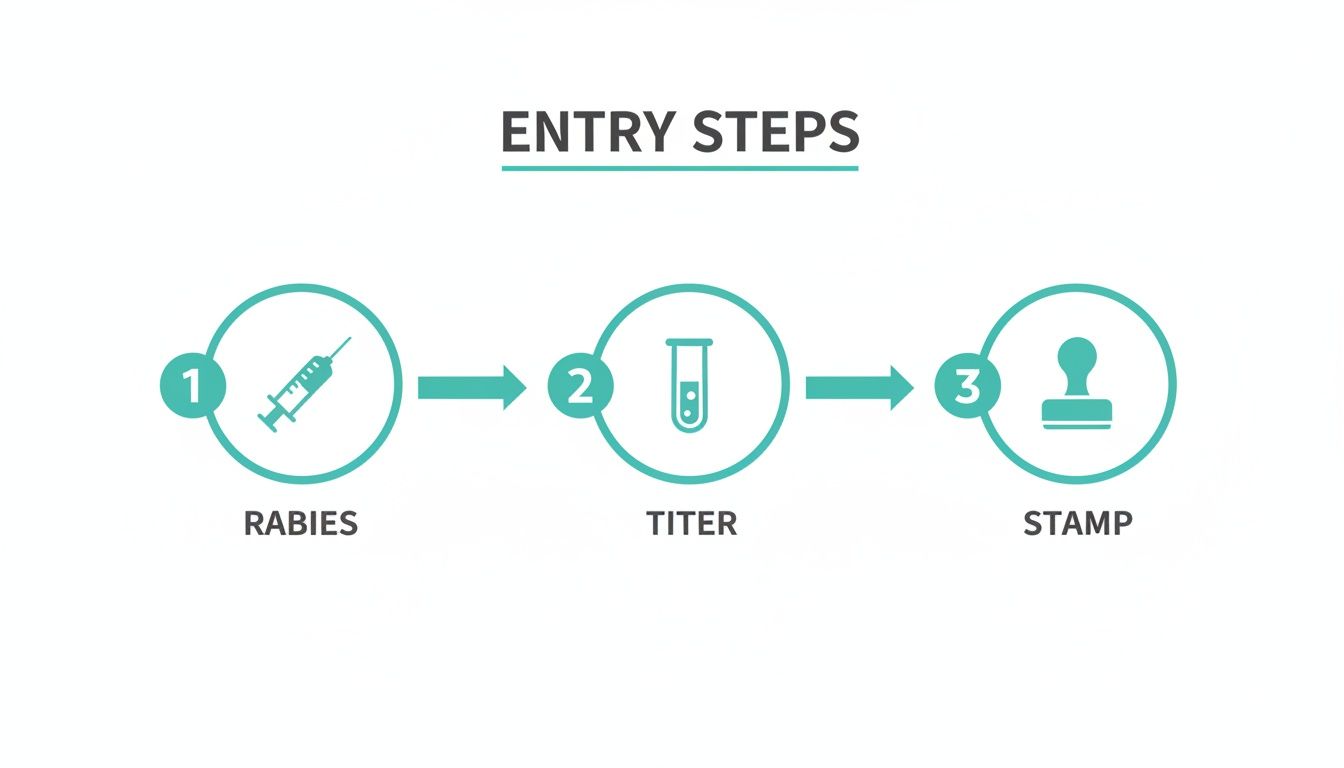
This flow highlights the sequence of rabies vaccination, titer testing, and final endorsement. For tight schedules, track test dates and vet appointments side by side, and keep digital copies of lab reports in your pocket.
Completing Endorsements
When titer results arrive, it’s time to tackle the paperwork. Use the template specified by your destination—mixing up forms can mean a ticket denial at customs.
Form Type | When To Submit |
|---|---|
USDA APHIS Form 7001 | U.S. exports |
Destination-Specific PDF | Country-defined deadline |
Fill each field carefully, including microchip number, pet description, and examination date. Double- and triple-check signatures, stamps, and dates before booking an endorsement appointment. Government offices can get busy, so allow for a little extra wait time.
Final Checklist
Before you pack the carrier, run through this list:
Vaccinations (with dates)
Lab results (titer reports)
Completed forms (no typos!)
Official signatures and stamps
Keep both physical copies and digital scans in separate, labeled folders. These small steps cut stress and leave you free to focus on spoiling your travel buddy.
For more on official endorsements, check out our guide on obtaining a USDA endorsed pet health certificate.
Tips And Best Practices
Set reminders for each milestone—these little nudges save big headaches later. Always verify that your pet’s name spelling and microchip number match across every document.
Use both paper and digital folders
Color-code steps for at-a-glance clarity
Share timelines with your veterinarian
Pack a basic exam kit (tweezers, gauze, sanitizer)
Keep emergency contacts handy
A first-time traveler once ran a practice run with local paperwork and avoided a last-minute frenzy. Another stored all scans in the cloud, pulling them up on a tablet at a moment’s notice.
Real World Example
One pet parent almost missed a tight titer window and braced for a full quarantine. Thanks to a shared spreadsheet, they spotted the looming deadline and scheduled tests in time. That quick action saved days of kennel stress—and plenty of puppy anxiety.
Wrapping Up
Following these steps turns what feels like a marathon into a series of sprints. Start at least three weeks before departure, and track everything in a shared tool like Passpaw. Many vets report saving hours on paperwork when clients use cloud-based reminders and form validation.
Plan exams
Track tests
Confirm endorsements
Backup documents
Safe travels and wagging tails await. Quick weekly reviews of your timeline will keep any last-minute surprises at bay. Bon voyage, buddy!
Using Digital Tools And Access

Digital solutions can transform the certificate process from a paperwork maze into a clear pathway. Think of it as swapping pen and paper for a slick dashboard that keeps everything in view.
Veterinary portals, mobile passport apps, and e-certificate platforms all plug into this ecosystem. They let you upload vaccine records, tick off checklist items, and receive alerts without printing a single sheet.
Veterinary Portals combine scheduling, form filling, and lab integrations in one place
Pet Passport Apps send timely reminders and store digital copies of official certificates
Electronic Certificate Platforms empower vets to issue export documents online, complete with government endorsements
For pet owners in remote regions, specialist travel brokers linked to cloud tools bridge the gap. One case in rural Canada saw an export-ready certificate in just 48 hours thanks to a broker’s platform.
Key Platform Features
Accredited veterinarians often access these platforms through their clinic software. Many systems include real-time compliance checks that flag missing fields before final endorsement.
24/7 Access to document status and reminders via mobile or desktop
Automated Alerts for upcoming exams or endorsement deadlines
Encryption & Two-Factor Authentication to protect sensitive data
Digital Planning And Support
Starting early is crucial, especially when local veterinary options are scarce. A well-designed app can forward forms to regional brokers, turning a frantic scramble into a smooth timeline.
“The right digital tool turns certificate chaos into a clear timeline,” says Dr. Hayes, a veterinary travel expert.
For full scheduling guidance and reminders, explore our Pet Travel Planner.
Learn more in our Pet Travel Planner.
Demand for health certificates remains high since over 50% of pets in some countries skip their annual vet visit. That gap drives reliance on digital passports and specialist brokers to avoid quarantine or denied entry. Learn more about these findings in the global pet health report.
When choosing a digital tool, compare features, pricing, and offline capabilities if you’re traveling through low-connectivity zones. This proactive approach keeps paperwork off your desk and gives you peace of mind wherever you roam.
FAQ
Q1 When Do I Need A Health Certificate For My Pet?
Think of a health certificate as your pet’s passport stamp. If they’re crossing any international border—or if local rules demand it—you’ll need one. In most cases, the document must be issued within 10 days of departure, though some destinations may ask for a tighter window.
Q2 How Do I Schedule Rabies Testing And Certification?
Start early, ideally the moment you book your tickets. Work with a USDA-accredited veterinarian who can guide you through each step. Jot down your pet’s rabies vaccination date, factor in the required waiting period, and plan to send off blood samples at just the right time. After your titer results come back, lock in that final health exam so the vet can sign off on everything.
Book the rabies vaccine at least 21 days before travel
Send blood for a rabies titer once the waiting period is up
Time your health exam to match your certificate’s validity window
For peace of mind, try scheduling your titer test two months ahead—so you have wiggle room if anything needs retesting.
Q3 What Digital Tools Help Me Track My Pet’s Certificate?
Imagine having a digital filing cabinet just for your pet. National veterinary portals, pet passport apps, and secure cloud storage can play that role. The best solutions offer:
Tracking Tools Overview
Automated Reminders to nudge you before deadlines
Vet Integration for seamless endorsements
Secure Cloud Storage to keep scanned copies safe
These features turn a stack of papers into a smooth, one-stop dashboard.
Q4 How Do I Handle Unexpected Quarantine Requirements?
If border officials flag missing paperwork or test results, start with a quick call to the local animal health office. They’ll pinpoint exactly what’s off. While you sort that out, scout nearby boarding facilities or pet-friendly stays. Packing a familiar blanket, a favorite toy, and a small care kit will help your companion feel at home, even in a holding area.
“Clear communication with officials can slash quarantine stress and downtime.”
Ready to cut through the red tape and keep tails wagging? Discover how Passpaw takes the hassle out of health certificates and travel compliance.

More articles
From regulatory changes to best practices for veterinarians and pet owners, our resources keep you ahead of the curve.