Are you a team member in a veterinary practice?
Are you a pet parent planning a trip with your furry pal?
A Growth Plan for Your Growing Vet Business
Growing a vet practice isn’t just about seeing more pets. It's about having a clear, actionable plan that steers every decision you make, from the services you offer to the clients you want to attract. Without a solid foundation, you're just guessing.
Let's break down how to build that foundation for sustainable, profitable growth.
Crafting a Solid Foundation for Practice Growth
Before you can think about new marketing campaigns or adding services, you need to give your own practice a wellness check. Trying to grow without a clear strategy is like treating a patient without a diagnosis—you might see some small improvements, but your efforts won't be targeted or efficient.
Building a solid foundation really comes down to three key areas:
Defining what "growth" really means to your practice. Is it about higher patient volume, boosting the average client transaction, or maybe expanding your team?
Setting clear, measurable goals. Vague ambitions like "get more clients" are impossible to track. You need specific targets.
Understanding your financial health. You have to know your numbers—revenue, profit margins, and overhead—inside and out before you can plan for expansion.
This initial planning phase is what turns your ambitions into an actual roadmap. It’s the difference between wishful thinking and a deliberate, strategic process.
Define Your Ideal Client
Here's a hard truth: you can't be everything to everyone. When you try to attract every pet owner in a ten-mile radius, your marketing gets diluted and your services don't really stand out.
Instead, get specific. Who are the pet owners you genuinely enjoy serving and who truly value the high-quality care you provide?
Ask yourself these questions to sketch out your ideal client profile:
Do they own a specific type of animal, like exotic pets, senior cats, or large-breed dogs?
Are they concentrated in a particular neighborhood or demographic?
Are they proactive pet parents who are all-in on preventive care, or do they tend to seek treatment only when something is wrong?
Knowing this allows you to tailor everything—from your clinic’s atmosphere to your website's messaging—making your practice the obvious choice for the right people.
Set Measurable Business Goals
Once you know who you're serving, you can set tangible goals. This is where the SMART framework (Specific, Measurable, Achievable, Relevant, and Time-bound) is your best friend. It turns fuzzy hopes into real targets.
A goal without a plan is just a wish. Setting concrete targets for revenue, client numbers, and service delivery provides a benchmark to measure your success and keeps your team focused on what truly matters for growing your vet business.
For example, don't just say, "I want to increase profits."
A much better SMART goal would be: "Increase overall practice revenue by 10% over the next 12 months by introducing two new high-margin wellness packages for senior pets." See the difference? It gives you a clear finish line and a way to track your progress.
You can also get creative with new revenue streams. For instance, have you considered why practices should offer health certificates? It's a high-value service that can set you apart.
Analyze Your Current Financial Standing
Finally, you need to get friendly with your financials. This isn't just about glancing at your bank balance; it's about understanding the story your numbers are telling. You have to know your Key Performance Indicators (KPIs) cold.
We're talking about things like your Average Client Transaction (ACT), client retention rate, and the profitability of each service you offer. This analysis shows you what's working and, just as importantly, where you're leaving money on the table.
The global veterinary services market is booming—it was valued at around USD 139 billion in 2025 and is only projected to grow. Your practice is part of that trend, and a strong financial foundation ensures you’re ready to capitalize on it.
To help you get started, here are the essential metrics every practice owner should be tracking. Focusing on these numbers will give you a clear picture of your clinic's health and highlight the biggest opportunities for growth.
| Essential Growth Metrics for Your Vet Clinic |
| :--- | :--- | :--- |
| Metric | Why It Matters | Example Goal |
| New Client Numbers | Measures the effectiveness of your marketing and community reputation. | Increase new clients by 15% quarter-over-quarter. |
| Client Retention Rate | Shows client loyalty and satisfaction; it's cheaper to keep a client than to find a new one. | Maintain a client retention rate of 85% or higher. |
| Average Client Transaction (ACT) | Indicates the average amount a client spends per visit. Increasing this is a direct path to higher revenue. | Increase ACT by 5% in the next six months. |
| Revenue per Veterinarian | Helps assess the productivity and efficiency of your DVMs. | Achieve an average revenue of $500,000 (this number varies geographically so it can be higher for your area) per full-time vet. |
| Service Profitability | Identifies which services (e.g., dental, surgery, wellness) are most profitable. | Increase profit margin on dental services by 10%. |
| Client Acquisition Cost (CAC) | Tells you how much it costs to attract a new client, so you can measure marketing ROI. | Reduce CAC from $150 to $120 per new client. |
Tracking these KPIs isn't just about crunching numbers. It's about making informed decisions that will guide your practice toward a healthier, more profitable future.
Expanding Your Services for Healthier Profits

A solid foundation of care is a must, but the real engine for a growing vet business is the services you offer. Relying only on routine check-ups and vaccinations is a recipe for stagnant revenue. To really kickstart growth, you have to think beyond the basics and start offering high-value services that solve specific, often stressful, problems for your clients.
It’s about shifting from a reactive model—treating sick pets—to a proactive one centered on wellness and specialized needs. When you broaden your service menu, you’re not just boosting your Average Client Transaction (ACT). You’re also becoming the indispensable, go-to resource for every aspect of a pet's health.
The opportunity here is massive. Total pet industry spending in the U.S. is projected to hit $157 billion by 2025. Veterinary care and product sales are expected to make up nearly $41.4 billion of that, which tells you just how much clients are willing to invest. You can see more of these pet industry trends and stats on americanpetproducts.org.
Identify High-Margin Service Opportunities
Let's be honest: not all services are created equal. The trick is to find offerings that clients see as incredibly valuable and that are profitable for your practice. These services usually demand specialized skills or equipment, which naturally positions them as premium solutions clients are happy to pay for.
Start by looking at the common but underserved needs right within your existing client base. Do you have a lot of senior patients? Are you seeing certain breeds prone to specific issues? Answering these kinds of questions will point you directly to the new services that will gain the most traction.
Consider adding one or more of these high-impact areas:
Advanced Dental Care: Go beyond basic cleanings. Offerings like digital dental X-rays, complex extractions, and oral surgery address a major concern for owners and are a huge revenue driver for clinics.
Nutritional Consulting: So many pet owners are completely lost when it comes to proper nutrition. Offering personalized diet plans for weight management, allergies, or chronic conditions cements you as an expert and builds a recurring revenue stream.
Behavioral Therapy: Behavioral problems are one of the top reasons pets are surrendered. Providing consultations for anxiety, aggression, or training issues offers a lifeline to struggling owners.
Rehabilitation Services: Help pets recover from surgery or manage chronic conditions like arthritis. Services like physical therapy, laser therapy, or an underwater treadmill can make a world of difference for a pet's quality of life.
Capitalize on the Pet Travel Niche
One of the most overlooked—yet highly profitable—services is helping clients with pet travel, specifically by issuing International Health Certificates (IHCs). As more people travel and move with their pets, the demand for vets who can handle the mountain of complex paperwork has shot through the roof.
This is much more than just filling out a form. It's a specialized service that saves clients from overwhelming stress and potential heartbreak. The rules for each country are strict, constantly changing, and very detailed. Frankly, most practices avoid it because the admin work feels like a nightmare.
This complexity is your opportunity. By becoming the local expert in pet travel, you attract new, high-value clients who desperately need this specific service. It’s a fantastic way to differentiate your practice from the competition.
That administrative burden can be managed easily with the right tools. Platforms like Passpaw were built specifically to simplify the entire IHC process, turning a complicated headache into a streamlined, profitable workflow. This frees up your team to focus on the medical side of things without getting bogged down in endless paperwork. You can learn more about why pet travel is a smart business strategy for veterinary practices in our guide.
Create and Market Service Bundles
Once you've added new services, you need to package them in a way that’s easy for clients to understand and buy. Bundling services into wellness plans is a brilliant way to increase client uptake and deliver more comprehensive care. It’s a win-win: clients get a better deal for committing to proactive care, and your practice gets predictable, recurring revenue.
Here are a few package ideas to get you started:
Puppy/Kitten Starter Package: Bundle all the essentials—vaccinations, deworming, spay/neuter surgery, and a microchip—for one attractive price.
Senior Pet Wellness Plan: Combine bi-annual exams, comprehensive bloodwork, urinalysis, and a dental screening to proactively manage age-related issues.
Dental Health Bundle: Include a pre-anesthetic exam, full cleaning and polishing, dental X-rays, and a take-home dental care kit.
Of course, marketing these new offerings is key. Announce them on your social media, send an email to your client list, and put some simple brochures in your waiting room. But most importantly, get your team talking about them during appointments. A personal recommendation from a vet they trust is the most powerful marketing tool you have.
Streamlining Operations to Welcome More Patients
As your practice grows, the last thing you want is for chaos to become the new normal. A sudden flood of new patients can quickly lead to painful wait times, a stressed-out team, and frazzled clients. A growing vet business doesn't just need more patients; it needs the internal systems to handle them smoothly.
The goal is to build a well-oiled machine where every step—from booking an appointment to checking out—is efficient and predictable. This doesn't just make clients happier; it's what keeps your team from burning out. It’s all about working smarter, not just harder.
Optimizing the Client and Patient Journey
Take a minute and walk through an appointment from your client's perspective. Where are the bottlenecks? Where does frustration creep in? You'd be surprised how small improvements at each stage can add up to a dramatically better experience for everyone.
Start by mapping it out:
Booking: How easy is it for clients to make an appointment? Long hold times are a massive turn-off.
Check-in: How long from the moment a client walks in to when they're in an exam room? A cluttered front desk is a recipe for delays.
Wait Time: Are pets and owners left waiting in the exam room for what feels like an eternity? This is where satisfaction plummets.
Check-out: Is paying and re-booking quick and painless? A slow checkout can sour an otherwise great visit.
To get a handle on incoming calls and appointment requests, a dedicated veterinary answering service can be a game-changer. It frees up your front-desk staff to focus on the people and pets right in front of them, smoothing out that crucial check-in process.
The Right Technology Makes Everything Easier
Manual processes are the enemy of an efficient practice. Relying on paper files, sticky-note reminders, and clunky old software slows everyone down and opens the door to costly mistakes. Investing in modern tech is one of the best moves you can make for your clinic's operational health.
A great Practice Management System (PIMS) is the heart of your clinic. It should do way more than just store records; it should automate tedious tasks, help manage inventory, and give you real insights into how your practice is performing.
Adopting the right technology isn't about replacing the human touch; it's about freeing up your team to provide more of it. Automation handles the repetitive stuff, letting your staff focus on what they do best: caring for animals and their owners.
Look for tools that automate key communication touchpoints. For instance, automated appointment reminders via text and email can slash your no-show rate, which is a huge drain on revenue. For a deeper look, check out our guide on choosing the best veterinary software for your clinic's specific needs.
Smart Inventory Management
Running out of a critical medication mid-procedure is a nightmare. On the flip side, having thousands of dollars tied up in excess inventory just collecting dust is a silent profit killer. Finding that sweet spot is crucial.
Effective inventory management isn't just about ordering supplies; it's a strategic part of your business.
Track Everything: Your PIMS should be able to track every single item, from vaccines to gauze.
Set Reorder Points: Automate your ordering by setting minimum stock levels that trigger a new purchase order before you run out.
Analyze Usage: Regularly pull reports to see what's flying off the shelves and what isn't. This helps you avoid wasting money on things you rarely use.
A little organization here goes a long, long way. Group similar items together, use clear labels, and implement a "first-in, first-out" system to prevent products from expiring. These simple habits create an efficient workflow that supports both your team and your bottom line.
Get Found: Your Digital and Local Marketing Playbook
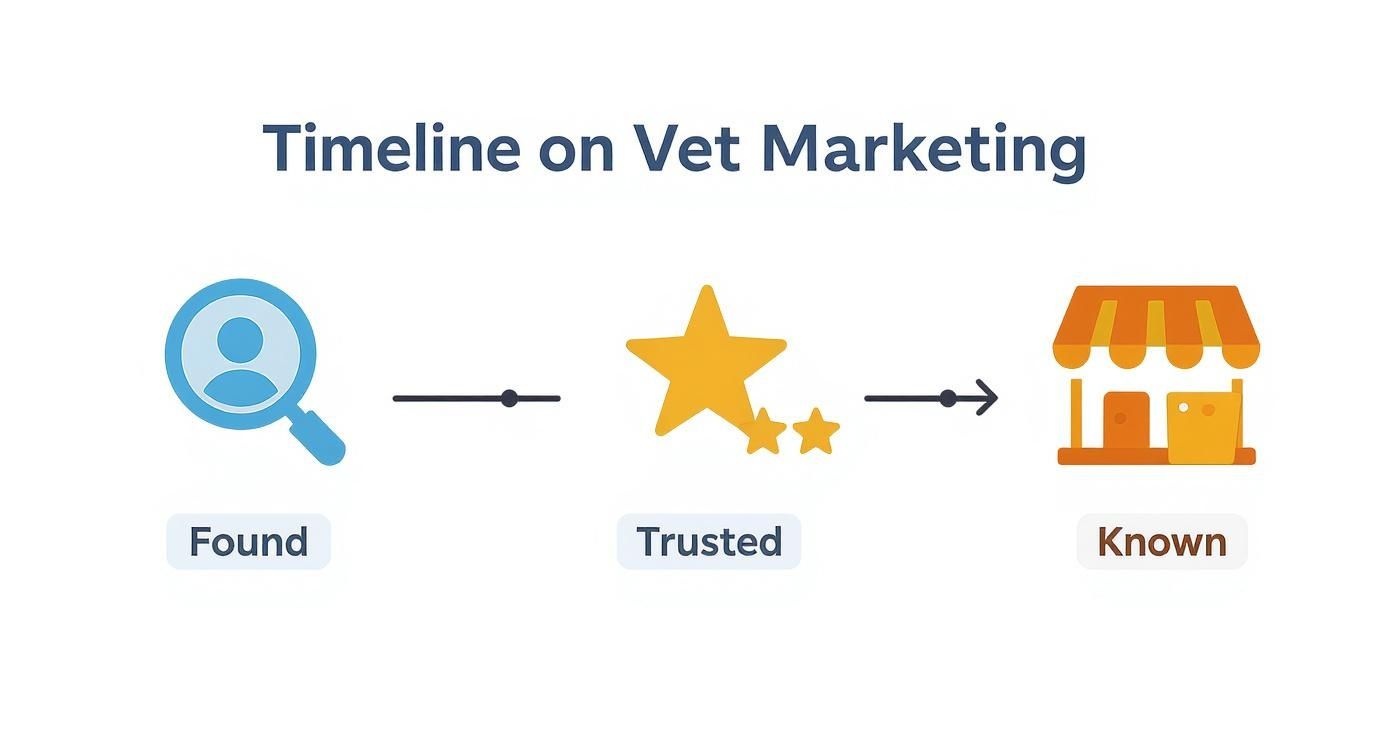
Having incredible services and a smooth-running clinic is great, but it won't fuel growth if potential clients can't find you. For any growing vet business today, visibility is everything—both online and right in your own neighborhood. This is how you attract a steady stream of the right clients, the ones actively looking for the exact care you provide.
Your marketing doesn't have to be a huge, expensive undertaking to get results. The secret is to show up where pet owners already are, whether they're scrolling on their phone or walking their dog past the local coffee shop. It's all about building trust and becoming the obvious choice for veterinary care in your area.
Dominate the Local Digital Scene
When a pet owner in your town Googles "vet near me," you need your clinic to be the first name they see. That's not luck; it's smart local Search Engine Optimization (SEO). Honestly, getting this right is one of the most powerful moves you can make for your practice.
The heart of your local SEO strategy is your Google Business Profile (GBP). It's a free listing that shows up in Google Maps and the local search results, and it's prime real estate. Make sure yours is fully built out and optimized with:
High-quality photos of your clinic, your team, and some happy four-legged patients.
The correct business name, address, and phone number (this has to be exact!).
A complete list of your services.
Up-to-date business hours.
Think of your GBP as your digital front door. For many potential clients, it’s the very first impression they'll have of your practice.
Build a Five-Star Reputation
In veterinary medicine, trust is the currency. Your online reviews on Google, Yelp, and even Facebook are your digital word-of-mouth, telling both search engines and fellow pet owners that you're a top-tier choice.
Don't be shy about asking for feedback. After a great appointment, encourage happy clients to share their experience online. A simple follow-up email or text with a direct link to your Google review page makes it incredibly easy for them to do it.
Look, a few negative reviews are going to happen. It's not the end of the world. The key is to respond calmly and professionally. It shows you care and are committed to getting it right, which can often turn a bad situation into a net positive.
Connect Authentically on Social Media
Sure, social media is great for posting cute pet pictures (and you should absolutely do that!). But it's also a fantastic tool for building a genuine community around your practice. The goal isn't to go viral; it's to create a space where clients feel a real connection to your team and what you stand for.
Share things that are actually helpful and interesting. Post behind-the-scenes photos of your clinic, introduce your team members, or offer simple pet care tips. This is how you humanize your practice and build relationships that extend well beyond the exam room.
To really nail your digital outreach, you need to stay in touch. Text message marketing is perfect for appointment reminders or wellness tips. Just make sure you follow the 10 SMS Marketing Best Practices for 2025 to get it right.
Forge Strong Local Partnerships
While your digital presence is critical, don't underestimate the power of old-fashioned community connections. Building relationships with other local, pet-focused businesses can create an invaluable referral network that sends new clients your way without you lifting a finger.
Think about who else serves the pet owners in your town:
Pet Groomers: They're often the first to spot skin issues or ear infections.
Dog Trainers and Daycares: They're a trusted source for new and established pet parents.
Pet Supply Stores: These are the local hubs for devoted pet lovers.
Local Shelters and Rescue Groups: Partnering here shows you're invested in animal welfare.
Just reach out and introduce yourself. Offer to leave some brochures at their front desk and ask if you can do the same for them. These simple cross-promotions can be a huge win for everyone.
Become a Trusted Community Hub
Go beyond just being a clinic and position your practice as a pillar of the local pet community. Hosting small workshops or events is a brilliant way to cement your reputation as the go-to authority on animal health.
These don't need to be huge productions. Think about a "Puppy Socialization Hour," a "Senior Pet Care" Q&A, or a "Pet First Aid" basics class. These events provide real value, showcase your team's expertise, and create the kind of positive, lasting impressions that build incredible client loyalty.
Building a Top-Tier Team to Support Your Growth
As your clinic grows, you'll find that your team is the true heart of the business. You can have the best services and the slickest operations, but a skilled, compassionate, and motivated team is what turns a good clinic into a great one. Investing in your people isn't just a nice thing to do—it's one of the smartest financial moves you can make.
Think about it: a happy, supported team provides better care. Better care leads to happier, more loyal clients and a healthier bottom line. Your growth plans are only as strong as the people you have on board to make them happen.
This journey—from just getting by to becoming a trusted local institution—is all about your team's ability to deliver consistent, high-quality service, day in and day out.
Attracting the Right Talent
Finding great people starts long before you even post a job opening. It begins with writing a compelling job description that does more than just list duties. You need to sell your clinic's culture, mission, and the opportunity to make a real difference.
Instead of a dry, bulleted list, paint a picture of what a day in your clinic is really like. Talk about your commitment to work-life balance, your modern equipment, or the supportive environment you've built. Use language that reflects your practice’s personality. If you’re a friendly, close-knit team, let that shine through. It’s not just about what you need; it’s about what you offer.
When it’s time to interview, look beyond just technical skills. A new hire can be taught how to use your software, but you can’t teach empathy or a positive attitude. Ask questions that reveal their character and problem-solving skills:
"Tell me about a time you had to deliver difficult news to a pet owner. How did you handle it?"
"How do you approach a situation where you disagree with a colleague on a treatment plan?"
These kinds of behavioral questions give you a real glimpse into how they’ll fit with your team and handle the daily pressures of veterinary medicine.
Onboarding and Continuous Training
A new hire’s first few weeks are critical. A structured onboarding process makes them feel welcomed and confident, setting them up for success from day one. Please, don't just throw them into the deep end and hope they figure it out.
The goal of onboarding isn't just to teach procedures; it's to integrate a new person into your clinic's culture. A great onboarding experience reduces staff turnover and helps new hires become productive members of the team much faster.
Your onboarding should include a few key things:
A Clear Schedule: Map out their first week, including introductions to every team member and dedicated training sessions.
A Designated Mentor: Assign an experienced, friendly team member as their go-to person for questions. This makes a huge difference.
Hands-On Training: Give them supervised, hands-on experience with your specific protocols and software. If you're looking for tools that help, check out our guide on veterinary practice management software.
But the learning shouldn't stop after orientation. Providing opportunities for ongoing professional development is essential for retention. This could mean sponsoring attendance at a conference, bringing in an expert for a lunch-and-learn, or paying for an online certification. When you invest in your team's skills, they invest their loyalty right back into your practice.
Fostering a Positive Clinic Culture
At the end of the day, what keeps great people around is a positive work environment where they feel valued and respected. This is especially true in the demanding veterinary field.
With the veterinary hospital market projected to reach USD 124.4 billion by 2034, having a stable, experienced team is a massive competitive advantage.
Creating this culture comes down to open communication, recognizing hard work, and genuinely prioritizing the well-being of your staff. Celebrate the wins, both big and small. Encourage feedback and actually act on it. A simple "thank you" can go a surprisingly long way. Building a top-tier team isn't just about hiring stars; it's about creating a workplace where they can truly shine.
Common Questions About Growing a Vet Business
Growing a practice brings up a ton of questions. Practice owners run into the same hurdles all the time, from taking that first step to building a long-term strategy. Here are some straightforward answers to the challenges you'll almost certainly face.
Where Should I Even Start with Growth?
Forget the flashy marketing campaign for a minute. The most effective first step is a good, hard look under your own hood. Before you can map out the future, you need a crystal-clear picture of where you are right now. That means getting real with your numbers and workflows.
Start by digging into your:
Financials: What are your revenue streams, profit margins per service, and overhead costs? Don't guess.
Operations: Map out your typical appointment flow. Where are the bottlenecks? Is your team drowning in paperwork or running smoothly?
Client Data: How many active clients do you have? What's your average client transaction (ACT), and more importantly, how many of them stick around (your retention rate)?
Once you have this baseline, you can set realistic, measurable goals. Trying to grow without this knowledge is like prescribing treatment without a proper diagnosis—you might get lucky, but the results won't be targeted or sustainable.
How Can I Market My Clinic on a Tight Budget?
You don't need a massive ad spend to make a real impact. It’s all about focusing on high-impact, low-cost strategies that build a solid local reputation and foster trust. Think clever and consistent, not just expensive.
Here’s where to start:
Own Your Local SEO: Claim and completely fill out your free Google Business Profile. This is non-negotiable. Add photos, list every service you offer, and make it easy for happy clients to leave reviews. It's the single most powerful thing you can do to get found by new clients in your area.
Get a Simple Website: Your site doesn't need to win design awards, but it must look professional, be easy to navigate on a phone, and clearly explain who you are and what you do.
Be Human on Social Media: Don't just blast out promotions. Share genuinely helpful pet care tips, introduce your amazing team, and post behind-the-scenes moments on Facebook or Instagram. It builds a friendly, approachable brand that people connect with.
Network with Your Neighbors: Set up simple referral programs with local pet groomers, trainers, and supply shops. These partnerships cost you nothing but a bit of time and can become a steady pipeline of new clients.
Should I Raise Prices or Add Services to Boost Revenue?
This is the classic dilemma, and the smartest answer is usually a bit of both. You absolutely need to adjust your prices periodically to keep up with inflation and market rates. But the most significant, sustainable revenue growth almost always comes from expanding what you offer.
Clients are often more receptive to paying for a new, high-value service than they are to seeing a price hike on a routine exam. Adding services lets you increase what clients spend per visit without making them feel like they're just paying more for the same old thing.
Instead of just charging more for a standard check-up, think about introducing specialized, high-margin services. Things like senior pet wellness plans, advanced dental cleaning packages, or even niche offerings like international pet travel health certificates can make a huge difference to your bottom line.
What Technology Gives the Best Return on Investment?
For any busy clinic, the best tech ROI comes from tools that claw back administrative time for your team. Every hour your staff isn't spending on paperwork is an hour they can spend on patient care, which is what actually drives revenue and client happiness.
A modern Practice Management System (PIMS) is the absolute foundation. Beyond that, look at tools that automate appointment reminders via text and email to slash your no-show rate. An online booking portal can also be a game-changer, freeing up your front desk team from being stuck on the phone all day.
For specialized offerings, service-specific software provides an incredible return. Take a platform like Passpaw, which is designed specifically for managing international pet travel certificates. It transforms a ridiculously complex and time-consuming headache into a streamlined, profitable service. It eliminates hours of admin work, prevents costly errors, and gives your team the confidence to offer a service most other clinics run away from.
Ready to turn a complicated administrative burden into a profitable new service for your growing practice? Passpaw simplifies the entire pet travel certification process, saving your team hours and delighting your clients. Learn more and see how it works.

More articles
From regulatory changes to best practices for veterinarians and pet owners, our resources keep you ahead of the curve.