Are you a team member in a veterinary practice?
Are you a pet parent planning a trip with your furry pal?
Entering Canada with Pets: A Complete Guide
Bringing your furry, feathered, or scaled friend along for a move to Canada is a big adventure, but it does require some solid preparation. The key is getting familiar with the rules set by the Canadian Food Inspection Agency (CFIA), which are all about preventing the spread of animal diseases. Getting the documentation and health checks right is your golden ticket for a smooth entry.
Your Guide to a Pawsitively Smooth Move

So, you're planning on entering Canada with your pet? You've come to the right place. We designed this guide to make the journey as stress-free as possible for both you and your companion. We'll walk you through the essential paperwork, health regulations, and specific requirements in simple, easy-to-understand terms.
Whether you're traveling with a dog, a cat, or a more unique animal, knowing the process is crucial. We’ll break down everything you need to know and share practical tips to help you avoid common, frustrating hiccups at the border.
For a detailed walkthrough tailored to specific routes, our guide for moving pets from the United States to Canada is a fantastic resource to have bookmarked.
Think of this as your friendly checklist for a successful journey north. A little preparation goes a long way in ensuring you and your pet have a happy and seamless arrival.
This guide will help you:
Pinpoint the key documents needed by Canadian authorities.
Create a practical timeline for vet visits and paperwork.
Navigate the specific rules for different types of animals.
Understanding Canada's Pet Import Rules
Before you start packing the squeaky toys and travel bowls, it’s important to get a handle on Canada's rules for bringing in pets. Let’s be clear: getting the paperwork right isn't just a suggestion—it’s the most important part of making sure your pet gets in without a hitch. Think of it as your pet’s passport to a new adventure.
These rules, set by the Canadian Food Inspection Agency (CFIA), are all about protecting Canada’s animals and people from diseases. For most pets like dogs and cats, the big concern is rabies. So, let's dig into the core documents you'll need.
The Rabies Vaccination Certificate Is a Must-Have
For any dog or cat crossing the border, the rabies vaccination certificate is the cornerstone of their travel file. This isn't just any old printout from your vet; it has to meet very specific criteria to be accepted by Canadian border officials.
Here’s what an official rabies certificate needs to have:
Written in English or French. The certificate must be in one of Canada's two official languages.
Signed and dated by a licensed veterinarian. This is what makes it official.
Clear identification of your pet. It must list their breed, age, sex, color, and any unique markings.
Proof of rabies vaccination. It has to clearly state the date the vaccine was given and how long the immunity lasts.
Specific vaccine details. The certificate needs to include the name of the licensed vaccine, its serial number, and its expiry date.
A simple invoice or a line item in your pet's general health record won't be enough. You need a standalone document with all of this information. Showing up without a valid certificate can lead to serious delays or, in the worst-case scenario, your pet being denied entry.
Navigating Different Rules for Different Origins
Canada’s import rules aren't one-size-fits-all; they change depending on where your pet is coming from. The biggest factor is the rabies risk level of your country of origin.
For example, if you're driving up from the United States with your dog, the process is pretty straightforward. As long as your dog is over three months old and you have that valid rabies certificate, you generally won't need an additional health certificate or an import permit for a personal pet.
It’s a different story if you're coming from a country Canada considers high-risk for rabies. Those countries face much stricter regulations. With Canada's pet dog population hitting an estimated 7.9 million in 2022 and thousands of dogs being imported each year, authorities have tightened the rules to protect public health. This has included temporary measures for commercial dogs from high-risk countries. You can read more about the data behind these Canadian pet import trends.
Pro Tip: Always, always check the current requirements for your specific country of departure directly on the CFIA website. Rules can and do change, and staying on top of them is the best way to avoid any ruff surprises at the border.
What About a Veterinary Health Certificate?
While not always mandatory for personal pets coming from the U.S., a veterinary health certificate is often needed for pets from other countries. It's also required for animals other than dogs and cats. This document, sometimes called an international health certificate, is a formal declaration from a licensed vet confirming your pet is healthy and fit for travel.
Basically, this certificate proves your pet was examined recently—usually within a few days of your trip—and showed no signs of infectious disease. If you're planning a more complex international move, it’s worth learning more about the full scope of international pet travel requirements, as they can get pretty detailed.
Getting all this paperwork sorted might feel like a chore, but it’s a small price to pay for a big, happy welcome for your furry family member in their new home.
Creating Your Pet Travel Timeline
When it comes to bringing your pets into Canada, timing is everything. Putting things off is not a good idea. A smooth, low-stress move depends on getting your timeline right, and that means starting the process months in advance. Trying to cram everything into the last few weeks is a recipe for stress.
This is especially true if your travel companion is something other than a cat or dog. While a dog coming from the U.S. has a pretty clear path, the journey for a pet bird or an exotic reptile is a whole different story. These pets often need special import permits from the CFIA, and those applications can take weeks—sometimes even months—to get approved. Planning ahead is the secret to a successful trip.
Mapping Out Key Milestones
The best way to avoid last-minute panic is to work backward from your travel date. Think of it as building a roadmap for your pet's journey. Some tasks, like microchipping or initial vaccines, can be handled far in advance. Others, like the final health check, are very time-sensitive.
Here’s a breakdown of the critical points to get on your calendar:
3-6 Months Out: Time to do your homework. Dig into the specific import rules for your pet's species and your country of origin. This is also when you should apply for any needed import permits and make sure your pet's microchip and core vaccinations are up to date.
1-2 Months Out: Book your pet’s travel. Whether you're flying or driving, confirm the pet policies with your airline or transport company. It's also a great time to start crate training to make the actual trip less stressful for your companion.
30 Days Out: Make sure your pet’s rabies vaccination is current. For many countries, the vaccine must be given at least 30 days before you travel. This is also when you should schedule the appointment for the final veterinary health certificate.
This simple timeline helps you see how the documents come together as your travel date gets closer.
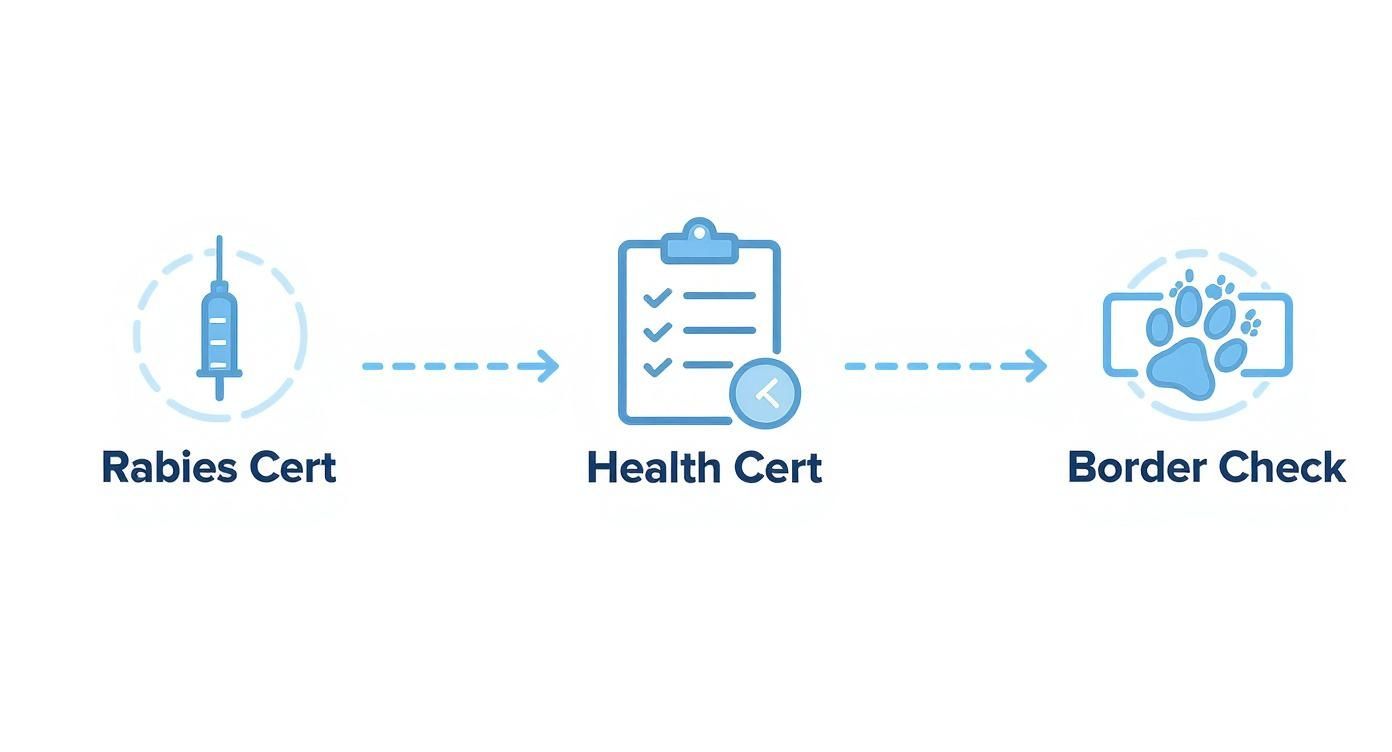
As you can see, getting the paperwork in order is a step-by-step process that all leads up to that final, successful check at the border.
Pet Travel to Canada Planning Timeline
Here’s a handy checklist to help organize your pet's move, broken down by how far in advance you should take action.
Time Before Travel | Action Item | Key Considerations |
|---|---|---|
6+ Months | Research destination rules & vet requirements. | Species-specific rules (e.g., birds, exotics) can be complex. Start early! |
3-6 Months | Apply for import permits (if needed). | CFIA permit processing can take several weeks or even months. |
3 Months | Check microchip & update vaccinations. | Ensure microchip is ISO-compliant. Confirm rabies vaccine validity. |
1-2 Months | Book travel & start crate training. | Airlines have limited pet space. Get your pet comfortable with their carrier. |
30 Days | Confirm rabies vaccine is current & book vet visit. | Rabies vaccine must be given at least 30 days prior to entry for many. |
1-2 Weeks | Obtain the International Health Certificate. | This is very time-sensitive; the exam is often needed within 10 days of travel. |
Travel Day | Have all original documents ready. | Keep everything in an easily accessible folder for the border inspection. |
Following this timeline will help keep you on track and prevent any last-minute surprises.
The Final Countdown: The Last Two Weeks
The last 14 days before you move are very important. This is when the final, time-sensitive pieces of the puzzle fall into place. Your main job here is getting the international health certificate, which has to be completed within a very tight window before you leave.
For example, the health exam often must happen within 10 days of your arrival in Canada. An accredited veterinarian needs to perform this check and sign the official forms, confirming your pet is healthy and shows no signs of disease. Waiting too long is not an option, but doing it too early will make the certificate invalid. It’s a delicate balance that requires careful scheduling.
Remember, the health certificate is your pet's official "fit to travel" document. It’s the final piece of evidence for Canadian officials that your pet meets all health requirements upon arrival.
This period is also the time to put together your pet’s travel folder. Keep all original documents—the rabies certificate, the signed health certificate, and any import permits—in one place you can get to easily. Having everything organized will make the inspection at the border go much more smoothly.
While this guide covers your pet's specific timeline, you might also want to consult an ultimate long distance moving checklist for an overview of all the other tasks involved in your relocation. A well-organized move is a happy move for everyone involved, two-legged and four-legged alike.
Traveling with Birds, Reptiles, and Other Pets
When you’re mapping out a move to Canada with a pet, it's natural to think first about dogs and cats. But what if your best friend has feathers, scales, or hops around on long ears? The truth is, Canada's import rules for non-traditional pets like birds, reptiles, and small mammals are often more complex and need a lot more planning.
Bringing these unique animals into the country isn't impossible, but it requires careful attention to detail. These regulations are in place for a good reason—to protect Canada’s native wildlife and agriculture from foreign diseases and invasive species. Don't let the extra steps ruffle your feathers; with the right preparation, you can ensure a safe and successful journey for your unique companion.
Beyond Furry Friends: Unpacking the Rules
The Canadian Food Inspection Agency (CFIA) has specific protocols for almost every type of animal. Unlike the relatively straightforward, rabies-focused rules for dogs and cats coming from many countries, the requirements for other pets can change dramatically based on their species.
Take pet birds, for example. Bringing one into Canada often involves much more than a simple health check. Depending on where you're coming from, your bird might need to undergo a quarantine period upon arrival to be tested for diseases like avian influenza. This is a major logistical hurdle that you have to arrange well in advance.
It's a similar story for reptiles and amphibians. You’ll likely need health certifications confirming they are free from certain diseases, such as salmonella. Small mammals like rabbits, guinea pigs, or ferrets also have their own distinct import categories.
The bottom line is this: never assume the rules for one type of pet apply to another. Every species has its own dedicated checklist, and it’s your responsibility to find it and follow it to the letter.
The Importance of CITES Regulations
One of the most important factors for exotic pets is checking the regulations of the Convention on International Trade in Endangered Species of Wild Fauna and Flora (CITES). Many popular pets, from certain parrots and tortoises to specific types of lizards, are protected under this international agreement.
If your pet is on a CITES list, you will need special permits to move them across international borders.
Export Permit: You'll need this from the CITES authority in your country of origin.
Import Permit: This must be obtained from the Canadian CITES authority before you travel.
Applying for these permits can be a lengthy process, often taking several months. It is very important to start this part of your research as early as possible. Showing up at the border with a CITES-listed animal without the correct permits could result in your pet being seized—a serious and heartbreaking situation you'll want to avoid at all costs.
A Look at Canada's Exotic Pet Landscape
The variety of pets entering Canada is surprisingly large. Between 2014 and 2020, Canada imported nearly 2 million live wild vertebrates. A surprising 49% of these animals were brought in for the exotic pet market, with frogs and toads being the most frequently imported group. These numbers show just how common it is for unique animals to make Canada their new home. You can find more details in this study on Canada's live animal import trends.
This steady flow of diverse species is exactly why the regulations are so specific—they're designed to manage a complex trade while safeguarding the country's ecosystem.
Finding the Right Information for Your Pet
So, where do you find the official rules for your specific animal? Your single best source of information is the CFIA's website. They have an online tool called the Automated Import Reference System (AIRS) that lets you look up the exact requirements for your pet.
Here’s a practical way to approach it:
Identify Your Pet's Species: Be as specific as you can. Use the scientific name if you know it.
Determine Your Country of Origin: The rules change depending on where you're coming from.
Use the AIRS Tool: Input your pet’s information to get a detailed checklist of what you need.
Contact the CFIA Directly: If you have any questions or your situation is unusual, don’t hesitate to reach out to a CFIA office for clarification.
To make sure your feathered friend is healthy for their big move, it helps to be well-versed in general bird care. This an essential guide to caring for pet birds is a great resource. Keeping your pet in top condition is always a great first step in travel prep.
Health Certificates for Every Kind of Pet
No matter the species, a veterinary health certificate will almost certainly be part of your required paperwork. This is an official document, signed by an accredited veterinarian, confirming your pet was examined shortly before travel and found to be healthy and free of contagious diseases. The specific details and timing for this certificate will depend entirely on your pet's species and your origin country. Our guide on the pet health certificate for travel offers a deeper look into what this important document entails.
Ultimately, bringing a non-traditional pet to Canada is a rewarding experience, but it’s a journey that starts with thorough research and careful planning. By taking the time to understand the specific rules for your companion, you set yourself up for a smooth and successful entry into your new home.
Your Vet: The Co-Pilot for Your Pet’s Move to Canada
Getting a pet ready for an international move is a team effort. Think of it as a partnership: you're the project manager, and your veterinarian is the medical expert. Understanding who does what is the secret to making sure nothing gets missed along the way.
It’s a common misconception that your vet will know all the details of Canadian import rules. While they are experts in animal health, you’re the one steering the ship when it comes to logistics and regulations. Your job is to bring them the right information so they can do their job effectively.
What’s On Your Plate as the Pet Owner?
The groundwork for a smooth border crossing starts with you. You need to become a temporary expert on Canada’s specific rules for your pet.
Here’s what you’ll be handling:
Digging into CFIA Rules: Head straight to the Canadian Food Inspection Agency (CFIA) website. This is your source of truth for everything—vaccination timelines, microchip requirements, and the exact forms you'll need.
Booking Appointments on Time: International moves run on a strict clock. You’re in charge of scheduling all the vet visits and making sure they line up perfectly with your travel date.
Sharing the Full Travel Plan: Your vet needs the complete picture. Give them your exact travel date, how you're traveling (flying or driving), and where you'll be landing in Canada.
When you handle the logistics, you free up your veterinarian to focus on what they do best: ensuring your pet is healthy and the paperwork is perfectly accurate.
The Veterinarian’s Critical Role
With the logistics sorted, your vet takes over the important medical tasks. Their expertise is what ensures your pet meets every single health requirement set by the Canadian government. Never hesitate to ask them questions—a good vet will be happy to clarify any medical details.
Here’s where your vet shines:
Getting Vaccinations Right: They'll make sure all necessary shots, especially for rabies, are given within the very specific timeframes Canada requires.
Conducting the Health Exam: Before you go, your vet will perform a thorough check-up to confirm your pet is healthy, fit for the journey, and free of any communicable diseases.
Completing the Health Certificate: This is where precision is key. Your vet is responsible for accurately filling out, signing, and dating the international health certificate.
A single mistake on the health certificate—like an incorrect date or a missing signature—can bring your entire journey to a halt at the border. This is exactly why clear communication and teamwork between you and your vet are so important.
Finding a Vet with Travel Experience
Here's a pro tip: not all vets are familiar with the details of international travel paperwork. If you can, find a veterinarian who is USDA-accredited (if you're in the U.S.) and has handled these forms before. Their experience can be very valuable.
A vet who’s done this before knows the common tripwires and how to avoid them. This is especially true when it comes to the strict, time-sensitive nature of the health certificate. For a much deeper look into this important document, check out our guide on the veterinary international health certificate.
Canada’s live animal import market is a big deal—valued at around USD 752 million recently, covering everything from livestock to family pets. You can see the data for yourself on Canada's live animal imports. This large volume is precisely why the country’s regulations are so detailed.
Ultimately, a strong partnership with your vet is the key to a successful move. When you both understand your roles and communicate clearly, you can navigate the process with confidence and get your pet to Canada without any last-minute drama.
How to Handle Your Arrival in Canada
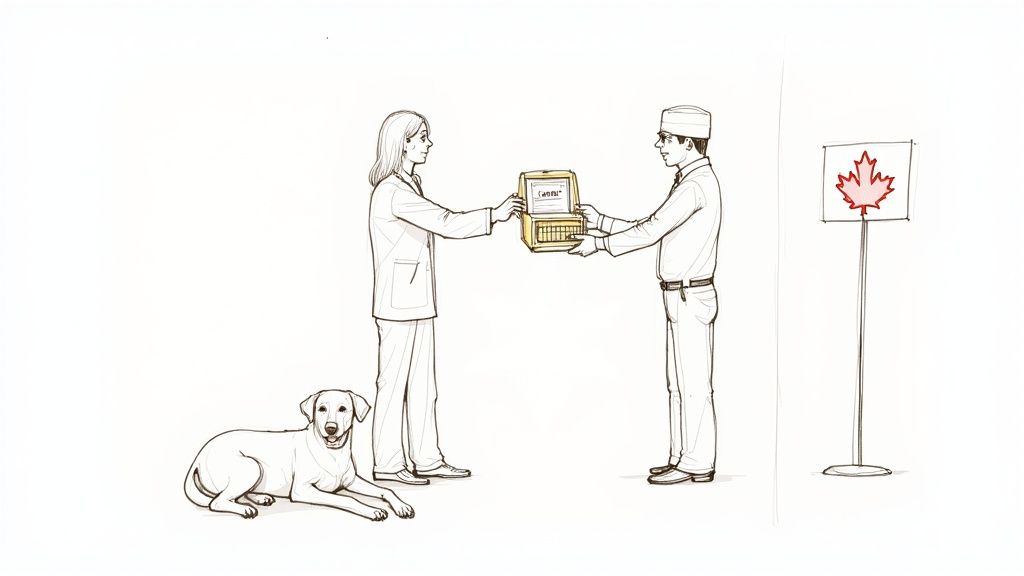
You’ve done all the prep work—the vet visits are done, the paperwork is organized, and you're finally at the border. This is the moment of truth, but it doesn’t have to be stressful. Knowing what to expect when you arrive can make the final step of entering Canada a much smoother experience for everyone involved, especially your pet.
First things first: you must declare your pet to an officer from the Canada Border Services Agency (CBSA), whether you're driving over the border or landing at an airport. A border services officer will then review all your documents. They may also do a quick visual inspection of your pet to make sure they look healthy and match the description on the paperwork.
What to Expect at the Inspection
The inspection itself is usually pretty quick and painless. The officer will ask for your pet’s rabies vaccination certificate and any other required paperwork, like an international health certificate or import permit. They’re simply making sure everything is in order and meets Canada’s animal health standards.
Being prepared is the name of the game here. A few simple tips can keep things moving along:
Keep your documents handy. Don't make the mistake of burying your pet’s paperwork at the bottom of a suitcase. Keep all the original documents in an easily accessible folder that you can hand over without a fuss.
Answer questions clearly and honestly. The officer might ask about your pet's health, where you're traveling from, or the reason for your trip. Just be direct.
Stay calm. Your pet will feed off your energy. If you're stressed, they'll be stressed. A calm demeanor makes the whole process easier on them—and the officer.
The CBSA inspection isn't meant to make your life difficult. It's a key step to protect the health and safety of animals and people already in Canada. A little bit of organization on your part goes a very long way.
It’s also smart to be ready for potential fees. If the officer decides a secondary inspection by a CFIA veterinarian is needed, there will be a cost. It’s always a good idea to have some funds available, just in case.
Arriving by Air vs. Driving by Land
The process will look a bit different depending on how you get there.
If you’re driving across a land border, it’s pretty straightforward. You'll present your pet and their documents to the officer right at the primary inspection booth. As long as everything is in order, it's often a quick check before you’re on your way.
Arriving by air has a couple of extra steps. After you get off the plane, you’ll head to customs and immigration. This is where you’ll declare your pet and show their paperwork to a CBSA officer. The airline staff can tell you where to pick up your pet, which is usually a special baggage area separate from the main carousels.
No matter how you arrive, communication is key. If you're flying, confirm the airline's specific procedure for handing off your pet upon landing. If you're driving, have your folder of documents ready before you even pull up to the booth. This kind of simple prep work can save you from frustrating delays and make the final leg of your journey a complete success.
Common Questions About Pet Travel to Canada
Even with the most detailed plan, it’s normal to have a few last-minute questions pop up as you get ready for your pet's big move. We get it. To help put your mind at ease, we’ve put together answers to some of the most common questions we hear from pet owners on their way to Canada.
Getting these small details right can be the difference between a smooth, happy arrival and a stressful one. Let's dig into some of the specifics.
Does My Dog or Cat Need a Microchip?
Officially, Canada doesn't require a microchip for personal dogs and cats. But honestly, it's a really good idea to get one anyway. Think of it as a permanent ID for your pet. A lost pet is every owner's worst nightmare, and a microchip is their best chance of getting back home safely.
One thing to keep in mind: if your pet’s rabies certificate has a microchip number on it, border officials should be able to scan that chip. Plus, many airlines have their own rules and often do require a microchip for travel. It's always best to call your airline directly to avoid any surprises at the check-in counter.
What if My Pet's Paperwork Is Wrong at the Border?
If a border officer finds a problem with your pet's documents, they’ll bring in a veterinarian from the Canadian Food Inspection Agency (CFIA) to take a look. From there, a few things could happen—it might be a simple secondary inspection (which you’ll have to pay for), or it could lead to a temporary quarantine.
The worst-case scenario? Arriving without a valid rabies vaccination certificate. In that situation, your pet could be denied entry into Canada. They would be sent back to their country of origin, which is an incredibly difficult and expensive ordeal. This is exactly why double-checking every single detail is so important.
Are There Special Rules for Puppies and Kittens?
Yes, there are very specific rules for young animals. For commercial dogs under eight months old, the import requirements are very strict. For those bringing in a personal pet, the most important thing is the rabies vaccination rule.
Puppies and kittens can’t get their first rabies shot before they are three months old. This means a young animal can't enter Canada as a personal pet until they’re old enough to be properly vaccinated and meet all the other entry requirements. It’s one part of the process you just can’t rush.
Feeling buried in paperwork? Passpaw makes managing your pet’s international health documents simple for both you and your vet. Find out how we can help at https://passpaw.com.
More articles
From regulatory changes to best practices for veterinarians and pet owners, our resources keep you ahead of the curve.