Are you a team member in a veterinary practice?
Are you a pet parent planning a trip with your furry pal?
A Reliable Guide to Cross Country Pet Transport for Safer Pet Moves
Moving your pet across the country is a big deal, and doing it right means careful planning to keep them safe and minimize stress. The secret is figuring out the best way to travel, getting all the paperwork in order, and helping your pet get used to the idea of a long trip before you hit the road.
Let’s get this journey started on the right paw.
Your Pet's Big Cross-Country Move

Moving with a pet isn’t just about logistics—it’s about managing the well-being of a furry family member. For an animal that loves routine and familiar spaces, a cross-country move is a massive change. That’s why a solid, thoughtful plan is your most important tool.
The good news? You’re not alone. Professional cross country pet transport has become a serious, growing industry. In fact, the global pet travel services market was valued at roughly USD 2.4 billion in 2024 and is expected to keep growing. This just goes to show how many owners are prioritizing their pets' comfort and safety during big moves.
So, Where Do You Start?
First things first: think about your specific pet. Their age, health, personality, and even their species will guide your next steps. An energetic young Golden Retriever will have a totally different travel experience than a senior cat who just wants a quiet corner to nap in.
This initial look-over will help you tackle the big decisions:
How will they travel? Ground or air? Each option comes with its own pros and cons related to safety, cost, and your pet’s comfort.
What paperwork is needed? Health certificates and vaccination records are usually needed for interstate travel. Getting these documents in order early is a must.
How do you keep them safe and calm? This is all about the details—proper crate training, packing familiar toys or blankets, and planning stops for their needs along the way.
Planning ahead is the single most effective way to reduce stress for both you and your pet. A well-organized move ensures all details are covered, from vet visits to the final arrival at your new home, preventing last-minute surprises.
Tools for a Smoother Journey
As you start planning, it helps to gather tips from people who’ve done this before. These stress-free cat travel tips, for example, have great insights that can apply to other pets, too.
A dedicated planning tool can also be a game-changer. Our comprehensive pet travel planner helps you build a customized checklist and timeline tailored to your move, so nothing falls through the cracks.
Ultimately, a successful move all comes down to preparation. By breaking the process into smaller, manageable steps, you can turn a potentially overwhelming task into a successful adventure for your whole family. The next few sections will walk you through each of these key decisions.
Ground vs. Air: Choosing the Right Ride for Your Pet
Deciding how your pet will make the cross-country trek is one of the most important choices you'll face. This isn't just about logistics; it's about matching the journey to your pet's personality, health, and needs to ensure they arrive safe and sound.
The two main routes are ground transport and air transport. Each has its own set of pros and cons, so let's dig into the specifics to help you make the best call for your furry family member.
The Scenic Route: Ground Transport
For many pets, a road trip is simply the kinder, gentler option. Ground transportation is often the best choice for animals that would find a flight overwhelming. Think of flat-faced breeds like Pugs and Persian cats, older pets with health issues, or just plain nervous travelers. The environment is far less chaotic and allows for more personal care.
You generally have two options on the ground:
Private Transport: This is the VIP treatment—a dedicated vehicle and driver just for your pet. It offers maximum flexibility for stops, special feeding schedules, and one-on-one attention.
Shared Rides: A more budget-friendly approach where your pet travels with a few other animals. Don't worry, good companies map their routes carefully to keep travel time to a minimum and ensure every passenger is comfortable.
The single biggest advantage of ground travel is the constant, hands-on care. Drivers make frequent stops for potty breaks, exercise, and fresh food and water, turning a potentially stressful journey into a manageable adventure.
Flying High: Air Transport
There's no question about it—air travel is the fastest way to get from coast to coast. If your move is on a tight timeline, a flight can get your pet to their new home in hours instead of days. For small pets, flying in the cabin with you or a designated "flight nanny" offers incredible peace of mind.
Larger pets will travel either as checked baggage or in the cargo hold. The word "cargo" can sound alarming, but it's important to know that pets are in a climate-controlled, pressurized area of the plane, completely separate from luggage.
A heads-up for anyone considering air travel: the maze of airline rules is real. Every airline has its own rules on carrier dimensions, breed restrictions (especially for snub-nosed pets), and temperature rules that prevent flying in extreme heat or cold.
The demand for safe, professionally managed journeys is soaring. In fact, specialized pet transport services now make up about 46.8% of the market revenue, with dogs leading the pack. This trend, highlighted by firms like Coherent Market Insights, shows just how much owners value a secure, well-handled trip for their pets.
Comparing Your Options Head-to-Head
To make this choice a little easier, let's put the two options side-by-side. Seeing the key differences laid out can help clarify which path is the right one for your pet and your moving situation.
Comparing Ground and Air Pet Transport Options
Factor | Ground Transport | Air Transport |
|---|---|---|
Stress Level | Generally lower stress; constant human interaction and regular breaks. | Can be higher stress due to engine noise, pressure changes, and separation. |
Best For | Senior pets, anxious animals, flat-faced breeds, and special-needs pets. | Healthy, adaptable pets when speed is the top priority. Good for very long distances. |
Speed | Slower; a cross-country trip can take several days. | Much faster; most domestic trips are completed within a single day. |
Cost | Can be more cost-effective, especially for larger pets or multiple animals. | Often more expensive due to airline fees, crate requirements, and potential air nanny costs. |
Restrictions | Very few breed or size restrictions. | Numerous restrictions on breed, size, and weather conditions. |
Ultimately, the decision goes far beyond just speed or cost—it boils down to your pet's unique needs. A young, confident Labrador might handle a flight like a pro, but an older, anxious cat would almost certainly do better with the slow-and-steady pace of a road trip.
Thinking through these factors is the best way to set your pet up for a comfortable and successful move. For a more detailed walkthrough, you can learn more about how to transport pets across the country in our comprehensive guide.
Navigating Vet Visits and Required Paperwork
Let's be honest: the paperwork side of a cross-country move with your pet can feel a little intimidating. But thinking of it as your pet's official travel pass makes it much more manageable. This isn't just red tape; it's a system to help ensure animals traveling across state lines are healthy.
The star of the show here is the Certificate of Veterinary Inspection (CVI), which you’ll often hear called a health certificate. This is the key document. It's a form completed by your accredited veterinarian confirming your pet appears healthy, is disease-free, and is up-to-date on its shots. It’s the "all clear" for interstate travel.
This decision tree shows how things like your pet's size and health play a big role in choosing between ground or air transport.
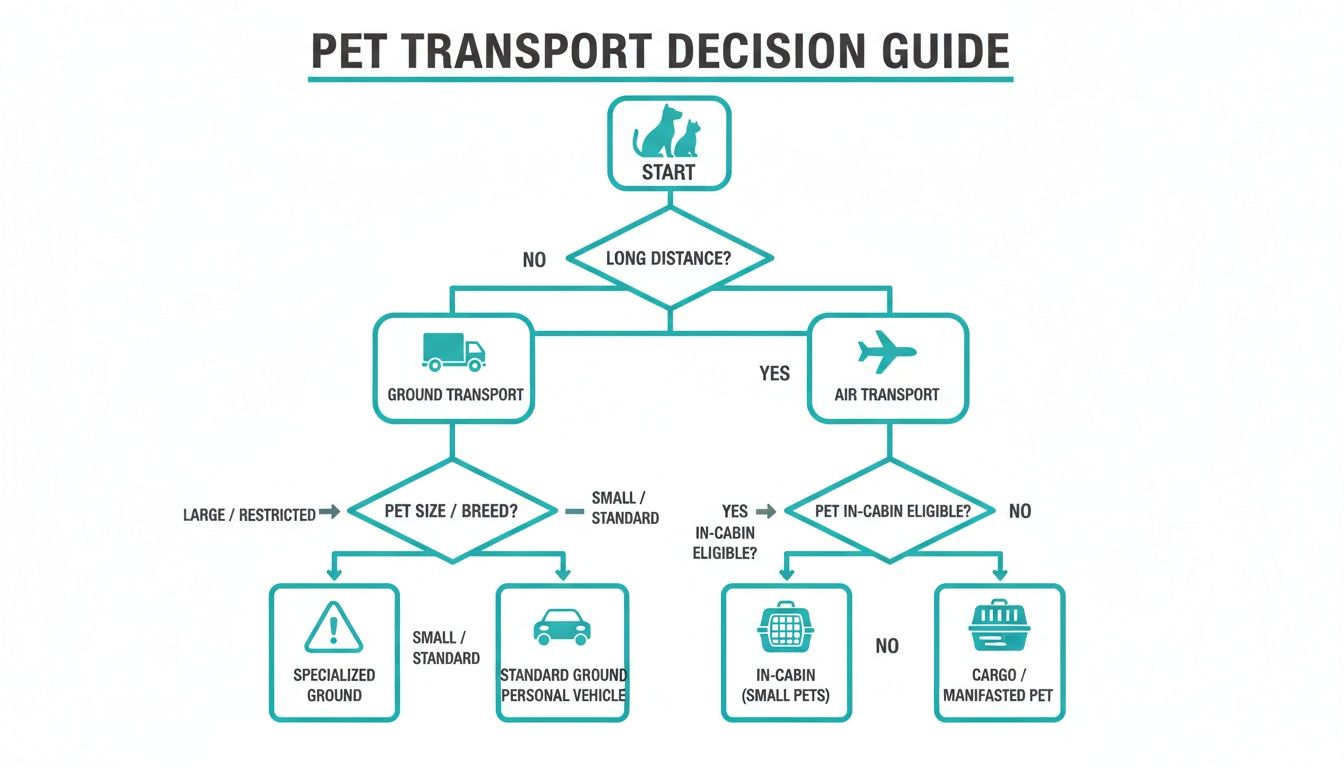
As you can see, there’s no single right answer. The best choice really comes down to what works for your specific pet and your moving situation.
Your Vet Visit Timeline
Timing is very important with the pre-travel vet check. Get the health certificate too early, and it could expire before you even hit the road. Wait too long, and you're in for a last-minute panic.
Here’s a good timeline to follow:
30+ Days Before Travel: This is your planning window. Call your vet and get that final health check appointment on the books. Use this time to double-check that all long-term vaccinations, especially rabies, are current. If your pet isn't microchipped yet, now is the perfect time. An up-to-date microchip is like an insurance policy if your pet gets lost in the chaos of a move.
10 Days Before Travel: Here's the sweet spot. Many states and airlines ask for a health certificate issued within 10 days of your departure. This is when you'll have your final vet visit. The veterinarian will do a full exam to confirm your pet is healthy enough for the journey and sign the official CVI.
Following this schedule helps make sure all your paperwork is valid for the entire cross country pet transport.
The Role of Microchips and Vaccinations
Beyond the CVI, a couple of other things are important for a smooth trip.
First, the microchip. It's not enough to just have one—you need to log into the provider's website and make sure your new address and current phone number are listed. A microchip with outdated contact info isn't very helpful.
Second, keep a copy of your pet's full vaccination record with you. Rabies is the big one for interstate travel, but having proof of other shots (like DHPP for dogs or FVRCP for cats) is just smart. It shows you're a responsible owner and can be a lifesaver if you need to find a last-minute boarder during the move.
The Certificate of Veterinary Inspection is more than just a form; it plays a part in protecting public health by helping to prevent the spread of animal diseases across states. It also helps transport companies know they are moving healthy pets.
How Digital Tools Can Help
Trying to keep track of vet appointments, vaccination deadlines, and paperwork on top of everything else in a move can be stressful. This is where modern tools can make a huge difference.
Platforms like Passpaw are built to help veterinary practices manage all these details. They can create, store, and securely share digital health certificates and travel documents with pet owners and transporters. This reduces the risk of losing paperwork and makes the whole process easier for everyone involved. For a vet clinic, it’s a way to take the headache out of pet travel for their clients. It's a real game-changer.
As people move around more, the logistics of taking our pets with us get trickier. The amount of paperwork—from health certificates to other permits—is only increasing. Getting this documentation right is key to avoiding costly delays. If your move requires federal sign-off, it’s worth taking the time to learn how to get a USDA-endorsed pet health certificate so you're fully prepared.
Preparing Your Pet for a Comfortable Trip
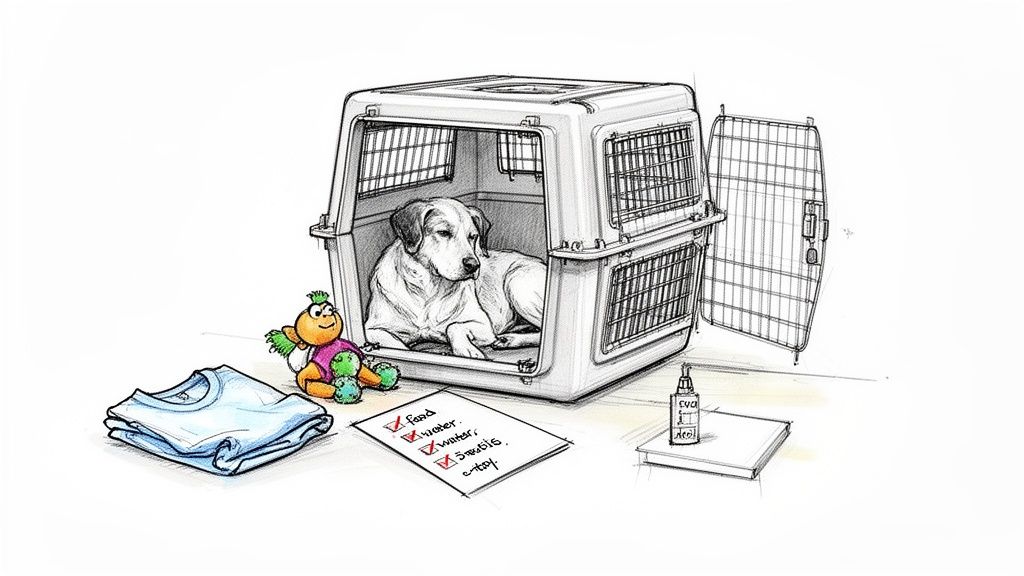
Think of your pet’s travel crate as their personal first-class suite for the journey. A comfortable, safe, and familiar carrier is one of the most important parts of successful cross country pet transport. It’s so much more than just a box; it’s their safe space during a time of big changes.
Choosing the right one is the first step. For any long-distance trip, you need a crate that is sturdy, well-ventilated on multiple sides, and latches securely. Size is key—it should be large enough for your pet to stand up, turn around, and lie down comfortably, but not so big that they could slide around and get hurt.
Crate Training Your Way to Success
You wouldn’t want to be pushed into a strange room for a long trip, and neither does your pet. The key is to turn the crate from a scary box into a cozy den long before moving day arrives. This process, known as crate training, is all about creating positive feelings.
Start this process weeks in advance. Place the crate in a common area of your home with the door wide open. Toss in some tasty treats or their favorite toy, encouraging them to explore it on their own. Whatever you do, never force them inside.
Once they're more comfortable, you can start feeding them their meals in the crate. This simple trick helps them connect the space with something wonderful—food! As they get used to it, you can close the door for just a few moments while you're in the room, slowly making the time longer. The goal is a pet that sees their crate as a place of rest, not restriction.
Packing Your Pet’s Go-Bag
Just like you have a carry-on, your pet needs a "go-bag" with all their essentials. Having everything organized and easy to grab makes travel day so much smoother for both your pet and the transporter. Don't leave this to the last minute!
Your pet's travel kit should include:
Food and Water: Pack enough of their regular food for the entire journey, plus a little extra in case of delays. Suddenly changing their diet can cause an upset stomach. Include a portable water bowl and bottled water.
Medications: If your pet takes any daily medications, make sure they are clearly labeled with instructions. Pack more than enough to cover the trip.
Comfort Items: A familiar blanket or an old t-shirt that smells like you can provide immense comfort. That familiar scent is incredibly reassuring in a new environment.
Important Documents: Keep a physical copy of their health certificate and vaccination records right there with their travel supplies.
A well-prepared travel kit ensures continuity and comfort for your pet. Having their familiar food, scents, and any necessary medications on hand helps minimize the disruption and stress of a long journey.
Managing Travel Day Jitters
Even with perfect preparation, moving day can be a lot for an animal to handle. Your calm mood is contagious, so try to remain as relaxed as possible. A long walk or a fun play session before they get into the crate can help burn off nervous energy, making it easier for them to settle down once the trip begins.
Many owners look for effective ways to manage their pet's stress. It can be worth exploring natural anxiety remedies for dogs for gentle options. Always discuss any calming aids with your veterinarian first, as sedation is generally not recommended for travel. With a little planning, you can make sure your pet's journey is a walk in the park—or at least, as close as you can get.
Budgeting and Choosing a Reliable Transport Service
When it comes to cross country pet transport, figuring out the budget is a huge piece of the puzzle. The final price tag isn't just one number; it’s shaped by a whole pack of factors that determine what you'll ultimately pay. Understanding these variables is the best way to set realistic expectations and avoid any surprises down the road.
Right off the bat, the two biggest things that will shape your quote are the distance of the trip and the size of your pet. A short hop from one state to the next is naturally going to cost less than a full coast-to-coast journey. Likewise, moving a Great Dane requires a lot more space and resources than a tiny kitten, and the price will reflect that.
Breaking Down the Costs
Beyond those basics, several other details can swing the cost of professional pet transport one way or another. It helps to know exactly what you're paying for.
Key cost factors often include:
Mode of Transport: As we've covered, ground transport is usually more budget-friendly than air travel. Flying can come with extra airline fees, specific crate requirements, and sometimes even the cost of a dedicated flight nanny.
Service Type: Are you looking for a private, door-to-door ride just for your pet, or are you comfortable with a shared shuttle? Private transport offers more direct attention but comes at a higher price.
Time of Year: Believe it or not, the season matters. Peak moving times, like summer, often see higher demand and slightly increased prices from transporters.
Navigating these variables can feel a little overwhelming, but getting a clear picture of the expenses is the first step to a well-planned move. For a much deeper dive into what you can expect to pay, we have a complete guide that breaks down all the numbers and helps you understand the factors that go into pet transportation costs.
Finding a Trustworthy Pet Transport Company
Choosing the right company to handle your furry family member is a massive decision. This isn't about finding the cheapest option—it's about finding the safest and most reliable one. With so many choices out there, asking the right questions is the only way to sniff out a truly professional service from the rest of the pack.
A little research now pays off with peace of mind later. Don't be shy about digging into a company's background and their process.
Your pet's safety and well-being are the top priority. A reputable transport service will be transparent, communicative, and happy to answer all your questions. If you get vague answers or a bad feeling, trust your gut and keep looking.
When you start checking out potential companies, use this checklist as your guide. A great transporter will have no problem giving you clear, confident answers to each of these points.
The Essential Vetting Checklist
Here are the key questions you should be asking any cross country pet transport service before you even think about booking:
Are you USDA Registered? This one is a big deal. The United States Department of Agriculture (USDA) sets standards for animal welfare during transport. A registered company is authorized to move animals across state lines and is held to specific care standards. No registration, no deal.
Can I see proof of your insurance? Accidents are rare, but they can happen. A professional service should carry insurance to protect your pet while they're in their care. Ask for a copy of their insurance certificate.
How do you handle communication during the trip? You're going to be anxious to know how your pet is doing. Ask if they provide regular updates, photos, or even GPS tracking. A good company understands a pet parent’s need for reassurance.
What is your experience with my pet's breed or temperament? If you have a flat-faced breed, an anxious traveler, or a senior pet with medical needs, it's vital the transporter has direct experience with their specific requirements.
What are your contingency plans? What happens in case of a vehicle breakdown, extreme weather, or an unexpected delay? A real pro will have clear plans in place for any "what-if" scenario.
Taking the time to research thoroughly and ask these questions ensures you're not just hiring a driver, but a dedicated professional who will treat your pet with the same care you do. This careful selection process is the final, crucial step in setting your pet up for a safe and comfortable journey to their new home.
Common Questions About Cross Country Pet Transport
Even the most carefully planned move is bound to come with a few last-minute questions, especially when your best friend is involved. The world of cross country pet transport has its own unique challenges, so we’ve gathered some of the most common questions we hear from pet parents.
Think of this as your quick-reference guide for those "what if" moments. Having the right answers helps you stay calm, and a calm owner makes for a much more secure pet.
Should I Medicate My Pet to Keep Them Calm?
This is easily one of the most frequent questions we get. No one wants their pet to be scared or stressed during a long trip. However, almost every veterinarian and professional transporter will strongly advise against using sedatives for travel.
Here’s why: these medications can interfere with an animal's natural ability to regulate their body temperature and keep their balance, which can be risky when they're on the move.
Instead of sedation, your best bet is to focus on positive crate training and providing familiar comfort items. A favorite blanket or a t-shirt that smells like you can work wonders. If you’re still worried about your pet’s anxiety, talk to your vet about gentle, non-sedative calming supplements. Always get a professional opinion first to find the safest option for your pet.
How Do I Prepare a Very Anxious Pet?
For a pet that’s already a bit of a worrier, early preparation is everything. Your goal is to make the entire experience feel as predictable and positive as you can.
Start crate training weeks, or even months, before you move. Use tasty treats and tons of praise to help them see their carrier as a safe space, not a punishment.
Don't forget that your own energy plays a huge part. Pets are incredibly good at picking up our stress, so try to stay cool and confident. On moving day, a long walk or a fun play session can help burn off some of that nervous energy before they have to settle in for the ride. It's also smart to ask your transport provider about their specific experience with anxious animals—find out what they do to keep the journey low-stress.
A pet's comfort on a long trip often boils down to familiarity. A well-worn t-shirt with your scent can be more calming than any new toy. It’s a simple trick, but it provides a powerful sense of security.
What Happens If There Is a Travel Delay?
Life happens. A sudden snowstorm, a flat tire, a flight cancellation—delays are always a possibility. Any reputable transport company will have backup plans ready for these exact situations. Before you book, make sure you ask them to walk you through what they do when things don't go according to plan.
For ground transport, this usually means checking into a vetted, pet-friendly hotel. Your pet will be fed, walked, and cared for until it's safe to get back on the road.
For air travel, airlines have their own procedures for handling pets during delays, and a professional transporter will manage all of that for you.
A good company will have clear communication plans to keep you in the loop every step of the way. You should never be left wondering what’s going on.
Can I Transport a Senior Pet or One with Health Issues?
Absolutely, but it requires extra care and a very thorough conversation with your veterinarian. Your vet needs to give the official green light for travel and provide detailed documentation of any health needs, medications, or mobility limitations.
For senior pets or those with chronic conditions, ground transport is almost always the better choice. It’s generally less stressful and allows for more personalized, hands-on attention. Make sure your transport provider has proven experience with special-needs animals and is equipped to give medication if needed. This isn't the time to look for a bargain; their specific experience is key to your pet's well-being.
Managing pet travel paperwork can feel like herding cats, but it doesn’t have to. Passpaw helps veterinary practices and pet owners get everything in order, making travel compliance simple and stress-free. Learn how we can help at https://passpaw.com.
More articles
From regulatory changes to best practices for veterinarians and pet owners, our resources keep you ahead of the curve.