Are you a team member in a veterinary practice?
Are you a pet parent planning a trip with your furry pal?
Conjunctivitis in Dogs Contagious: Key Facts Every Owner Should Know
So, is that red, goopy eye your dog is sporting contagious? The short and simple answer is: it depends.
If your dog's pink eye is caused by a virus or bacteria, then yes, it can definitely spread to other dogs. But if it's the result of something like seasonal allergies or a bit of dust that got kicked up at the park, it’s not contagious at all.
Understanding When Dog Conjunctivitis Is Contagious
When you notice your furry friend has red, swollen, or weepy eyes, it’s natural to feel concerned. The big question on every owner's mind is whether this condition, commonly known as pink eye, can spread. The answer depends entirely on the cause, which is why a trip to the vet should always be your first move.
Think of it this way: some forms of conjunctivitis are like a "kennel cough" for the eyes—catching and ready to spread through the dog park. Others are more like your own seasonal allergies; they cause real discomfort but pose zero risk to other pets.
Infectious vs. Non-Infectious Causes
To keep it simple, the reasons for your dog's eye irritation fall into two main camps.
Infectious Conjunctivitis: This is the type caused by germs like viruses or bacteria. Just like a common cold, these germs can be passed from one dog to another through direct contact or by sharing things like toys and water bowls. This is the version of conjunctivitis in dogs that is contagious.
Non-Infectious Conjunctivitis: This is actually the more common situation for most dogs. It's triggered by things in the environment or other health issues. These causes are not contagious and won't spread to your other pets or family members.
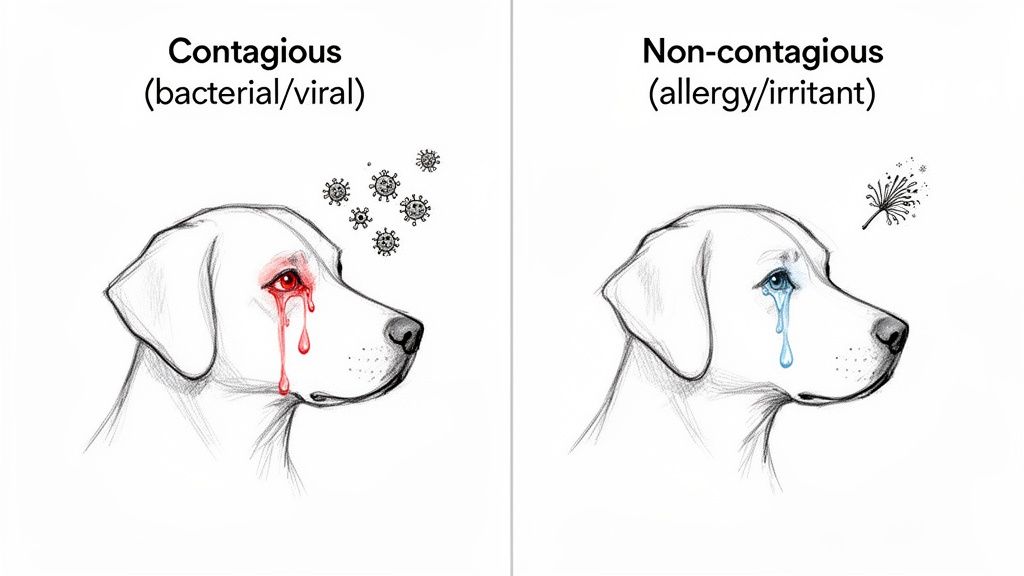
The most important thing to remember is that you can't tell if conjunctivitis is contagious just by looking at it. Redness, swelling, and discharge can look the same whether the cause is a virus or a bit of pollen. This makes a professional diagnosis from a vet essential.
To help you get a better handle on the situation, here’s a quick breakdown of what could be behind your dog's irritated eyes.
Canine Conjunctivitis Causes At A Glance
This table offers a quick comparison of the different triggers for pink eye in dogs, helping you see which ones are a contagious risk and which are not.
Cause of Conjunctivitis | Is It Contagious? | Common Example |
|---|---|---|
Viral Infections | Yes, highly | Canine distemper virus or canine herpesvirus can cause conjunctivitis as a symptom. |
Bacterial Infections | Yes, moderately | Bacteria like Staphylococcus or Streptococcus can cause a secondary infection. |
Allergies | No | Your dog is reacting to pollen, dust, or mold, much like a person with hay fever. |
Irritants or Injury | No | Shampoo, smoke, wind, or a scratch to the eye can cause temporary inflammation. |
Anatomical Issues | No | Breed-specific conditions like inwardly growing eyelashes or "cherry eye" are common causes. |
Underlying Conditions | No | Dry eye (Keratoconjunctivitis Sicca or KCS) is a frequent cause of ongoing irritation. |
As you can see, the list of non-contagious causes is much longer than the contagious ones. While it's always wise to be cautious, chances are your dog's discomfort is due to an isolated issue. Still, only your vet can tell for sure.
What's Behind Your Dog's Pink Eye?
When you see your dog’s eyes looking red, puffy, and unhappy, it’s easy to jump to the worst conclusion. But not all cases of pink eye are created equal, and figuring out what’s really going on is the first step toward getting them back to normal.
Think of it like being a detective—the treatment that works depends entirely on finding the right culprit. The world of dog conjunctivitis is split into two main camps: infectious and non-infectious. This is the key difference between a contagious problem and a simple, one-off irritation.
The Contagious Culprits: Infectious Causes
When conjunctivitis in dogs is contagious, it's because a tiny invader is at play. These are the germs that can spread from one dog to another, making a trip to the dog park or daycare a bit more complicated.
Bacterial Infections: Germs like Staphylococcus or Streptococcus often show up as a secondary infection. You'll usually notice a thick, yellow or greenish discharge. This type is moderately contagious, typically spreading through direct contact or by sharing things like water bowls and toys.
Viral Infections: Viruses like canine distemper or canine herpesvirus can trigger conjunctivitis as part of a larger illness. Viral pink eye can be highly contagious between dogs, spreading through the air via coughs and sneezes.
Thankfully, these infectious types are less common than their non-contagious counterparts.
The Usual Suspects: Non-Infectious Causes
More often than not, your dog's red eyes aren't a sign of a contagious illness. These non-infectious causes are far more frequent and are usually limited to just the one dog.
Here are some of the most common non-contagious triggers:
Allergies: Just like us, dogs can get red, itchy eyes from allergens like pollen, dust, or mold. This is one of the top reasons for eye irritation, especially during certain seasons.
Environmental Irritants: A bit of dust kicked up on a walk, a puff of smoke, or even a splash of shampoo during bath time can lead to temporary inflammation.
Anatomy Quirks: Some dogs are just built differently. Conditions like inwardly growing eyelashes, rolled-in eyelids (entropion), or the famous "cherry eye" can cause ongoing irritation that leads to conjunctivitis.
Underlying Health Conditions: Sometimes, red eyes are a symptom of something deeper. A leading cause is keratoconjunctivitis sicca (KCS), better known as dry eye, where the eye simply doesn't produce enough tears to stay lubricated.
This is exactly why a vet's diagnosis is so important. An expert can tell the difference between a simple irritant and a more complex condition like KCS, which requires specific, long-term management to protect your dog's vision.
For instance, a UK study highlighted just how big of a deal dry eye is, especially for certain breeds. The research found that American Cocker Spaniels had over 52 times the odds of developing KCS compared to crossbreeds. English Bulldogs and Pugs also faced a much higher risk.
You can discover more insights about breed-specific eye health from the full study, but the takeaway is clear: genetics can play a huge role in your dog's eye health.
How Contagious Conjunctivitis Spreads Through The Pack
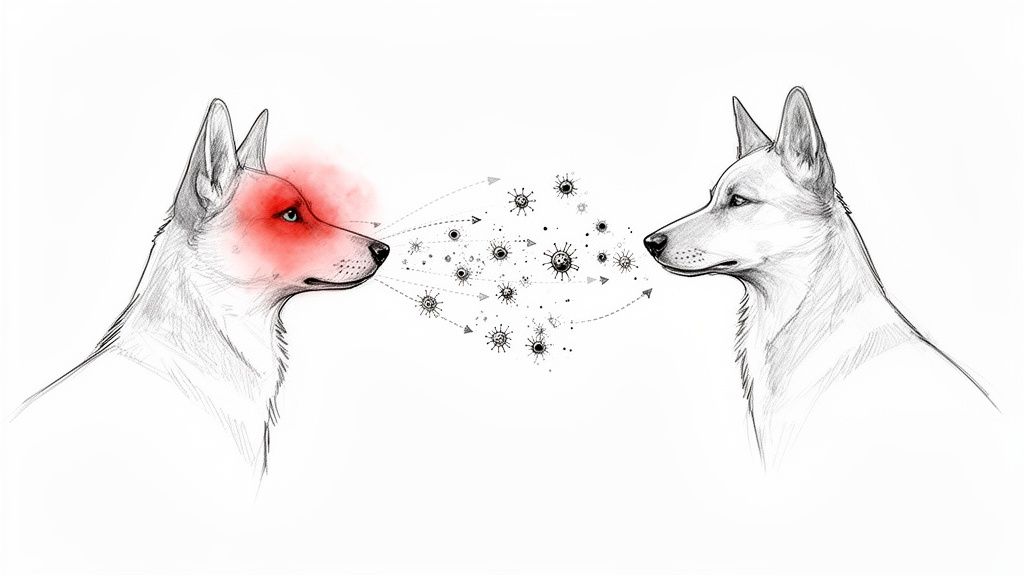
When a case of conjunctivitis in dogs is contagious, it can move through a group of canine buddies with surprising speed. Understanding how these infectious germs travel is the secret to stopping a little eye irritation from becoming a full-blown pup-demic. Often, it’s the simple, everyday interactions you wouldn’t think twice about that are the culprits.
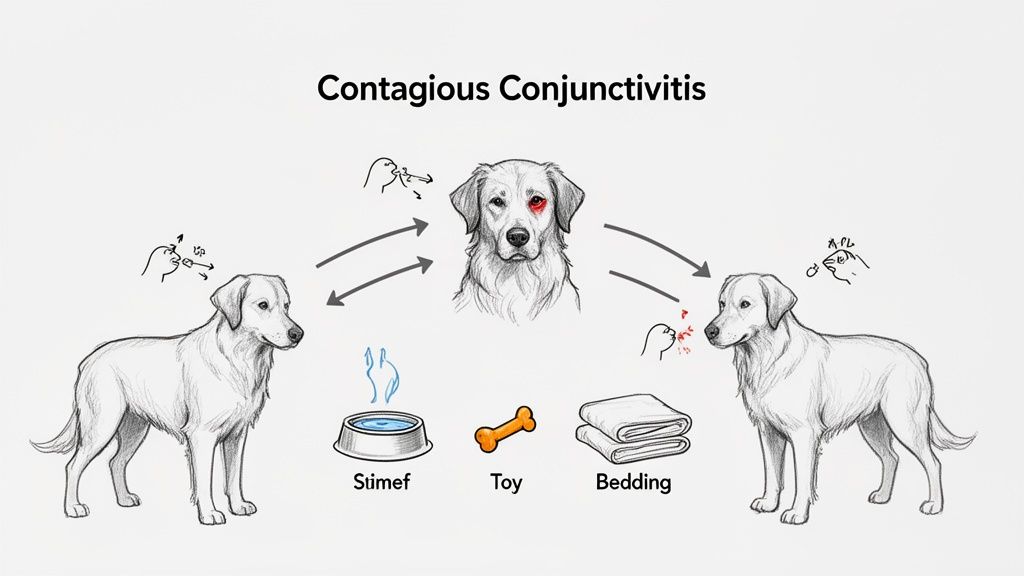
The number one way contagious pink eye gets around is through direct, dog-to-dog contact. Just think about how dogs greet each other—lots of sniffing, licking, and playful wrestling. If a sick dog has goopy discharge from their eyes, the bacteria or viruses can easily jump to another dog during these friendly meetings.
But the germs aren't always so direct. They're perfectly happy to hitch a ride on shared items, spreading the infection without the dogs ever touching.
Common Transmission Hotspots
Certain places and things are well-known for helping germs make the leap from one dog to another. This is especially true in any spot where dogs gather in groups.
Shared Resources: Think water bowls, food dishes, toys, and bedding. These can all get contaminated with infectious discharge. When the next dog comes along for a drink or a chew, they can pick up the germs.
High-Traffic Areas: Dog parks, grooming salons, and daycare facilities are prime spots for germs to spread. With so many dogs in one place, the chances of running into an infected animal (or a contaminated surface) are just higher.
It's important to remember that just because your dog visits these places doesn't mean they'll get sick. But being aware of the risk helps you take smart precautions, like bringing your own water bowl to the park.
Why Some Dogs Are More At Risk
Not all dogs are created equal when it comes to fighting off germs. A few key factors can make a dog more likely to catch contagious conjunctivitis, with age and immune health at the top of the list.
Puppies and very young dogs, for example, are particularly at risk. Their immune systems are still developing and aren't as strong as an adult dog's. Research on dogs in shelters really drives this point home. One study found that young dogs under two were 4.91 times more likely to develop conjunctivitis than older dogs, with infection rates in some centers reaching 65.51%.
Likewise, senior dogs or those with weakened immune systems due to other health issues can have a harder time fending off infections. These situations call for extra care, especially if you're dealing with complex health paperwork. Keeping a pet healthy is a key part of our guide on international pet travel requirements, as a contagious condition can throw a major wrench in travel plans. For a broader look at how infections move through a population, you can explore the different ways viruses spread.
Spotting The Symptoms of Canine Conjunctivitis
Knowing what to look for is the first step in getting your dog the right help. While "pink eye" is the classic sign, the symptoms of dog conjunctivitis are more varied than just a bit of redness. Paying close attention to the specific signs can give you valuable clues to share with your veterinarian.
Think of yourself as a symptom spotter. Your job isn't to diagnose the problem, but to gather the details that help your vet crack the case. Catching these signs early makes a world of difference in your dog's comfort and recovery.
The Telltale Signs of Eye Irritation
Beyond simple redness in the whites of the eyes, there are several key indicators that something is wrong. Keep an eye out for these common symptoms.
Swollen Eyelids: The pink lining inside the eyelid, called the conjunctiva, might look puffy and more visible than usual.
Squinting or Blinking: Your dog might hold their eye partially or fully closed, or blink way more than normal. This is a clear signal of discomfort or pain.
Pawing at the Eyes: If you see your dog frequently rubbing their face on the carpet or pawing at their eyes, it’s a sure sign of itchiness or irritation.
Discharge from the Eye: This is a major clue, and the type of discharge can be very revealing. It might be clear and watery, or it could be a thick, goopy substance that is yellow or green.
It's important to understand that these symptoms don't automatically mean your dog's conjunctivitis is contagious. A clear, watery discharge might just point to allergies, while a thick, colored discharge often suggests a bacterial infection. But only a vet can make that call.
To help you make sense of what you're seeing, this table breaks down what different symptoms might suggest.
Interpreting Your Dog's Eye Symptoms
This guide can help you understand potential causes, but remember, it's not a substitute for professional veterinary advice. It's a tool to help you have a more informed conversation with your vet.
Symptom | What It Might Mean (Potential Cause) | Contagious Risk |
|---|---|---|
Redness & Clear, Watery Discharge | Allergies, environmental irritants (dust, wind), or a foreign object in the eye. | Low |
Thick, Yellow or Green Discharge | Often indicates a bacterial infection, which may be secondary to another issue. | Moderate |
Squinting with Watery Tears | Could be a sign of a corneal ulcer (a scratch on the eye's surface), which is painful. | Low |
Redness & Swelling (with no discharge) | Can be caused by anatomical issues like entropion (in-turned eyelids) or dry eye (KCS). | Low |
Ultimately, any of these symptoms are a good reason to call your vet. A proper diagnosis is very important, especially if you have travel plans that require a clean bill of health.
Ensuring your pet is healthy and symptom-free is a key part of getting a veterinary international health certificate, as any sign of a contagious illness can cause significant delays. Prompt veterinary care gets your furry friend relief quickly and keeps everyone safe.
Treatment And Management At Home
Once your vet figures out what’s causing your dog’s eye irritation, the next step is getting them on the road to recovery. The game plan will depend entirely on the root cause, but most at-home care focuses on a few key things: soothing their discomfort and clearing up the problem. It's time to get your pup’s peepers back in tip-top shape.
Your vet will likely recommend a treatment tailored specifically to your dog's needs. This often means medicated eye drops to fight an infection or calm down inflammation. Sometimes, a simple saline solution is all that's needed to gently flush out any gunk or irritants. If the infection is more widespread, your vet might also suggest oral medications like antibiotics or antihistamines.
This handy chart can help you visualize what different types of eye discharge might mean, which is great information to have before your vet visit.
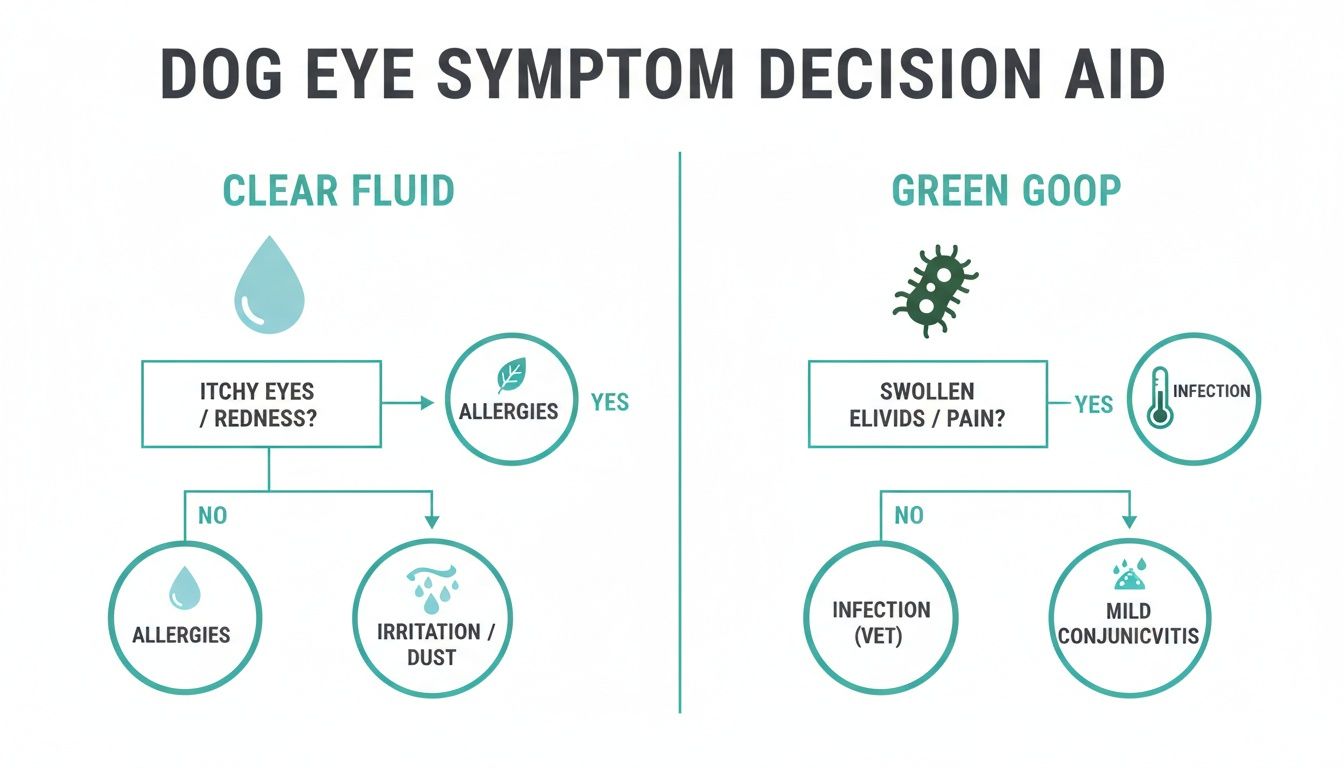
As you can see, clear fluid often points to non-contagious issues like allergies. On the other hand, thick green goop is a much stronger signal of a potentially contagious infection.
Managing A Contagious Case
If your vet confirms the conjunctivitis in your dog is contagious, you'll need to take a few extra steps at home to prevent it from spreading. The goal is to create a safe, clean space for your dog to recover without passing germs to other furry family members. Think of it as a mini-quarantine, but with more cuddles (for the sick pup, at least).
The most effective way to manage a contagious case is through careful isolation and hygiene. This protects other pets in your household and helps your dog heal faster without the risk of reinfection.
Here are a few simple but incredibly effective tips for managing the situation:
Create a Separate Space: Designate a comfy, isolated area for your sick dog, well away from other pets. A spare room or a sectioned-off part of your living area works well.
Separate Supplies: Use dedicated food and water bowls, bedding, and toys for your recovering dog. Don't let other pets share these items until your dog is fully recovered and everything has been sanitized.
Practice Good Hygiene: This one is huge. Always wash your hands with soap and water before and after giving eye drops or cleaning your dog's face. It’s a very important step to stop the spread of bacteria or viruses to other animals—or even to yourself.
Wash Bedding Regularly: Toss your dog's bedding, blankets, and any soft toys into the laundry and wash them in hot water. This will help kill off any lingering germs.
Keeping your home environment safe and clean is always a top priority for pet parents. For more ideas on pet-proofing your space, especially during busy times of the year, check out our holiday safety tips for your pets.
Understanding The Risk To Humans And Other Pets
When you spot your dog’s red, weepy eyes, it’s only natural for your mind to jump to your own family. Is this contagious? Could you, your kids, or your other pets catch it? It’s a completely fair question, and the answer is thankfully quite straightforward.
Let's get right to it: the risk of you catching pink eye from your dog is extremely low. The specific bacteria and viruses that usually cause infectious conjunctivitis in dogs just aren't a good match for the human body. While we can never say it's absolutely impossible—especially for someone with a weakened immune system—a direct dog-to-human jump is considered very rare.
Can Your Other Pets Catch It?
Now, the risk to other animals in your home is a different story. If your dog’s conjunctivitis is the infectious kind (caused by a virus or bacteria), it can definitely spread to other dogs. Think of it like a common cold making its way through the pack.
What about cats or other species? While some germs can cross species lines, most of the usual causes behind dog pink eye tend to stick with dogs. That said, it’s always best to play it safe. Keep your pets separated until your vet gives you the all-clear.
The single most important thing to remember is that good hygiene is your best defense. Washing your hands thoroughly with soap and water after petting your dog, cleaning their eyes, or giving them medication greatly cuts down any potential risk.
The spread of illness between pets and people isn't just about direct infection. Research also shows that pet allergens can make humans more sensitive over time. A study of over 8,000 people found that 3.6% were sensitized to dog allergens, and many of them reported symptoms when exposed. This is a great reminder that keeping our pets healthy is a big part of keeping our homes healthy for everyone. You can read more about these public health findings and pet allergens.
Ultimately, managing these risks is about being cautious, not fearful. Staying on top of your pet's overall health is important for the well-being of your entire household. That includes all their routine preventative care, which is why knowing things like how often your dog needs a rabies vaccine is so important.
Frequently Asked Questions
When your dog's eyes are red and goopy, your mind starts racing with questions. It's completely normal. Let's tackle some of the most common concerns pet owners have about canine conjunctivitis to clear things up.
How Long Is a Dog With Conjunctivitis Contagious?
If your dog's pink eye is caused by an infection, the simple answer is: they're generally contagious as long as they have symptoms, especially eye discharge. Your veterinarian is the only one who can give you a precise timeline for your dog's specific case.
Typically, after the first few days of effective treatment, the risk of spreading it drops a lot. Even so, it's best to follow your vet's isolation advice to the letter to keep any other pets in the house safe.
Can I Use Human Eye Drops On My Dog?
This is a hard no. You should not use human eye drops on your dog unless a veterinarian specifically tells you to. Many over-the-counter drops for people contain ingredients that are irritating or even harmful to dogs.
Trying to medicate your dog yourself can quickly turn a minor problem into a major one. It's just not worth the risk. Always stick to the medications recommended by your vet—they know exactly what your furry friend needs.
Think of it this way: your vet’s recommendation is tailored to the specific cause of your dog’s conjunctivitis. Grabbing a human product is a shot in the dark that could easily do more harm than good.
How Can I Help Prevent Conjunctivitis In My Dog?
While you can't bubble-wrap your dog from every possible eye issue, a little proactive care goes a long way in reducing the risk.
Gentle Cleaning: Make a habit of wiping your dog's face with a soft, damp cloth. This simple step helps remove dust, pollen, and other potential irritants before they cause trouble.
Keep Vaccinations Current: Staying up-to-date on vaccines is very important. It helps protect your dog against some of the underlying viruses that can lead to conjunctivitis.
Be Mindful in Crowds: Use a little extra caution in high-traffic dog spots like daycares, boarding facilities, or busy parks, especially if you see other pups with tell-tale symptoms.
Navigating your pet's health is one thing; navigating international travel paperwork is another. Passpaw takes the complexity out of obtaining international pet health certificates, ensuring a smooth and stress-free journey for both you and your pet. Find out more at https://passpaw.com.
More articles
From regulatory changes to best practices for veterinarians and pet owners, our resources keep you ahead of the curve.