Are you a team member in a veterinary practice?
Are you a pet parent planning a trip with your furry pal?
British Airways Pets Policy: A Pawsitively Simple Guide
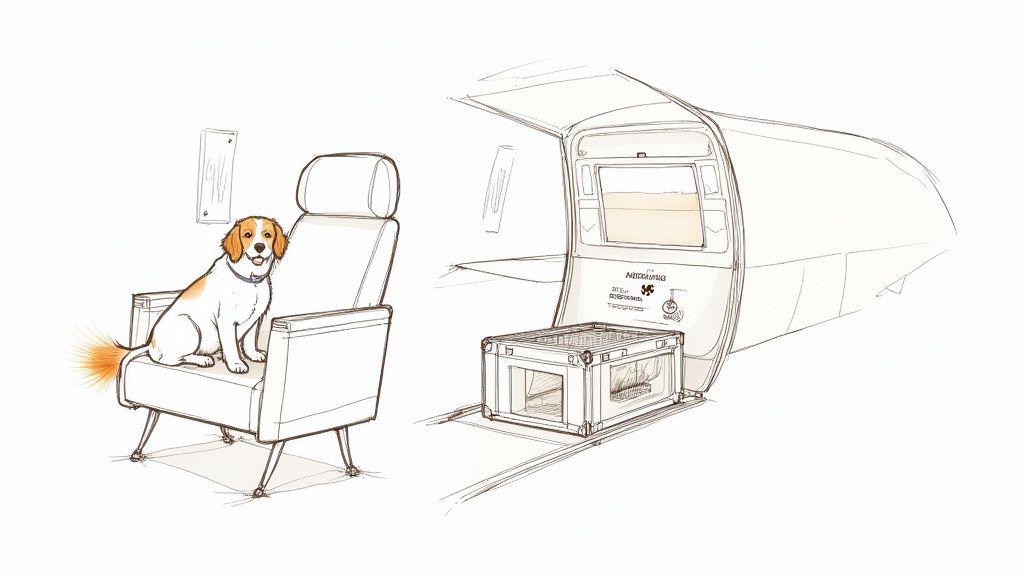
Thinking about flying with your pet on British Airways? Let's get the biggest question out of the way first. When it comes to the passenger cabin, only registered assistance dogs are allowed to fly alongside their owners.
For all other pets, the journey takes place in a dedicated, climate-controlled, and pressurized cargo hold. This isn't your standard luggage compartment; it's a space designed for the safe and comfortable transport of animals, managed by pros who handle pets every day.
Your Guide to Flying with Pets on British Airways
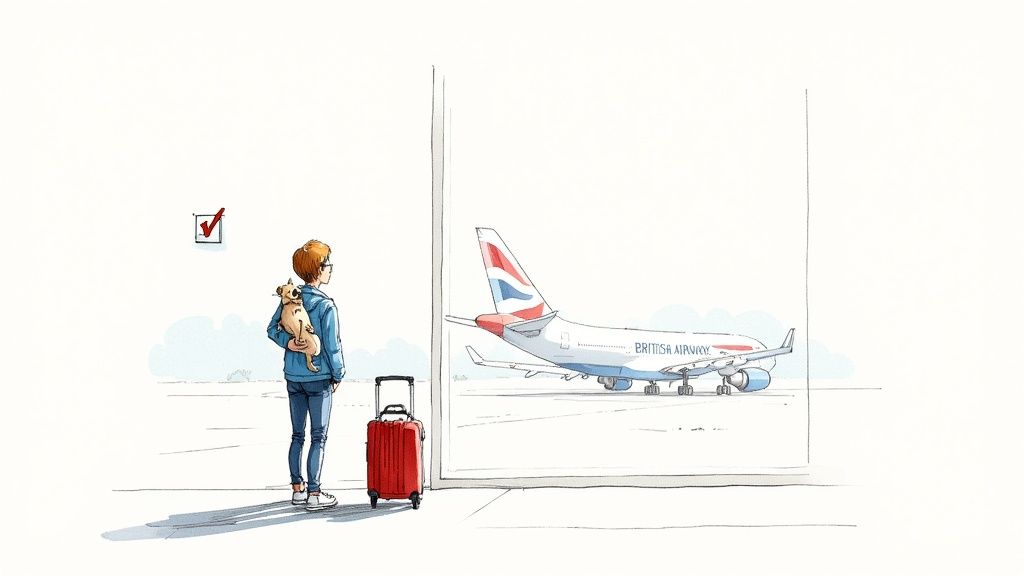
We get it—navigating airline pet policies can feel a bit ruff. This guide is here to break it all down into simple, easy steps. We'll walk you through the entire British Airways pet policy, from booking your pet's spot to picking them up at your destination, making sure you're fully prepared for a smooth trip.
The Basics: Cabin vs. Cargo
The first thing to understand is British Airways' core approach: they treat animal transport with the utmost seriousness. For the safety of everyone on board, they have a clear separation between recognized service animals and all other pets.
This means that unless you have a medically approved service dog (which needs at least seven days' advance notice), your pet will not be in the cabin with you. Instead, they will travel via a dedicated cargo service. For flights leaving the UK, this is handled by PetAir UK. For flights arriving in the UK, the service is managed by BA's sister company, IAG Cargo.
This might seem different from some other airlines, but it's a system designed to give your pet specialized care. They're the last to be loaded onto the plane and the first to be taken off, which cuts down their time on the tarmac and prioritizes their well-being.
"Your pet's journey is managed by trained animal handlers from start to finish. The pet area in the hold is dimly lit, temperature-controlled, and pressurized, creating a calm and safe space for them during the flight."
Essentially, your pet is treated like a VIP passenger, just in a different part of the plane. Understanding this is the key to a stress-free experience. For a broader look at how different airlines handle things, check out our general pet travel tips and tricks.
To give you a quick snapshot, here's how the two travel options compare on British Airways.
British Airways Pet Travel At a Glance
Travel Type | Permitted Animals | Booking Process | Key Restriction |
|---|---|---|---|
In-Cabin | Registered and medically approved assistance dogs only. | Contact the accessibility assistance team at least 7 days before flying. | Emotional support animals and other pets are not permitted. |
Cargo | Most common domestic pets (dogs, cats, etc.). | Must be booked separately through IAG Cargo or its approved partners. | Pets must be in an IATA-compliant travel crate. |
As you can see, the process is quite different depending on the type of animal you're traveling with.
What This Guide Covers
To make sure you don't miss a single detail, we've organized this guide to cover every stage of the process. Our goal is to give you a complete picture of what to expect, leaving no stone unturned.
Here’s a quick look at what we’ll cover:
In-Cabin Rules for Assistance Dogs: We’ll explain the specific requirements for service animals traveling with their owners.
Pet Cargo Explained: A detailed look at how the cargo system works and the safety measures in place.
Crate Requirements: How to choose an IATA-compliant crate and prepare your pet for their space.
Paperwork and Health Checks: A guide to the necessary documents and veterinary steps you’ll need to take.
Understanding In-Cabin Rules for Assistance Dogs
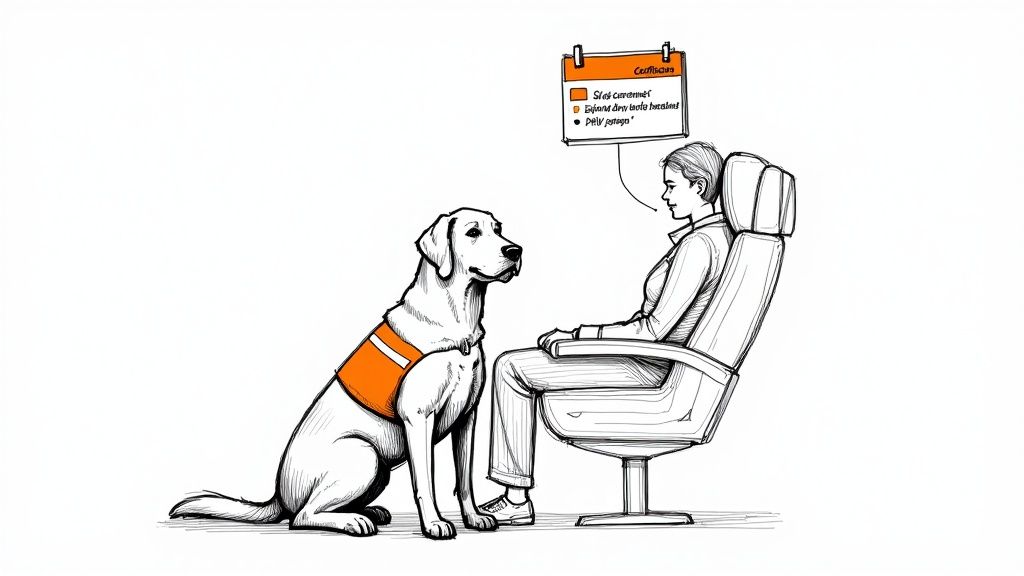
While almost every pet travels in the cargo hold, British Airways makes one key exception: recognized assistance dogs. These highly skilled canine partners are the only animals allowed to fly in the passenger cabin, making sure their handlers get the support they need from gate to gate.
But this isn't a simple show-up-and-fly situation. There are specific rules and a pre-approval process you have to go through. It's all about coordinating with the airline well ahead of time to confirm your dog's training and qualifications, ensuring a safe and comfortable flight for everyone on board.
Who Qualifies for In-Cabin Travel
British Airways is very clear on this: an assistance dog is a dog specially trained to help a person with a disability. This is an important distinction, as the policy doesn't cover emotional support animals (ESAs) or therapy pets. To qualify, your dog should be certified by an organization that’s a full member of either Assistance Dogs International (ADI) or the International Guide Dog Federation (IGDF).
This requirement is in place to confirm the dog has passed rigorous, standardized training. It helps ensure they can perform their job reliably in busy environments like an airport terminal or the tight quarters of an airplane.
A few examples of recognized assistance dogs include:
Guide Dogs: Helping individuals who are blind or have low vision get around.
Hearing Dogs: Alerting people who are deaf or hard of hearing to important sounds.
Medical Alert Dogs: Trained to signal the onset of a medical issue, like a seizure or a diabetic emergency.
If your dog doesn't have certification from one of these two internationally recognized bodies, it will need to travel via the cargo service.
The Pre-Approval Process is a Must
You can't just arrive at the airport with your assistance dog and expect to board. Getting your companion approved for cabin travel is a multi-step process that you must start with the British Airways accessibility team. Honestly, this is the most important step in the whole journey.
You need to contact them at least seven days before your flight, but we strongly suggest starting the process much earlier. This gives you plenty of time to gather and submit the needed paperwork without any last-minute panic. The airline will take time to check your dog’s credentials, and they may even contact the training organization directly.
A key part of the British Airways policy for assistance dogs is verification. The airline takes time to confirm that every assistance dog traveling in the cabin meets the training standards set by internationally recognized bodies.
Your Pre-Flight Checklist
To make things a little smoother, here’s a quick checklist to get you started.
Gather Your Documents: First things first, you'll need official proof that your dog was trained by an ADI or IGDF-accredited organization. Get the training certificate and your dog’s ID details ready to go.
Contact British Airways: Get in touch with the airline's accessibility or special assistance line. They have a team dedicated to handling these requests and will walk you through what they need.
Complete the Necessary Forms: British Airways will send you some forms to fill out. Be thorough and double-check that all the information about you and your assistance dog is accurate.
Check Destination Rules: It’s also up to you to make sure your assistance dog meets all the health and entry requirements for your destination country. This includes things like vaccinations, microchipping, and any required health certificates or treatments.
By tackling these steps early and keeping communication open, you can set yourself up for a seamless trip with your essential partner by your side.
How Pet Cargo Travel Works with British Airways
Since nearly every pet traveling on British Airways flies via cargo, it's worth taking a moment to unpack what that actually means. The word "cargo" can bring up images of dusty boxes and forgotten suitcases, but for your pet, the reality couldn't be more different. Think of it as a specialized service designed entirely around their well-being.
British Airways partners with dedicated experts like IAG Cargo to handle everything. Your pet isn't just another item in the hold; they're a VIP (Very Important Pet) managed by trained professionals every step of the way. Keeping this in mind can really help ease the natural anxiety that comes with flying your four-legged family member.
A Look at Your Pet’s Journey
To give you some peace of mind, let's walk through what travel day actually looks like from your pet’s point of view. It's a carefully planned process built for safety and comfort.
After you drop them off with the dedicated cargo agent, they're taken to a quiet, climate-controlled animal holding area—not a noisy tarmac or drafty warehouse. This space is intentionally kept calm to minimize stress before the flight.
When it's time to board, your pet gets priority treatment.
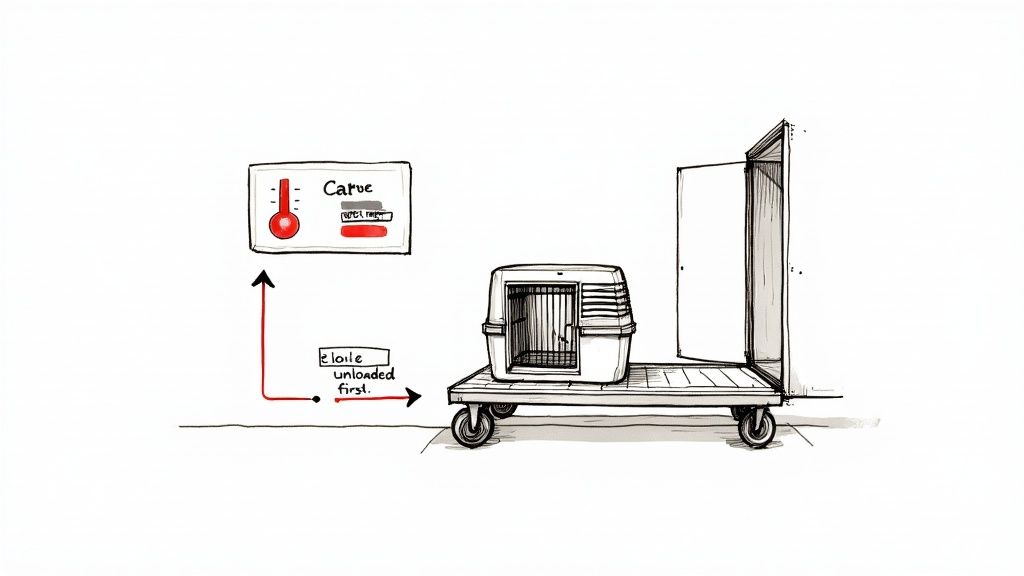
Last to Be Loaded: They are brought to the aircraft just before departure, often in temperature-controlled vehicles, to limit their time exposed to the elements.
First to Be Unloaded: As soon as the plane lands, they are the very first to be taken off and moved quickly to the animal reception center.
This "last on, first off" policy is a key part of the BA cargo service, ensuring your pet spends the least amount of time possible in transit.
The Onboard Environment
The section of the cargo hold where pets travel is a world away from where standard luggage goes. This special compartment is pressurized, climate-controlled, and kept at a comfortable temperature, just like the passenger cabin right above them.
It's also dimly lit, which naturally encourages pets to rest and settle in for the journey. The flight crew is always aware that live animals are on board, and they monitor the hold's conditions from the cockpit throughout the flight.
The entire system is built on a commitment to animal welfare. Every procedure is designed to create a safe, stable, and low-stress environment that mirrors the main cabin as closely as possible, ensuring your pet’s well-being from takeoff to landing.
This is exactly why booking through the correct cargo channels is so important. It ensures your pet is placed in the designated live animal section, not with general freight.
Critical Safety and Temperature Restrictions
One of the most important parts of the British Airways pet policy involves strict temperature controls. Your pet's health is the top priority, which means a flight won't go ahead if the weather at the origin, destination, or any connecting airport is too extreme. While it might seem like an inconvenience, it's a vital protection.
BA has a rule against pet transport if temperatures are forecast to go above 85°F (29.4°C) or drop below 45°F (7.2°C) at any point on the ground. These limits are in place to prevent dangerous conditions like heatstroke or hypothermia. You can find more industry context by reviewing other dog-friendly airline guidelines to see how different carriers manage these protocols.
To help you keep track of these crucial safety measures, here's a quick checklist of the key requirements when shipping your pet via British Airways cargo.
Pet Cargo Safety Checklist
Requirement | Details and Considerations | Applies To |
|---|---|---|
Temperature Limits | Travel is not permitted if the ground temperature is below 45°F (7.2°C) or above 85°F (29.4°C) at any airport on the itinerary. | All live animals |
Breed Restrictions | Brachycephalic (flat-faced) breeds like Bulldogs and Pugs may have special requirements or may not be permitted to fly due to respiratory risks. | Specific dog & cat breeds |
Crate Sizing | Crates must meet IATA standards. Some flat-faced breeds require a crate 10% larger than standard to ensure proper air circulation. | All live animals |
Last On, First Off | Pets are loaded last and unloaded first to minimize time on the tarmac and in transit. | All live animals |
Specialized Handling | Trained ground staff and climate-controlled vehicles are used for transport between the terminal and aircraft. | All live animals |
Following these guidelines is essential for a safe journey, ensuring the airline can provide the best possible care for your pet.
Special Considerations for Certain Breeds
The airline also has specific rules for brachycephalic, or "flat-faced," breeds. Because their shortened airways make them more susceptible to breathing difficulties at high altitudes, the risks are much higher.
For this reason, some breeds like Bulldogs, Pugs, and Pekingese are often not permitted to fly at all. Other flat-faced breeds might be accepted but will require a travel crate that is 10% larger than the standard size. That extra space is crucial for promoting better air circulation. Always declare your pet’s exact breed when booking to make sure you're following the rules and avoid any last-minute issues.
Choosing the Right Crate and Preparing Your Pet
A smooth trip for your pet begins long before you head to the airport, and it all starts with the right travel crate. Think of it as your pet's personal travel suite—it’s the single most important piece of gear you'll buy, and it needs to be safe, secure, and perfectly sized to meet the strict British Airways pets policy.
Getting the crate right is a must. British Airways, along with every other major airline, follows the standards set by the International Air Transport Association (IATA). These aren't just helpful suggestions; they're safety rules designed to keep your pet protected through every step of the journey.
Selecting an IATA-Compliant Crate
Picking an IATA-compliant crate is more than just grabbing one off the shelf. It has to check all the boxes for material, construction, ventilation, and security. The goal is to create a safe, sturdy den for their flight.
Here’s what you need to look for:
Strong Material: The crate must be made of rigid plastic or wood. Forget about wire-mesh or soft-sided carriers; they are not allowed for cargo travel.
Secure Door: The door has to be metal, with a locking system that a clever pet can't pop open with a nudge of their nose or paw.
Proper Ventilation: To ensure plenty of fresh air, the crate needs ventilation on at least three sides. For some flat-faced breeds, you'll need a crate that's 10% larger to give them even better airflow.
Solid Roof and Floor: The top must be completely solid—no extra doors or openings—and the floor needs to be leak-proof to handle any accidents.
No Wheels: If your crate comes with wheels, they have to be removed or taped up securely so the crate can't roll around.
For a deeper dive into picking the perfect carrier, check out the helpful tips in our guide on choosing an airline-approved pet carrier. Getting this right is the first big step to a stress-free trip.
Getting the Size Just Right
When it comes to travel crates, size is everything. Too small, and it’s uncomfortable and unsafe. Too large, and your pet won't have the stability they need during movement. You're aiming for that sweet spot where they feel secure without being cramped.
IATA standards are very clear on this. Your pet must be able to:
Stand up completely without their head touching the ceiling.
Sit down without hunching over.
Turn around easily inside the crate.
Lie down in a natural, comfortable position.
To get the right fit, measure your pet's height from the floor to the top of their head (or the tip of their ears, if they stand erect). Then, measure their length from the tip of their nose to the base of their tail. The crate's interior should be a few inches taller and longer than those measurements.
A correctly sized crate is your pet's safe space during the flight. It prevents injury by providing stability and gives them a sense of security in an unfamiliar environment, making the journey much less stressful.
Preparing Your Pet for the Big Day
Once you've got the perfect crate, the next step is to help your pet see it as a good thing. This process, known as crate training, is key for reducing travel anxiety. Don't wait until the last minute—start this process weeks, or even months, before your flight.
Begin by just placing the open crate in a common area of your house. Toss their favorite blanket, a few toys, and some treats inside to encourage them to explore it on their own terms. After a while, you can start feeding them their meals inside and closing the door for very short periods, gradually making it longer. The whole idea is to build a positive association, turning the crate into a familiar den instead of a scary box.
As for food and water, the general rule is to give your pet a light meal about four hours before you leave for the airport. A full stomach can lead to discomfort or motion sickness. You'll need to attach food and water bowls to the inside of the crate door, where airline staff can access them without opening it. It's also a good idea to tape a small bag of their food to the top of the crate in case of a long delay.
Finally, a word on sedation: most vets strongly advise against it. Sedatives can affect a pet's ability to regulate their body temperature and keep their balance, which can be risky at high altitudes. Always talk to your vet to get the best health and preparation advice for your specific pet.
Navigating Pet Travel Paperwork and Health Checks
Let's be honest: the paperwork side of your pet's trip can look like a mountain of forms. But breaking it down makes it completely doable. This part of the British Airways pet policy is all about getting your timing and preparation right. Sorting out your pet’s health checks and documents is the most important step to avoid any heartbreaking, last-minute cancellations.
Every single trip, whether it’s a short hop or an international move, comes with its own set of health paperwork. Think of it as your pet's passport—it's the official proof that they're healthy, vaccinated, and ready to fly. If you miss just one form or a single deadline, your travel plans could be grounded before they even begin.
This whole process is in place for a good reason: it protects local wildlife and other animals from potential diseases when pets cross borders. So, let’s get everything lined up perfectly.
The Core Health Requirements
Before you even get to the booking stage, there are a few must-haves that nearly every journey requires. These are the absolute fundamentals for flying your pet with British Airways.
Microchipping: Your pet needs a 15-digit ISO-compliant microchip. This is their permanent ID, and it's the very first thing officials will scan. Double-check that the chip is registered with your most current contact details.
Rabies Vaccination: A valid rabies shot is needed for almost all international travel. Here's the critical part: the microchip has to be implanted before the rabies vaccine is given. If it’s done in the wrong order, the vaccination might be considered invalid for travel.
General Fitness to Fly: Your pet simply needs to be in good health. A vet has to sign off that they are fit for the journey, which involves stress and big environmental changes.
Understanding the Animal Health Certificate
If you're traveling from Great Britain (that's England, Scotland, and Wales) into the European Union or Northern Ireland, the Animal Health Certificate (AHC) is your golden ticket. This document has taken the place of the old pet passports for travel out of Great Britain.
An AHC can only be issued by an Official Veterinarian (OV). This isn't your everyday vet; an OV has completed extra government training specifically to certify animals for travel. Make sure you confirm your vet has this qualification.
The Animal Health Certificate is extremely time-sensitive. It has to be issued no more than 10 days before you travel and is generally only valid for a single trip into the EU. You absolutely have to schedule your vet visit within this tight window.
The infographic below gives a quick look at the main prep steps, from measuring your pet for their crate to getting them comfortable in their travel space.
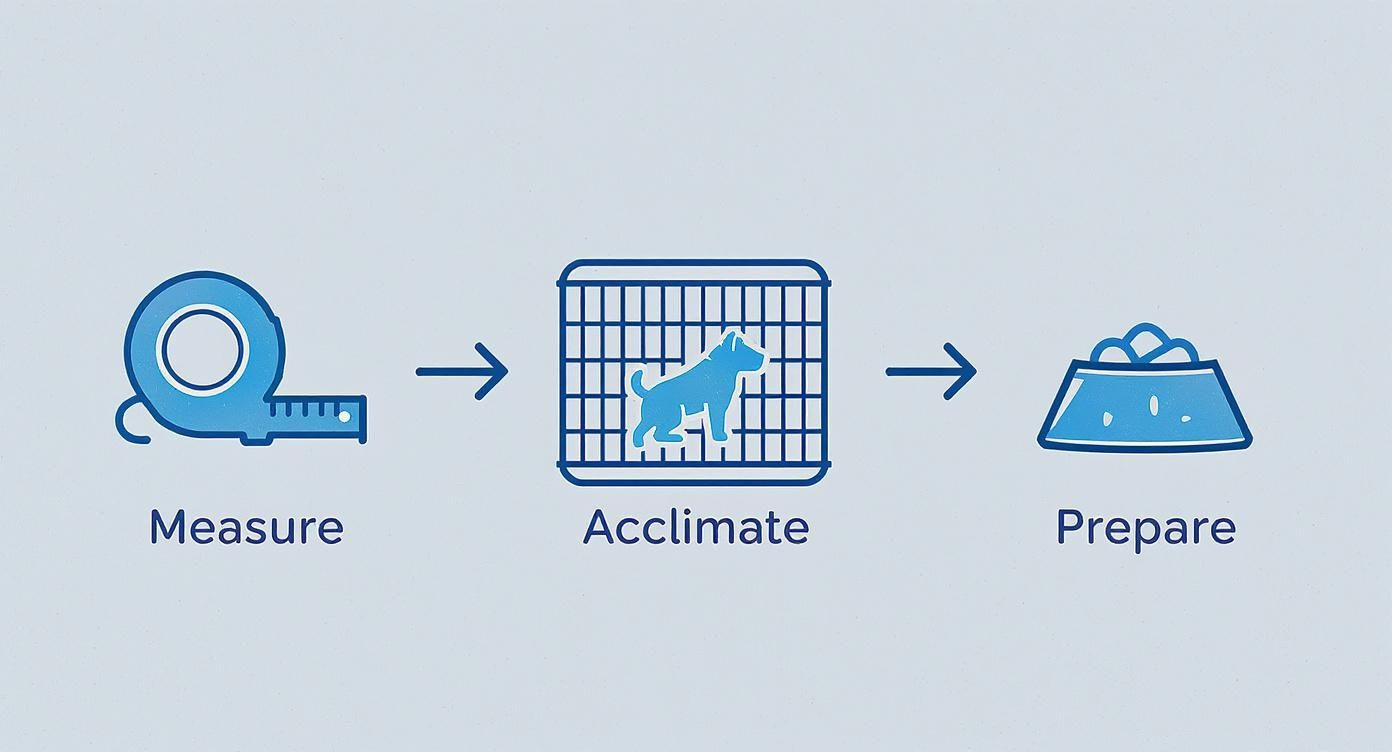
This visual is a great reminder that the physical prep—like crate training—is just as important as the paperwork for a smooth and successful journey.
Your Step-by-Step Paperwork Timeline
Working off a timeline is the best way to keep your sanity and avoid that last-minute scramble. The rules can change a lot depending on where you're headed, so always start by checking the specific import regulations for your destination country.
3-6 Months Before Travel: This is your research phase. Dig into the import rules for your destination and have an initial chat with your vet about the required vaccinations or treatments.
1-2 Months Before Travel: Lock in an appointment with an Official Veterinarian. This gives you plenty of time to get any vaccine boosters and talk through the specific health certificate you'll need. For a deep dive on this critical document, check out our guide on getting a pet health certificate for international travel.
Within 10 Days of Travel: Showtime. This is the crucial window to get your Animal Health Certificate (for EU trips) or the final vet sign-off on other international health forms.
Day of Travel: Keep all your original documents in a waterproof folder. You'll need them ready to hand over to the cargo agent.
The admin load can feel heavy, and staying organized is key. To keep everything in one place, you might want to look into some of the best tools for collecting documents so nothing gets misplaced. In the end, careful planning and watching those deadlines are your two best friends in this process.
Budgeting for Your Pet's Flight Costs
Alright, let's tackle the big question on every pet owner's mind: how much is this going to cost? Flying your pet via specialized cargo isn't like checking an extra bag; it’s a full service built around your pet’s safety, and the price reflects that level of dedicated care.
The final fee isn't a simple, one-size-fits-all number. It’s a figure that changes based on several key factors, so what one person pays for their journey could be quite different from your final quote.
Key Factors Driving the Price
Think of the total cost as a puzzle, with each piece playing a major role in the final price. The biggest drivers are:
Your Pet’s Size and Crate Weight: This is usually the single biggest factor. Larger and heavier pets need bigger crates, which take up more space and weight on the aircraft.
Your Travel Route: It's no surprise that long-haul international flights cost more than shorter domestic hops. This comes down to fuel, distance, and the handling required at multiple airports.
Time of Year: Just like passenger tickets, pet transport prices can change with the seasons. Flying during peak travel times often comes with a higher price tag.
Getting a handle on these elements is the first step to building a realistic budget. For a deeper dive into all the variables, check out our complete guide on overall pet transportation costs.
What's Included in the Cargo Fee?
It’s really helpful to understand that you're paying for much more than just a spot on the plane. The fee covers a whole suite of specialized services designed to make your pet's journey as safe and comfortable as possible.
This investment ensures your pet gets priority handling from trained staff, is moved around in climate-controlled vehicles, and travels in a safe, dimly lit, and properly pressurized cargo hold. It’s a complete, end-to-end service designed entirely for their well-being.
The cost for British Airways pet cargo can vary pretty widely, typically falling somewhere between £2600 and £8000. This range depends heavily on the destination and the size of your pet's crate. This pricing reflects a global shift towards prioritizing animal safety above all else, though it's a different model than what you'd see with airlines that allow pets in the cabin. You can see how other airlines compare in this guide to dog-friendly airline policies on Radical Storage.
Understanding these costs upfront helps you plan properly and ensures there are no financial surprises down the road.
Your Top Pet Travel Questions, Answered
Planning to fly with your furry co-pilot always brings up a few questions. To make sure you feel confident and prepared, we've put together some quick answers to the most common things people ask about British Airways' pet policy.
Getting these details sorted is the final piece of the puzzle for a smooth, stress-free trip for everyone—especially your pet. Let's dig in.
Can My Emotional Support Animal Fly in the Cabin?
No, the British Airways pet policy doesn't allow emotional support animals (ESAs) in the passenger cabin. That space is reserved only for certified assistance dogs trained by an organization accredited by Assistance Dogs International (ADI) or the International Guide Dog Federation (IGDF).
All other animals, including ESAs and therapy pets, must fly via the dedicated cargo service, which is managed by partners like IAG Cargo. This is a firm rule across all of their flights.
What Happens if My Pet's Flight Is Delayed?
If a major flight delay or cancellation happens, your pet’s well-being is the number one priority for the specialized cargo team. They are immediately moved to a quiet, safe, and temperature-controlled area with access to fresh water.
As soon as possible, the ground crew will rebook your pet onto the very next available flight that meets all the strict safety and temperature rules. This is why it's so important to make sure your contact info is up-to-date—the airline needs to be able to reach you with updates.
Are Any Dog Breeds Banned from Flying?
Yes, for safety reasons, British Airways restricts certain breeds from flying. This is especially true for brachycephalic (flat-faced) dogs and cats, whose short airways can cause serious breathing problems at high altitudes.
Breeds like Pugs, Bulldogs, and Pekingese are often not permitted to fly at all. Other flat-faced breeds might be allowed, but they'll need a travel crate that is 10% larger than the standard size to give them better air circulation. You should check the most current restricted breeds list directly with IAG Cargo before you make any plans.
How Far in Advance Should I Book My Pet's Travel?
Think months, not weeks. Booking pet travel isn't something you can do last-minute. Starting several months ahead gives you enough time for vet visits, any necessary vaccinations, and getting the time-sensitive health certificates in order.
Booking well in advance is key. Cargo space for pets is limited and gets snapped up fast. If you're traveling with an assistance dog in the cabin, you have to let British Airways know at least seven days beforehand, but we'd strongly recommend contacting them much earlier to ensure the approval process goes smoothly.
An early start is the best way to make the whole journey paws-itively perfect.
Planning pet travel means juggling a lot of moving parts and precise paperwork. Passpaw is designed to help veterinary practices manage this entire process with ease, ensuring every document is prepared correctly and on time. Learn how Passpaw can simplify pet travel compliance for your clinic.
More articles
From regulatory changes to best practices for veterinarians and pet owners, our resources keep you ahead of the curve.