Are you a team member in a veterinary practice?
Are you a pet parent planning a trip with your furry pal?
British Airways Animal Policy Explained for Pet Travel
Flying with your best friend can feel like a maze of rules, but figuring out the British Airways animal policy is the first step to a smooth journey. Let's cut through the confusion with the number one rule you need to know: only recognized assistance dogs are allowed in the cabin.
All other pets, including emotional support animals, will travel safely and comfortably in the plane's climate-controlled cargo hold.
Your Guide to Flying with Animals on British Airways
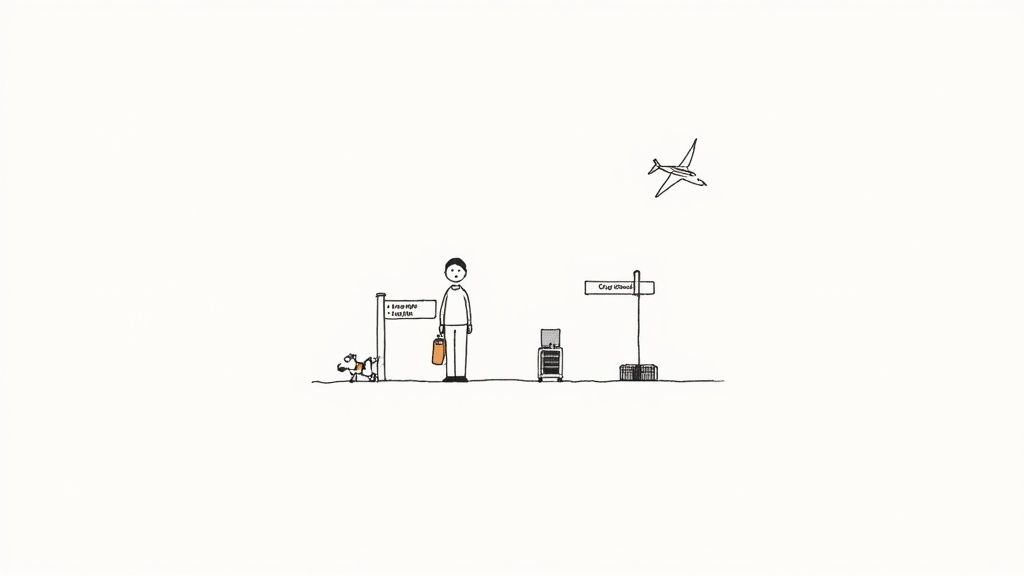
Planning a trip with your pet is about more than just buying a ticket; it's about making sure their journey is just as safe and stress-free as yours. To do that, British Airways has a clear set of policies that puts animal welfare first, which means the rules change depending on the type of animal you’re bringing along.
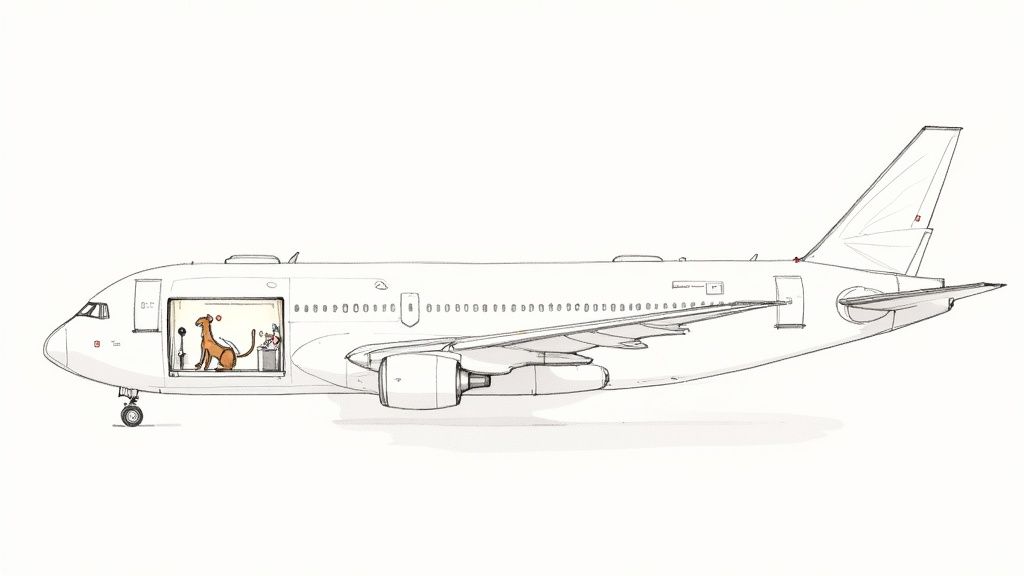
For most pet owners, this means your dog or cat will fly with the airline's special cargo service. Don't picture a normal baggage area—this is a specialized, pressurized, and temperature-controlled part of the plane run by experts in animal handling. They even make sure pets are the last ones loaded onto the plane and the first ones off, which keeps their time on the tarmac as short as possible.
Quick Guide to Animal Travel on British Airways
To make things even clearer, here's a simple breakdown of how British Airways categorizes animal travelers.
Animal Type | Allowed in Cabin | Travels in Cargo | Associated Fee |
|---|---|---|---|
Pets (Cats, Dogs, etc.) | No | Yes | Yes (Cargo Fee) |
Recognized Assistance Dogs | Yes | No | None |
Emotional Support Animals | No | Yes | Yes (Cargo Fee) |
As you can see, the difference comes down to whether the animal is a trained service dog or a companion pet.
A Note on Emotional Support Animals
This is a common source of mix-ups, so it’s worth highlighting. British Airways does not recognize emotional support animals (ESAs) for in-cabin travel. If you have an ESA, they will need to travel as a pet in the cargo hold, following all the standard procedures for pet transport.
The key difference really boils down to function. The airline's policy is built to distinguish between a highly trained service animal performing key tasks for its handler and a beloved pet companion. This helps reserve the limited cabin space for passengers who rely on an assistance dog for their well-being and mobility.
Navigating the rules for specific routes can add another layer of complexity. If you're flying stateside, our in-depth guide on flying pets from the United States to the United Kingdom can give you a head start.
From here, we'll walk you through the rest of the British Airways animal policy to help you get ready for a smooth journey.
Bringing Your Assistance Dog in the Cabin
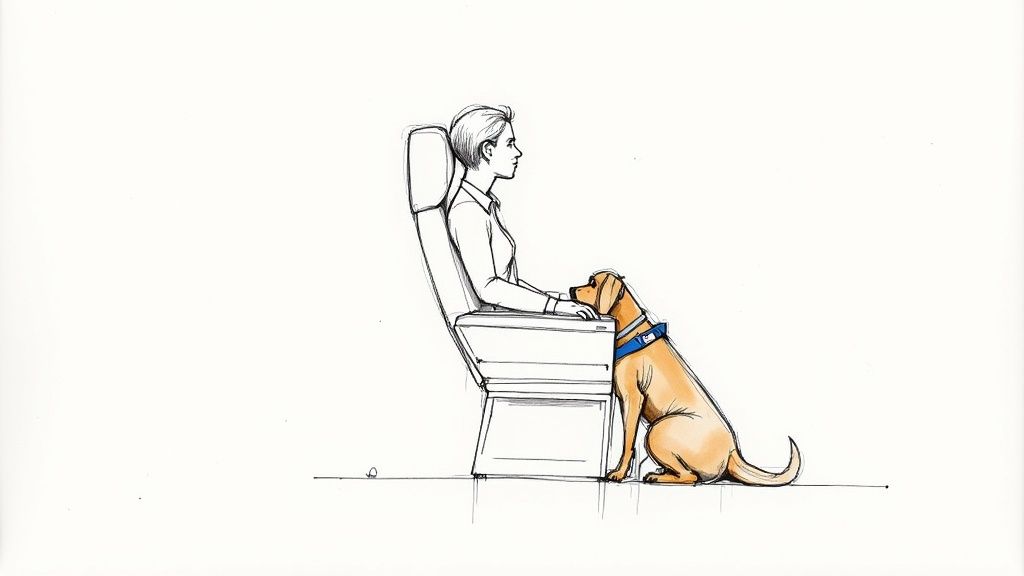
For passengers who depend on an assistance dog, flying together in the cabin isn't a perk—it's a must. British Airways understands this and has a process to ensure both you and your vital companion travel safely and comfortably. Unlike pets, these highly trained animals are welcome to stay with you free of charge.
The key word here is "recognized" assistance dog. This means your dog has been professionally trained by an approved organization to perform specific tasks that help with a disability. It’s also important to know you can't book this type of travel online; you'll need to contact the airline directly to make the arrangements.
What Qualifies as a Recognized Assistance Dog
To fly in the cabin, your dog must meet certain criteria. British Airways typically accepts dogs trained by organizations that are part of Assistance Dogs International (ADI) or the International Guide Dog Federation (IGDF). These memberships help the airline confirm your dog has the high-level training and public manners needed for air travel.
Because this check can take time, you should contact the airline's accessibility team as soon as you book. The latest you should reach out is 72 hours before you travel. This heads-up is important for the airline to confirm your dog’s details and prepare for your flight.
Remember, planning ahead is the best way to ensure a smooth, stress-free experience. Last-minute requests can be hard to handle and might disrupt your travel plans.
Onboard Rules and Expectations
Once you get the green light, there are a few simple rules for your dog's behavior on the aircraft. Following them helps ensure a safe and pleasant flight for everyone.
Your dog must:
Fit in your foot space without blocking the aisle or moving into another passenger's area. This is a key safety measure for cabin service and potential emergencies.
Remain on a leash or harness for the entire flight.
Behave properly. That means no barking, jumping, or otherwise bothering fellow passengers.
The cabin crew will know you're flying with an assistance dog, but you are responsible for managing your animal's needs throughout the trip. Think of it as teamwork—the airline provides the space, and you make sure your companion is ready for the ride. This careful approach is what makes flying a secure and comfortable option for those who rely on their furry partners.
How Your Pet Travels Safely in Cargo
For most pet parents flying with British Airways, the cargo hold is where their furry friends will travel. Now, I know the word "cargo" can sound a little cold, but let's clear that up right away. This isn't your normal baggage area; it's a special service built entirely around your pet's safety and comfort.
Think of it less like luggage and more like a private suite for your pet. British Airways partners with its sister company, IAG Cargo, whose staff are expert animal handlers. They have a brilliant system in place: pets are the very last to be loaded onto the plane and the absolute first to be taken off, which keeps their time on the tarmac to a minimum.
The Cargo Environment: A Safe Haven in the Sky
The animal area in the hold is totally separate from general baggage. It's a climate-controlled, pressurized, and dimly lit space designed to keep pets calm and comfortable for the entire flight.
This environment is managed carefully to protect your pet from extreme temperatures. Even the vehicles used to move animals to and from the aircraft are temperature-controlled. This is a huge deal and a key reason British Airways rarely has to deny boarding due to weather, a common headache with some other airlines. The pilot is always aware that animals are on board, and flight attendants can often confirm they have been loaded safely before takeoff.
Your Pet’s Travel Carrier is a Must-Have
The single most important piece of gear for your pet's journey is their travel crate. British Airways requires that all carriers are IATA-compliant, which is the gold standard for air travel safety. This isn't just a suggestion; it's a firm rule to ensure your pet cannot escape or get hurt.
To meet their requirements, the crate must be:
Sturdy and Secure: Made from hard plastic or wood, with a secure metal door. Soft-sided carriers are a definite no-go for the hold.
Well-Ventilated: It must have openings on at least three sides to ensure proper airflow.
The Right Size: This is critical. Your pet must have enough room to stand up, turn around, and lie down comfortably. A crate that's too small is both stressful and unsafe.
Finding the perfect carrier can feel like a mission in itself, but our guide on choosing an airline-approved travel pet carrier can walk you through selecting the right one for your companion.
The Booking Process Made Simple
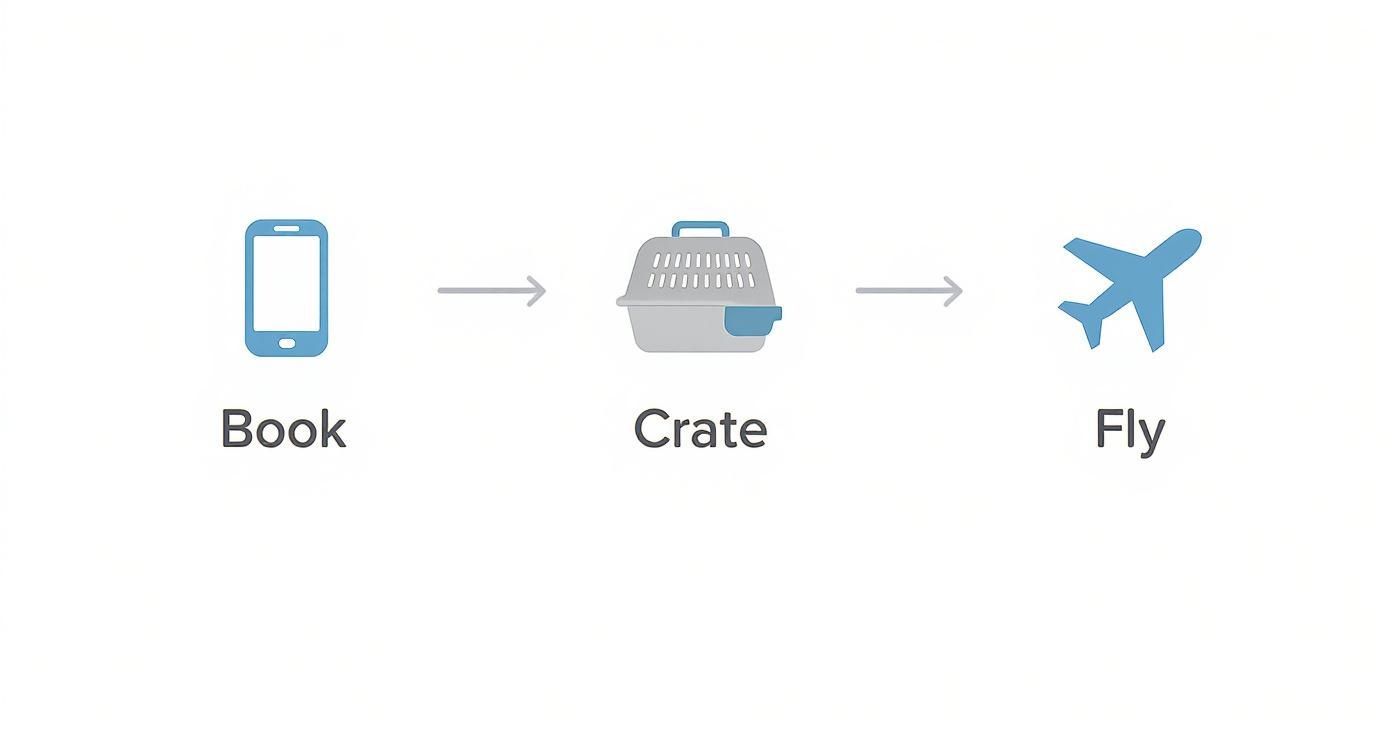
Here's something important to know: you don't book your pet's cargo spot directly on the main British Airways website. Instead, you'll work with a specialized pet shipper, like PetAir UK, which is owned and operated by veterinary surgeons. These experts handle all the logistics, from booking the cargo space to making sure every piece of paperwork is in order.
Using a professional pet shipper turns what can be a tricky, stressful process into a manageable one. They act as your guide, ensuring every detail of the British Airways animal policy is met and giving you peace of mind that your pet is in expert hands from drop-off to pickup.
Your Pre-Flight Checklist for Documents and Health
Let's talk about the single most important step for a smooth departure: getting your pet’s paperwork in order. If this part isn't handled correctly, your travel plans could come to a screeching halt at the check-in counter. This section of the British Airways animal policy isn't just about their rules—it's about meeting international regulations.
Think of it like your own passport and visa. Every country has its own specific entry requirements for animals, all designed to protect public health and stop the spread of disease. Your job is to assemble a perfect travel portfolio for your pet that ticks every single box.
The Core Documents You Will Need
While the specifics can change quite a bit depending on your destination, a few documents are almost always on the required list. These are the foundation of your pet's travel file.
Microchip Details: Your pet must have an ISO-compliant microchip. This is their permanent ID, and it's the first thing officials will check.
Rabies Vaccination Certificate: For most international travel, proof of an up-to-date rabies vaccination is non-negotiable. A key detail: the microchip has to be implanted before the rabies shot is given.
Veterinary Health Certificate: This is the official document, signed by an accredited vet, confirming your pet is healthy enough to fly.
That health certificate is especially tricky because it's time-sensitive. Many countries require it to be issued within just 10 days of your travel date, so your timing has to be perfect. For a much deeper look, check out our guide on the essentials of a veterinary international health certificate.
If your travels involve the UK, you’ll need to follow the Pet Travel Scheme (PETS). This is the set of rules that governs how pets enter the country without quarantine, and it includes very strict requirements for microchips, vaccinations, and all the accompanying paperwork.
Partnering with Experts for a Smooth Journey
Because navigating all these details can feel like a lot, British Airways often works with specialists to help travelers.
For any pet travel that starts in the UK, they partner closely with PetAir UK. This company was founded by qualified veterinary surgeons and has been flying pets all over the globe since 2004. For pets flying into the UK, the airline’s sister company, IAG Cargo, takes over the process, ensuring animals are handled by experienced professionals every step of the way.
Don't underestimate the paperwork. Start looking into your destination's specific requirements months in advance. A small mistake on a form can cause big delays at the airport.
Understanding Route and Breed Restrictions
Just when you think you have all your ducks in a row, you run into another layer of rules—not all pets can fly on all routes. The British Airways animal policy is built with safety as the top priority, which means certain destinations, specific breeds, and even the weather come with their own set of rules.
It’s not just about getting from Point A to Point B; it's about making sure the journey is safe for every animal involved.
Some destinations have very strict quarantine laws or might have temporary bans, preventing pets from arriving altogether. For example, a country could abruptly halt all animal imports during a disease outbreak. This is why checking your destination's specific regulations is just as critical as knowing the airline's policy. These rules are always changing, so staying current is a must. You can learn more about how to prepare for upcoming shifts in pet travel regulations.
Why Some Breeds Cannot Fly
One of the most important rules to know involves brachycephalic, or flat-faced, breeds. Think Pugs, Bulldogs, Boxers, and Persian cats. Their shorter noses can lead to serious breathing difficulties, especially when dealing with the stress of air travel and changes in altitude.
To protect these vulnerable pets, British Airways—like many other major airlines—will not transport certain flat-faced breeds in the cargo hold. This isn't meant to be an inconvenience; it's a key safety measure to prevent breathing problems. It’s a tough rule, but it’s all about putting your pet’s well-being first.
The airline's responsibility extends beyond just pets. British Airways has faced legal questions in the U.S. for its refusal to transport animals intended for scientific research, showing a complex balance between their welfare stance and other industries. Discover more insights about this legal challenge on eara.eu.
Weather and Temperature Embargoes
Extreme weather can also put your travel plans on ice—sometimes literally. If temperatures at the departure, transit, or arrival airport are too high or too low, the airline may not accept your pet for travel. This is known as a temperature embargo.
While British Airways uses temperature-controlled vehicles to minimize this risk, severe weather can still cause frustrating delays or even cancellations. This is especially true during the peak heat of summer and the deep cold of winter.
A good pro-tip? When booking, try to choose flights that travel during the cooler parts of the day in summer or the warmer parts of the day in winter. Planning for the weather is one more smart step to ensure a smooth trip for your furry co-pilot.
When you're choosing an airline for your pet, you're not just looking at crate sizes and fees. You're entrusting a family member to a company, and it helps to know what they stand for. An airline's approach to animals says a lot about its core values, and the British Airways animal policy goes much deeper than just the logistics of pet transport.
Their policies reflect a broader commitment to animal welfare, one that clearly shapes their business partnerships. It shows they're listening to the growing global conversation around responsible tourism—and they’re siding with travelers who want their choices to matter.
More Than Just Pets: A Stand Against Certain Animal Attractions
A perfect example of this is the airline's decision to stop selling or promoting travel packages that include attractions with animals in human care. This move, which impacts many zoos and aquariums, was a major shift in their holiday offerings.
This wasn't a decision made lightly. It came as a direct response to public concern over the well-being of animals used for entertainment. By stepping away from these promotions, British Airways made a clear statement: their animal welfare principles don't just apply to the pets in their cargo hold but also to the wildlife at the destinations they fly to. You can dig deeper into this policy shift on zoos.media.
This wider ethical stance gives you valuable context. It tells you that the rules for flying your pet aren't just a list of random regulations. They're part of a larger, more thoughtful philosophy about how animals should be treated.
Knowing this provides a more complete picture. It’s not just about a company following rules; it's about a company trying to find the right balance between business and a genuine sense of responsibility. For a pet owner, that kind of insight can bring a whole lot of peace of mind.
Your Top Questions Answered
We get it. Thinking about flying with your pet brings up a million questions, and navigating the British Airways animal policy can feel a bit ruff. To help clear things up, we’ve put together answers to the most common questions we hear from pet parents just like you.
Can My Pet Fly on the Same Flight as Me?
This is the big one, right? The short answer is: it’s very likely, but not a 100% guarantee.
When your pet travels in the hold, you'll book their spot through a specialist shipper like IAG Cargo or PetAir UK, which is separate from your own ticket. You’ll give them your flight details, and they will absolutely aim to get your pet on the exact same flight.
Nine times out of ten, this works perfectly. But remember, the airline's top priority is your pet's safety. Things like last-minute aircraft changes or extreme weather on the tarmac could mean your pet gets moved to the next available safe flight. It's a good idea to have a little flexibility in your mindset just in case.
What Happens if My Flight is Delayed or Canceled?
If your travel plans hit a snag, rest assured your pet's do, too—and they'll be well cared for. The airline's expert animal handling team is trained for this. They will make sure your pet is moved to a safe, comfortable, and temperature-controlled area until they can be rebooked on a new flight. They’ll have fresh water and will be looked after by professionals who know exactly what they're doing.
Are There Any Hidden Costs I Should Know About?
The main expense you’ll see is the cargo fee paid directly to the shipper, which covers the flight and all the special handling your pet receives.
Beyond that, make sure you budget for a few other key items:
The IATA-compliant travel crate, which is a crucial investment in your pet's safety.
The veterinary health certificate and any vet visits needed to get it.
Potential fees at the animal reception center when you land in your destination country.
Planning ahead is truly the key to a 'purr-fectly' smooth journey. By getting familiar with these common points, you can walk into your travel day feeling confident that you've got all your bases covered.
Getting every single detail right is non-negotiable. For a journey free of paperwork headaches, let Passpaw handle the document prep and validation. We ensure every form is correct and ready to go. Learn more at Passpaw.
More articles
From regulatory changes to best practices for veterinarians and pet owners, our resources keep you ahead of the curve.