Are you a team member in a veterinary practice?
Are you a pet parent planning a trip with your furry pal?
Your Complete Guide to an Animal Transportation Service
Moving can be stressful enough on its own, but figuring out how to safely get your pet from here to there? That adds a whole new layer of complexity. An animal transportation service is essentially a specialized travel agency for your furry, scaled, or feathered family members. They handle all the tricky logistics—from booking flights to navigating confusing international rules—to get your pet from point A to point B safely and with as little stress as possible.
What an Animal Transportation Service Really Does

Think of a pet shipper as the project manager for your pet’s big move. Their main job is to lift the immense weight of coordinating a complex journey right off your shoulders. Instead of you spending countless hours digging through airline policies, figuring out country-specific import rules, and chasing down the right health certificates, they manage it all for you.
These professionals are experts in the tiny details most pet owners would never even think to check. They know which airlines have safe, climate-controlled cargo holds. They can find the most direct flight routes to cut down on travel time. And they know exactly what paperwork is needed for your destination. It's their entire business to make sure every single box is ticked for a smooth and safe trip.
It's More Than Just Booking a Flight
A true animal transport professional does a lot more than just find a spot on a plane. The best services offer a complete door-to-door solution, making the whole process as seamless and hands-off for you as possible.
Logistical Planning: They map out the entire journey from start to finish, including the crucial ground transportation to and from the airport.
Documentation Management: This is a big one. They help ensure all health certificates, vaccination records, and import permits are filled out correctly and submitted on time.
Crate and Comfort: They'll guide you in selecting the right airline-approved travel crate and help you prepare your pet for the journey ahead.
Constant Communication: A good service provides updates every step of the way, giving you much-needed peace of mind from pickup to delivery.
It’s no surprise the demand for these services is on the rise. The global pet travel services market was valued at USD 2.4 billion in 2024 and is expected to more than double, hitting USD 5.3 billion by 2034. That growth shows how much owners value getting professional help to move their companions safely.
In short, an animal transportation service turns a potentially overwhelming and chaotic task into a manageable, organized process. They bring the expertise needed to navigate the maze of pet travel, whether you're moving across the state or clear across an ocean.
This comprehensive, expert-led approach is why so many people turn to the pros. For a deeper look into the planning specifics, you can check out our guide on pet travel. Using a professional service helps ensure no detail gets overlooked, making for a 'paw-sitive' experience for everyone involved.
The Team That Makes Your Pet's Move Happen
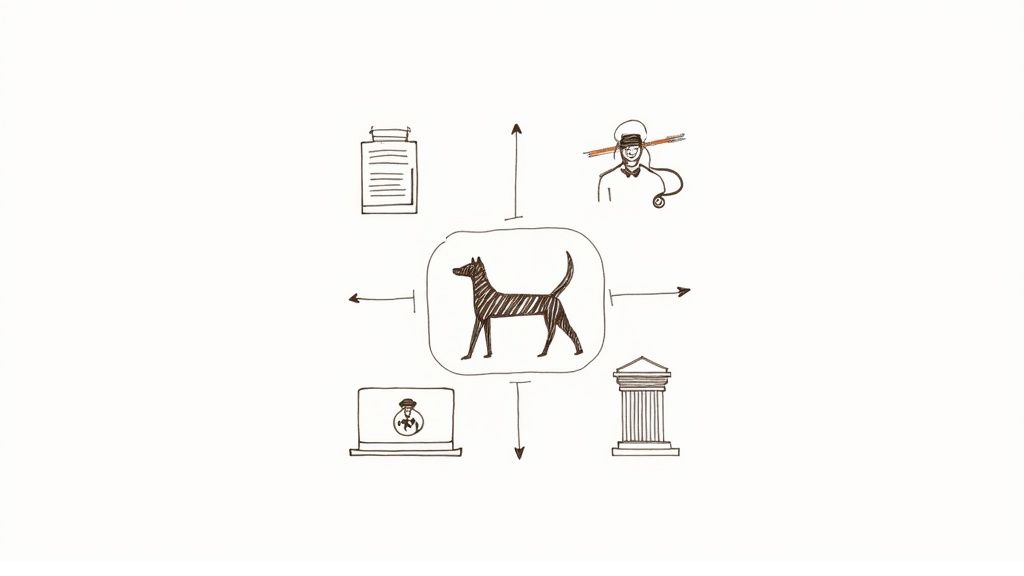
Successfully moving a pet isn't a one-person job—it’s a carefully coordinated effort between a whole team of specialists. Knowing who does what can bring a huge amount of peace of mind. Think of it like a dedicated flight crew for your pet, where every member has a critical role in ensuring a safe and smooth journey.
At the very center of this operation is the professional pet shipper. They are your project manager, the main point of contact organizing every single detail. From building a timeline to wrangling paperwork and booking travel, they are the hub that connects all the other players, making sure absolutely nothing falls through the cracks.
The Key Players in Your Pet's Journey
Beyond the shipper, several other experts are absolutely essential for a successful move. Each brings a specific skill set to the table, and they all have to work in perfect sync. This seamless teamwork is what makes a professional animal transportation service so valuable.
Here’s a quick look at who's on the team:
Your Veterinarian: They're the first stop. Your vet handles the pre-travel health check, administers any needed vaccinations, and issues the all-important health certificate—your pet’s official passport for the trip.
The Airline Carrier: Airlines provide the actual transportation, but not all are created equal. Professional shippers partner with carriers that have proven, pet-safe programs with climate-controlled, pressurized cargo areas designed for an animal’s comfort and safety.
Government Agencies: Entities like the USDA (United States Department of Agriculture) here in the U.S. and similar bodies in other countries are the rule-makers. They often endorse health certificates for international travel, making sure your pet meets the import and export guidelines.
Seeing how these experts work together makes it obvious why professional coordination is so critical. A pet shipper acts as the central point, making sure everyone—from the vet to the airline—is perfectly aligned for a seamless experience.
The teamwork between these roles is what turns a tangled, multi-step process into one fluid operation. While the shipper manages the logistics, the team behind the scenes provides the specialized care and oversight needed at every stage. You can learn more about the dedicated people who make this happen and get to know the individuals behind our services. They help ensure the entire process isn't just "good enough" but is truly purr-fect for your furry family member. This team approach is fundamental to safe pet relocation.
Decoding Your Pet's Travel Paperwork: Domestic vs. International
Navigating the paperwork for pet travel can feel like you're trying to learn a new language, filled with confusing forms and strict deadlines. But don't worry—with a little guidance, it's completely manageable. Whether you're moving one state over or to an entirely new continent, understanding the key documents is the first step toward a smooth journey.
Think of this paperwork as your pet's passport. It's the official proof that they are healthy, vaccinated, and cleared to enter their new home. Getting this right isn't just about ticking boxes; it's about protecting your pet's safety and well-being every step of the way.
The Basics of Domestic Pet Travel
For moves within the same country, the process is usually pretty straightforward. The key document you'll likely need is a Certificate of Veterinary Inspection (CVI), which most people just call a health certificate. This is an official form filled out by an accredited veterinarian after giving your pet a thorough exam.
The CVI confirms that your pet is:
Showing no signs of infectious or contagious diseases.
Current on required vaccinations, especially rabies.
Considered healthy and fit enough to travel.
Heads up: this certificate is only valid for a short window, usually just 10 to 30 days, so timing is everything. A good animal transportation service can help you schedule the vet visit at the perfect time, ensuring the paperwork is valid for your travel date and avoiding any last-minute drama.
Taking on International Travel Paperwork
Moving your pet to another country is a whole different ballgame. The "paper-woof" gets a lot more intense because every nation has its own set of rules designed to protect local animals from foreign diseases. It’s not just more forms; it’s a completely different and more complex process.
This is where specialized expertise becomes critical, and it’s a big reason the global animal transportation market is booming. The market is expected to grow from USD 0.16 billion in 2025 to USD 0.23 billion by 2034. This growth is fueled by the intricate demands of international moves that really need an expert touch. You can get more insights on the global animal transport market trends to see just how much this industry is expanding.
International moves often involve a multi-step process that can take months to complete. On top of a health certificate, you might also need:
An Import Permit: Some countries require you to get official permission to bring your pet in before you even start the rest of the process.
Rabies Titer Test: Many rabies-free countries (like Japan or Australia) demand a blood test to prove the rabies vaccine is working. This has to be done at an approved lab, sometimes six months or more before you travel.
Government Endorsement: After your vet completes the international health certificate, it often has to be stamped and signed by a government agency, like the USDA here in the States.
Juggling these international requirements is one of the biggest headaches for pet owners. One wrong move—a missed deadline or an incorrect form—can result in your pet being denied entry or, even worse, being stuck in a long and stressful quarantine.
Because the rules are so specific and can change with little warning, professional guidance is a lifesaver.
To help you get a clearer picture, here's a quick comparison of what to expect.
Domestic vs. International Travel Requirements at a Glance
Requirement | Domestic (e.g., USA State-to-State) | International (e.g., USA to EU) |
|---|---|---|
Primary Document | Certificate of Veterinary Inspection (CVI) | International Health Certificate (often specific to the country) |
Timeline | Typically completed within 30 days of travel. | Can take 3-6+ months to prepare. |
Vaccinations | Rabies is standard. Other requirements vary by state. | Rabies is mandatory, plus others depending on the destination. |
Microchip | Recommended but not always mandatory. | Almost always required (ISO standard). |
Blood Tests | Rarely required. | Often required (e.g., Rabies Titer Test for many countries). |
Government Approval | Not usually needed for state-to-state travel. | Often required (e.g., USDA endorsement in the US). |
Import Permit | Not applicable. | May be required by the destination country before travel. |
As you can see, the leap from domestic to international travel is significant. The right preparation truly makes all the difference. For a detailed breakdown of what to expect, check out our guide on international pet travel requirements. It provides a much deeper look into the process to help ensure your pet's journey is a success.
Your Step-By-Step Pet Relocation Timeline
A successful pet move is all about planning. Staring at the whole process at once is a recipe for overwhelm, but if you break it down into a clear timeline, it becomes a series of simple, manageable steps. Think of this guide as your chronological checklist.
Getting a head start is the secret to a low-stress experience for both you and your pet. It gives you plenty of breathing room for paperwork, vet appointments, and getting your furry friend used to the idea of travel. A proactive approach is the best way to avoid last-minute chaos and make sure every little detail is covered.
This simple visual timeline shows you the key stages, from the first bit of research right up to the final travel prep.
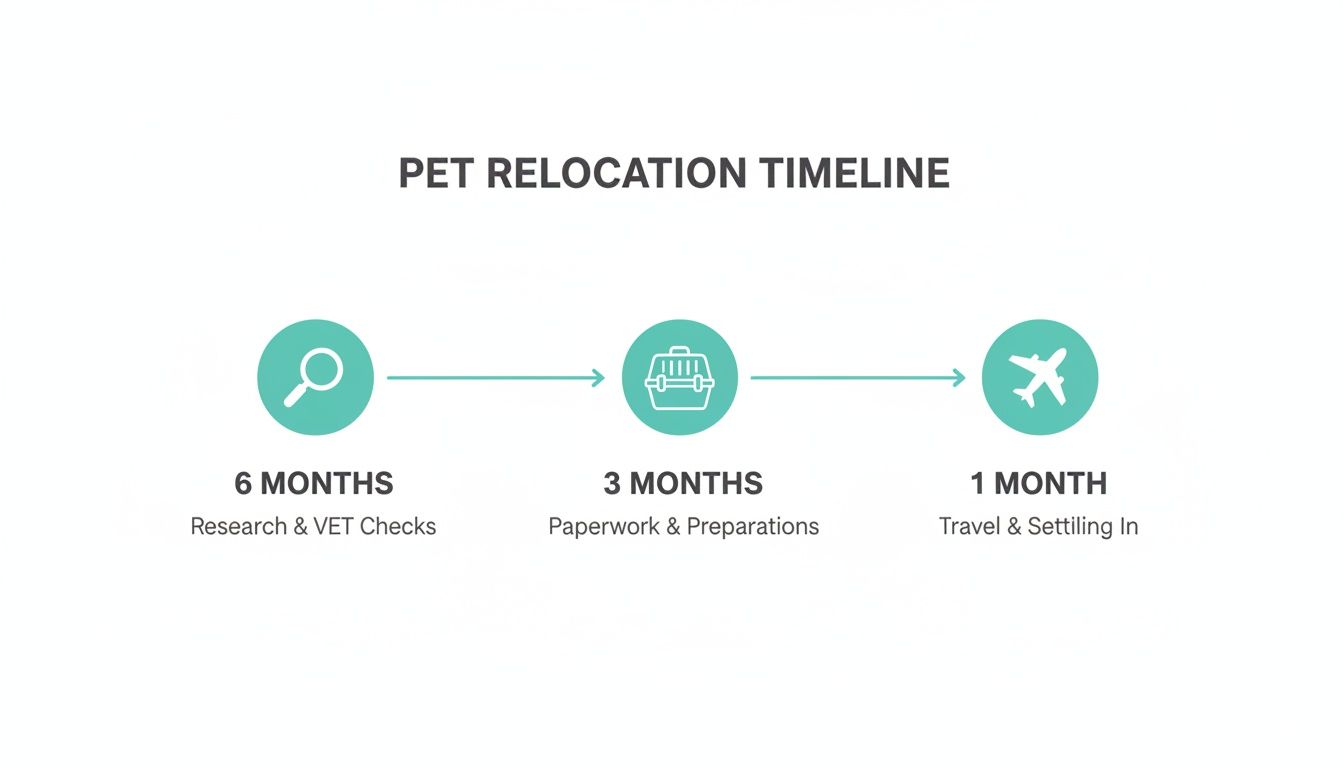
As you can see, the real work starts months before the actual move, giving you more than enough time to get everything done without feeling rushed.
6 Months Before Your Move
Welcome to the research and planning phase. The more you figure out now, the easier everything will be later on. The goal here is to understand the big picture and kick off the tasks that take the longest.
Research Destination Requirements: If you're moving internationally, this is non-negotiable and your absolute first priority. Every country has its own rulebook, and some things, like rabies titer tests, can easily take six months or more to complete.
Contact an Animal Transportation Service: Now is the time to start looking into professional shippers. They can give you a realistic timeline and a clear list of everything you'll need for your specific destination.
Consult Your Veterinarian: Have a chat with your vet. Give them a heads-up about your moving plans so they can pull your pet’s medical history and flag any upcoming vaccinations or treatments you'll need to schedule.
3 Months Before Your Move
With your research done, it’s time to start taking action. This stage is all about paperwork, preparation, and getting your pet comfortable with the journey ahead. This is when things start to feel real.
This is often the busiest period for paperwork, especially for international moves. A professional shipper can be your best friend here, helping ensure that no document is missed and every deadline is met, preventing costly delays.
Go ahead and start the formal application for any required import permits. You’ll also want to buy an airline-approved travel crate. Make sure it's the right size—your pet needs to be able to stand up, turn around, and lie down comfortably.
As soon as you have the crate, start positive crate training. You want the crate to feel like a safe, happy den, not a punishment. Use treats, their favorite toys, and lots of praise to build a good association.
1 Month Before Your Move
It’s the final countdown. This month is all about final checks and confirmations. It's time to confirm all travel arrangements with your chosen animal transportation service, locking in flight details and pickup times.
Schedule the final veterinary visit for the official health certificate. Just remember, these documents are time-sensitive, so your shipper will tell you the exact window for this appointment. It's also a good idea to double-check that your pet’s microchip is registered with your current contact info.
Finally, put together a travel packet with all your pet’s original documents, your contact details, and feeding instructions. Pack a small "go-bag" with essentials for arrival, like a leash, a familiar blanket, food, and water bowls.
Of course, the journey doesn't end when the plane lands. A huge part of the process is helping your pet adjust to a new home. Following a timeline like this takes the guesswork out of the equation and makes the whole experience much more positive for everyone involved.
How to Choose a Reputable Animal Transportation Service
Entrusting your pet to someone else is a big decision. Choosing the right partner for the journey is everything. Not all animal transportation service providers are created equal, so doing a little homework upfront can save you a world of stress.
Think of it like hiring a trusted babysitter—you want someone with a great reputation, solid credentials, and a clear commitment to your pet's safety and well-being. A reputable shipper will never be shy about their qualifications and should be totally transparent about their experience, client testimonials, and how they handle every stage of the journey.
Check for Credentials and Memberships
One of the quickest ways to vet a company is to check for professional affiliations. The gold standard in this industry is membership in the International Pet and Animal Transportation Association (IPATA).
This isn't just a logo they can slap on a website; it means the company adheres to certain ethical and operational standards for the safe and humane transport of animals. Membership is a clear sign you're dealing with professionals who take their responsibility seriously, not just a casual operator.
Key Questions to Ask Any Potential Shipper
Once you have a shortlist, it's time to ask some direct questions. Their answers will tell you everything you need to know about their expertise and level of care. Don't be afraid to dig into the details—a good shipper will welcome your questions.
Experience: How long have you been in business? Do you have specific experience with my pet's breed and our destination country?
Contingency Plans: What happens if there's a flight delay or cancellation? How will my pet be cared for during an unexpected layover?
Communication: How will you keep me updated during the journey? Will I get photos or status reports along the way?
Crate and Safety: What are your standards for travel crates? When selecting a reputable service, it's crucial to investigate their standards for providing safe and appropriate dog kennels, essential for your pet's well-being during transit.
A professional shipper's answers should be confident, detailed, and reassuring. If you get vague responses or feel like they are brushing off your concerns, consider it a major red flag.
Beware of Red Flags
While you're looking for positive signs, it's just as important to spot the warnings. The biggest red flag is often a quote that seems too good to be true—because it probably is.
Unusually low prices can indicate that a company is cutting corners on safety, using non-approved airlines, or will hit you with hidden fees later. You can learn more by exploring the typical factors that influence pet transportation costs.
It's also worth remembering that while the pet transport niche grows, it's part of a much larger industry. Livestock transportation still forms the backbone of the animal transportation sector, with market projections expecting it to be part of a $4.7 billion industry by 2032. This scale means established shippers have deep experience with complex logistics that smaller, newer operators may lack.
Choosing a well-vetted, reputable partner is the best way to ensure your pet's journey is a safe one.
Pet Transport FAQs
Even with the best plan in place, a few questions are bound to pop up when you're thinking about animal transportation. It's a big deal, and you want to be 100% confident before you hand over your furry family member. We get it.
So, let's walk through some of the most common questions we hear. Think of this as your final pre-flight check to put your mind at ease.
How Much Does an Animal Transportation Service Cost?
This is usually the first thing people ask, and the honest answer is: it depends. The final price tag is a mix of a few key factors—your pet's size, how far they're going, whether they're traveling by ground or air, and if any international paperwork is involved.
For a domestic trip on the ground, you might be looking at anywhere from a few hundred to over a thousand dollars. On the flip side, an international flight with all its moving parts and complex rules can easily run into several thousand dollars. Always, always ask for an itemized quote so you know exactly what you're paying for.
Is It Safe for My Pet to Fly in Air Cargo?
Yes, it is—as long as it's handled by a reputable shipper and a pet-friendly airline. This isn't the same as the baggage hold where suitcases go. Your pet travels in a dedicated compartment that is climate-controlled and pressurized, just like the passenger cabin.
True professionals only work with airlines that have a proven track record for animal safety. For a long-distance move, a single flight is often much less stressful and far safer than a multi-day drive. The idea that cargo is a scary place for pets is a common myth, but the reality for live animals is very different.
A huge advantage of hiring a pro is their inside knowledge of airlines and routes. They know exactly which carriers prioritize animal welfare and will always choose the safest option for your pet, not just the cheapest one.
Should I Give My Pet a Sedative Before the Trip?
Absolutely not. In fact, pretty much every veterinarian and all airlines will tell you this is a bad idea. Sedation can mess with your pet's ability to regulate their body temperature and keep their balance, which is a real risk when they're in the air.
The safest and most effective way to calm a nervous traveler is good old-fashioned crate training. If you can help your pet see their travel crate as a safe, cozy den long before the trip, you'll be doing them a much bigger favor than any pill could.
What Happens if My Pet's Flight Is Delayed?
This is where hiring a professional really pays off. A good shipper doesn't panic when things go wrong—they have a plan B, C, and D ready to go.
If a flight is delayed or canceled, they'll arrange for your pet to be taken to a safe, temperature-controlled facility where they'll get fresh water and proper care. The shipper takes care of all the rebooking headaches and keeps you in the loop the entire time, lifting all that stress right off your shoulders. Managing the unexpected is their job.
For veterinary clinics and pet owners, navigating the maze of health certificates and permits can be a huge headache. Passpaw takes the complexity out of the equation. Our platform automates the entire workflow, helping ensure every document is perfect and on time, every time. Discover how Passpaw can make pet travel compliance a breeze for your practice.
More articles
From regulatory changes to best practices for veterinarians and pet owners, our resources keep you ahead of the curve.