Are you a team member in a veterinary practice?
Are you a pet parent planning a trip with your furry pal?
Navigating the Aeromexico Pet Policy Without the Hassle
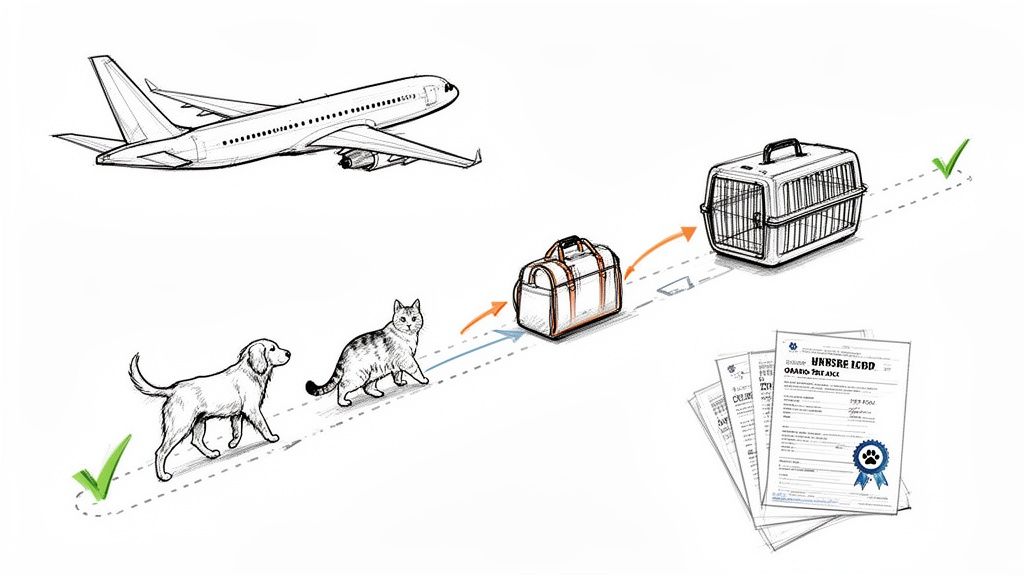
Flying with your pet on Aeromexico is definitely doable, but the right option depends on your companion's size and weight. The Aeromexico pet policy boils down to two main choices: smaller pets can fly right there in the cabin with you, while larger animals travel safely as checked baggage in a special, temperature-controlled hold.
The key decider here is the combined weight of your pet and their carrier. That single number will point you toward the right path.
Decoding the Aeromexico Pet Policy
So, you're planning a trip with your four-legged co-pilot? Let's break down the Aeromexico pet policy in simple terms. Knowing your options from the get-go makes the whole process feel a lot less intimidating and sets you up for a smooth journey.
Think of it as choosing between a personal escort (in-cabin) and a private suite (checked baggage). The right fit depends mostly on your pet's size, but also on things like your flight's duration. This first decision is the most important one you'll make.
In-Cabin vs. Checked Baggage
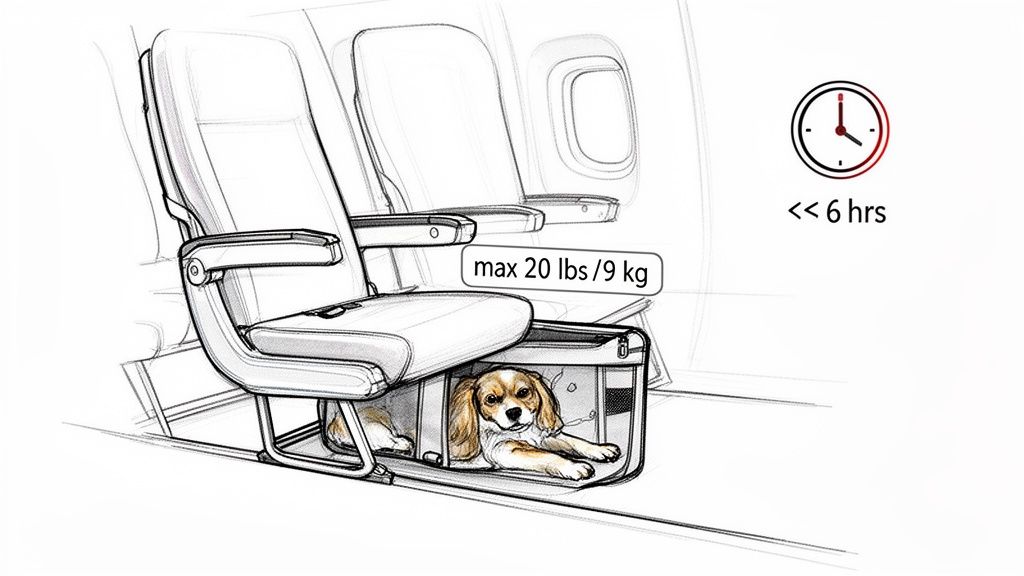
The main difference comes down to size and weight. Small pets who fit within the carrier dimensions and weight limits can stay right at your feet, tucked under the seat in front of you. This is the in-cabin or "onboard" option. It's a popular choice for cat owners and people with small or toy dog breeds who prefer keeping their pets close.
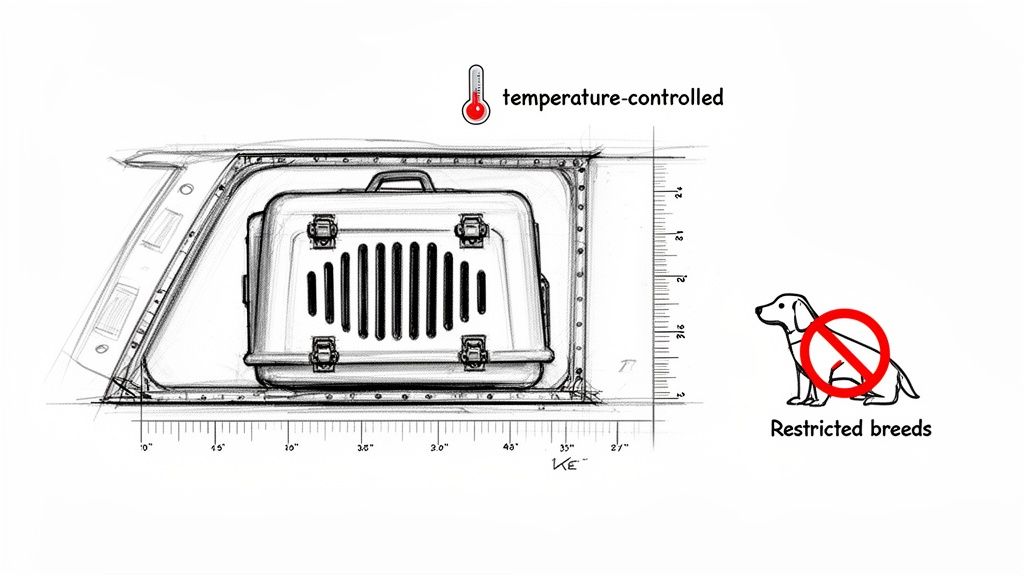
For any pet that's too large for the cabin, the checked baggage or "in hold" option is the way to go. They travel in a dedicated, climate-controlled, and pressurized compartment just below the main cabin. This area is designed for live animals, helping to ensure their safety and comfort throughout the flight.
To give you a clearer picture, here's a quick side-by-side comparison.
Aeromexico Pet Travel at a Glance
This table breaks down the main differences between flying with your pet in the cabin versus checking them as baggage.
Requirement | In-Cabin Pet (Onboard) | Checked Pet (In Hold) |
|---|---|---|
Max Combined Weight | 20 lb (9 kg) | 99 lb (45 kg) |
Who is it for? | Small dogs and cats | Medium to large dogs and cats |
Where they travel | Under the seat in front of you | Pressurized, climate-controlled cargo hold |
Booking | Must be booked in advance via phone | Must be booked in advance via phone |
Carrier Type | Soft-sided or hard-sided carrier | IATA-compliant hard-sided kennel |
Keep in mind that these are just the basics. Each option comes with its own detailed set of rules for kennel sizes, breed restrictions, and paperwork.
It's a very good idea to book your pet’s spot as early as possible because space is extremely limited. Aeromexico typically allows a combined maximum of only 6 pets per flight across both the cabin and the hold. Those spots can fill up fast, especially on popular routes.
For those hoping to fly in-cabin, the combined weight of your pet and their carrier cannot exceed 20 lb (9 kg). This rule alone often means many medium-sized breeds aren't eligible.
For international trips, especially if you're headed to Mexico, the paperwork is just as important as the flight logistics. To get ahead of the game, check out our complete guide on everything you need for smooth pet travel to Mexico.
Flying with Your Pet in the Cabin
Having your furry co-pilot right at your feet can make the whole flight experience less stressful for both of you. If your pet is on the smaller side, Aeromexico allows them to travel right there with you in the cabin. This is what airlines call the "pet in cabin" option, and it's designed for the littlest companions.
Think of it as your pet getting their own spot under the seat in front of you. It's the go-to choice for many owners of cats and small dog breeds because it keeps your best friend close. But there are some firm rules you'll need to follow to make it happen.
Is Your Pet Eligible for Cabin Travel?
The first and most important hurdle for in-cabin travel is weight. Aeromexico is very specific about this, and it includes both your pet and their carrier.
The total combined weight of your pet and their carrier cannot be more than 20 pounds (9 kg). This is a firm rule, and it's likely the airline staff will weigh them at check-in.
If your pet and carrier tip the scales even slightly over that limit, they won't be allowed in the cabin. It’s a smart move to do a test weigh-in at home long before you head to the airport to avoid any bad surprises.
Beyond just weight, there are a few other boxes to check:
Eligible Species: Generally, only small dogs and cats are allowed in the cabin.
Age Requirement: Your pet needs to be at least eight weeks old. This is to make sure they're mature enough to handle the journey.
One Pet Per Passenger: Each traveler can only bring one pet carrier on board.
Carrier Requirements and Dimensions
The carrier is your pet’s little home for the flight, so it has to meet some specific standards. It needs to be small enough to slide completely under the seat in front of you—it can't be on your lap or on an empty seat next to you.
You can use either a soft-sided or hard-sided carrier, but it must be secure, have good ventilation, and feature a waterproof bottom. For soft-sided carriers, the maximum dimensions are around 16 x 12 x 8 inches (40 x 30 x 20 cm). These measurements help ensure it can be safely stowed without blocking any aisles.
Getting the right carrier is a huge part of the process. To dive deeper, you can learn more about choosing an approved airline travel pet carrier in our detailed guide.
Inside, your pet must have enough room to stand up and turn around without feeling cramped. And once you're on the plane, they have to stay inside the carrier for the entire flight. No exceptions.
Important Flight Restrictions
Even if your pet meets all the size and carrier rules, there’s one more big one to keep in mind: how long you'll be in the air.
Pets are typically not allowed in the cabin on flights scheduled to last longer than six hours.
This rule is all about your pet's well-being. A long-haul flight is tough enough on humans, and it's just not fair or safe for an animal to be in a small carrier for that long. This makes the in-cabin option perfect for domestic flights within Mexico or shorter international hops to nearby countries.
Also, if you're traveling with a pet in the cabin, you'll be assigned a window seat. You won't be allowed to sit in an emergency exit row or a bulkhead seat because the carrier needs to be tucked under the seat in front of you. Following these rules helps ensure a smooth, stress-free trip for you, your pet, and everyone else on board.
When Your Pet Travels as Checked Baggage
What happens if your pet is a bit too big to squeeze under the seat in front of you? Don't sweat it—they can still come along for the ride. Aeromexico's pet policy has a solid option for larger companions to travel safely as checked baggage.
This means your pet will fly in a special cargo hold that's both temperature-controlled and pressurized, located right beneath the main passenger cabin. Think of it as their own private suite for the flight. It's designed specifically for live animals, helping them stay comfortable from takeoff to touchdown. But just like any special arrangement, there are a few important rules to follow to make sure everything goes off without a hitch.
Understanding Weight and Size Limits
While you get a bit more wiggle room with checked baggage compared to in-cabin travel, there are still some hard limits. The most important number to keep in your head is the total combined weight of your pet and their kennel.
The total weight for your pet plus their kennel must not exceed 99 pounds (45 kg). This is a strict maximum, and yes, they will weigh it at the airport.
If you tip the scales over that limit, your pet won't be able to fly as checked baggage. The next step would be looking into Aeromexico Cargo, which is a separate service with its own set of rules and booking procedures. Do yourself a favor and weigh your pet in their kennel at home well before your travel date. It'll save you from any last-minute surprises at the check-in counter and give you time to figure out a Plan B if needed.
Choosing the Right Kennel
The kennel is your pet’s safe space during the flight, so it's not just any old carrier. It has to meet specific IATA (International Air Transport Association) standards to be considered. Think of it less as a carrier and more as a personal safety pod.
Aeromexico is pretty clear on what they require for checked kennels:
Material: The kennel must be made of rigid plastic, wood, or metal. Soft-sided carriers or those made of wire mesh are a definite no-go for the cargo hold.
Security: It needs a secure, spring-loaded metal latch that won't pop open by accident. Many airlines, including Aeromexico, often suggest securing the top and bottom halves with nuts and bolts for extra peace of mind.
Ventilation: There has to be good airflow, which means ventilation on at least three sides of the kennel.
Size: This is crucial for comfort. The kennel must be large enough for your pet to stand up, turn around, and lie down comfortably without being cramped. A good rule of thumb is to find a carrier that's a few inches taller and longer than your pet.
To make the journey less stressful, get your pet comfortable with their kennel ahead of time. Leave it open in your living room with their favorite blanket or toys inside. The goal is for them to see it as their own little den, not some scary box they get put into.
Breed Restrictions You Should Know
For the safety and well-being of the animals, Aeromexico does not allow certain breeds to travel as checked baggage. This is especially true for short-nosed, or brachycephalic, breeds like Pugs, Bulldogs, Boxers, and Persian cats. These pets are more prone to breathing problems at high altitudes, and the airline won't risk their health.
Before you even think about booking, it's a good idea to check if your pet's breed is on their restricted list. Airline policies can differ quite a bit on this, so it’s always smart to compare. For instance, you can see how another major airline handles these rules in our guide to the Delta pet travel policy.
The best course of action is to check the most current list on Aeromexico's official website or give their customer service a call. This one simple step can save you from a truly heartbreaking situation at the airport. Following these "impawtant" rules is the key to ensuring your larger companion travels safely and comfortably below deck.
Preparing Your Pet's Travel Documents
Navigating airline rules is one thing, but getting your pet's paperwork in order is perhaps the most critical part of the entire process. This step needs serious attention to detail and careful timing—a single incorrect or expired document can stop your trip in its tracks. Let's break down the essential paperwork you'll need under the Aeromexico pet policy to ensure a smooth check-in.
Think of it as building a passport and visa file for your pet. Each document serves a specific purpose, from showing they're healthy enough to fly to meeting the entry requirements of your destination country. Getting this right is completely non-negotiable for a hassle-free journey.
The All-Important Health Certificate
The foundation of your pet’s travel file is the official health certificate, sometimes called a Certificate of Veterinary Inspection (CVI). This is your official proof that a licensed veterinarian has recently examined your pet and found them fit for travel. It’s the single most important piece of paper you’ll carry.
Aeromexico is strict about the timing. For domestic flights within Mexico, the certificate must be issued within 5 days of your flight. For international travel, that window can be different, so it's vital to confirm the exact requirement for your specific route.
To be valid, the certificate must include key details:
Your pet's name, age, breed, and color
Your name and address
Confirmation that your pet is free of contagious diseases
Details of their current rabies vaccination
Vaccination Records and Other Must-Haves
Right alongside the health certificate, you'll need solid proof of your pet's vaccinations. This isn't just a friendly suggestion; it's a firm requirement for most destinations and for Aeromexico.
The non-negotiable vaccine is for rabies. Your pet's rabies shot must be current, and you’ll need the original certificate showing when it was given, the vaccine type, and its expiration date. A heads-up: many destinations require the vaccination to have been administered at least 30 days before travel, so a last-minute jab won't cut it.
Your vet also needs to note on the health certificate that your pet has received preventative treatments for both internal and external parasites. It's just one more checkpoint to help ensure the health and safety of all animals on board.
Navigating International Travel Paperwork
If your trip takes you across an international border, the paperwork gets a lot more complex. Every country has its own unique import rules, and you have to follow them perfectly. This is where many well-meaning travelers run into trouble, so doing your homework is absolutely key.
For international travel, the health certificate often needs an official endorsement from a government body, like the USDA in the United States. This stamp confirms that the issuing veterinarian is accredited and that the document is legitimate.
This endorsement process takes time and simply cannot be done at the last minute. You’ll need to build this step into your preparation timeline, often weeks in advance. The requirements can be surprisingly tricky, which is why starting early is so important.
For a comprehensive overview of what you might need, our guide on international pet travel requirements offers a much deeper dive into the complexities of cross-border documentation.
Here's a quick look at what might be needed for international flights:
Document Type | Purpose | Key Consideration |
|---|---|---|
Endorsed Health Certificate | Meets the destination country's import regulations. | Must be signed by a government vet (e.g., USDA-APHIS). |
Import Permit | Grants official permission to bring a pet into the country. | Required by some countries; must be applied for in advance. |
Microchip Certificate | Provides permanent identification for your pet. | The microchip must be ISO-compliant for many regions. |
Rabies Titer Test | Measures rabies antibodies in the blood. | Required for entry into rabies-free countries like Japan or the UK. |
Don't let the paperwork become a source of stress. The secret is to start the process well ahead of your travel date, stay organized, and work closely with your veterinarian. Assembling this travel file correctly ensures you have every 't' crossed and 'i' dotted, paving the way for a smooth and purr-fect check-in experience.
How to Book Your Pet's Flight and Pay Fees
Unlike booking your own seat, you can't just add your pet to your online cart when flying Aeromexico. Securing their spot requires a more personal touch: a direct phone call to the airline. This is a key step in the process, so don't skip it.
There's a good reason for this hands-on approach. Airlines, including Aeromexico, have a firm cap on how many animals are allowed on each flight. This is to help ensure the safety and comfort of everyone onboard, two-legged and four-legged alike. Requiring a phone call lets them manage these limited spots in real-time.
Why You Must Book Early
When it comes to your pet's travel, waiting is not your friend. The golden rule is simple: reserve their spot the moment your own travel plans are locked in. This isn't just friendly advice—it's a practical necessity.
Competition for these pet-friendly slots can be surprisingly fierce, especially around holidays, weekends, or peak travel seasons. With most flights running close to full, waiting until the last minute could easily mean there's no room left for your companion.
To put it in perspective, Aeromexico's planes are often packed. With a passenger load factor of 85.5% in June 2023, there's very little empty space to begin with. Since Aeromexico typically allows a combined total of only six pets per flight, grabbing one of those spots on a crowded plane is a real challenge.
The Booking Process Step-by-Step
Ready to make it official? Here’s how to reserve your pet’s spot and sidestep any last-minute drama.
Book Your Own Flight First: You'll need your ticket confirmation number before you can add your pet.
Call the Aeromexico Call Center: This is the only way to book. Be ready with your flight details, your pet’s breed, their age, and the combined weight of your pet and their carrier.
Confirm Space Availability: The agent will check if there’s still room for a pet on your specific flight. If a spot is open, they will add a special note to your reservation.
Receive Confirmation: The agent will confirm your pet’s reservation over the phone and tell you about the fees. Always ask for a reference number for this confirmation.
Understanding the Fee Structure
Bringing your pet along comes with an extra cost, which depends on whether they fly in the cabin or as checked baggage, as well as your destination. It's important to factor this into your total travel budget.
Keep in mind that the fees are charged per flight segment. So, if you have a connecting flight, you should expect to pay the fee for each leg of the journey.
Here’s a general idea of what to expect:
Domestic Flights (within Mexico): Fees are typically lower for travel within the country.
International Flights: Expect to pay more for flights to the United States, Canada, Central America, or other international destinations.
Pro Tip: Always confirm the exact fee with the Aeromexico agent when you call to book. Fees can change, and getting the precise amount over the phone helps you prepare financially and avoid any surprises at the airport.
Beyond your pet's specific fee, looking into general tips for finding cheaper airfare can help keep your overall travel budget in check. Planning ahead for both your ticket and your pet’s fee can make the whole experience much more affordable.
Your Pre-Flight Checklist for a Smooth Travel Day
You've got the confirmation, the documents are sorted—now the big day is just around the corner. A little prep work in these final stages can be the difference between a frantic airport dash and a calm, collected travel experience. Let's walk through the final steps to get you and your furry co-pilot ready for takeoff.
Think of this as your game plan for the final stretch. Running through this checklist keeps you organized and helps ensure your pet is as comfortable and stress-free as possible, all the way from your front door to the boarding gate.
Weeks and Days Before Your Flight
Great preparation starts long before you even think about packing. This is the time to nail down the final health requirements and, just as importantly, get your pet acquainted with their travel gear.
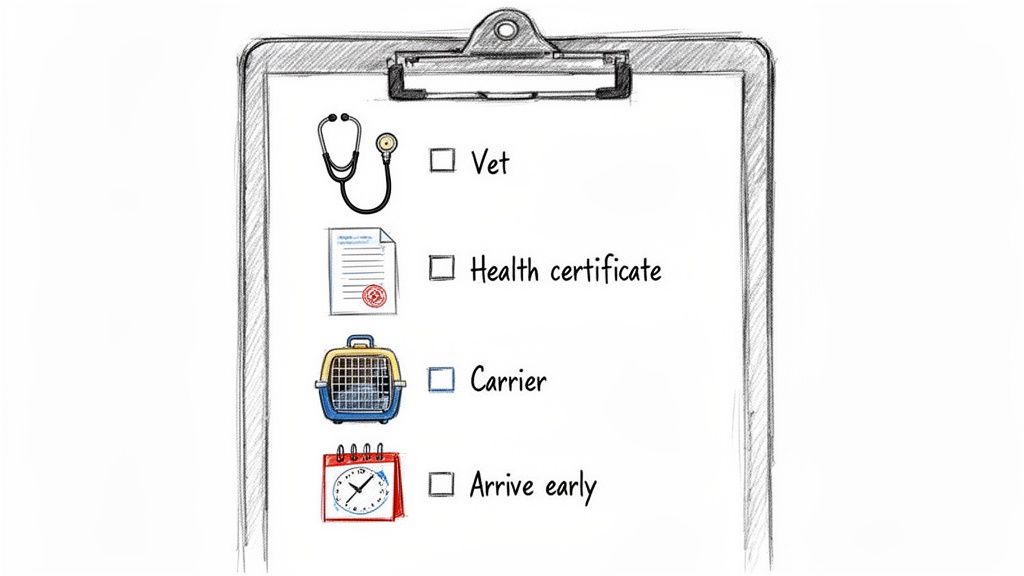
Final Vet Visit: Get that official health certificate locked in. You'll need to schedule this check-up within the required window—typically 5 days before a domestic flight. This is a key part of the Aeromexico pet policy.
Carrier Acclimation: Your goal is to make the carrier a happy, safe space. Leave it open in the living room with their favorite blanket and a toy inside. You want them to see it as their personal den, not a scary box.
Pack Their Go-Bag: Get a small bag ready with just their essentials. Think: a leash for post-flight walks, a familiar toy to keep them occupied, a small portion of food for after you land, and any medications they need.
The Day of Your Flight
On travel day, your main job is to keep things calm and predictable. A relaxed owner almost always means a more relaxed pet.
Pro Tip: Before you head to the airport, go for a long walk or have an energetic play session. A tired pet is far more likely to settle down and rest during the flight, which makes the journey easier on everyone.
Make sure you get to the airport with plenty of time to spare. Aeromexico recommends arriving at least three hours early for an international flight and two hours for a domestic one when you're traveling with a pet. This buffer gives you more than enough time for the special check-in process without that rushed, frantic feeling.
A few hours before leaving for the airport, give them a light meal, but hold back on too much water right before you go. This helps minimize the chances of an accident. Give them one last potty break right before you walk into the terminal.
When you get to the check-in counter, have all your pet's documents ready to go in a folder. The airline staff will need to look over the health certificate, vaccination records, and give the carrier a once-over. After you’re through security, find a quiet corner away from the main hustle and bustle to wait for your flight. Keeping your pet calm and secure in their carrier is the key to a paws-itively peaceful start to your trip.
Pet Travel Preparation Timeline
To help you stay on track, we've put together a timeline. It breaks down all the key tasks, from initial research to the day you fly, so nothing falls through the cracks.
Timeframe | Action Item | Key Considerations |
|---|---|---|
2-3 Months Out | Research & Book Flight | Confirm Aeromexico's pet policy for your specific route. Book your pet's spot on the phone immediately after booking your own ticket. |
1-2 Months Out | Schedule Vet Consultation | Discuss travel requirements, required vaccinations, and microchipping with a USDA-accredited vet. |
4 Weeks Out | Start Carrier Acclimation | Introduce the travel carrier. Make it a positive space with treats, toys, and comfy bedding. |
2 Weeks Out | Gather & Organize Documents | Collect all necessary paperwork. Use a tool like Passpaw to manage and verify documents digitally. |
5-10 Days Out | Final Vet Appointment | Obtain the official health certificate within the airline's required timeframe (e.g., 5 days for domestic). |
24-48 Hours Out | Final Preparations | Pack your pet's go-bag, confirm flight details, and re-check all your documents one last time. |
Day of Travel | Execute Your Plan | Enjoy a pre-airport walk, offer a light meal, and arrive at the airport with ample time (2-3 hours early). |
Following a timeline like this removes the last-minute guesswork and anxiety. By breaking down the process into manageable steps, you can feel confident that you're fully prepared for a smooth journey with your best friend.
Your Top Questions About Flying with a Pet on Aeromexico
Even after doing your homework, a few last-minute questions always seem to pop up. Let’s clear the air and tackle some of the most common things travelers ask when flying with their pets on Aeromexico, so you can head to the airport feeling confident.
Can I Bring an Emotional Support Animal on My Flight?
The rules for emotional support animals (ESAs) have changed quite a bit over the last few years across all airlines. Right now, Aeromexico's policies are really focused on service animals and standard pet travel. Because these regulations can be updated, your best bet is to contact the airline directly to get the most current information on their ESA rules.
What if My Pet and Carrier Weigh More Than the Limit?
If your pet and their kennel tip the scales over the 99 lb (45 kg) limit for checked baggage, they won't be able to travel on your passenger flight. Don't worry, there's another option. You’ll need to get in touch with Aeromexico Cargo. This is a separate service built for transporting larger animals and comes with its own booking process, fee schedule, and unique set of requirements.
Can My Pet Fly in the Cabin on International Flights?
Yes, they can, but there's a key detail you need to know. Your small dog or cat is welcome in the cabin on international flights, but only if the total flight time is under six hours. For any trip longer than that, your pet will need to fly as checked baggage, assuming they meet all the necessary requirements for that service.
Are There Any Sedation Rules?
Aeromexico, like almost every other airline, strongly advises against sedating your pet for a flight. Sedatives can affect an animal's natural ability to regulate body temperature and keep their balance at high altitudes, creating potential health risks. This is a conversation you absolutely should have with your vet before even considering it.
If you and your vet decide sedation is needed, Aeromexico requires you to bring a letter from the vet. It has to specify the product name, the exact dose given, and the time it was administered. This is for your pet's safety.
What Happens if My Flight Has a Connection?
The Aeromexico pet policy is applied on a per-flight basis. This means if your journey involves a layover, your pet has to meet all the requirements for each leg of the trip. You should also be prepared to pay the pet fee for each flight segment, as this is standard practice for most connecting flights.
Feeling buried in paperwork and stressed about deadlines? Passpaw helps veterinary practices streamline the creation of international health certificates, making sure every document is perfect for your trip. See how we make pet travel simpler at https://passpaw.com.
More articles
From regulatory changes to best practices for veterinarians and pet owners, our resources keep you ahead of the curve.